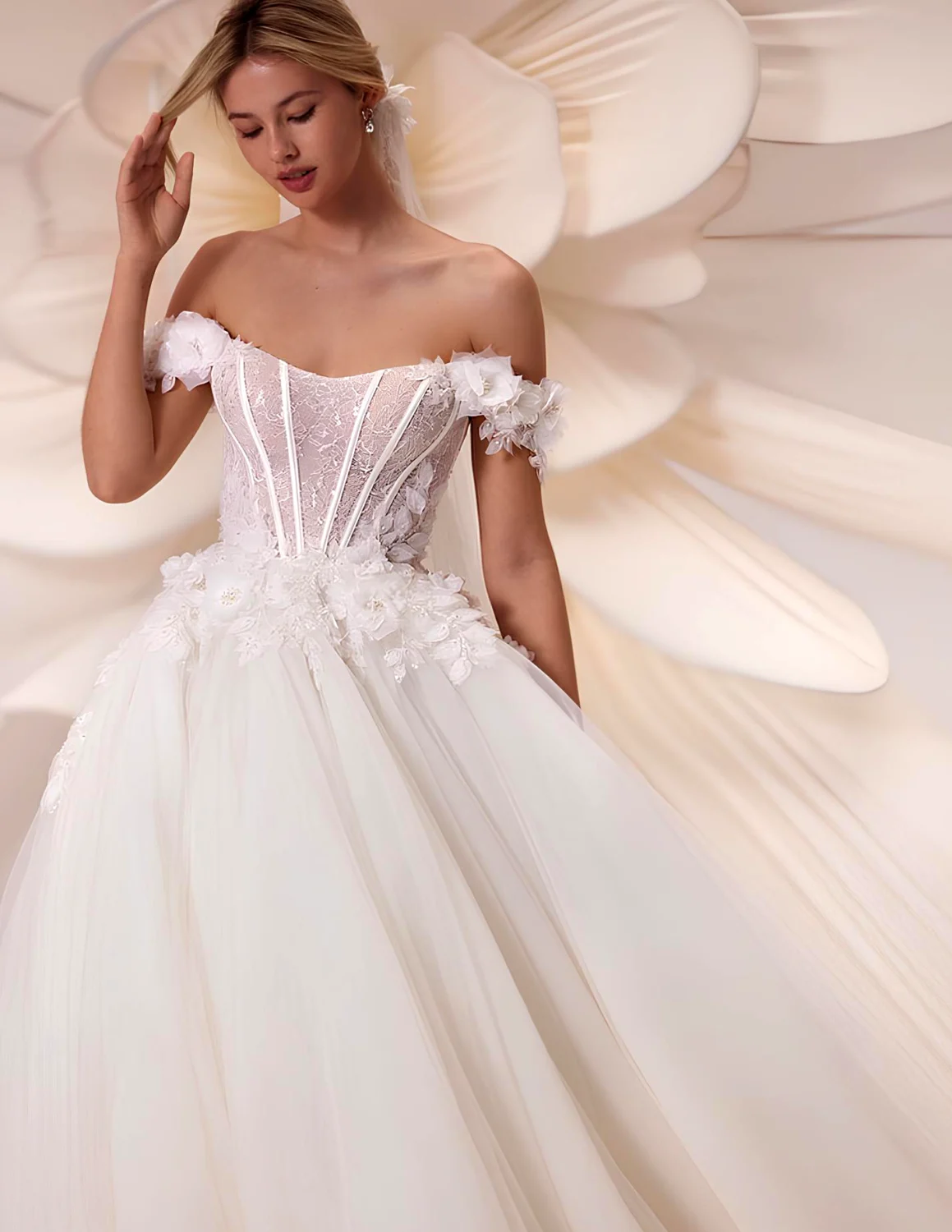
Wedding dress shoulder details influence the upper outline and where sleeves, hair and a veil meet. Start with more than a choice between sleeves and no sleeves. Separate the visible neck edge, the position of straps and the area around the upper arm. Then check how these parts sit when you move in the actual dress being offered. A stationary picture does not establish their freedom of movement or an internal fastening. Keep the visual effect you like separate from the product information you still need.
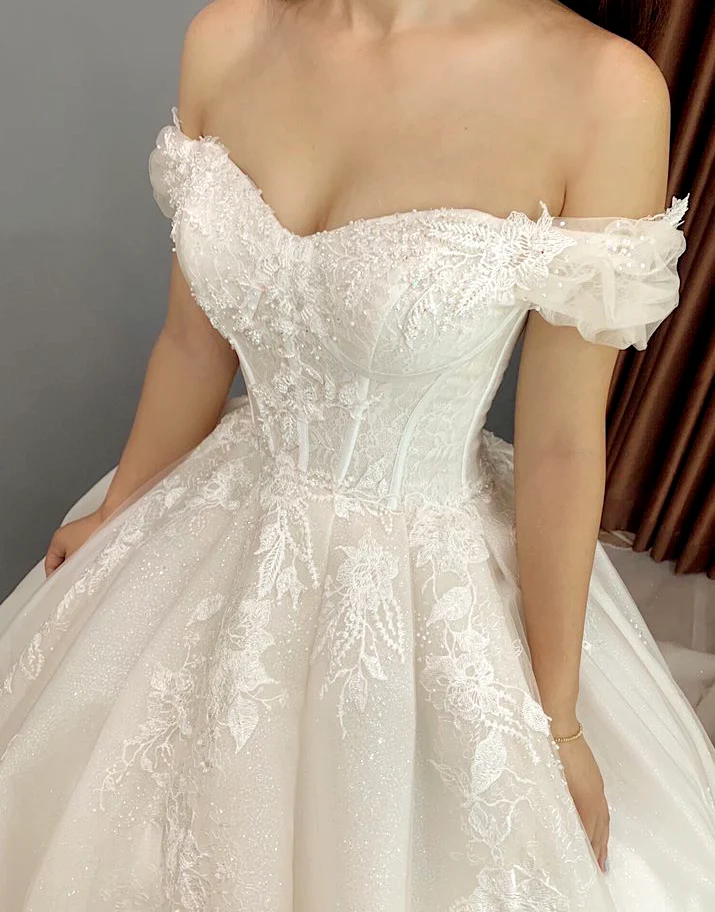
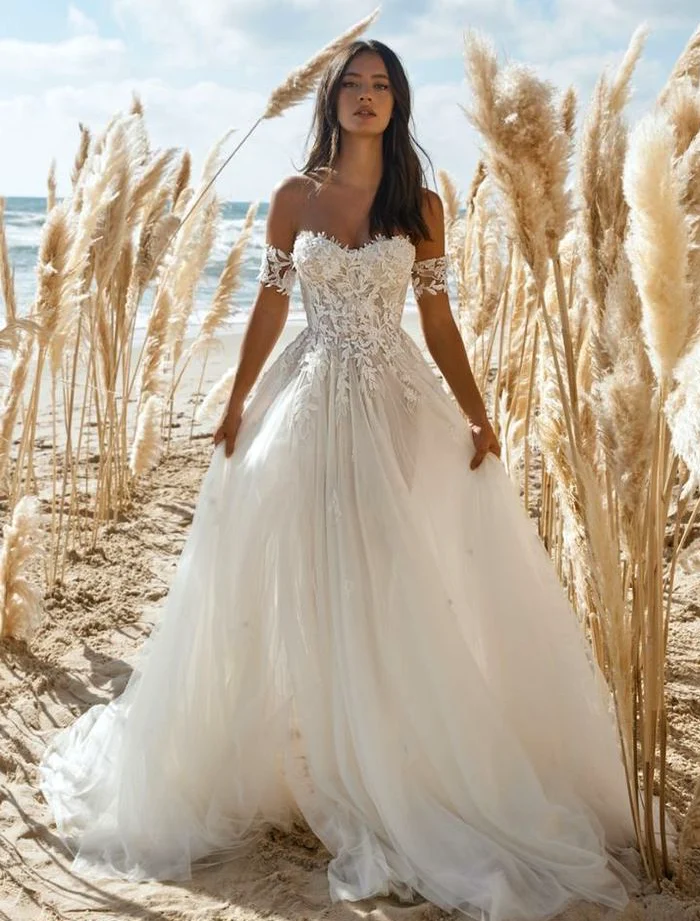
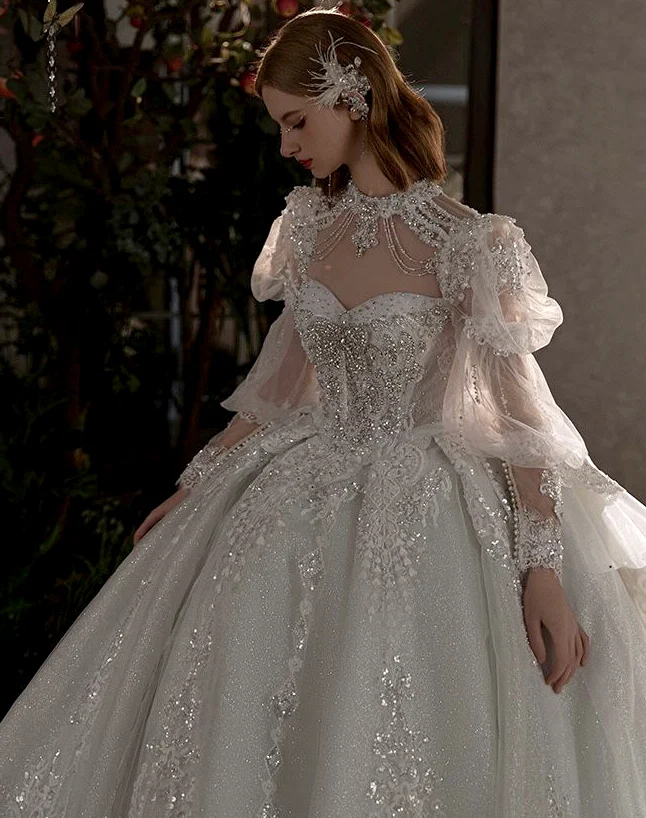
The five references offer different starting points: a closer floral open-shoulder view, a related direction with more of the skirt visible, decoration higher around the neck, slim straps beside wide sleeves, and pronounced flower-like shapes on the upper arms. Use the differences to make a small selection. You do not need all these ideas in one outfit or a compulsory match between a particular outline and body shape. Identify the upper line you want, then decide which questions the real garment must answer.
1. Which wedding dress shoulder details should you compare first?
Begin at the upper edge and follow its line from one side to the other. In the closer floral reference it sits below the shoulders. In the higher decorated image, lines lead around the neck and across a more transparent-looking upper area. Either can be pronounced, but they occupy different spaces near the face. Temporarily set the skirt aside in this first comparison. You can then choose the neck edge you want rather than simply the photograph with the widest skirt.
Record separately whether you want to try slim straps, a short upper-arm area or longer sleeves. The reference combining slim straps with wide sleeves shows why those decisions are related without being identical. A visible strap does not explain its structural job inside the garment. If neckline shape is your main question, the sweetheart neckline comparison provides a more focused next step. Answer that question before adding another detail, so the selection remains a useful comparison instead of an accumulation of unrelated features.
2. How can you check room for your arm movements?
At the fitting, hold a bag or a similarly sized object with both hands and bring your arms forward. Repeat the movement without the object and watch the upper edge. Does it need repositioning afterwards? Does part of a sleeve change position? Describe the movement you observe. That gives an adviser a more specific starting point than a general request for greater comfort. Include the gestures you expect when greeting people or holding flowers, rather than testing only a pose you would use in front of a mirror.
A named product example shows why confirmation matters for each model. Maggie Sottero explicitly lists inner elastic in the short off-the-shoulder sleeves of Rebecca Ingram’s Adeline. That information belongs to the product described on its own page. It neither identifies our photographs as Adeline nor confirms elastic in another dress. Ask which version of your chosen model is offered and try that actual arrangement. Outer similarity is not enough to transfer an unseen fastening or movement feature from one product to another.
3. How do the sleeves relate to the complete outline?
After the close view, compare a reference showing more of the skirt. In the image beside water and grasses, the open shoulders can be considered alongside a broad pale skirt. The higher decorated reference places short puffed areas and longer sheer-looking sleeve sections in a different relationship. First compare their side volume with the centre of the bodice. The surroundings are simply a background for this exercise; they do not verify a wedding venue or a particular season. Keep your comparison about the visible shape.
View your actual dress from a similar distance, from the front and side. A floral detail that dominates a close photograph may occupy a different share of the complete garment. Decide whether you want that stronger or quieter emphasis. The comparison of off-the-shoulder wedding dresses with long sleeves offers another way to consider an open upper line beside a longer arm area. Borrow the visual question rather than assuming that its sleeve connections or movement allowance also belong to your chosen model.
4. In which order should you add hair, a veil and jewellery?
Assess the dress first, then your intended hair arrangement and then the veil. This makes it easier to see which addition covers shoulder decoration or accompanies an already pronounced neck edge. The high decorated reference uses much of the area near the neck. The image with larger flower-like upper-arm details leaves a more open area between the shoulders. Use that contrast when choosing between statement earrings and extra neck jewellery. You do not have to request every accessory visible in either photograph.
Move in the actual combination as well. Turn your head, carefully bring the veil to one side and observe where its edge passes a sleeve or piece of jewellery. Contact alone does not establish damage; it identifies a point whose handling you can discuss. If you want another layer at certain times, the bridal cape comparison helps with a separate selection. Confirm its actual connection and what is included independently of the dress. Being photographed together does not establish that two pieces come as one supplied set.
5. Which alteration questions should be settled before you commit?
Show the area you want changed directly on the dress you have tried. Do you want a higher neck edge, a narrower sleeve or a different strap position? Ask which connected areas would also be affected. A small visible shift may require a different proposal from adding a separate piece. The picture cannot confirm what is alterable. Work with an explained proposal for this actual garment rather than a supposedly universal solution, and demonstrate the movement that led you to request a change in the first place.
Record the agreed work scope, affected pieces and date of the final fitting. Establish which hair or veil arrangement you will bring back to that appointment. Separate a requested extra sleeve option from parts already included in the offer. The slim-strap reference with wide sleeves is a shape reference, rather than proof that its sleeves detach. If that function matters to your choice, have it explicitly confirmed and demonstrated on the actual product. A precise record helps keep the visual preference and the promised supplied version aligned.
6. What belongs in your final comparison note?
Choose a small number of favourites with different upper lines and write a clear observation for each. Examples include an open centre between the shoulders, flowers on the upper arm or decoration near the neck. Add the unanswered question, such as where the edge sits with arms forward or whether an extra layer is intended. If the shop permits a record of your fitting, keep it separate from the inspiration images. You can then distinguish a desired visual effect from a product feature already confirmed during your appointment.
At the last fitting, assess the complete arrangement with the agreed alterations. Repeat the movements that matter and check whether the discussed areas sit as intended. Confirm storage and care from the product information and its label; GINETEX explains the care symbols used on such labels. A floral or reflective surface does not identify a fibre. Keep your note with the confirmed details. The gallery remains a tool for comparing visible shapes, while decisions about the supplied version and its handling are made on the real dress.
Separate wedding dress shoulder details into the neck edge, straps and sleeves. Then test arm movement on the actual dress, with your intended hair, veil and any extra layer.
Frequently asked questions
Can a photo establish movement in wedding dress shoulder details?
A photo cannot establish movement in wedding dress shoulder details. Check the neck edge and sleeves with your arms forward on the actual dress. Ask about the supplied version; similar pictures do not confirm the same internal fastening.
What should I agree before altering wedding dress shoulder details?
For alterations to wedding dress shoulder details, record the affected area, work scope and expected final arrangement. Agree when you will try the result again with the intended accessories.
When should I check a veil with wedding dress shoulder details?
Check the veil with wedding dress shoulder details after first assessing the dress and again with its agreed final version. Compare the veil beside the neck edge, sleeves and jewellery while making the movements you actually need.


