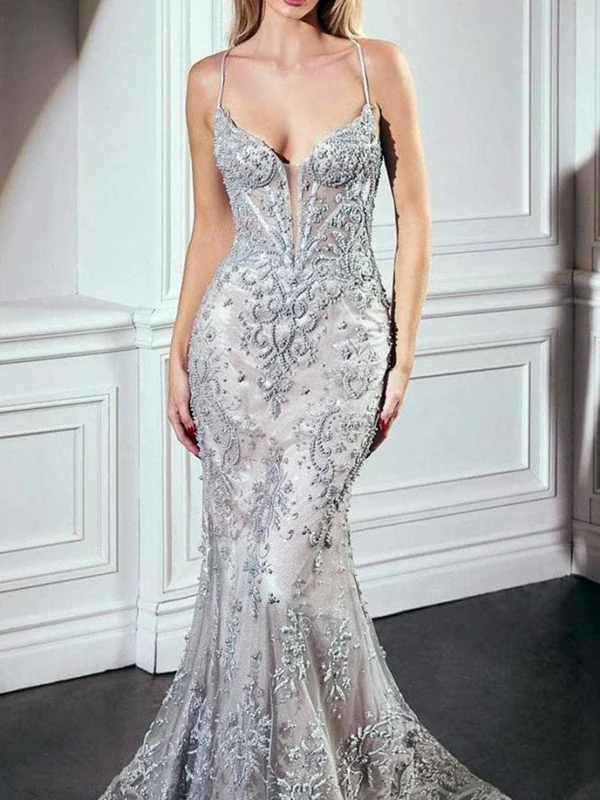
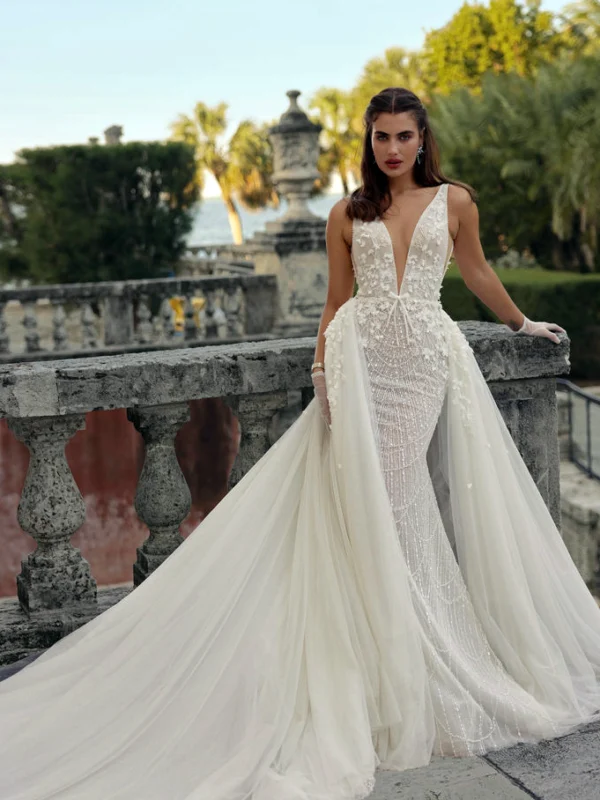
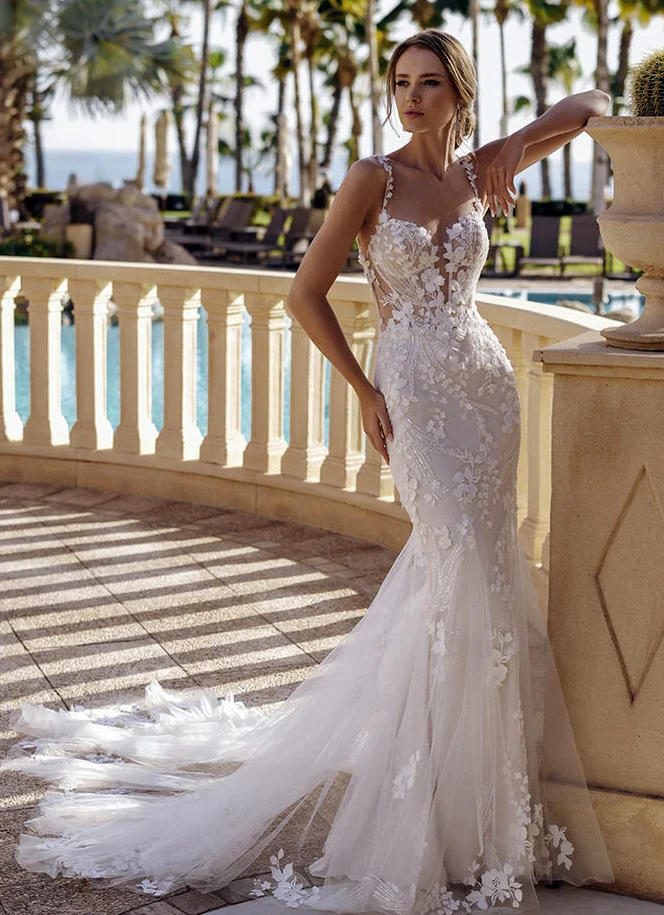
A silk wedding dress should be chosen using information about the actual garment, rather than sheen or a smooth photograph alone. The references here include pale open-shoulder dresses, a narrow-strap bodice and coloured alternatives with different draping. None establishes silk content. Start by clarifying which part of the offered dress contains which fibres, then compare the appearance and the movements you need for your wedding. This keeps the material preference distinct from the silhouette. You may enjoy a particular neckline regardless of fibre, or consider a documented composition essential. Knowing which question you are answering makes the fitting and the final comparison more useful.
Define what silk wedding dress means in the offer
Ask for the composition of the outer fabric, lining and any separately described layers. A product name may emphasise silk without explaining its percentage or component. Record the exact model and option beside the answer, especially if a range contains several versions. The FTC’s US textile labelling guidance explains fibre-content information for that market; it does not authenticate the photographs here. For your decision, the practical point is to associate the stated composition with the garment you would actually receive. If the description is incomplete, request clarification before using the material name to explain a price difference or to assume a wearing quality.
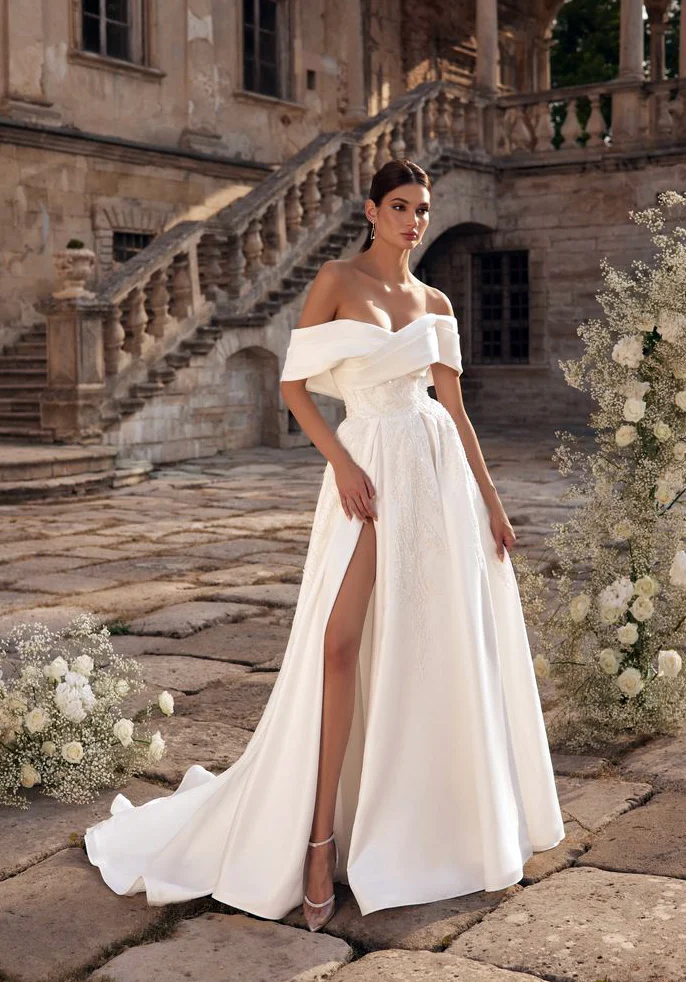
Separate a material preference from the visible shape
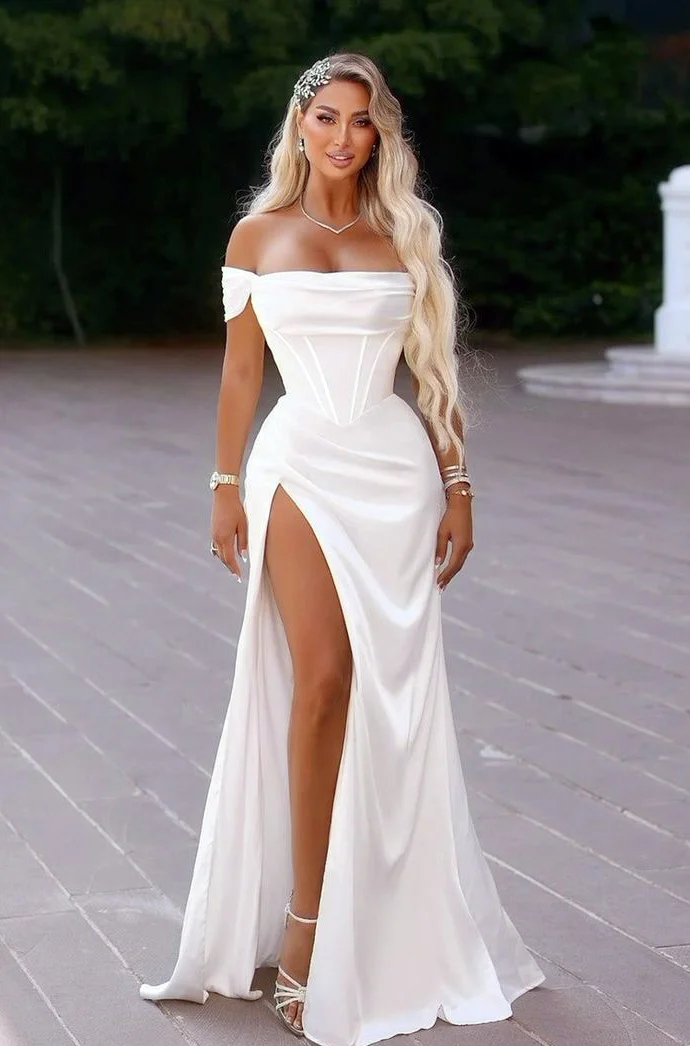
Look at the photographs without their material labels for a moment. Do you prefer a continuous pale skirt, a strongly divided bodice or a more asymmetric upper line? The first two pale references have broad off-shoulder arrangements and leg openings, while the narrow-strap example places more visible detail around the middle. Coloured alternatives offer a separate comparison of the same broad questions. Decide which feature you want to keep before discussing fibre. For a silk wedding dress, a documented composition and an appealing shape can both matter, but neither one proves the other. Keeping two notes prevents an attractive surface from obscuring an unanswered product question.
Examine the whole construction, not one outer layer
Ask how the actual dress is assembled and which areas are lined. A smooth outer panel does not reveal the number of layers beneath it, and a patterned bodice does not establish a particular support system. At the fitting, check the upper edge with the underlayers you intend to wear. Sit, raise your arms and turn naturally. If an area needs support or another adjustment, ask for an explanation on the garment. Do not order an accessory because another photographed dress appears to use an invisible solution. The real construction and your own preferences determine what needs trying, including the desired coverage at the neckline and waist.
Compare shoulder lines with your wedding movements
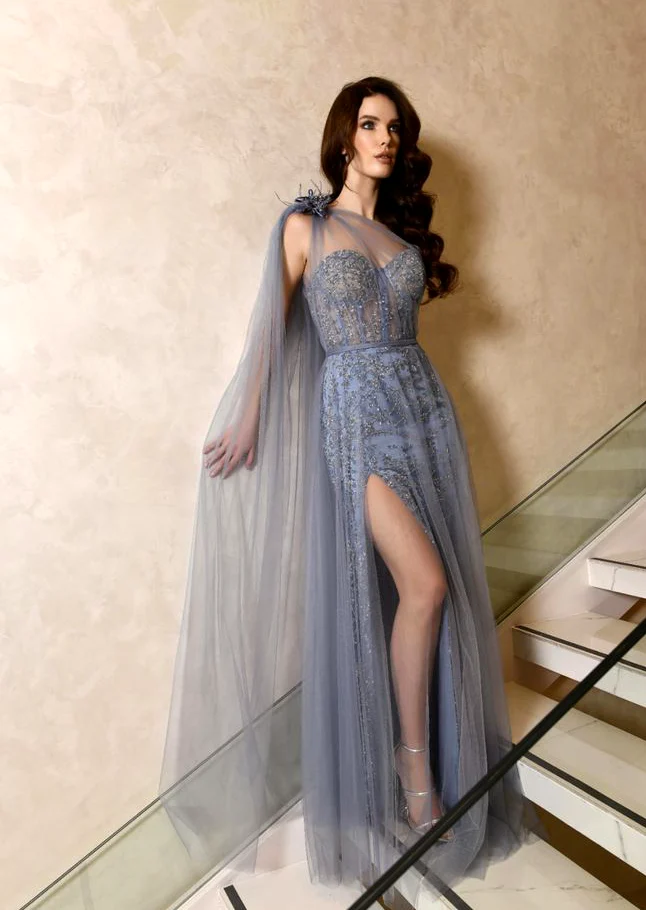
The broad pale shoulder details and the coloured one-shoulder arrangement divide the upper body differently. Try greeting someone, reaching for your bouquet or another planned object, and putting on the outer layer. Check whether the top needs rearranging afterwards. A beautiful neckline in a still pose can remain a preference even if you decide another construction works better for the day. When considering a silk wedding dress with an exposed shoulder line, bring the intended underwear early rather than leaving that question to the final appointment. Compare the view from both sides, especially for an asymmetric model where one front photograph cannot explain the entire effect.
Test openings and trains as separate features
A visible leg opening does not automatically provide the stride or coverage you want. Walk in the planned shoes, sit on an ordinary chair and try a step. For a longer trailing section, practise gathering or carrying the actual fabric and ask whether a securing arrangement exists. Treat that as a separate question from the neckline.
The pale wider reference and the narrower white dress may lead you towards different handling plans even if you enjoy both appearances. Request a relaxed standing view if the skirt is carefully arranged in a listing. You need to know how it falls without a photographic pose before settling on its everyday use during the celebration.
Judge light and colour without diagnosing fibre
Examine the actual garment in even daylight and normal indoor lighting where possible. Bright bands and darker folds help you understand the appearance, but they cannot identify silk. If you are comparing a silk wedding dress online, request consistent front, side and rear views of the same model. A grey-blue or gold-toned reference can help you decide whether colour is part of your own wedding look, without being evidence of a bridal product category or a material. Ask yourself whether you want that colour, that draping or both. This makes alternatives useful without needing to copy the complete photographed outfit or assume its original purpose.
Discuss alterations before committing to the garment
Have the actual dress assessed for any shortening, strap adjustment or bodice change. Ask where the work would take place and how it affects visible folds or decoration. A small change at a shoulder can alter the way an upper edge falls, so check it in the complete outfit rather than as a measurement alone. Agree the scope and timing and leave room for a follow-up fitting with your shoes. Compare complete proposals, including required work, instead of treating the lowest starting price as the finished cost. Clear product information remains important even when the visual style feels exactly right; alterations cannot answer an unresolved composition question.
Read care instructions and finish the comparison
A silk wedding dress name does not provide a universal washing, steaming or ironing instruction. Read the actual label and discuss uncertain treatment with an appropriate professional. GINETEX distinguishes washing, bleaching, drying, ironing and professional textile care. For more visible shape ideas, see our boho wedding dress guide and crochet-look wedding dress comparison. The FTC textile guidance explains its US context, while GINETEX explains care symbols. Choose using documented composition, a convincing fitting and a plan for the actual wedding, keeping any missing information open until it is answered.
Associate documented composition with the actual model and its components. Then compare shape, movement, underlayers and care.
Frequently asked questions
Does shine in a photograph prove silk?
No. Shine and smooth areas describe appearance rather than identify fibre.
Which composition details should I request?
Ask about outer fabric, lining, separately described layers and the actual percentage in the offered option.
Are the coloured references confirmed silk bridal products?
No. They provide colour and shape comparisons; category and fibre are not established from the pictures.
Can every silk-named dress receive the same care?
No. Read the actual label; a material name does not provide a universal washing or pressing instruction.