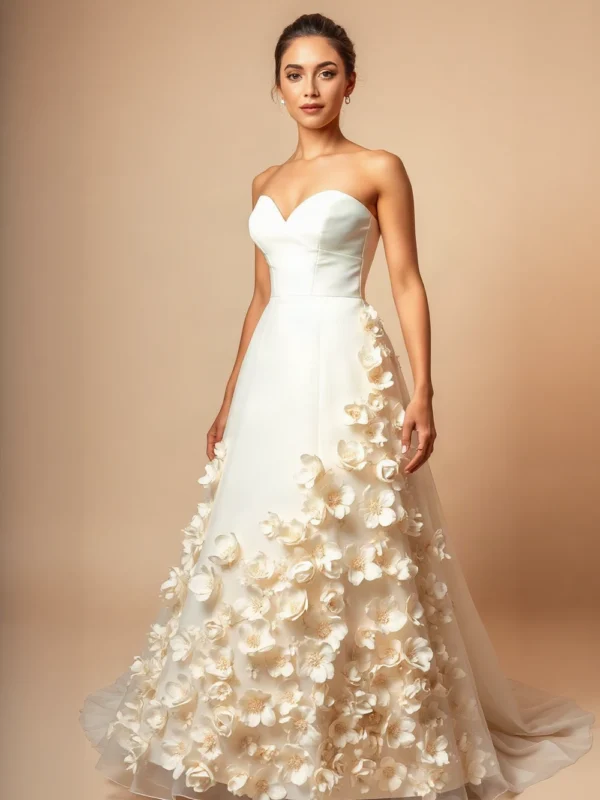
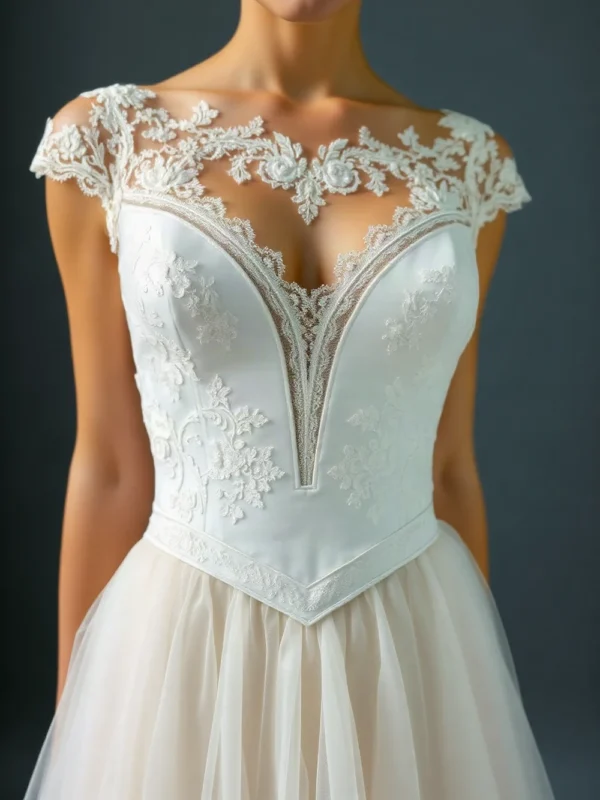
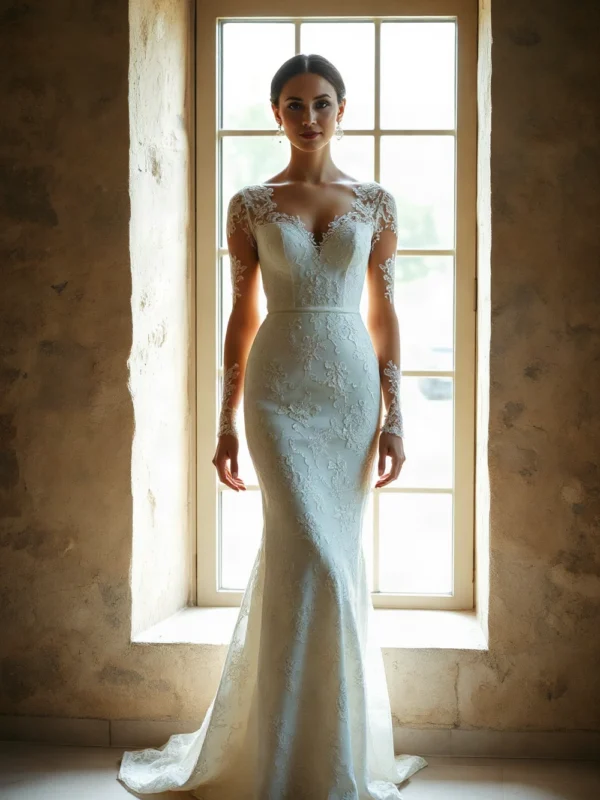
A full skirt may be the feature associated with princess wedding dresses, but the bodice often determines how the look feels. The same base can appear intricate with an illusion high neck, softer with crossover draping, elongated with a halter cut or restrained with a clean strapless bodice. The waist transition matters too: a narrow band, broad waistband, lace-up back, projecting peplum or uninterrupted seam changes the relationship between upper body and skirt.
These six images compare light-colored princess silhouettes through their bodices and waist treatments. The aim is not to name one solution universally better, but to see where each directs attention, how it meets the skirt and what deserves testing. They offer visual inspiration, not evidence about a specific purchasable dress. In a fitting, construction, movement, support and personal comfort should be judged on the actual garment.
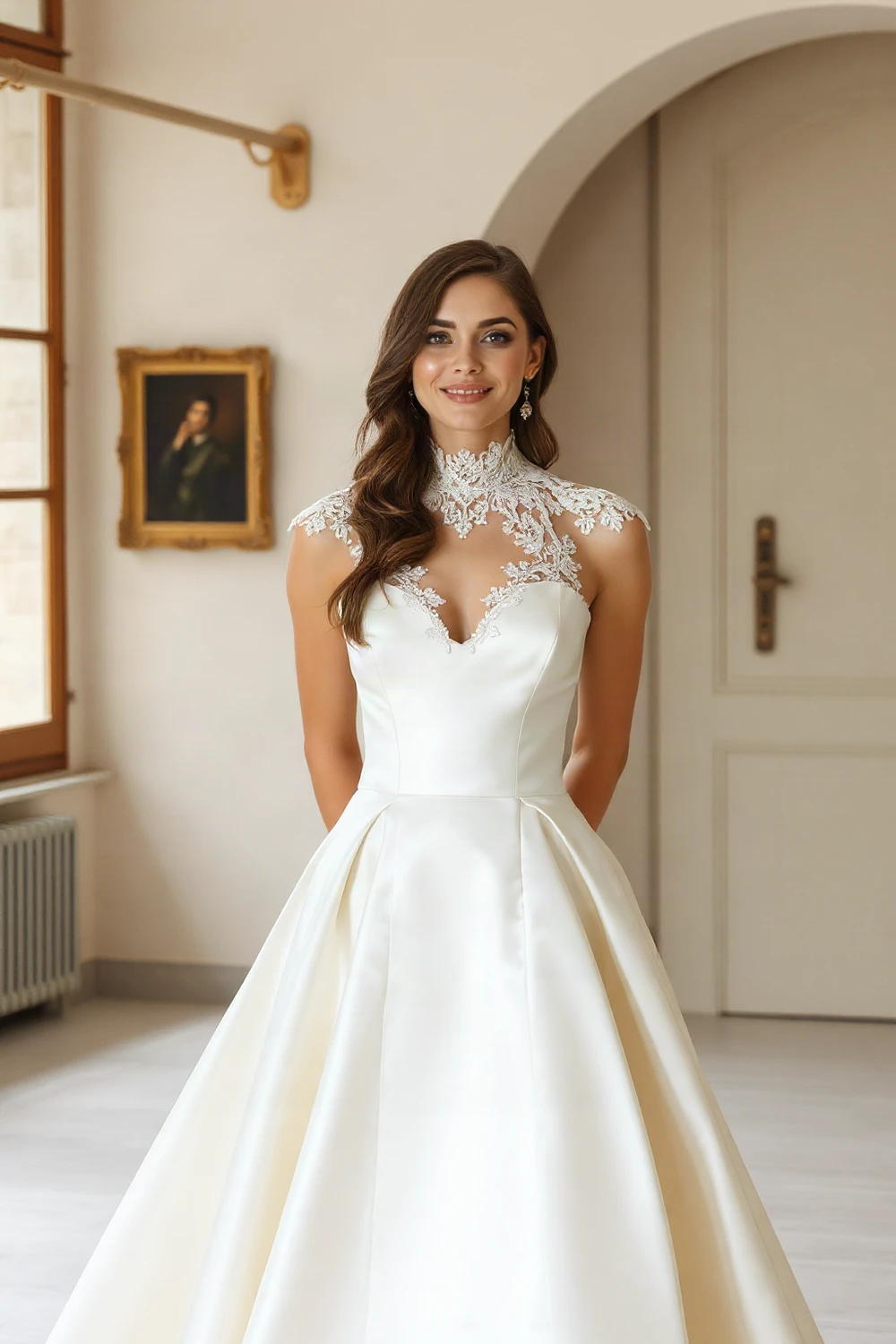
Concentrating detail around the face with an illusion high neck
In the first look, lace-like motifs circle the neck, cross a sheer shoulder area and descend toward the edges of a sweetheart-shaped bodice. Rather than spreading pattern throughout the dress, the arrangement concentrates it around the face. The broad skirt and its orderly pleats form a quiet foundation for the intricate upper section.
This approach may suit someone seeking a frame between dress and face. Because the decoration reaches several mobile areas, test head turns, raised arms and relaxed shoulder movement. A necklace may crowd the high neckline; restrained earrings or a subtle hair detail can be sufficient. Although the neck appears more covered than in the other looks, the central opening adds a vertical focus and keeps the bodice from seeming visually solid.
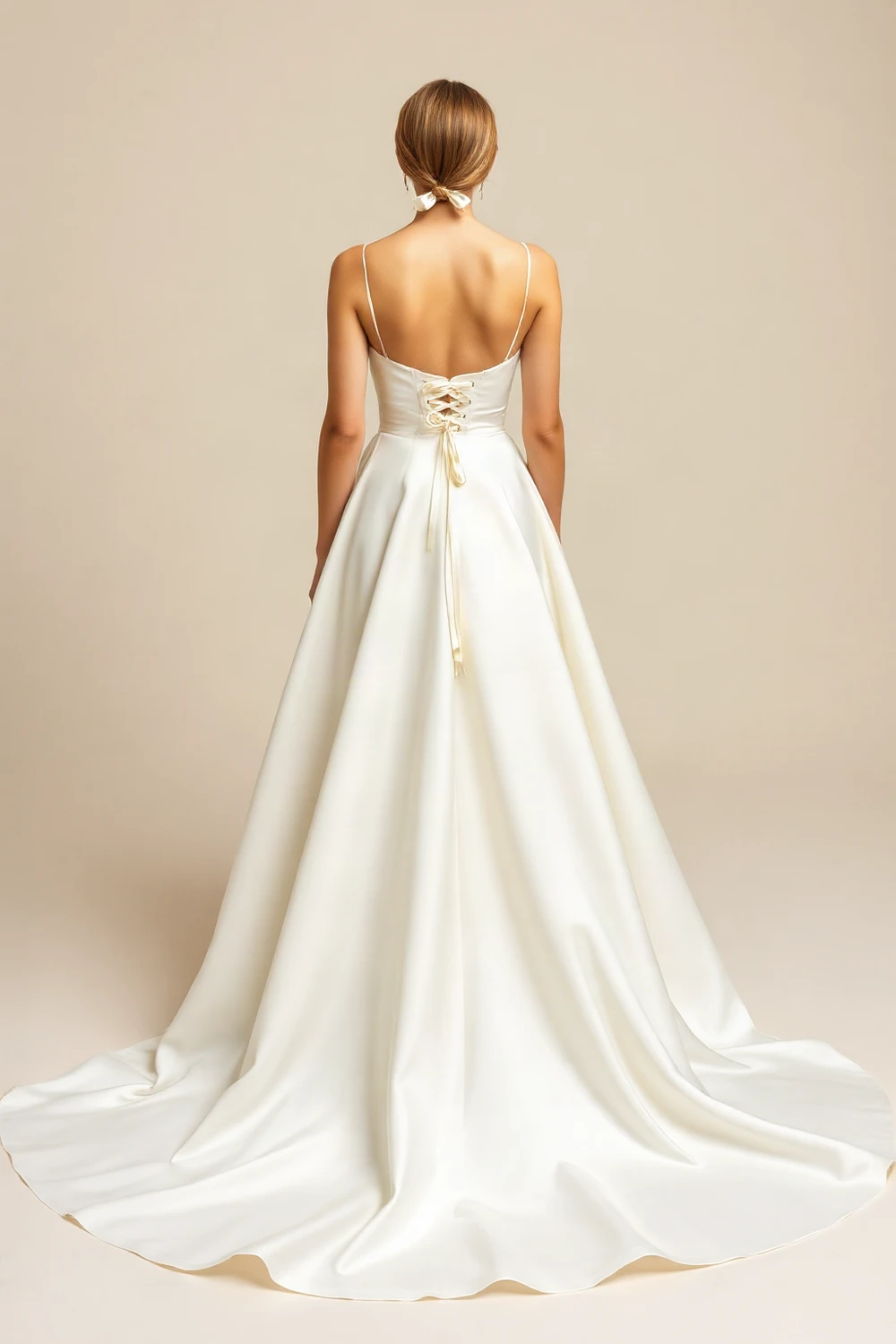
Considering a lace-up back together with the train
The second image shows how a rear view can define a princess silhouette. Fine straps frame a low, broad opening, while crossed lacing forms a compact focal point at the lower bodice. From the defined waist, the skirt falls in long folds and spreads into a generous rounded train.
When comparing lace-up backs, look beyond decoration. Test strap position, support, the sensation of the ties while sitting and their behavior in motion on the dress. The extensive train adds formal scale, but walking routes, turns and later management should be planned before the event. Hairstyling also changes the effect: hair gathered at the nape keeps the back visible, while long loose hair can hide both the opening and the lacing that distinguishes this view.
Creating a softer bodice with crossover draping
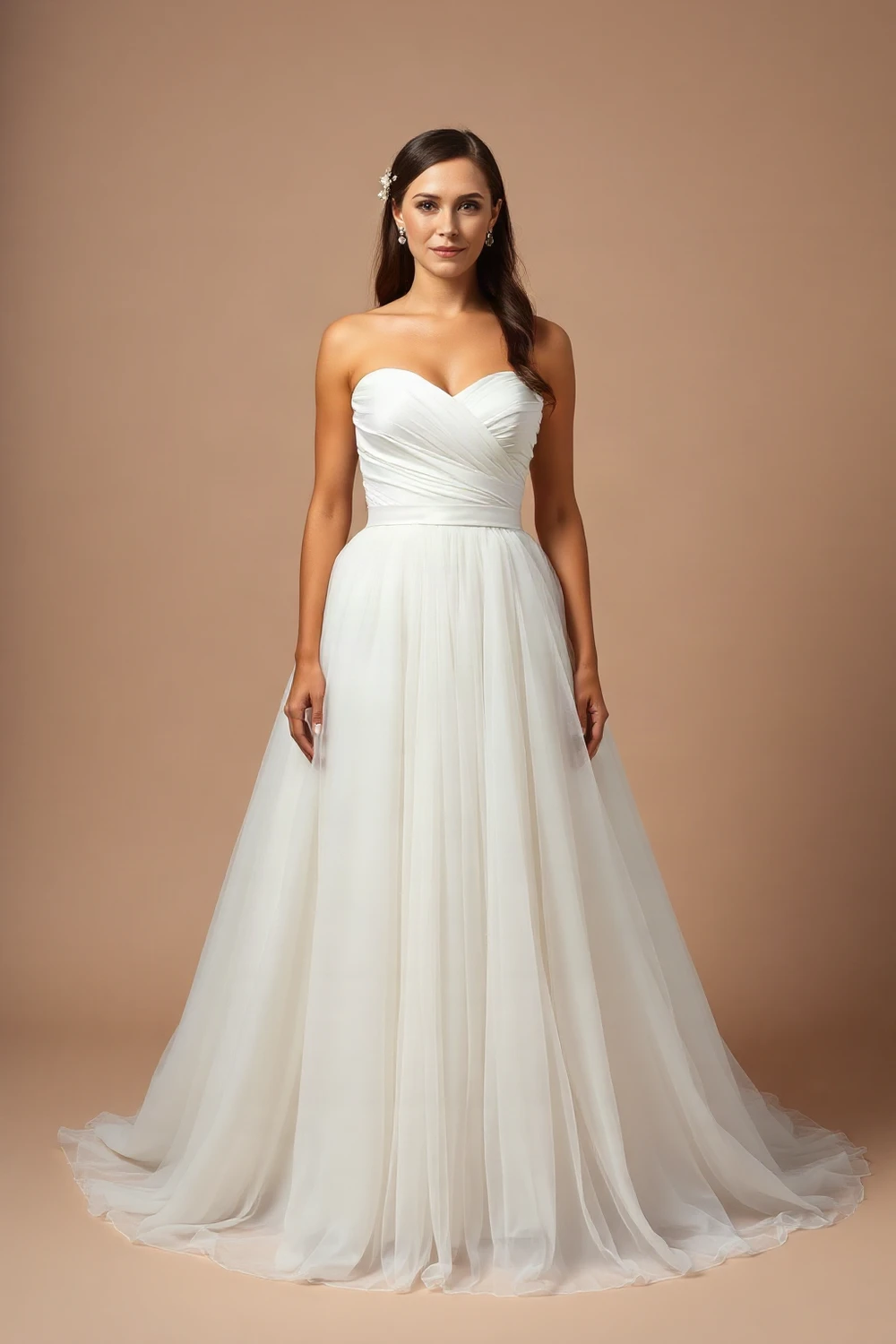
In the third design, folds cross the sweetheart neckline, giving the upper body movement instead of a flat paneled surface. The draping ends at a narrow, plain waistband. Below it, fine skirt layers descend in long vertical lines, balancing the bodice’s diagonal activity with a softer downward flow.
Because ruching makes folds part of the design, fitting priorities differ from those for a crisp bodice. Check that the layers settle evenly on both sides, the upper edge stays stable and the waistband remains horizontal in motion. The airy-looking skirt appears more fluid than the smooth, heavily structured alternatives, reinforcing the soft effect. Since a band already divides the waist clearly, another belt may interrupt the composition. Small accessories let the directional folds lead the eye.
Drawing a long line from neck to waist with a halter cut
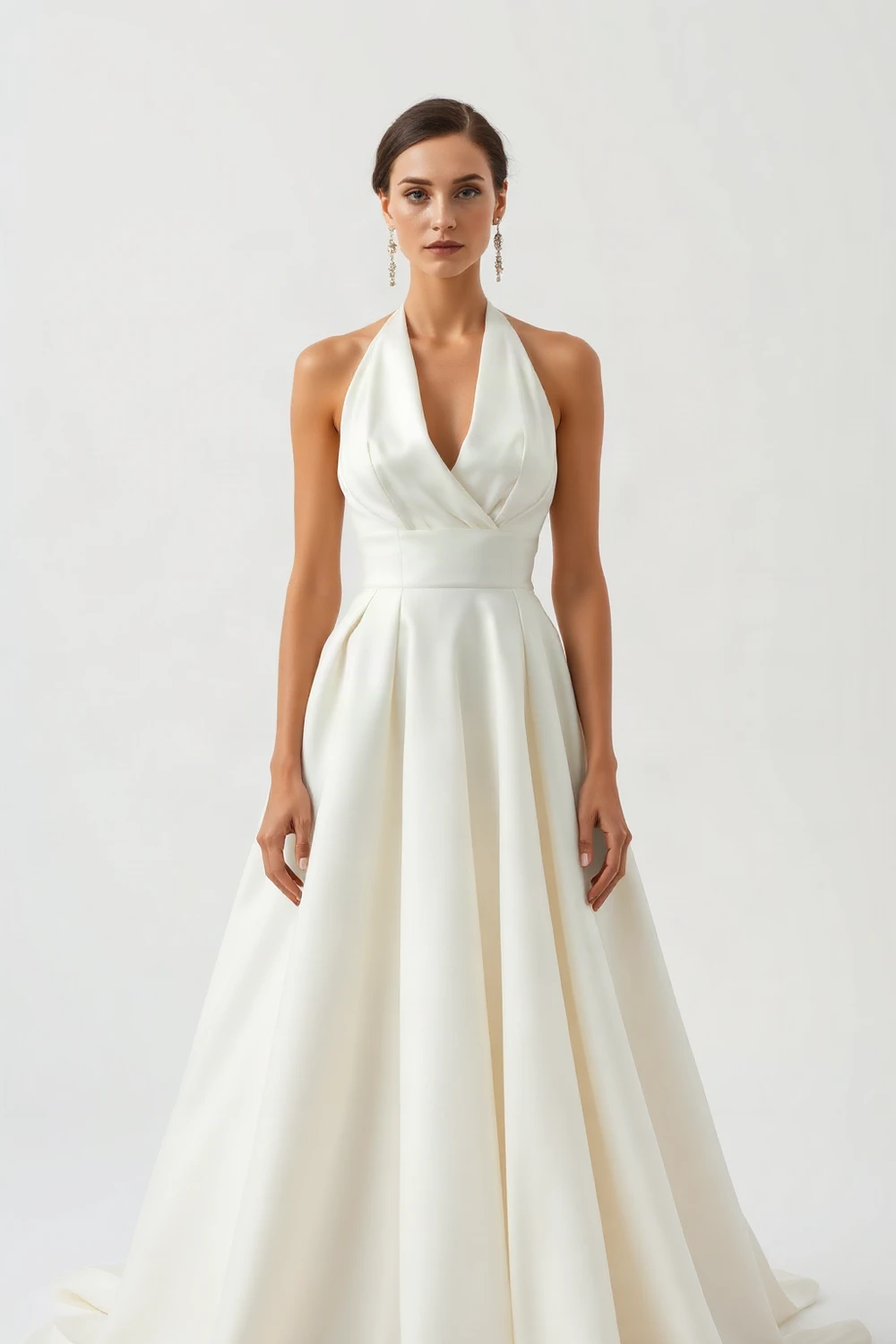
The fourth look uses wide halter panels that descend from the neck and cross around a deep V. A broad waistband stops that movement before large pleats open into the skirt. With the shoulders visible, the upper section feels comparatively open above the princess base.
Judge a halter by how it carries as well as how it looks. Test pressure behind the neck, chest support and panel placement while reaching forward or turning. Long earrings can echo the open shoulder line, whereas a heavy necklace may compete with the uncluttered V. Compared with the crossover-ruched bodice, this option has less surface activity and follows a more architectural route. It suits a preference for clean, elongated geometry rather than soft layers across the upper body.
Making the waist transition visible with a peplum
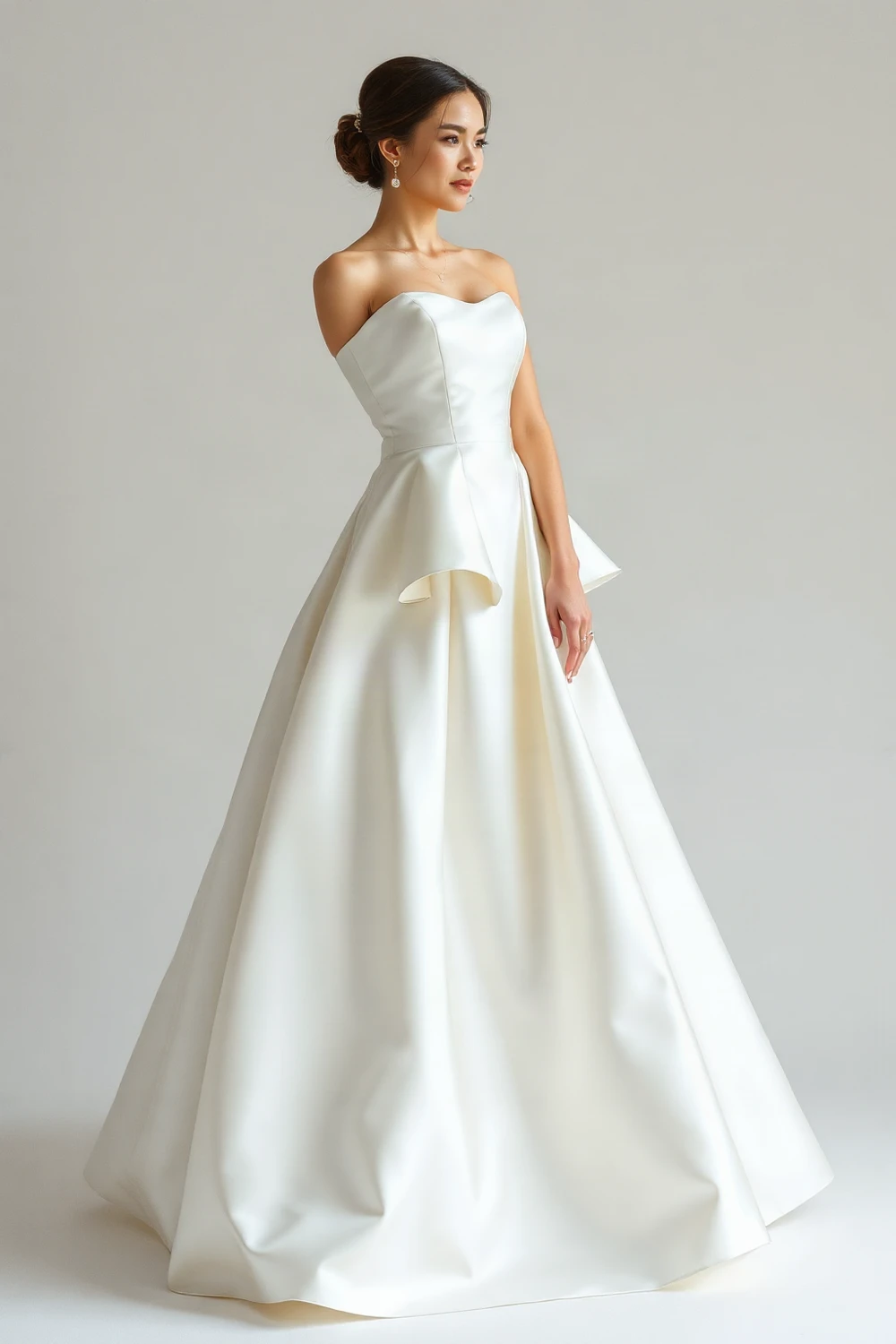
The fifth design places a short, projecting peplum between a smooth strapless bodice and the full skirt. Instead of concealing the join, this layer enlarges it and looks sculptural from the three-quarter angle. A gentle sweetheart edge and vertical bodice seams remain restrained, leaving the waist construction as the main feature.
A peplum can sharpen waist definition, but it also adds volume around the hip line. Check its effect in front, side and rear mirrors rather than from one pose. Sit to notice how the layer bends, then lower the arms to see whether they touch its edges. Because the dress already has a forceful structural detail, a large belt or busy necklace may be unnecessary. Letting the peplum’s geometry stand alone often creates the clearest balance.
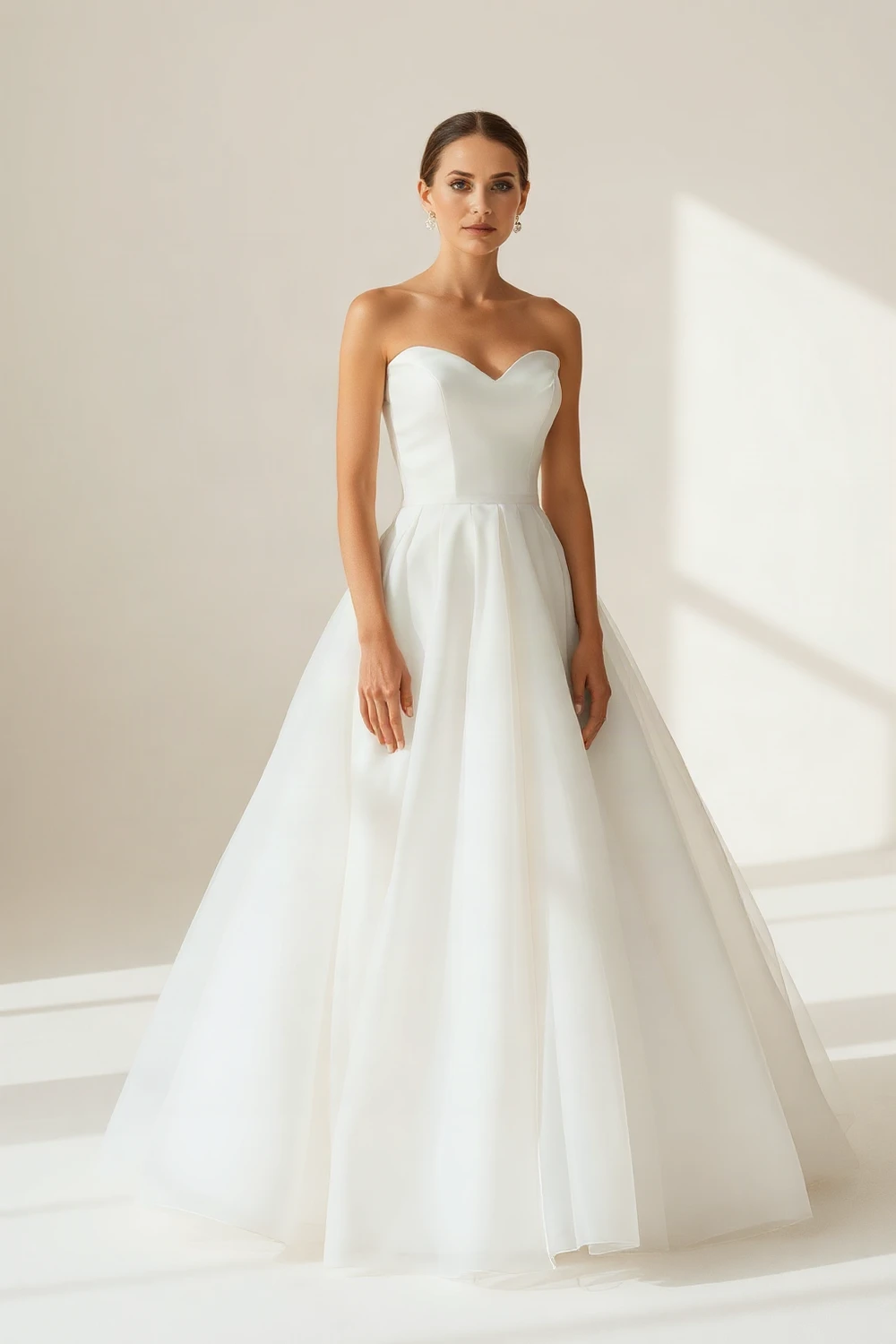
Letting proportion lead on a minimalist strapless bodice
The final look removes applied pattern, ruching and a projecting waist feature. A gentle sweetheart edge and vertical seams shape the strapless bodice, which joins the full skirt directly through small waist folds. With fewer interruptions, neckline height, waist placement and the skirt’s starting point become noticeable.
Minimalism does not reduce the demands of fit; it makes discrepancies more visible. During a fitting, check that the upper edge remains stable while walking, the sides provide suitable support and the waist seam sits at the intended point. Compared with the peplum look, this option forms a calmer, more continuous silhouette. It also provides a setting for earrings, a veil or a hair accessory. Choosing one principal accent rather than enlarging all three preserves the clean visual logic that distinguishes the design.
Skirt width is only part of a princess wedding dress. A motif-rich high neck frames the face, an open lace-up back emphasizes rear views, crossover draping adds softness, a halter creates length, a peplum brings sculptural volume and a minimalist strapless bodice provides a clean foundation. The strongest option is the one in which the preferred upper detail meets the waist and skirt without an unintended break.
After making a visual shortlist, examine each candidate from the front, side and back. Sit, walk, raise the arms and recreate the approximate height of the planned hairstyle or veil. These trials show how the silhouette behaves rather than how it appears in one still pose. A sound decision combines visual focus, support needs, venue conditions and personal ease. The goal is not maximum detail, but a considered relationship between neckline, bodice, waist and the volume below.
Compare high illusion necklines, lace-up backs, crossover draping, halter cuts, peplums and clean strapless bodices—and see how each changes a full princess silhouette.
Frequently asked questions
Should a necklace be worn with a high-neck princess wedding dress?
If lace-like motifs or other detail already surrounds the neck, a necklace may make the area look crowded. Earrings or one restrained hair accessory can preserve the neckline’s framing effect.
What should be checked when fitting a lace-up back?
Check strap placement, back support, how the ties feel when sitting and whether they shift during movement. Also test how much of the lacing will be covered by the chosen hair and veil.
Does a ruched or flat-paneled bodice look simpler?
A flat-paneled bodice generally reads as cleaner and more architectural. Crossover ruching creates visible surface movement even without embellishment and directs attention toward the waist.
From which angles should a peplum waist be assessed?
Use front, side and rear views because a peplum adds localized volume around the hips. Sit down as well to check how the layer bends and whether its edges meet the arms.
How should movement be tested in a strapless princess dress?
Walk, sit, stand, turn gently and raise the arms to see whether the upper edge remains stable. Evaluate side support and waist-seam placement throughout those movements.