Every look in this gallery uses a light-colored princess silhouette that expands from a defined waist. The main difference is not simply skirt fullness, but the way each bodice directs attention. Neckline openness, shoulder treatment, surface movement and waist construction give the otherwise related shapes distinctly different visual weight.
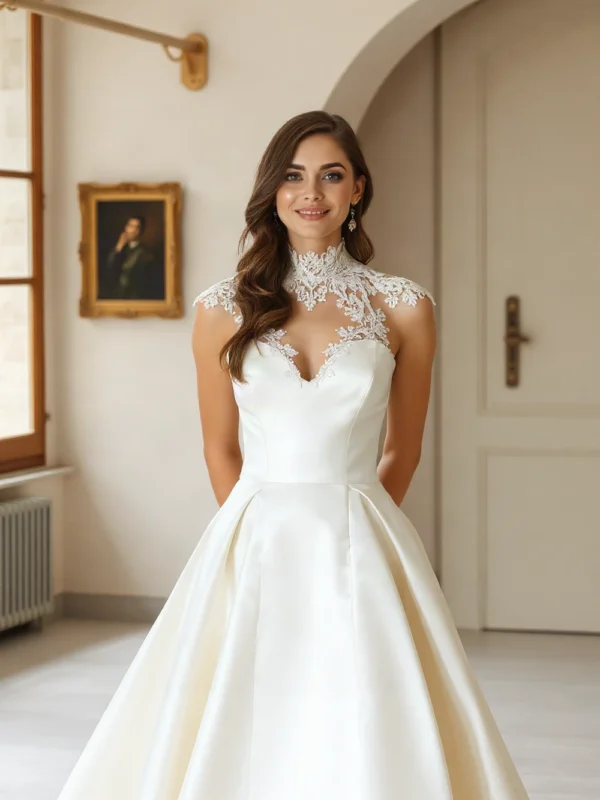
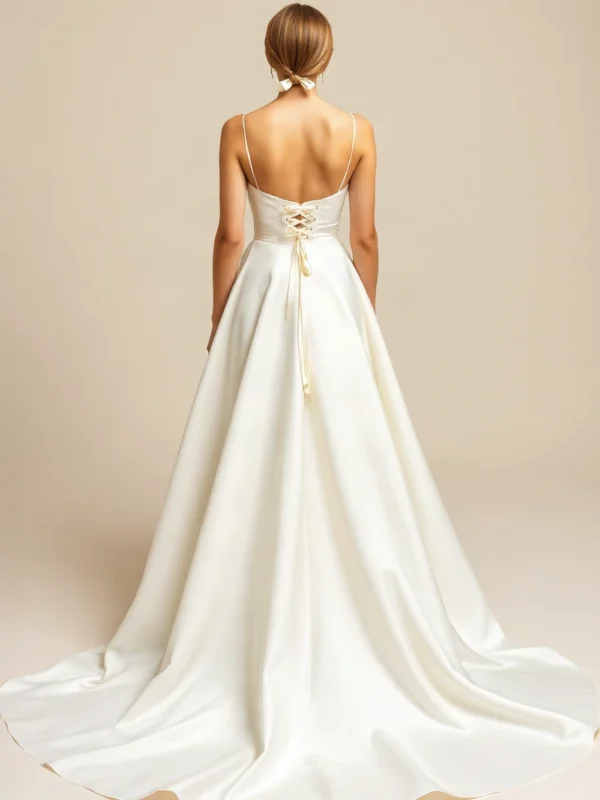
The first look concentrates lace-like motifs around the neck and across a sheer shoulder area, setting ornate detail against a smooth bodice. The second shifts attention to the back: fine straps, a low opening and compact lacing lead into a long, unbroken skirt and broad train. One frames the face; the other reserves its strongest feature for rear views.
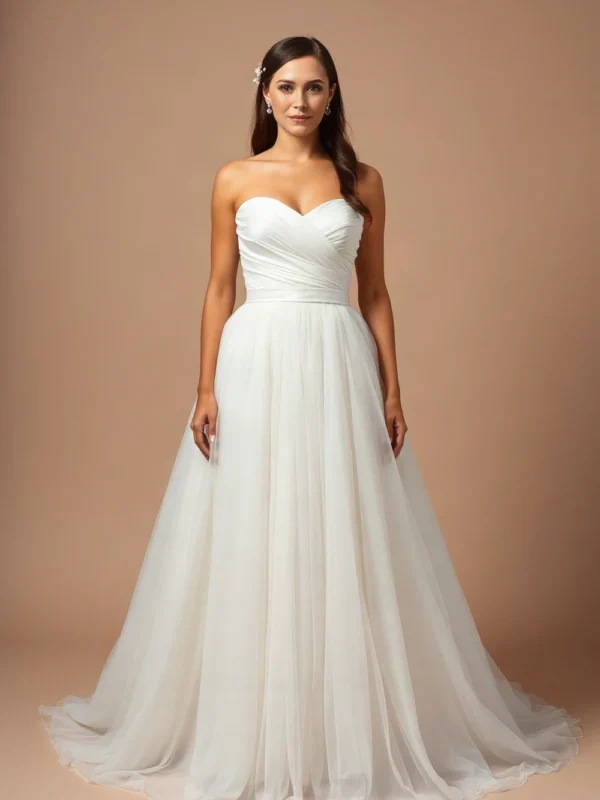
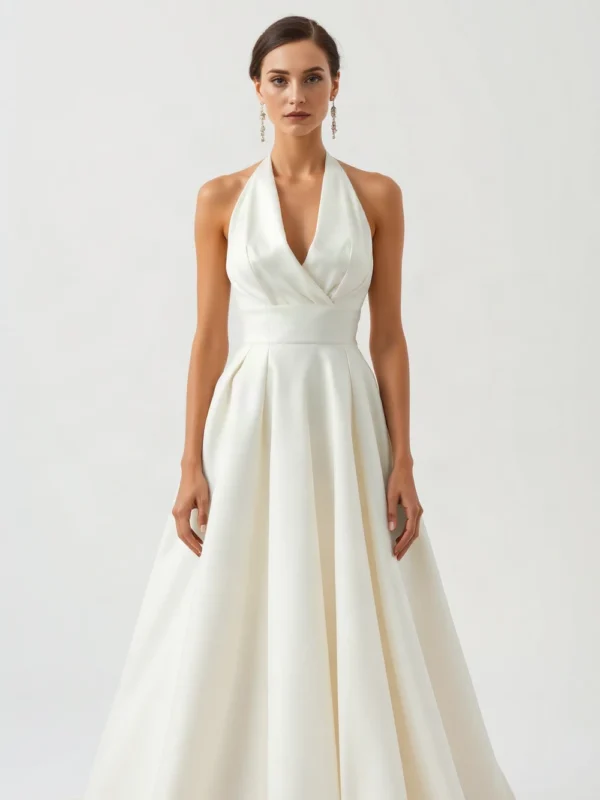
The third and fourth dresses create shape through directional lines. Crossover ruching makes the strapless bodice appear soft and layered, while the halter panels form a continuous V from the neck toward the waist. A fine, airy-looking skirt gives the ruched design more movement. Large controlled pleats make the halter version feel more architectural.
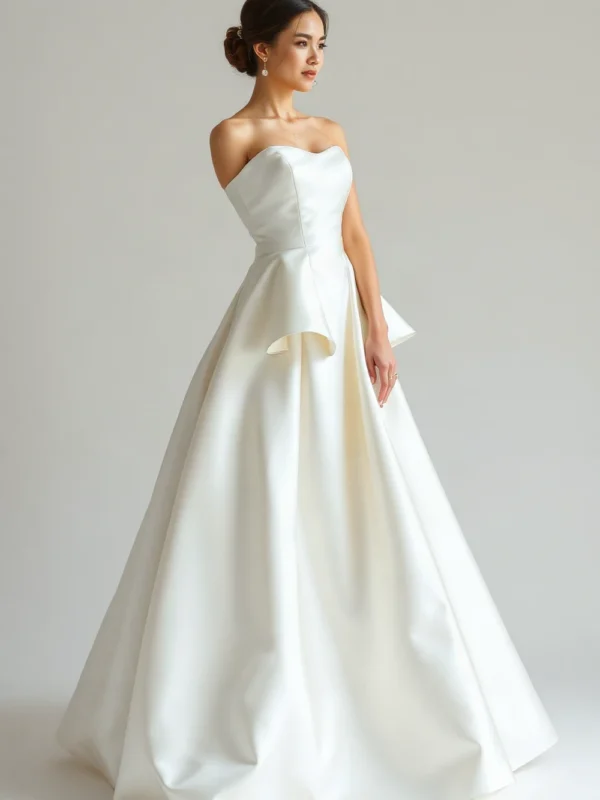
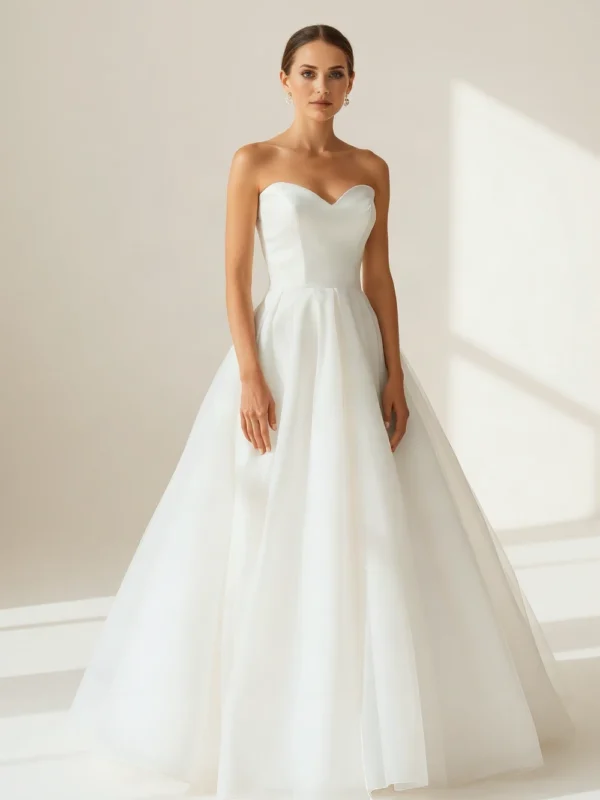
The final pair presents two versions of restraint. On the fifth dress, a short projecting peplum creates a sculptural step between the clean bodice and full skirt. The sixth removes that intermediate feature: shaped seams, a gentle sweetheart edge and small waist folds establish the transition without applied ornament.
When comparing them, follow each line from neckline to waist rather than judging the neckline alone. Vertical routes can lengthen the upper body visually, horizontal bands emphasize the waist, draping adds softness and a peplum adds localized volume. During a fitting, test sitting, arm movement and the rear view as carefully as the front so that comfort supports the chosen effect.