Choose a princess dress by deciding how much skirt volume you want before settling on its neckline, sleeves and accessories. The six colourful references show different ways to combine a pronounced upper section with broader skirt areas. They can help you name visible style preferences. The internal layers, fibre content and possible alterations of an actual product require confirmation from the garment and its seller. An impressive outline in a picture does not establish those properties.
Dark blue-green with pale ornaments, a wide navy skirt and a grey-brown dress with an emphasized front area offer different overall shapes. The gold-looking and green references are shown in closer crops; the blue-and-pink look adds another colour contrast. Some features suggest historical styling, but the pictures establish neither a production date nor historical authenticity. Treat them as visual ideas for a present-day choice and decide which details belong in your own event and wardrobe.
1. How much skirt volume should the princess dress have?
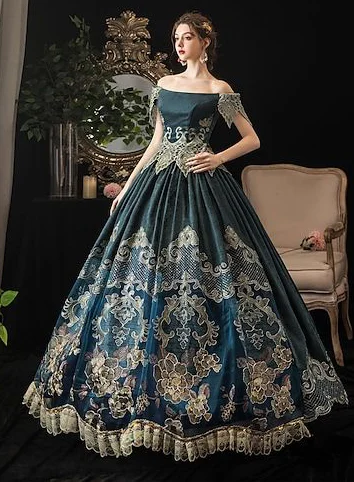
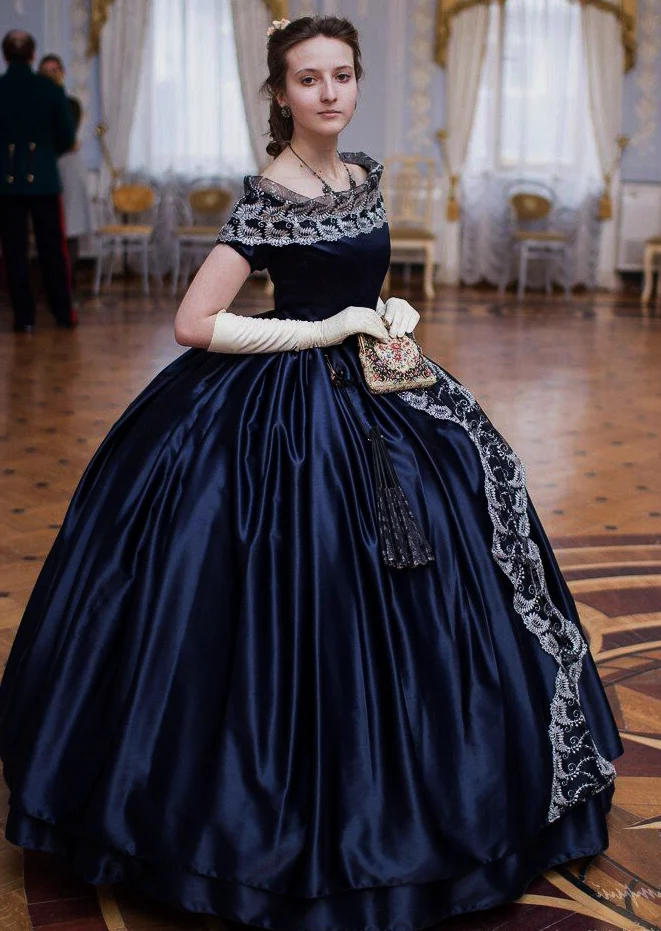
Start with a reference whose lower skirt edge is visible. The blue-green dress places pale ornaments in broad zones across a clearly spreading area. The navy example emphasizes larger quieter surfaces beside a decorated side panel. Compare these effects before concentrating on a single piece of jewellery. The width you see is an observation about the picture, rather than a circumference measurement or proof of how easily a real dress moves.
Maggie Sottero describes the ballgown silhouette through a fitted bodice and full skirt. That is a useful shape description, rather than evidence about the hidden layers of our references. At a fitting, ask which layers belong to the dress and which additional pieces are actually intended. Walk in that complete arrangement. Also check the space beside a chair and where you would guide the skirt when getting up, instead of relying only on a stationary mirror pose.
2. Which neckline and sleeves do you want together?
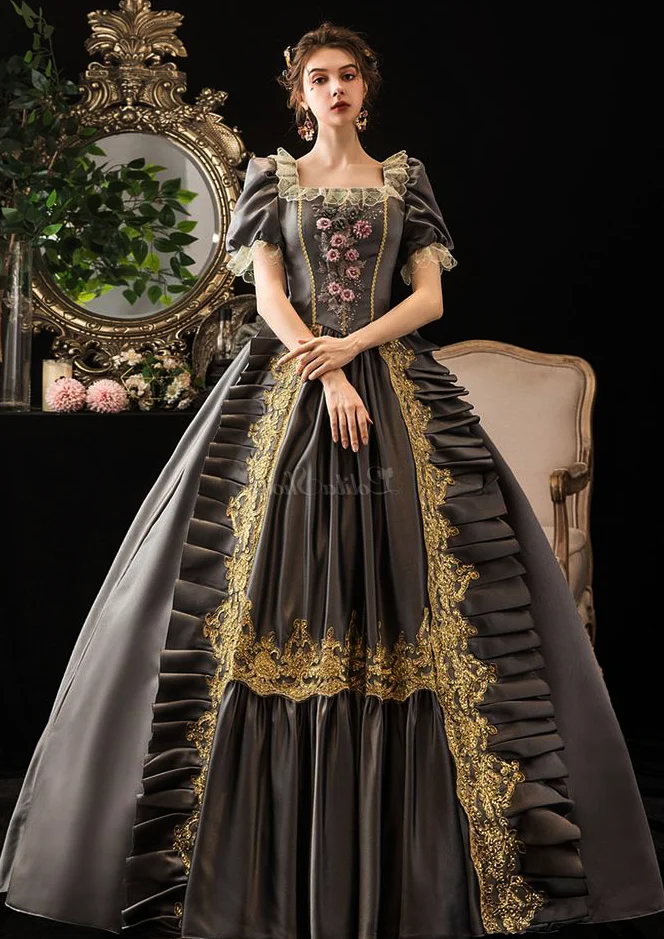
The straighter open shoulder line in the blue-green reference frames the upper body differently from the squarer neckline and short puffed sleeves of the grey-brown dress. Consider the neck edge independently of the skirt decoration: temporarily set the lower part aside and identify the upper outline you prefer. A wider sleeve, a bare shoulder and a higher decorated edge occupy different areas beside hair and earrings. None needs to be assigned as a compulsory choice for a particular body shape.
Try the sleeves on the real garment while bringing your arms forward and holding a bag. If the pronounced bodice is your main interest, the distinction between a corset appearance and confirmed construction offers a useful comparison. Visible vertical lines alone do not establish adjustable lacing or support. Tell the adviser which edge you want and describe an observed movement, rather than assuming an internal structure from the picture. This makes your request more precise and easier to discuss.
3. Where should patterns and ornaments draw attention?
The blue-green dress distributes pale motifs across larger skirt zones. In the grey-brown example, gold-looking edges frame a central front area, while flowers mark the boundary between colours in the blue-and-pink reference. Choose one of these arrangements as a starting point. They differ through more than the amount of decoration: your eye may travel across the skirt width, along a vertical boundary or toward the centre. Identify that direction before adding another competing decorative feature.
Return from a close detail to the whole visible shape. A narrow crop can make a small area seem like the main feature even when it occupies only part of the complete garment. Ask how the surface of the actual model is made and how a proposed alteration would affect its pattern. A reflective or raised-looking area does not verify metal, handwork or a particular fibre. Keep the visual impression and confirmed product information separate, especially when a construction detail influences your buying decision.
4. How should you compare colour and shine?
First compare two colour groups, such as dark blue with pale decoration and green with a ruffled brown neck edge. Then bring in the strongly reflective gold-looking close-up. The full hem and parts of that skirt are outside the frame, so use it to discuss the upper surface rather than the whole silhouette. A dark background and a bright room also create different viewing conditions. Do not attribute every difference between those pictures to the garments themselves.
At a fitting, place your intended jewellery beside the actual material and view the combination from a similar distance. If you want to explore a more open centre or another neck shape, the keyhole neckline comparison offers a different question about the upper area. Borrow the decision process without automatically copying a complete styling arrangement. You can keep your own colour preference when the shape, rather than its colour, is what interested you in the reference. Naming that priority helps each later accessory choice make sense.
5. How will accessories and movement work with the complete look?
Long pale gloves and a small patterned bag are part of the navy image. They are not automatically required or included with any similar-looking dress. View your own garment first, then add one accessory at a time. Hold the bag as you would when arriving, greeting people and sitting. You can then see when it covers front decoration and whether another carrying method would suit the hand movements you actually plan to make.
Separate skirt width from length behind the body as well. A wide skirt and a long trailing section do not necessarily need the same handling; the wedding dress train guide provides a complementary comparison. Ask concrete questions about doors, steps and the intended seating arrangement while trying the real model. Establish the event expectations directly with the hosts. A costume-like or historically styled reference can suggest a look, but it cannot promise that a specific outfit meets a dress code.
6. What should you confirm before ordering, alterations and care?
Write a short selection rather than collecting conflicting details. Record the intended skirt volume, neck edge, sleeve shape and main decoration separately. Then request actual product information and an explanation of possible alterations. Have the included pieces identified. If a change affects a decorated front area or hem, discuss its expected appearance on the complete dress rather than considering only the isolated measurement. That is a different decision from choosing the picture that first attracted your attention.
Record the agreed work, its cost scope and the date of a final fitting. Use the same shoes and relevant accessories that helped you assess the length. Decide on cleaning and treatment from the finished product’s own label; GINETEX explains the care symbols used on such labels. Keep the gallery as an organized visual reference, alongside confirmed information. It cannot replace material details or a chance to test the actual garment with its complete accessories. Combining those sources of information gives you a clearer basis for the final choice.
Choose the skirt volume of a princess dress first. Then compare neckline, sleeves and decoration on the actual garment, and assess the complete combination while walking and sitting.
Frequently asked questions
Does a princess dress automatically need a hoop underskirt?
No. The outer width does not establish its internal construction. Ask which layers and additional pieces are intended for the actual princess dress, then try that complete arrangement.
Can I plan a princess dress in the same way for a costume evening and a gala?
Check each event’s expectations directly with the hosts. A historically styled princess dress can provide an idea, but the suitability of the specific garment and accessories for the requested dress code needs its own decision.
What should an alteration quote for a princess dress explain?
Record the affected areas, discussed result, work scope and final fitting date. Establish how any change to the princess dress would affect a decorated front area or the pattern along its hem.



Thoughts on this article