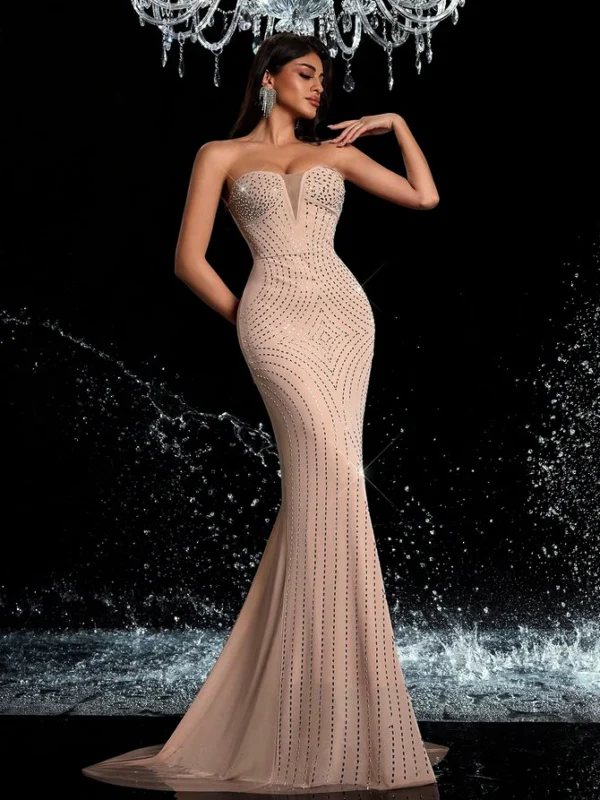
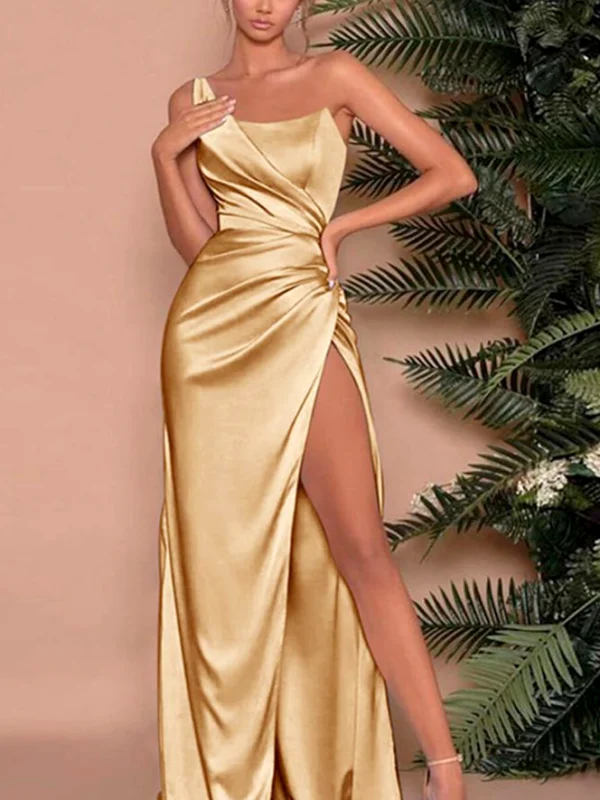
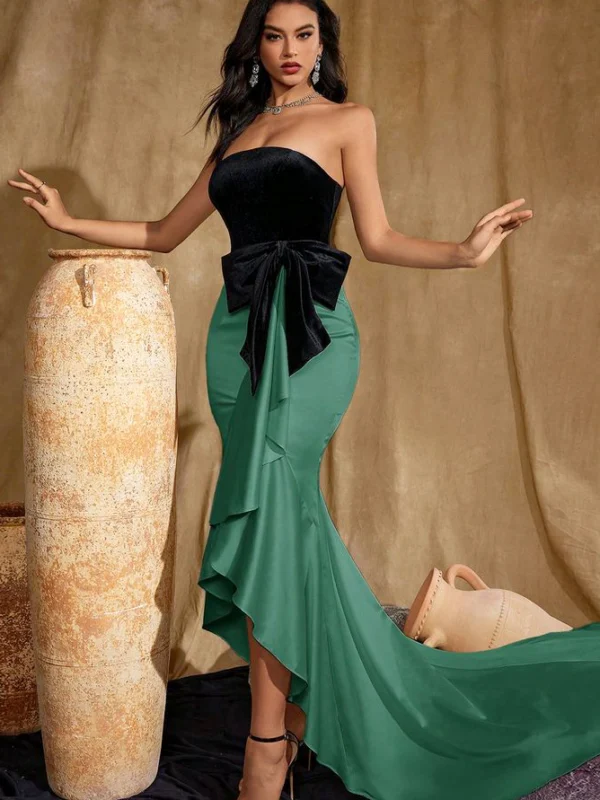
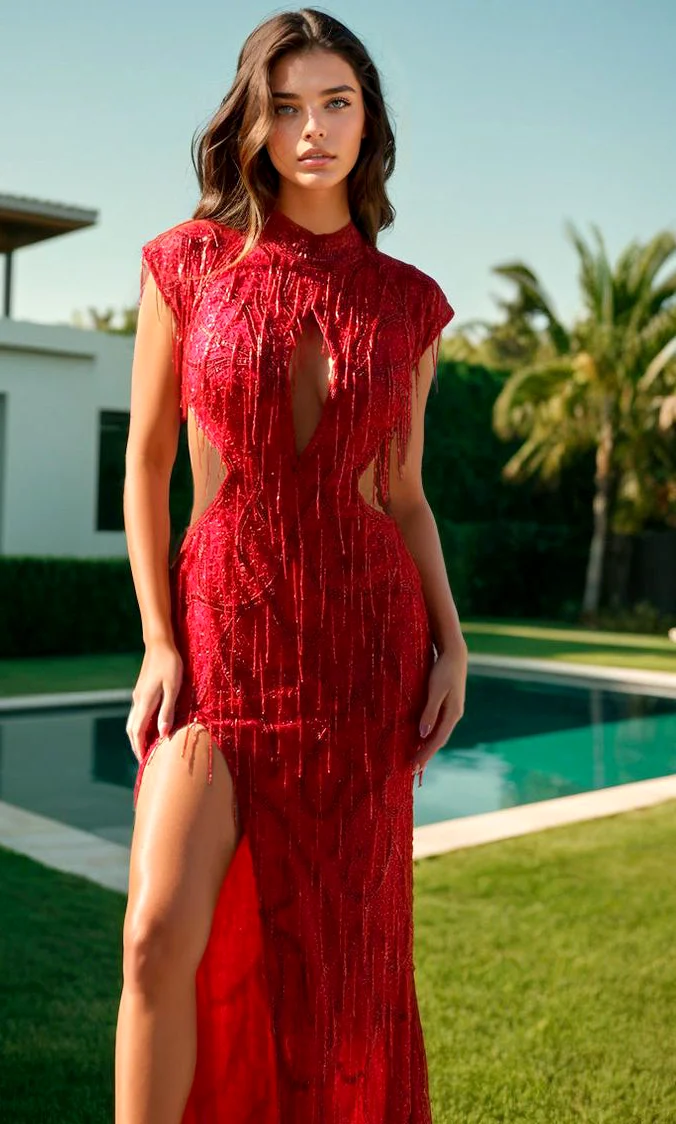
A keyhole evening dress combines a high neckline with a separate opening below it. In the leading red example, that front opening is elongated, with short sleeve sections, side waist openings and long hanging details alongside it. Three other references show an open upper edge or a V. Compare the position you want at the bodice first. You do not need to adopt every additional opening and decoration at the same time. This selects a specific evening dress for your planned outfit rather than simply a striking individual photograph.
The term describes a neckline arrangement, rather than a particular material or fixed skirt silhouette. As a separate product example, David’s Bridal describes a high-neck A-line gown with keyhole openings. Our red reference instead shows a fitted shape. Use the term when searching, then check the opening’s actual position on your preferred dress. For an open back as well, the backless party dress guide extends the assessment of rear coverage.
Distinguish the keyhole evening dress from an open V
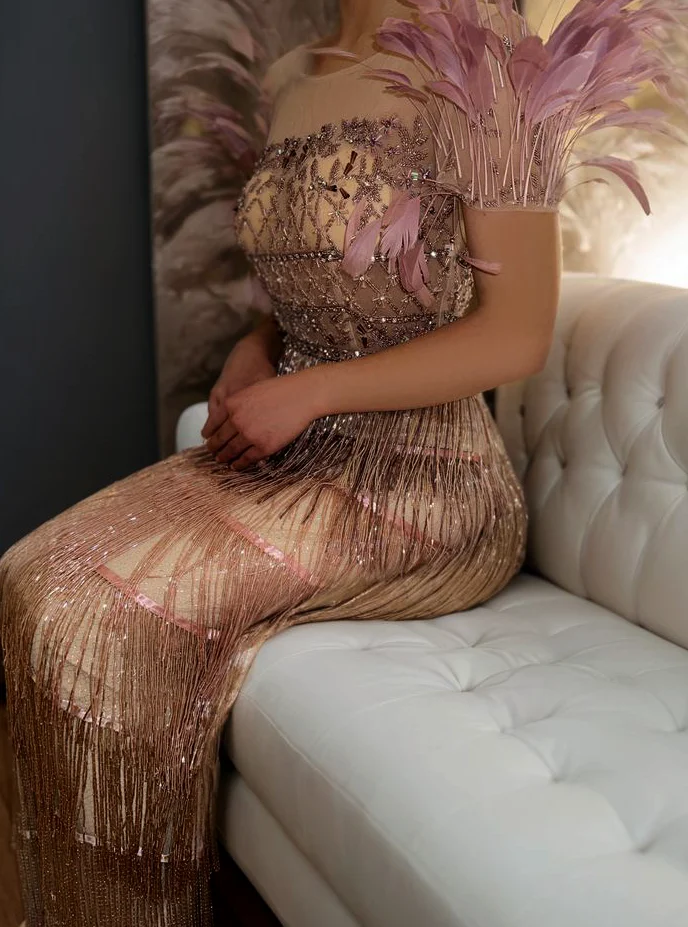
Follow the red dress’s outer upper edge. It stays closer to the neck while a longer open centre sits below it. On the grey-looking long V example and shorter silver-coloured comparison, the actual front edge opens downwards. The seated pinkish gold-coloured reference instead has an open upper chest edge with larger feather-like side details. These differences help describe a high frame separately from an open centre. Choose which line you want on your own dress before comparing the amount of decoration across it.
Request a clear front view of a candidate without hair or a hand over the opening. Then assess its own side and back. Describe the desired width and length of the open area specifically. A similarly decorated surface is no substitute for the right neckline. If you want the opening changed, discuss the real possibility on the product. A shared red or reflective colour does not explain either that alteration or the fastening of the higher upper section, so those details need separate product information.
Choose the front opening separately from waist and slit
The main example has further openings beside the waist and a high side leg opening in addition to the centre. These are separate decisions. You can like the upper keyhole and want less bare waist or a different skirt. Mark which opening should remain and which you want changed for a consultation. The cut-out evening dress guide expands the independent selection of side openings. Here the higher neck border above the front centre remains the focus.
Try the actual version with the intended underlayers. Assess the coverage you want standing normally first, then sitting and reaching your arms forward. Choose which visible edges appeal and which you want changed. If you prefer a more covered area, request a genuinely available option rather than assuming an unseen insert from a red close-up. Establish whether the altered combination can actually be provided on the model. A description such as “similar but more covered” leaves the important places unresolved unless you identify precisely which area should change.
Compare earrings and necklace beside the higher edge
Start with earrings and no additional necklace if you want to see the opening’s shape clearly. Compare a longer and shorter pair with the same dress and hairstyle. Look from a little distance at whether the jewellery ends sit beside the edge or overlap it. A larger earring may appeal, but does not need to fill the whole bare area. Choose its visible position rather than searching for a supposedly required jewellery size whenever the fabric is higher near the neck.
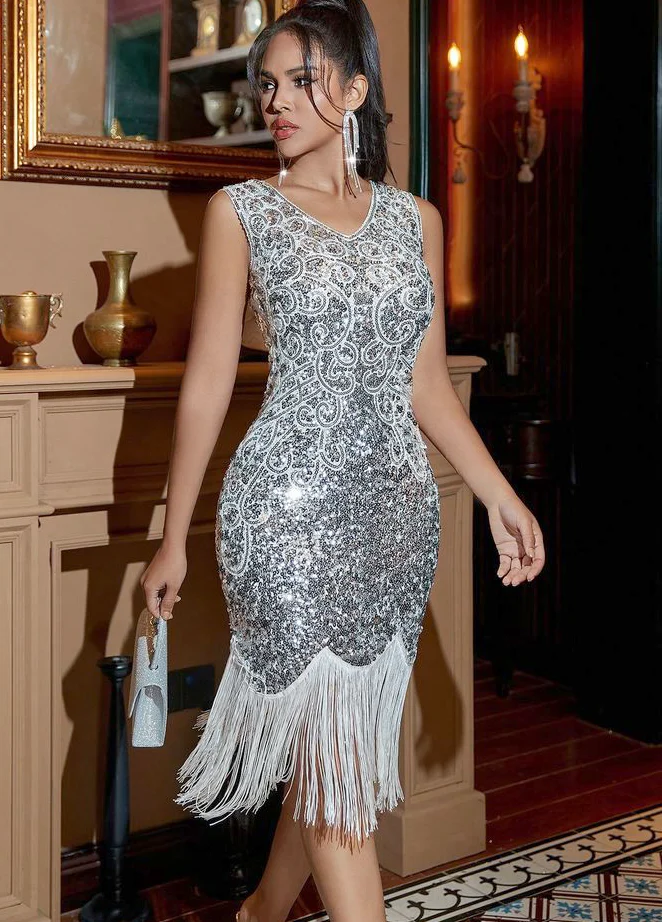
If you want to add a necklace, wear the real piece and assess its position against the opening. Decide whether fabric edge and necklace should remain separately recognisable or whether you like their overlap. Do not change the earrings simultaneously. The shorter V reference shows long pale earrings and a small bag; it supplies another choice rather than a ready-matched necklace for the red dress. Turn your head and look from the side during your trial. This makes the selection about your own upper outfit rather than an isolated jewellery photograph.
Test hanging decoration with bag and outer layer
Numerous narrow hanging details continue across the red bodice and skirt. The shorter comparison places longer pale strands mainly at the hem, while the long grey model has several horizontal bands. Choose how much moving decoration you want alongside the upper opening. For a wider comparison of those positions, the fringe evening dress guide helps. An appealing neckline does not require the same amount of decoration at every skirt section; you can look for a quieter lower area if you prefer.
Bring your intended bag and jacket to the fitting. Hold the bag in the planned hand and try opening, closing and setting it down. Put on and remove the outer layer where fitting conditions allow. Observe the actual edges and hanging details that meet during those actions. Choose the handling you enjoy. The seated reference’s feather-like forms do not establish a material or a universally suitable jacket. The specific combination needs to work with your garment and movements rather than relying on another image where different decoration and sleeves are arranged differently.
Assess neckline and skirt length while sitting
The seated reference shows another way to view a bodice when hands are together on the lap. Use it as a prompt to assess your own dress sitting down. Check the distance between higher neck edge and opening without deliberately pulling your shoulders back. Stand and compare again. You can like the front shape standing yet prefer another position when seated. Describe the specific difference you want to discuss on the actual piece rather than requesting an unspecified better fit from a photograph alone.
Choose skirt length separately. The shorter V example finishes with strands around the knee area, while the long grey model extends at the bottom. The red leading image does not show the complete lowest edge. Have your own hem shown with your shoes. Walk several ordinary steps and sit again. A leg opening’s actual position belongs in that trial too. Do not borrow a heel height or length allowance from other references whose bodice and skirt are cut differently, even if their decorative surfaces look related.
Establish fastening and care for the whole outfit
Ask how the actual dress’s higher section closes and how to put it on. Try that sequence before finalising hair and jewellery. Plan help specifically if you want it. A front photograph does not show the rear fastening. Changes to the opening or hanging details also require an explanation on the available model. Establish which pieces and work are genuinely included so the neckline you describe and the complete version you can wear correspond to one another.
Before cleaning or pressing, the specific product information matters. GINETEX explains care symbols; your label remains decisive. The keyhole evening dress is deliberately selected when you have tried the front opening, remaining coverage and actual accessories together. Add the real skirt length and a tested outer layer. The noticeable upper centre can then remain a wanted part of your evening outfit whose use you know, rather than a detail that appeals only in one particular photographed stance.
Choose a keyhole evening dress by the width and length of its front opening first. Select waist and slit separately, then test underlayers, jewellery, sitting and an outer layer on the real dress.
Frequently asked questions
Can the size of a keyhole opening be altered?
Establish this on the particular dress. Show which edge you want repositioned and request an explanation of the alteration actually offered before assuming it is possible.
How should I choose jewellery beside the higher edge?
Compare longer and shorter earrings without a necklace first, using the same dress and hairstyle. Add a necklace separately and assess its position against the opening.
What should I bring to the decisive fitting?
Bring the intended underlayers, shoes, bag and any planned jacket. You can then assess the neckline as part of your complete outfit.