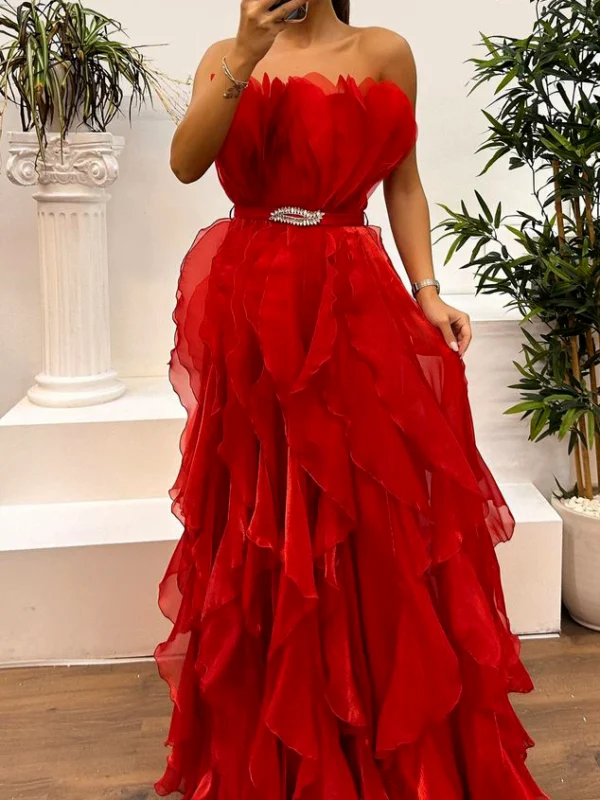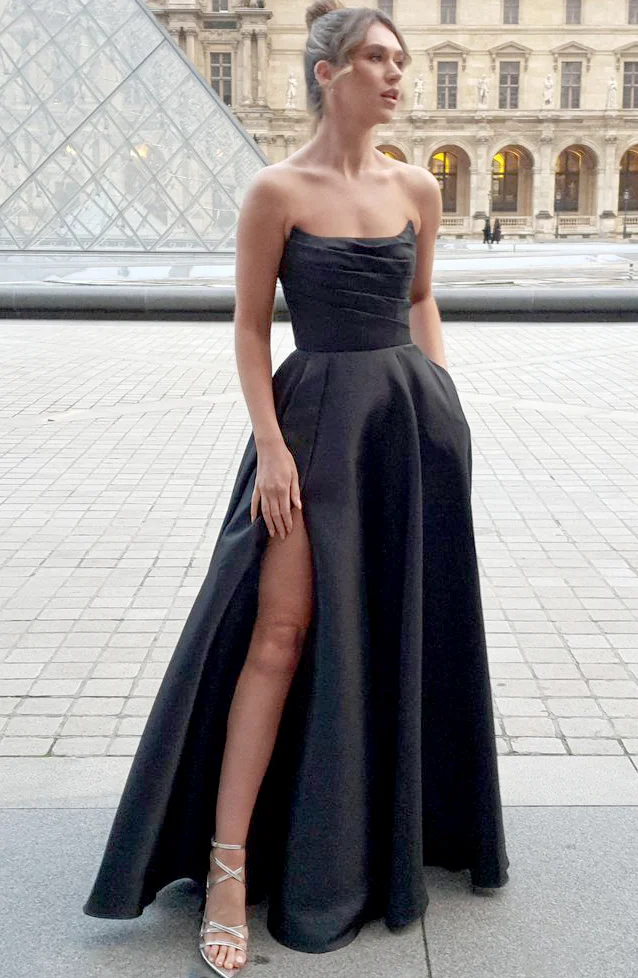
A corset-look evening dress draws attention to the bodice and waist, but the visual effect alone does not establish how the garment is constructed or supported. Some dresses suggest the effect through seams, contrasting panels or the outline of the neckline. Judge the real construction at a fitting and ask the seller which features the actual model has.
Our three references compare a black floor-length dress with a slit, a pale blue dress with a full skirt and a green dress with sheer-looking panels. The gallery describes what is visible. It does not verify brand, price, fibre content or availability. Use the images to identify a shape you would like to try, then make decisions from the garment itself.
Corset-look evening dress: separate appearance from construction
Begin by describing the visible design: a close-fitting upper section, a defined waist, an open shoulder line or vertical lines across the bodice. These observations help a stylist understand your preference. They do not establish whether a dress will hold its shape without straps or which underwear will be suitable.
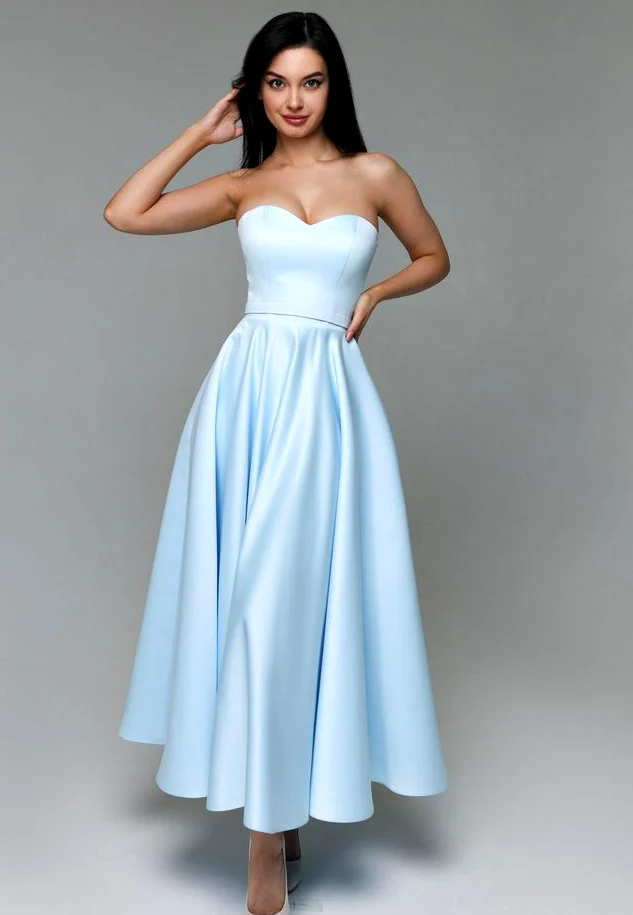
Ask how the bodice is intended to fit and fasten, whether any cups or internal support are present, and which alterations are realistic. If an assistant uses the word corset, clarify what that means for this model. A decorative corset effect and an independently adjustable corset are different things. Avoid choosing a smaller size merely to intensify the visual effect.
Compare three different silhouettes
The black reference pairs a close strapless-looking bodice with a long, wide skirt and an opening that reveals one leg. Its main contrast is between a defined upper section and the movement of the lower section. For a similar dress, check the slit while standing, walking and sitting; its appearance can change considerably with a pose.
The pale blue look has a heart-shaped neckline and a fuller skirt with the ankles visible in the image. The smoother-looking bodice offers a quieter visual reference. Try different necklace and earring options before deciding that the open neckline needs more decoration. Your preferred balance may come from leaving the neckline uncluttered.
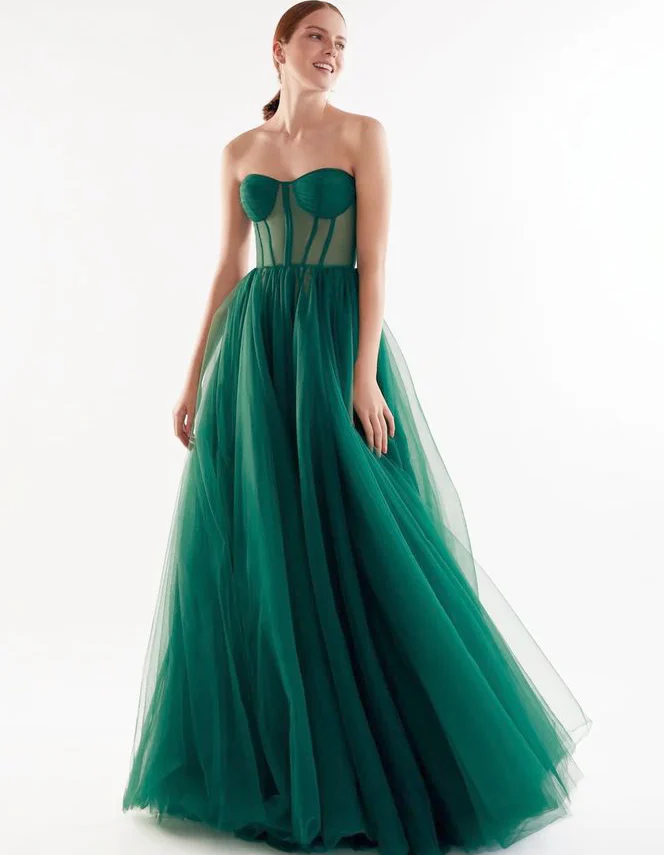
The green dress makes vertical lines and sheer-looking areas part of the focal point. A full skirt extends from the waist. Compare the same combination in daylight and indoor light, using the underwear intended for the event. The photograph cannot confirm the presence or extent of lining.
Use a movement-based fitting
Stand naturally with your shoulders relaxed before assessing the neckline. Walk, turn, sit and reach forward as if greeting someone across a table. Notice whether you keep adjusting the upper edge or whether any area feels restrictive. Describe the exact movement to the fitter so that a proposed adjustment addresses the problem you actually experienced.
Stay seated long enough to evaluate how the waist and bodice feel. Try the shoes or a similar heel height when checking the hem. If you expect to dance, test ordinary movements rather than an exaggerated pose. A comfortable fitting does not guarantee every moment of an event, but it gives you better evidence than a stationary mirror view.
Match the dress to the invitation
Read the invitation before choosing accessories. A dress that feels right for a relaxed celebration may not meet a specified formal dress code. Debrett's describes black tie as formal evening wear with its own conventions. If an invitation uses an unfamiliar term, ask the host how it applies to that event rather than assuming that a shiny fabric resolves the question.
Keep the setting in mind as well: outdoor routes, stairs and a long period at a dining table may influence the hem or outer layer you prefer. These are practical choices, not universal rules about which colour or silhouette is permitted. Confirm event-specific expectations directly when they matter.
Choose accessories in stages
Start with one focal point. For an open neckline, compare statement earrings without a necklace against a simpler earring-and-necklace combination. With visible bodice lines, a quiet bag and shoes can let the construction-like detail remain central. Use the complete outfit rather than evaluating each accessory against a different dress photograph.
Check the length of a necklace while sitting and turning your head. Try a jacket, wrap or other outer layer over the actual bodice so that you see the full effect. A layer that looks good on a hanger may cover the defining neckline. A small bag should also work with the way you intend to carry it throughout the event.
Assess colour and transparency consistently
Compare options in similar light and from a similar distance. A close image of a pale blue neckline is not a fair comparison with a distant, warmly lit picture of a black gown. If photographs are allowed, take matching front, side and back views. Record the lighting and the shoes used when they affect your judgement.
Look at sheer-looking panels with the actual lining and underwear. Ask whether adjustments change the visible pattern or seam placement. Do not infer comfort, opacity or a particular fibre from the surface alone. A fabric can photograph with a satin-like shine without the image establishing its composition.
Agree alterations before the final decision
List the proposed changes: hem, upper edge, waist, fastening or any additional lining. Ask which are possible, what they cost and when the final fitting takes place. A change to one part can affect the proportions of another, so discuss the whole dress rather than requesting several isolated fixes.
Keep the order details and care information together. Read the actual garment's label; GINETEX explains the symbols used for textile care. Never assume that a dress with decorative panels can be washed or cleaned in a particular way solely from its appearance. Confirm the appropriate treatment for the complete garment.
Leave the fitting with useful notes
Write down which neckline stayed where you wanted it, which movement felt comfortable and which question remains open. Include total costs and the alteration timetable. These details help you compare dresses without letting an attractive pose determine the whole decision.
The linked gallery gives each reference its own detail page, with visible features and fitting questions. Move between the three looks to compare the bodices and skirts separately. The aim is a dress that fits your event and your preferred style, supported by information about the real garment.
A corset look describes an appearance first. Verify support, fit and alterations at a fitting, and choose the complete outfit with the invitation in mind.
Frequently asked questions
How can I tell whether a corset-look evening dress actually provides support?
Visible seams, a close-fitting bodice or sheer-looking panels on a corset-look evening dress do not establish support. Ask about the actual construction, fastening, any cups and intended fit. Assess the bodice while walking and sitting instead of choosing a smaller size to intensify the appearance.
How should I assess the slit in a long corset-look evening dress?
Compare the slit in a corset-look evening dress while standing naturally, walking and sitting. Turn and try familiar dance movements if you plan to dance. Check the hem with your intended shoes; a single photograph does not show where the opening sits during those movements.
How can I compare jewellery with an open or sweetheart neckline?
Try earrings without a necklace first, then test your preferred combination. Notice where a necklace sits when you are seated and how it moves as you turn. Add your jacket or wrap to the actual dress and check how much of the neckline remains visible.