Princess ball gown wedding dresses share a full-skirted foundation, but one dramatic detail can change how the silhouette is perceived. A black sash from waist to floor draws the eye vertically; one-shoulder draping redirects attention to the face and shoulder line. Cascading tiers amplify movement, gold-toned motifs add ceremonial intensity, a front slit opens the volume, and an off-the-shoulder band balances the upper body with a horizontal frame.
These six concepts show how one category can shift between restrained and ornate, symmetrical and asymmetrical, or closed surfaces and active openings. Rather than naming one feature universally best, consider how neckline, waist, skirt, train and setting work together. A useful comparison should also test sitting, walking, turning, arm movement, and how the front and back register in photographs.
Graphic Contrast Designed for the Back View
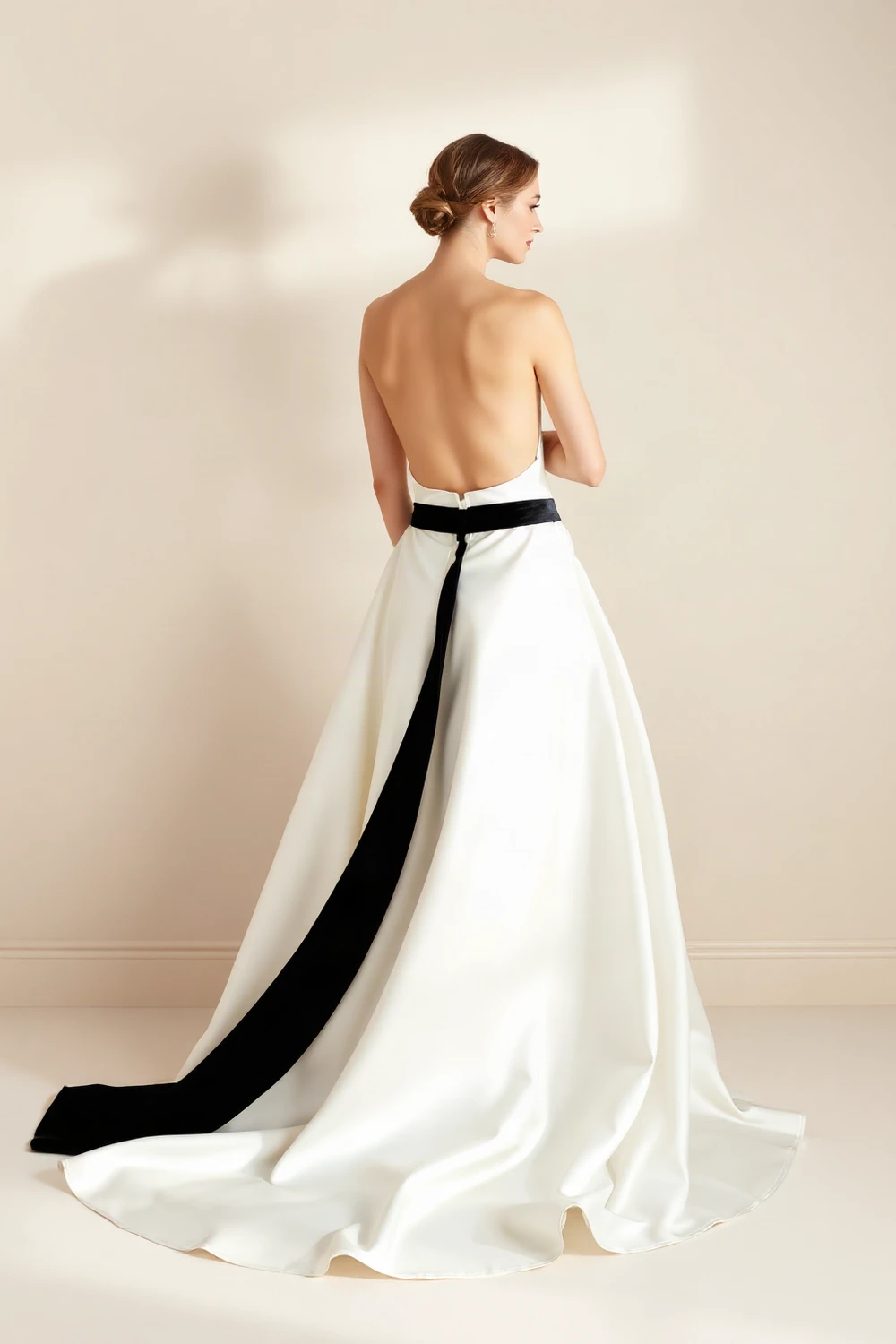
In the first look, the broad, uninterrupted white skirt is divided by a black waistband and a long tail extending down the back to the floor. The exposed back lightens the upper section, while the dark vertical line leads the eye from waist to train. It suits someone preferring one distance-readable gesture to scattered ornament.
Although concentrated behind the wearer, the unseen front must still connect convincingly with the contrast. The gown will appear from the front for much of the ceremony, then from several angles while walking and in photographs. Test the dark tail on steps, through an aisle and while dancing. It is bolder than the sixth gown’s tonal motifs, yet more controlled and graphic than the third look’s cascades.
Balancing Volume with One-Shoulder Draping
The second gown balances a substantial skirt with a restrained surface and one-shoulder bodice. Draping travels diagonally from the covered shoulder across the bust, creating direction before a horizontal waistband cleanly stops the line and transitions into the full skirt. Without visible surface ornament, line and proportion provide the main design information.
The asymmetrical neckline already creates a focal point near the face, so a necklace is optional. Earrings or a cleanly arranged hairstyle can keep the diagonal unobstructed. During fitting, ensure the shoulder stays positioned when the arm lifts and the open side feels secure. The skirt is less active than the slit design, but attention moves toward the shoulders. For anyone who finds tiers or dense motifs excessive, it offers a quieter, architectural princess silhouette.
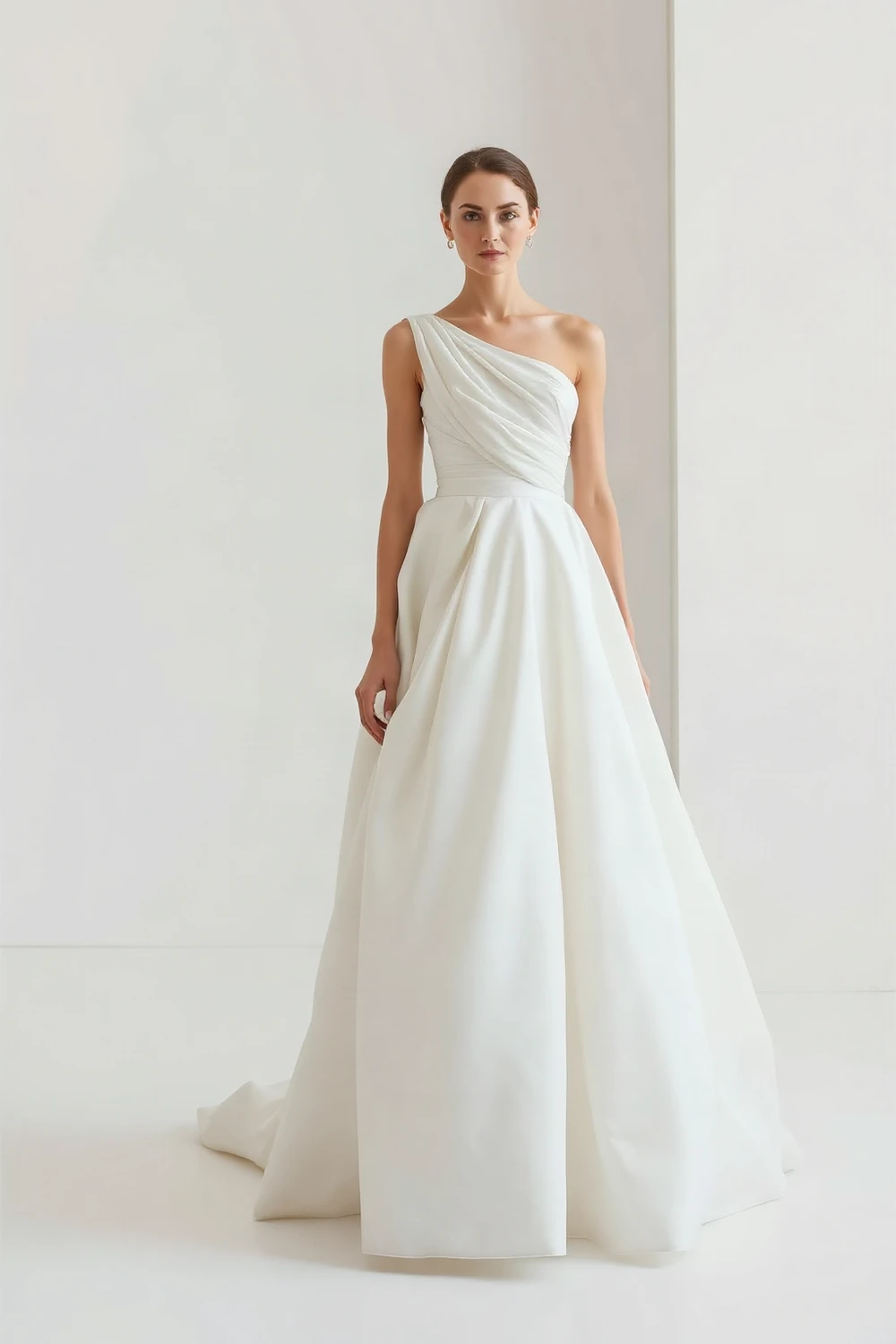
Creating Flow with Cascading Skirt Tiers
The third image pairs a strapless sweetheart neckline and plain bodice with a skirt carrying most of the movement. Tiers starting at different heights create diagonal routes across the front and side, while the long train extends their flow across the floor. Sunset light catches the fine edges, making the layered effect more pronounced in the image.
Judge a tiered skirt in motion as well as at rest. Check whether lower edges approach the shoes, how the layers behave on steps and how much space they occupy when seated. Compared with the second gown’s smooth skirt, the lower half is a much stronger focal point, so restrained accessories can keep the sweetheart neckline and active skirt from competing. For an outdoor ceremony, observe how light layers respond to moving air, not just a still fitting-room pose.
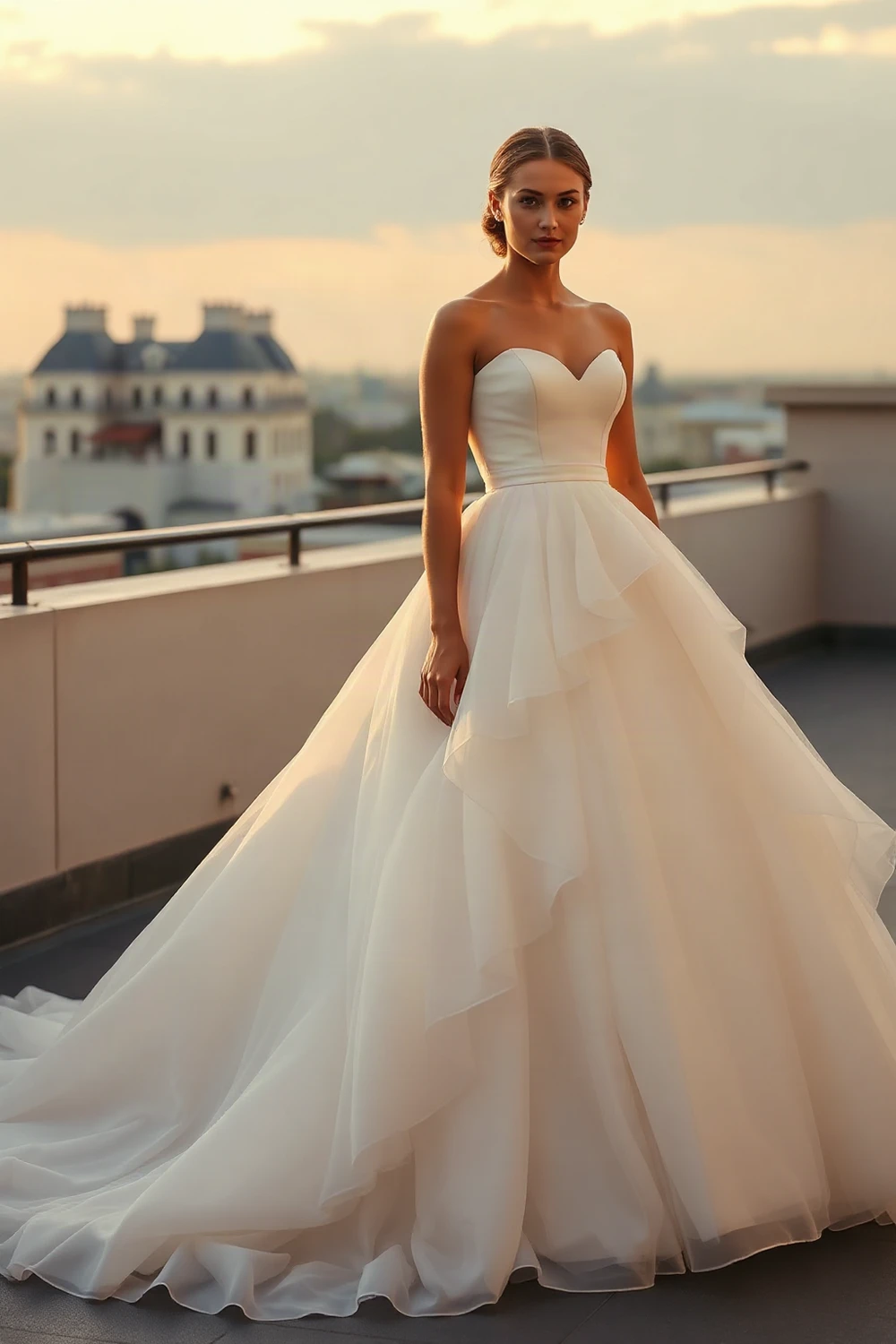
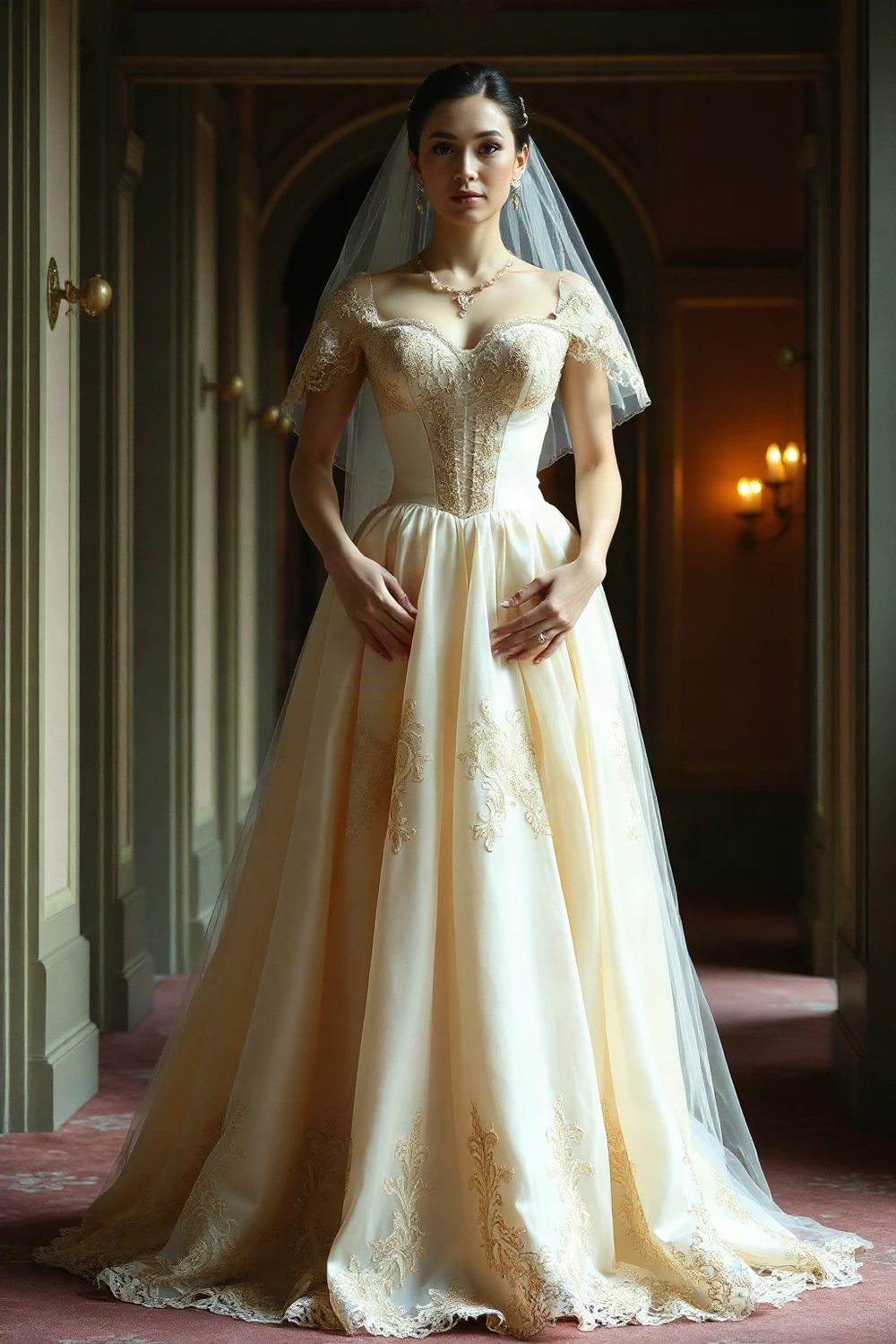
Gold-Toned Motifs Across a Champagne Ground
In the fourth design, warm champagne color, gold-toned motifs and a dark corridor create a rich play of light and shadow. Vertical lines through the structured bodice visually lengthen the waist, while detailed areas frame the neckline. Ornament disperses through the skirt’s middle before intensifying near the border, creating rhythm without covering the full shape evenly.
Consider this detailed bodice together with a veil, necklace and earrings. One principal emphasis near the face can feel more balanced than competing accessories. Because the warm color may appear creamier or more golden under different illumination, assess it under more than one light source. Unlike the sixth gown’s quietly repeated pattern, this design has defined zones of intensity, helping the bodice and decorated hem remain legible in wider photographs.
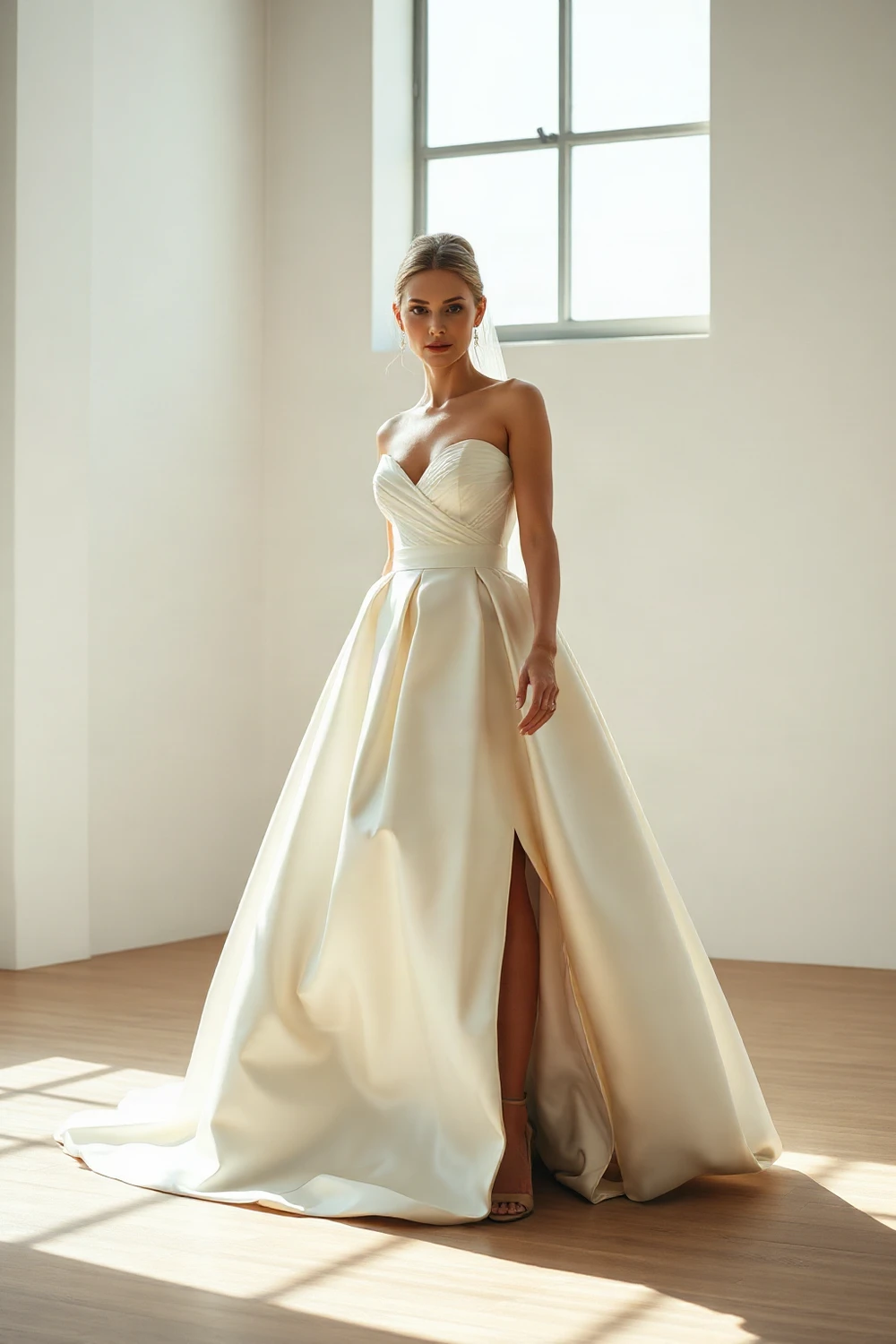
Opening a Full Skirt with a Front Slit
The fifth concept pairs a strapless, draped sweetheart bodice with a broad, smooth skirt. Large folds preserve princess volume, while a front slit breaks the closed surface with one vertical opening. The step and shoe become visible, and directional sunlight in the room emphasizes each fold’s depth.
Assess the slit while moving, not only standing: exposure changes when sitting, climbing stairs, taking a longer step or dancing. Since the shoe is visible, its color, straps and heel shape join the composition. Where the third gown creates motion through layers, this design uses a cleaner, directed gesture. Neckline and waist draping already give definition, allowing limited additional decoration. At a fitting, confirm that the desired ease of movement works with the full skirt’s scale and weight.
A Quiet Pattern Beneath an Off-Shoulder Line
In the sixth look, a broad off-the-shoulder band horizontally frames an inner sweetheart neckline. Below the narrow waist, the skirt expands cleanly, gaining depth through pale floral motifs rather than the first gown’s black contrast or the fifth gown’s slit. Keeping the pattern close to the base color creates calm continuity despite the decorated surface.
Arm movement is the key fitting consideration. Raise the arms, carry a bouquet, embrace, sit and dance to see whether the band remains comfortable and correctly placed. Because the motifs read quietly from a distance and more clearly nearby, venue scale and intended photography matter. Less contrasting than the fourth gown’s warm gold-toned detail and far softer than the black sash, this look suits someone wanting princess volume and interest without one sharply dramatic accent.
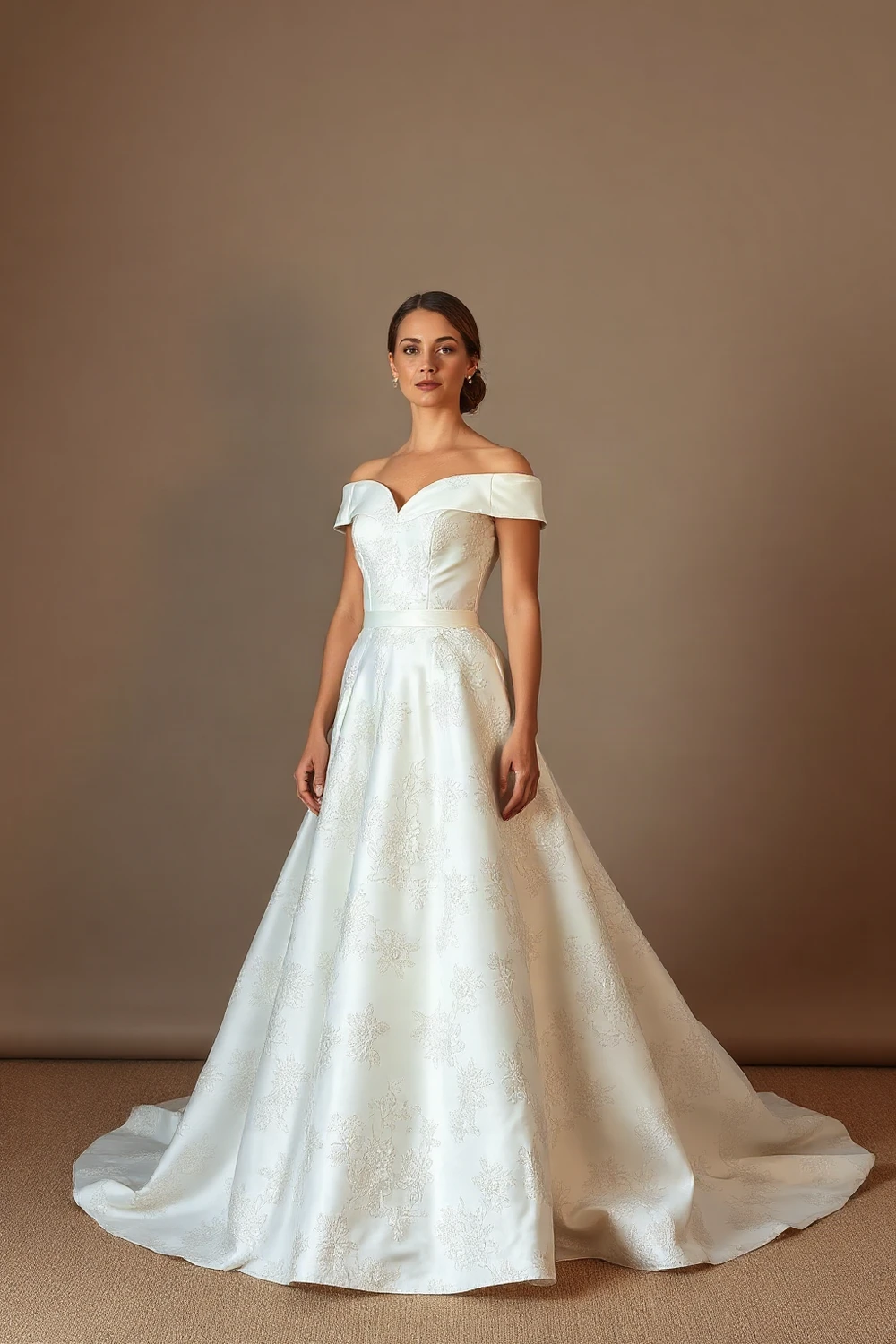
The most useful distinction among these examples is not simply skirt fullness, but where attention concentrates: the black sash prioritizes the back; one-shoulder draping, the upper body; tiers animate the skirt; gold-toned motifs enrich the surface; a slit reveals the step; and an off-the-shoulder band frames the neckline.
To build a short list, choose the area you most want visible, then assess that feature with venue lighting, accessories and required movement. Do not view a gown only from the front while standing. Photograph the front, side and back; sit, walk, turn and raise your arms. This process tests whether a dramatic visual idea can become a balanced, personal choice throughout the day.
Compare how a black sash, one-shoulder draping, cascading layers, gold-toned motifs, a front slit and an off-the-shoulder band transform a princess ball gown silhouette.
Frequently asked questions
How should accessories be balanced with a black-sash ball gown?
The sash already creates a strong graphic focal point. Keep earrings and hair details restrained, and if another black accent is introduced, repeating it in only one controlled place can preserve the clarity of the look.
Does a one-shoulder bodice need a necklace?
Not necessarily. The asymmetrical neckline already directs attention around the face. If a necklace is used, test a short, simple option that does not cross or compete with the diagonal draping; earrings alone may be sufficient.
How can I choose between cascading tiers and a front slit?
Tiers distribute movement across the skirt, while a slit creates one opening that highlights the step and shoe. Walking, sitting and stair tests will reveal which approach feels easier to manage.
Under what lighting should gold-toned motifs be evaluated?
Compare them in light close to daylight and under dimmer illumination similar to the venue. Warm and cool sources can change the apparent color and contrast, especially in photographs.
What should be tested when fitting an off-the-shoulder ball gown?
Raise your arms, embrace, carry a bouquet, sit and simulate dancing. The band should remain positioned, preserve the neckline and avoid restricting ordinary upper-body movement more than expected.