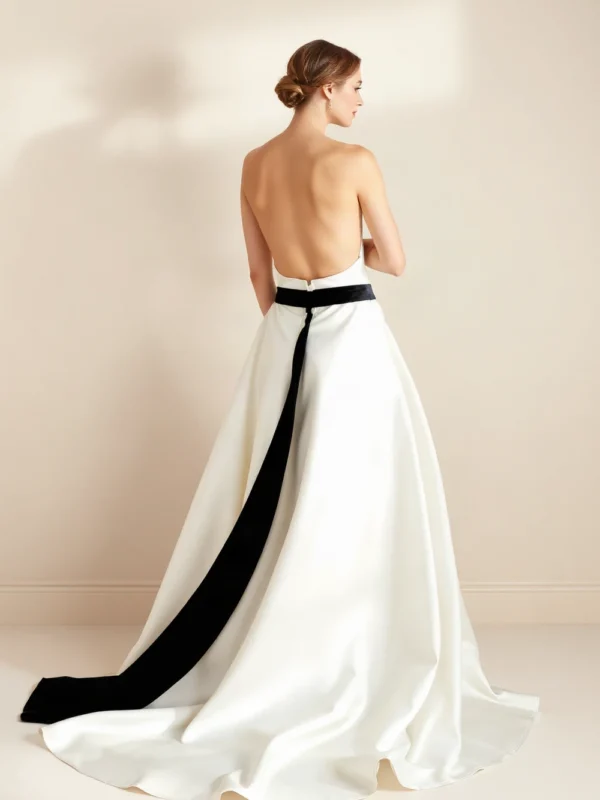
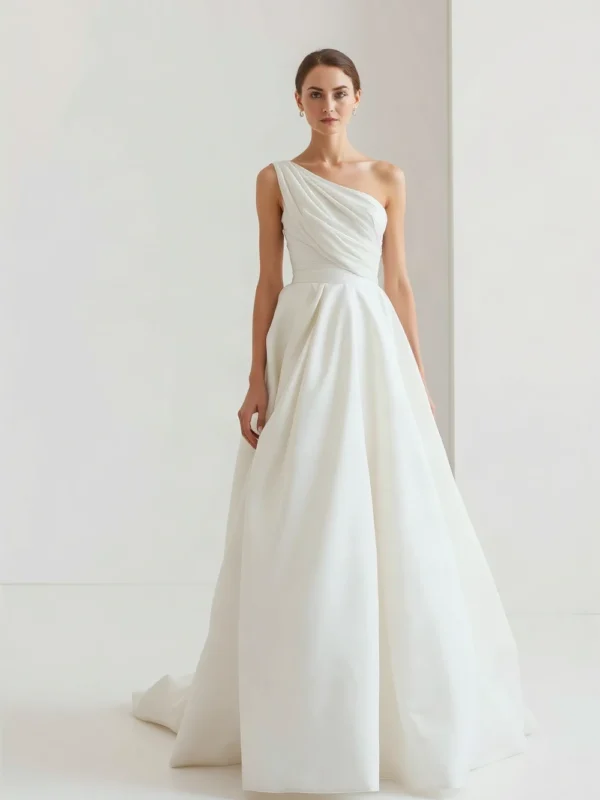
The shared foundation of this gallery is a defined waist opening into a full princess skirt. The impact, however, does not come from volume alone. The long black sash in the first image creates sharp graphic contrast, while the diagonal one-shoulder draping in the second feels quieter and more architectural.
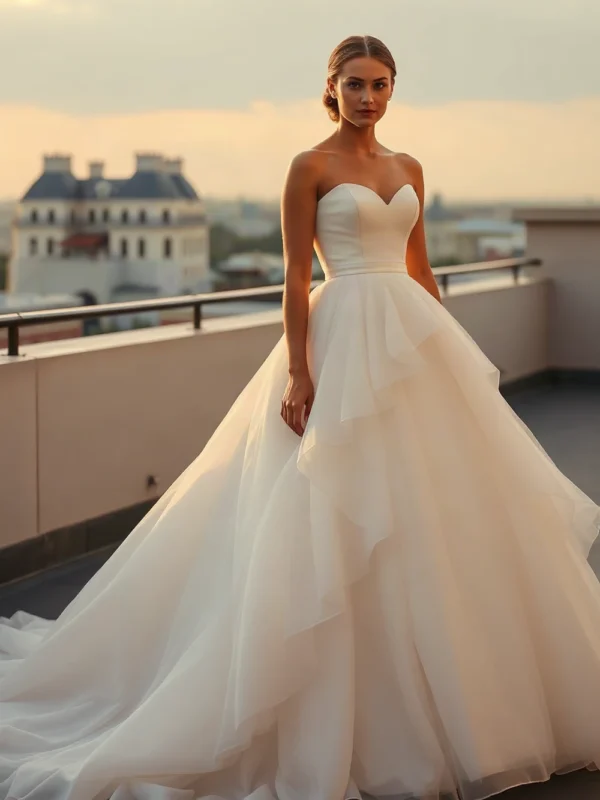
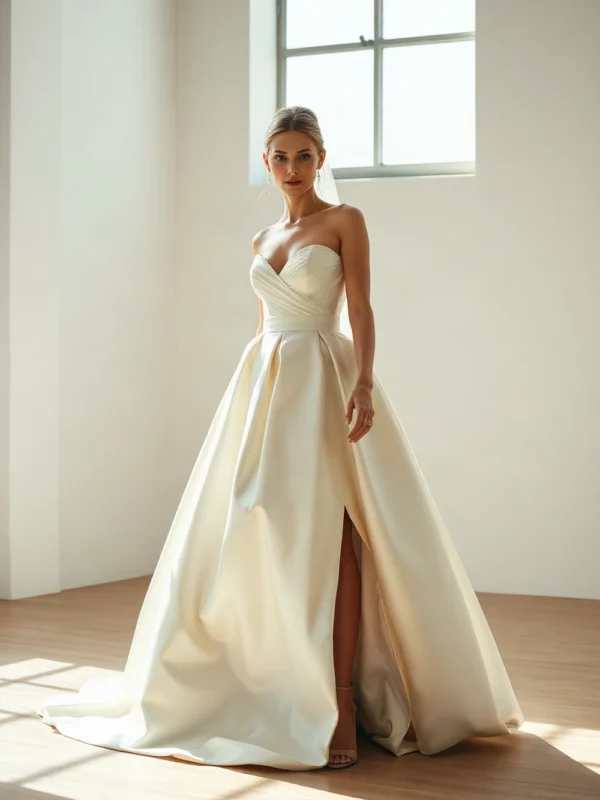
Movement takes over in the third look, where soft tiers descend from different heights across the skirt. Sunset light outlines their edges and emphasizes the flow. The fifth image also introduces movement, but its focus is a front slit and deep folds rather than a sequence of overlapping layers.
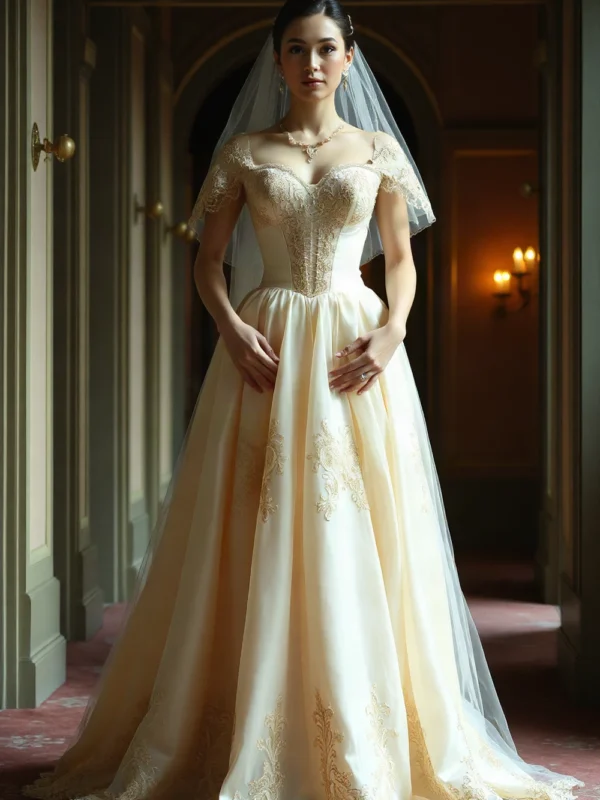
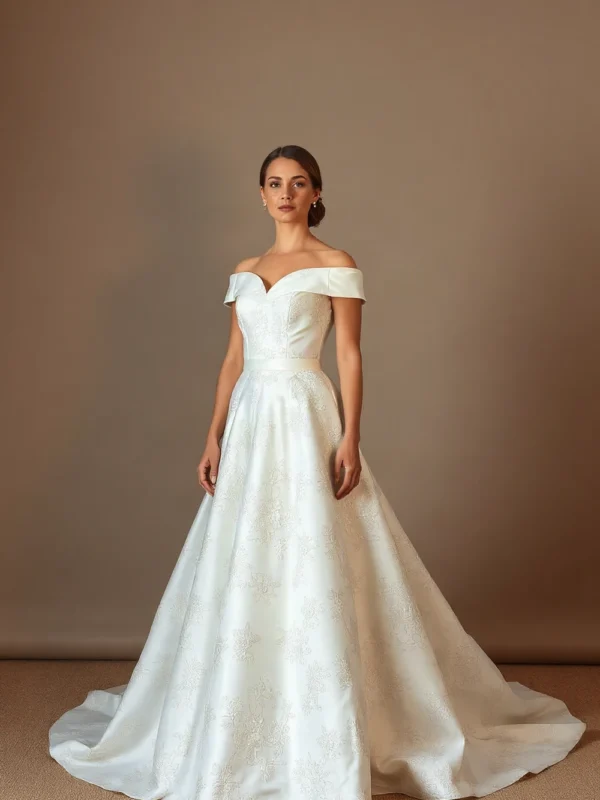
The fourth and sixth designs offer a useful surface comparison. Gold-toned motifs are concentrated around the structured bodice and hem of the warm champagne gown. In the sixth look, pale floral patterning spreads more evenly across the dress, producing a subtler tonal effect that becomes clearer at close range.
Necklines change the character just as strongly. The one-shoulder design creates decisive asymmetry. The third and fifth gowns use strapless sweetheart lines, whereas the folded off-the-shoulder band in the sixth image forms a broad horizontal frame. Short, motif-rich shoulder sections add further detail around the neckline of the fourth look.
Consider how each feature will read within the setting, not only in a close view. Black contrast or cascading tiers can establish a strong focal point in a simple room. Tonal motifs may feel more balanced against an ornate interior. Before settling on a direction, compare sitting, walking and turning, as well as the front and back views that photographs will capture.