Compare plus-size wedding dresses through genuinely available trials rather than a size guessed from a photograph. Ask which desired models exist in which sample sizes before the appointment, and which versions can actually be ordered. These pictures supply ideas for necklines, patterns and skirts; their clothing sizes are undocumented. You do not need to derive your own size or a compulsory cut from them. Begin with two shape preferences and prepare an appointment where actual differences can be assessed under understandable conditions.
Arrange the trial before choosing plus-size wedding dresses
Send the boutique a small selection of specific model names or reliable references. Ask whether you can actually try those models and how the appointment will be prepared. Available sample size and orderable size are separate pieces of information. Confirm both. If a favourite is absent, request a real alternative sharing the particular feature you enjoy, such as an open shoulder line or broader skirt, instead of asking only for something similar.
The Maggie Sottero plus-size guide recommends confirming desired styles and exact sizing possibilities when booking. That concerns its own offering and identifies none of our pictures. The buying a wedding dress guide supports general preparation. Record which concrete question a sample should answer during your visit and which information can only be established on the version offered later.
Use measurements and model information before a familiar number
Have the consultant explain which measurements are taken for the candidate and which size chart applies. A familiar everyday clothing number does not provide a complete order description. Maggie Sottero notes that bridal sizing differs from everyday clothing and connects selection with measurements and the specific gown. Avoid importing a general conversion from another offer when the responsible person uses a different chart.
For a temporarily arranged sample, ask which areas are being held or adjusted. What can be assessed in that state, and what remains unresolved? Record the boundary explicitly. A sample can show a neckline without demonstrating the complete later fit. Request an understandable next step for the open question. This is more specific than assuming another ordered number automatically resolves every observation. Your preferences can remain the same while the limits of this particular trial stay clear.
Choose the silhouette without a body-type prescription
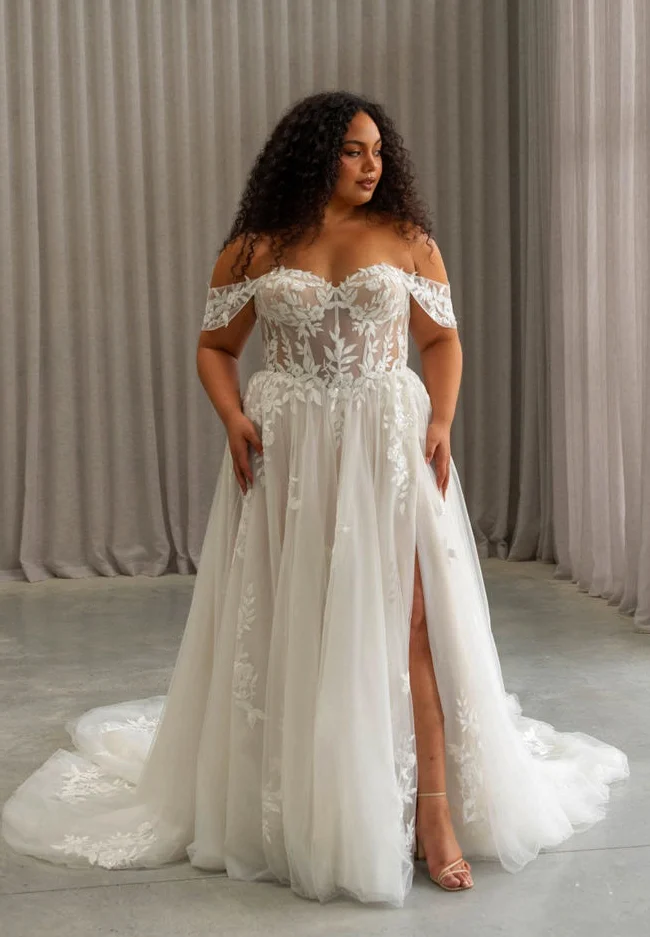
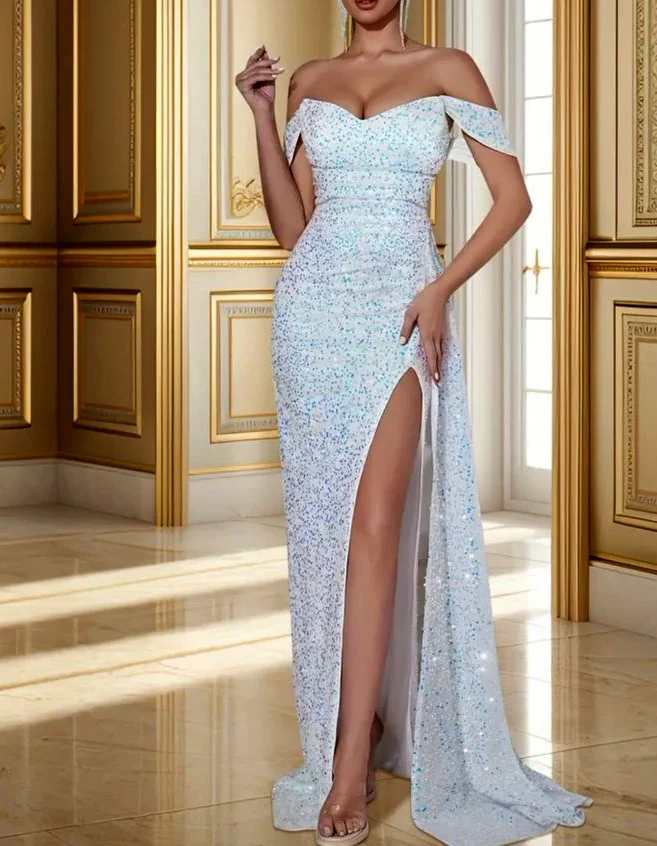
The pale floral front shows a broader lower course and a visible front opening. Another pale reference covered in small reflections follows the upper skirt more closely. Use those differences as shape ideas without assigning sizes to the pictured people or garments. Should the broader area begin at the waist or farther down? Should pattern continue over the whole skirt or grow quieter beneath? Select those features individually rather than expecting a general size label to choose them.
Compare two actual candidates with similar shoes and an unchanged bag initially. Stand normally, walk and sit. Describe what you want to see and wear instead of treating a body area as something that must be concealed. A broader skirt is no requirement, and a closer shape needs no special permission. The choice concerns your preference on the real dress. Where samples have been prepared differently, record that distinction beside your first impression and revisit it during a more comparable trial.
Establish coverage and inner components specifically
Curving rows of pale points travel over the bodice in the closer light-coloured example, while longer sheer-looking sleeves create another drawing. The broader floral front exposes more of the arms and places smaller motifs along lowered shoulder areas instead. Select the visible arm line first. The wedding dress strap guide adds connections passing over the shoulders. None of these visible lines can explain internal construction on its own.
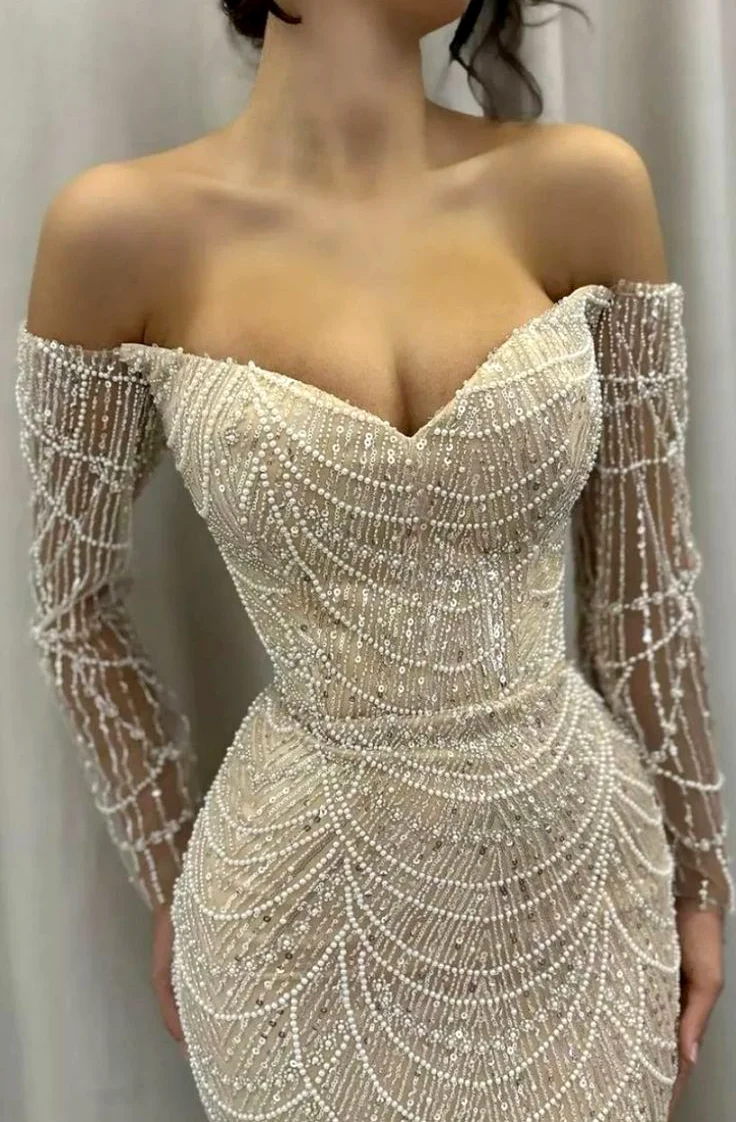
Ask for the actual candidate’s inner components and offered layers to be explained. Try the underwear you really intend to use rather than supplying an invisible solution from the reference. If more coverage appeals, request a confirmed version and inspect it on the dress. Dense pattern does not establish which underlying areas are closed. View the whole upper section with the same hairstyle afterwards, keeping the new layer identifiable as a separate change instead of changing every accompanying piece simultaneously.
Assess the complete outfit through ordinary actions
Bring the intended shoes and inspect the hem during a normal step. Hold the planned bouquet or a similarly sized trial object. Sit, stand and reach for the bag before rearranging the bodice. Is there a place you want to discuss? Show it specifically. Footwear visible through the pale floral reference’s front opening confirms neither the length nor the movement of another garment. Your own result belongs to the actual candidate and the actions you have tried.
Add jewellery and the outer layer after that baseline comparison. The bridal accessories guide helps distinguish emphasis around hair, ears and neck. The dark green one-shoulder and pinkish higher-necked pictures are further colour and shape ideas, not verified plus-size products or documented wedding outfits. You can enjoy one line while seeking another colour. Test that preference on an actual offer with its sizing possibilities established, without adopting the entire photographed garment as a package.
Record the version, order and next check
Summarise two favourites through the same information: model, intended version, actual trial state, proposed size and one unresolved question. Have an intended alteration explained on the particular garment. Which pieces are included, and what should become visible at the next fitting? Establish agreed services and dates through that offer. Our references supply neither fixed delivery times nor a universal alteration scope. Return to both candidates through the same question instead of substituting another model’s photograph for the missing answer.
Recheck the discussed area when the actual version is available. Use the intended inner pieces, shoes and actions again. For cleaning or ironing, read its real label; GINETEX explains care symbols. Your selection then connects personal shape preferences with confirmed model information. The plus-size label cannot replace those details or your own choice, and it need not prescribe a restricted selection of necklines and accessories. Further additions can be assessed against the complete outfit you have deliberately chosen.
For a plus-size wedding dress appointment, ask about actual models and sample sizes beforehand. Choose shape preferences without body-type rules and confirm size, version and alterations on the real offer.
Frequently asked questions
Can I take a plus-size wedding dress size from a reference photograph?
These reference photographs establish no clothing sizes. For plus-size wedding dresses, compare your actual measurements with the specific model’s size chart through the relevant consultant.
Must a plus-size wedding dress have one particular silhouette?
Plus-size wedding dresses require no single silhouette. Select the visible shape you want and compare actual candidates while standing, sitting and walking.
What should I ask when the sample is not the size I need?
At a plus-size wedding dress trial, establish which arrangement is temporary and which actual version can be ordered. Ask about a suitable further trial instead of inferring the later fit from an unsuitable sample.
Does a visible bodice line prove the required internal support?
Visible lines on plus-size wedding dresses explain neither their inner components nor their effect on you. Have the actual construction described and try the intended combination through your own movements.



Thoughts on this article