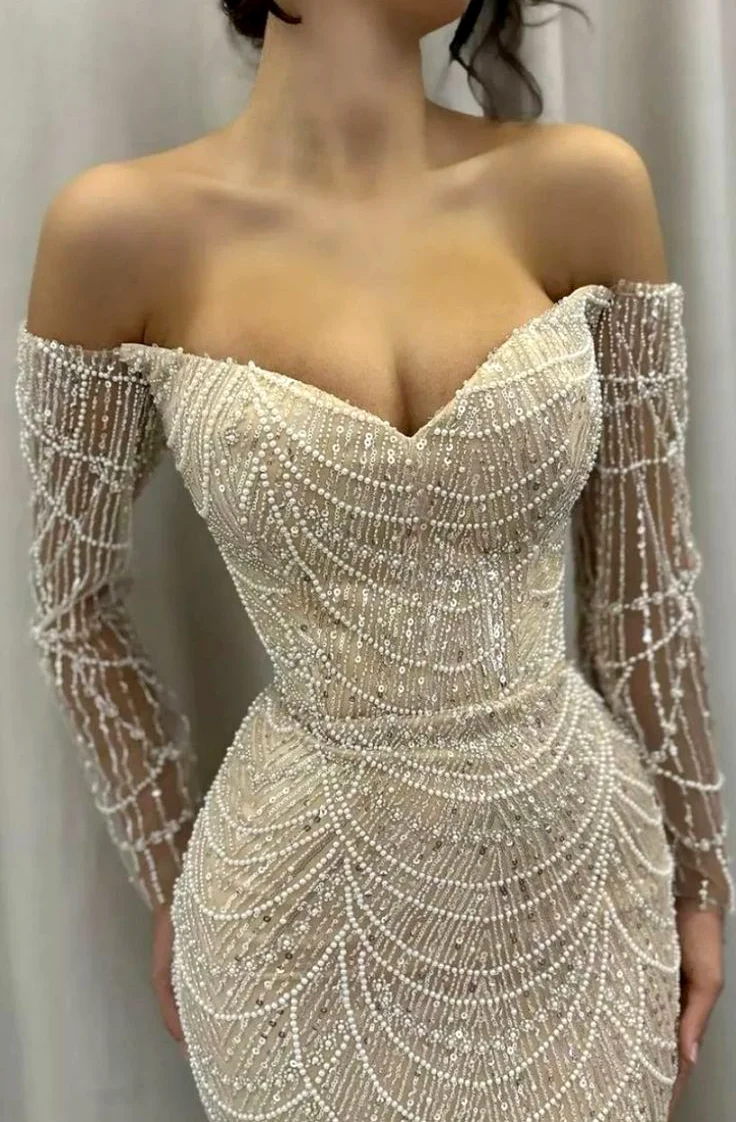
Curving point rows on a bodice form a dense pale drawing in this close view. The upper edge rests beneath exposed shoulders and deepens at the centre. Small rounded bright forms follow curves and diagonal directions across the front. Long sheer-looking sleeves add more distinct lengthwise and crosswise lines at the sides. Hands remain lower beside the body. The head, complete lower hem and shoes are not included.
Use the close view for a specific pattern question. Would you like similar rows across the whole upper area or larger gaps beside the arm? Inspect centre and sides separately on the actual dress, then step back to conversation distance. A close image can emphasise individual bright points without showing their place in the complete outfit.
Reach for an object during your trial and observe sleeve endings beside the hands. Have the offered inner components explained before deriving coverage from apparent transparency. The drawing confirms neither bead material nor particular support. A complete combination needs the whole view of this actual model.