An old wedding dress needs two separate decisions: do you want to wear this particular existing piece, and is its actual condition suitable for your plans? A romantic form or patterned surface alone answers neither question. The four pale references show different bodices, sleeves and lower lines. They establish no age, former ownership or historical period. Use them for visible preferences while assessing provenance and preservation independently on your actual garment. A desired appearance should remain distinct from a documented history, and a similar picture cannot complete assessment of the real piece’s present condition.
1. Establish what is known about the existing dress
Begin with information genuinely available if the dress comes from your family. Ask about earlier photographs, known alterations, remaining labels and its last use. Record what is documented and what remains a memory or assumption. Ask the same questions about the particular version when considering an offered secondhand garment. A personal story may matter to you without replacing a look at the present piece and all its components. Another photograph’s similar skirt cannot explain an offered item’s missing rear or inner layers.
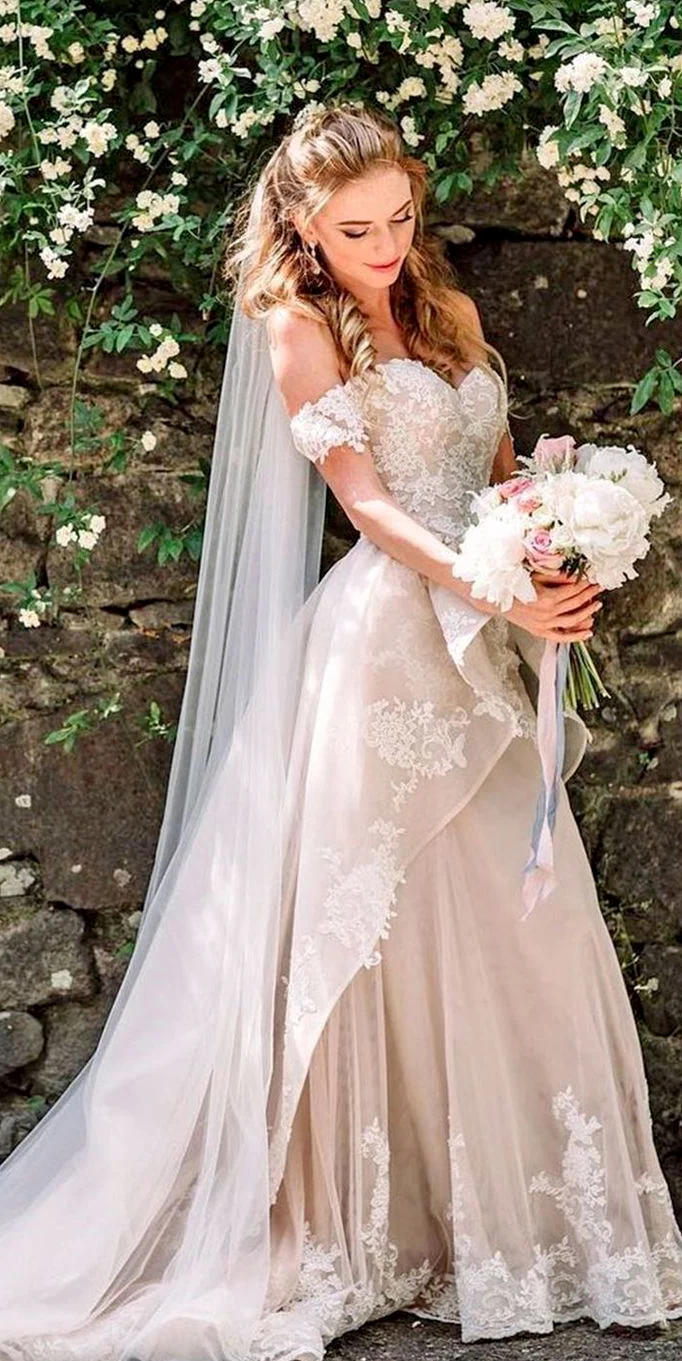
The four pictures supply no age evidence. A long veil, close bodice or floral surface may appeal without assigning a garment to a particular decade. Background architecture cannot date it either. Separate a search for older-looking shapes from the wish to wear a genuinely older existing garment. A new similar model may also become a candidate without being presented as a historical original. Establish which of those reasons actually matters most to your choice before narrowing the selection.
2. Assess condition before making a firm wearing plan
Have the actual piece shown completely, including rear, hem, interior and existing connections. Ask about visible stains, open areas and previous treatments instead of selecting only the most attractive front photograph. Professional assessment should precede a fitting or alteration order on a seemingly fragile or damaged garment. Another image’s immaculate pale surface supplies no information about the robustness of your genuinely old dress. Discuss intended use alongside present condition; a pictured shape cannot carry out that assessment.
The V&A’s guidance on caring for vintage wedding dresses notes that older stains can be difficult or impossible to remove. A textile conservator can assess possible treatment. Do not derive a home-washing recipe from that information. Establish realistic outcomes and limitations for your actual piece first. Desired lightening should neither be silently assumed nor inferred from a completely different pale garment in a picture. Keep an uncertain outcome distinct from agreed work.
3. Describe shape preferences without assigning age
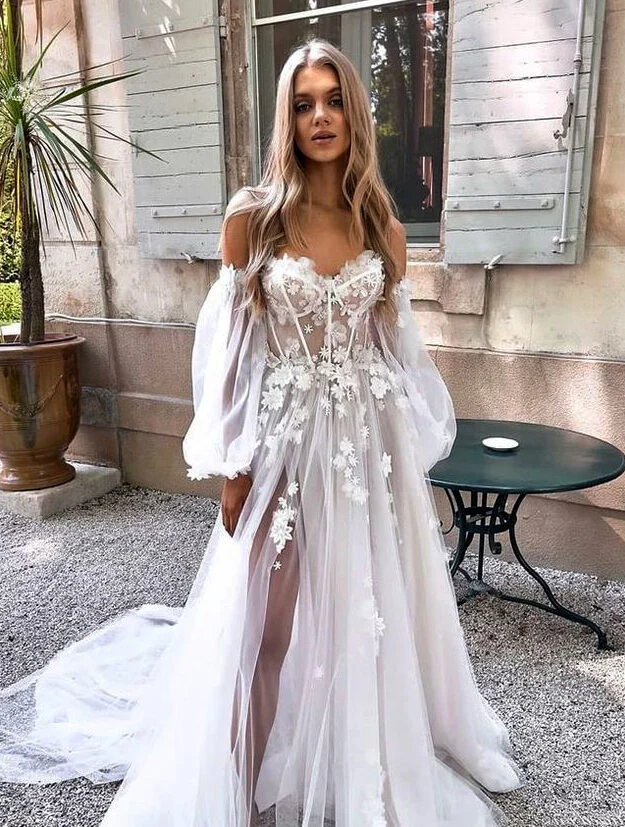
The bouquet reference shows low floral upper-arm areas, a long veil and a diagonally directed patterned outer border over a quieter skirt. Another picture joins low puffed sleeves to a fine-looking floral bodice and longer fabric on the floor. Record independently whether sleeve volume, upper height or drawing distribution appeals. None of those visible details proves an older or previously worn piece. You can describe the appearance you prefer clearly without assigning it a particular date or history.
The narrow-strapped picture instead uses many small silver-looking reflections and a closer lower line. The broad folded shoulder view combines a quieter outer surface with long finely patterned sleeves and an open front skirt area. The floral wedding dress comparison helps name drawing and transitions. Its material descriptions do not automatically belong to these photographs. Establish the selected piece’s actual composition separately rather than treating a similar lighting effect as shared fabric information.
4. Discuss possible alterations on the actual piece
Compare the garment with genuinely intended shoes and inner layers if its condition permits a fitting. Ask the responsible professional to assess specific alteration preferences directly on that piece. A narrower bodice, another sleeve shape or a new length initially remains a wish rather than a confirmed possibility. For a significant family garment, establish which existing features you particularly want preserved too. Prioritising these before commissioning work helps prevent different wishes from quietly conflicting with one another.
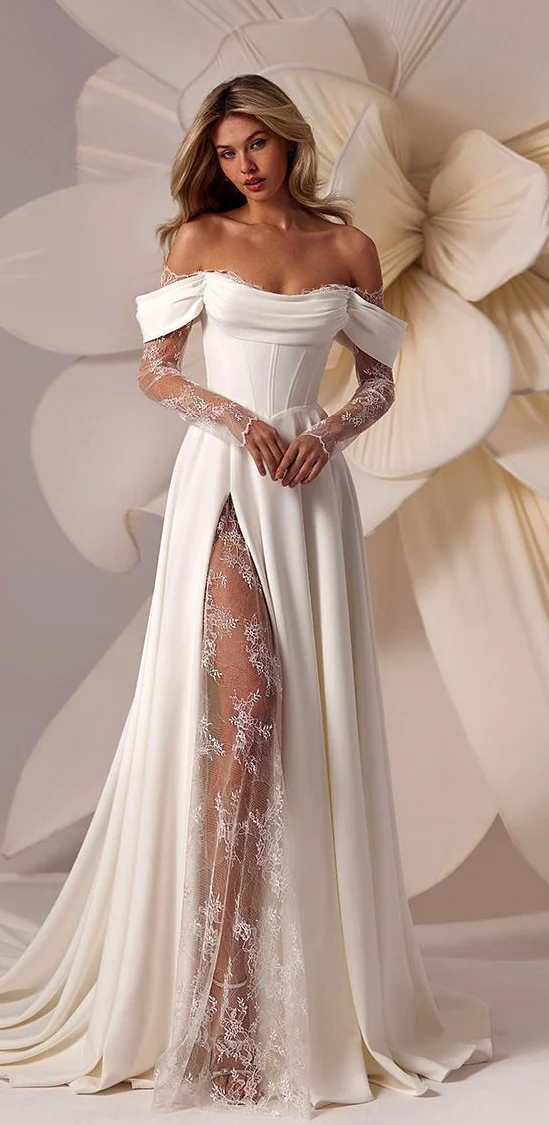
A close-up may show connections without replacing assessment of actual condition. Discuss the intended solution through the existing material and precise version. If one preference cannot sensibly be realised, compare another combination or garment. Visual similarity to a reference cannot promise that the same silhouette can be obtained from a particular older piece. Keep agreed work separate from outstanding possibilities, establishing what the real garment allows before treating a pictured result as the outcome of an alteration.
5. Complete the outfit without reinventing provenance
Hair, jewellery and veil can contribute to the intended appearance. A long pale veil falls behind the person in the bouquet reference while both hands hold flowers before the body. Compare your actual accessories separately on the real garment where its condition permits use. A newly added veil does not thereby become an original component. Keep existing and newly introduced pieces distinct in your description if provenance matters to you. Sharing an outfit does not mean sharing the same history.
The dark and pale bridal look comparison can help express intended contrast as your own styling decision. It changes neither the existing garment’s age nor its history. Return to the complete outfit at ordinary distance afterwards. Hands or a large bouquet may obscure the front centre in an attractive picture. Supplement your candidate with an unobscured view before deciding about the whole upper connection; another garment’s image cannot reveal that actual missing detail.
6. Plan the next step through the actual findings
Place provenance information, professional condition assessment and visible preferences alongside one another. You can then decide whether this particular dress suits the plan or another approach makes more sense. The wedding dress buying guide supports comparison of particular offers. Price, necessary work and included components must belong to that candidate. Old does not automatically mean cheaper or more elaborately made, and an actual total needs the specific offered piece rather than its general category.
Discuss handling after possible use with the responsible professional too. Keep available information and records alongside the dress’s documented history. A general care method derived from a picture selection is unsuitable for a fragile historical piece. Choosing an old wedding dress becomes clearer when personal meaning, present condition and realistically discussed possibilities correspond. These photographs help name the intended visible direction while remaining separate from actual product information and decisions about its preservation.
Separate provenance, present condition and personal shape preferences when choosing an old wedding dress. These visual references have no confirmed age or history.
Frequently asked questions
Do the pictures prove the age of an old wedding dress?
The pictures show shapes and drawing without documented age or former ownership. Establish your particular old wedding dress’s provenance through information actually available.
Is an old wedding dress automatically cheaper than a new one?
The age of an old wedding dress does not determine its total price. Compare the particular offer with actually discussed work and required additional components.
Can every stain be removed from an old wedding dress?
Complete stain removal is not guaranteed on an old wedding dress. The V&A describes possible limitations; have the actual piece professionally assessed before planning treatment.
Are intended alterations to an old wedding dress definitely possible?
Alterations to an old wedding dress need assessment through actual condition and existing construction. A reference silhouette initially expresses a preference rather than promising feasibility.


