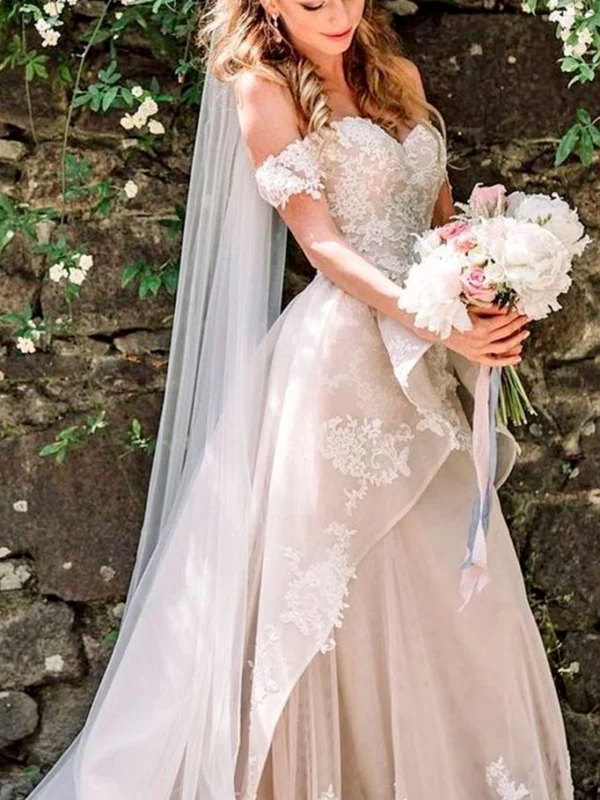
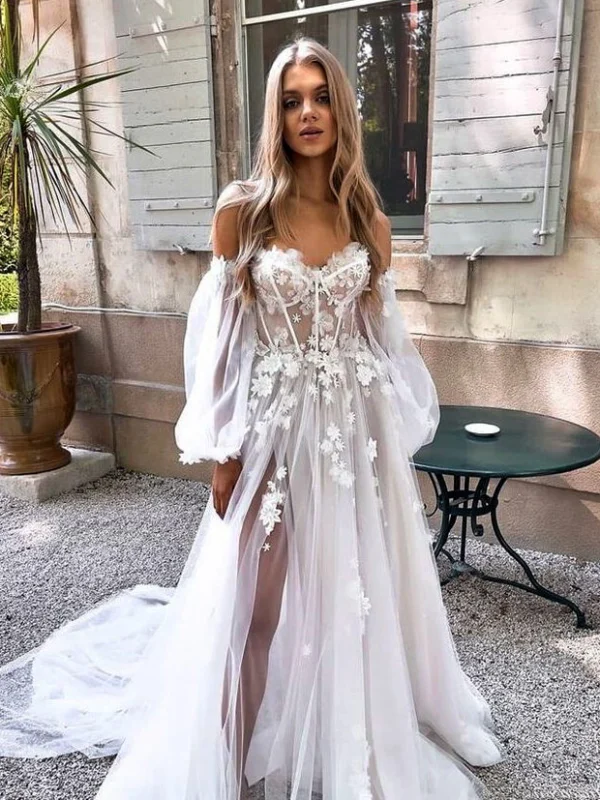
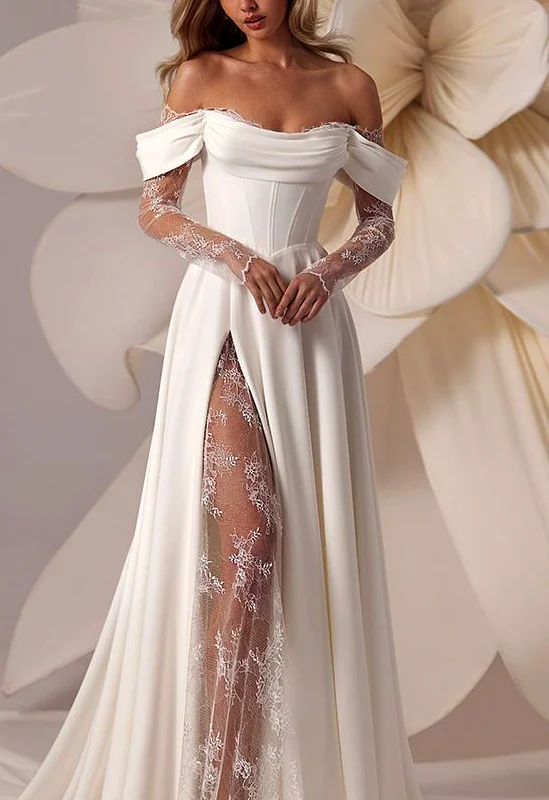
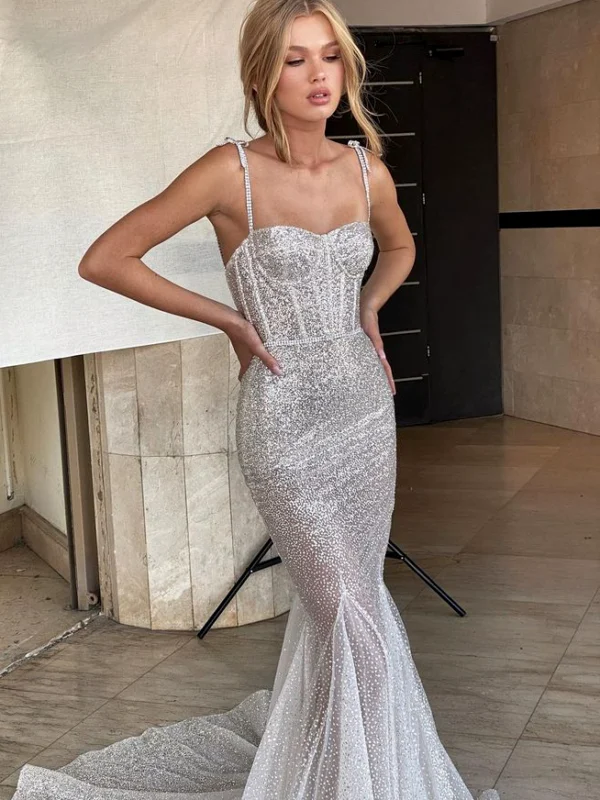
Four pale dress views provide shape ideas for selecting an existing older piece or a desired appearance. Their age and previous history remain unconfirmed. A floral reference with a long veil accompanies low puffed sleeves, a broad folded shoulder border and a reflective form with narrow straps. Compare visible lines before discussing particular alterations to another garment. Similar drawing alone establishes no shared manufacture. Keeping each picture’s own visible areas separate makes those choices clearer.
Guide to comparing these images
Organise the upper surfaces
Upper shoulders remain exposed in the puff-sleeved view, with narrow vertical lines visible across a more densely patterned bodice. The broad shoulder-fold picture instead places a quieter surface there, carrying fine drawing along long sleeves. Narrow straps frame the upper border on the silver-looking form. Record which relationship between exposed shoulders and visible surface you prefer. Similarity of line cannot establish the same internal processing. Information about actual connections and inner construction needs the chosen piece itself.
Compare drawing and reflection separately
Many small reflections cover bodice and hips into the widening lower skirt in the silver-looking photograph. The longer floral views instead use larger readable botanical forms. A patterned outer border crosses a quieter surface diagonally in the veil picture. Assess those distributions first and your intended colour afterwards. Reflection cannot establish metal, and floral forms do not date the dress. Material and condition need information about the real candidate rather than another garment’s visible detail.
Note how much the picture includes
The silver-looking view crops the upper head. The bouquet picture includes face and veil while the hands obscure part of the centre. Complete missing areas on your actual piece instead of joining different garments into an apparently complete perspective. A useful next picture selection shows its own front, back and details you want preserved. Decide which visible ideas you then wish to pursue. Only assessment of the existing piece can establish which preferences fit its actual condition. This comparison can clarify personal shape choices without replacing that assessment.