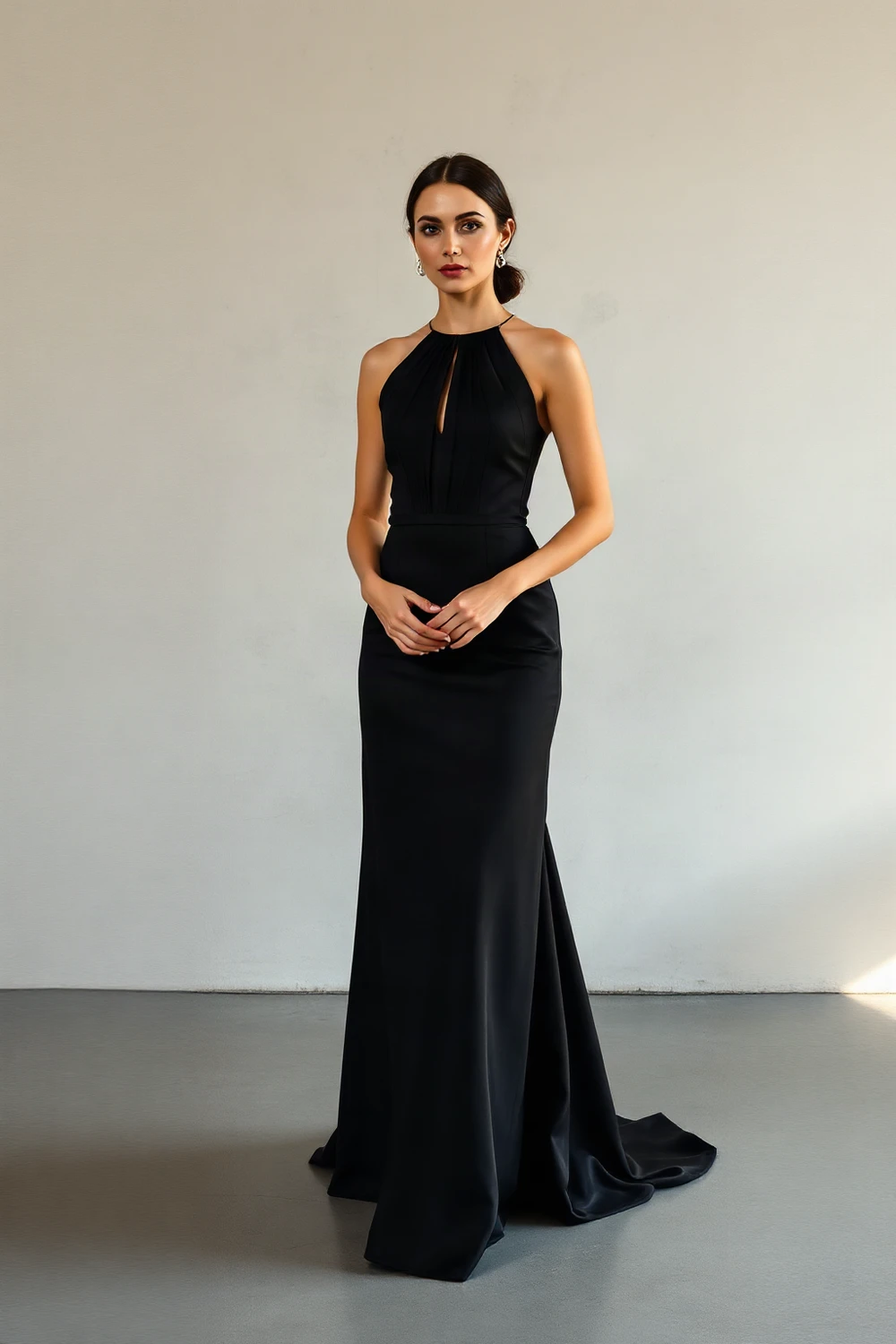
Modern black wedding dresses can look deceptively similar when color dominates the decision. These six concepts show how cut changes the impression: slim-strapped draping, an enclosed halter, a broad A-line, patterned mermaid lace, a clean off-the-shoulder shape, and a strapless layered gown. Trains range from a small pool at the hem to expansive, floor-filling forms. Compare how each neckline frames the shoulders, how freely the skirt moves, and whether surface detail leaves room for accessories.
Use these images as references for proportion and styling, not a catalog of specific purchasable pieces. Rather than reproducing one exactly, find the combination suited to the intended experience. Consider ceremony and reception settings, route texture, seated time, dancing, and the leading photographic angle. Each section connects a visual idea with practical fitting tests.
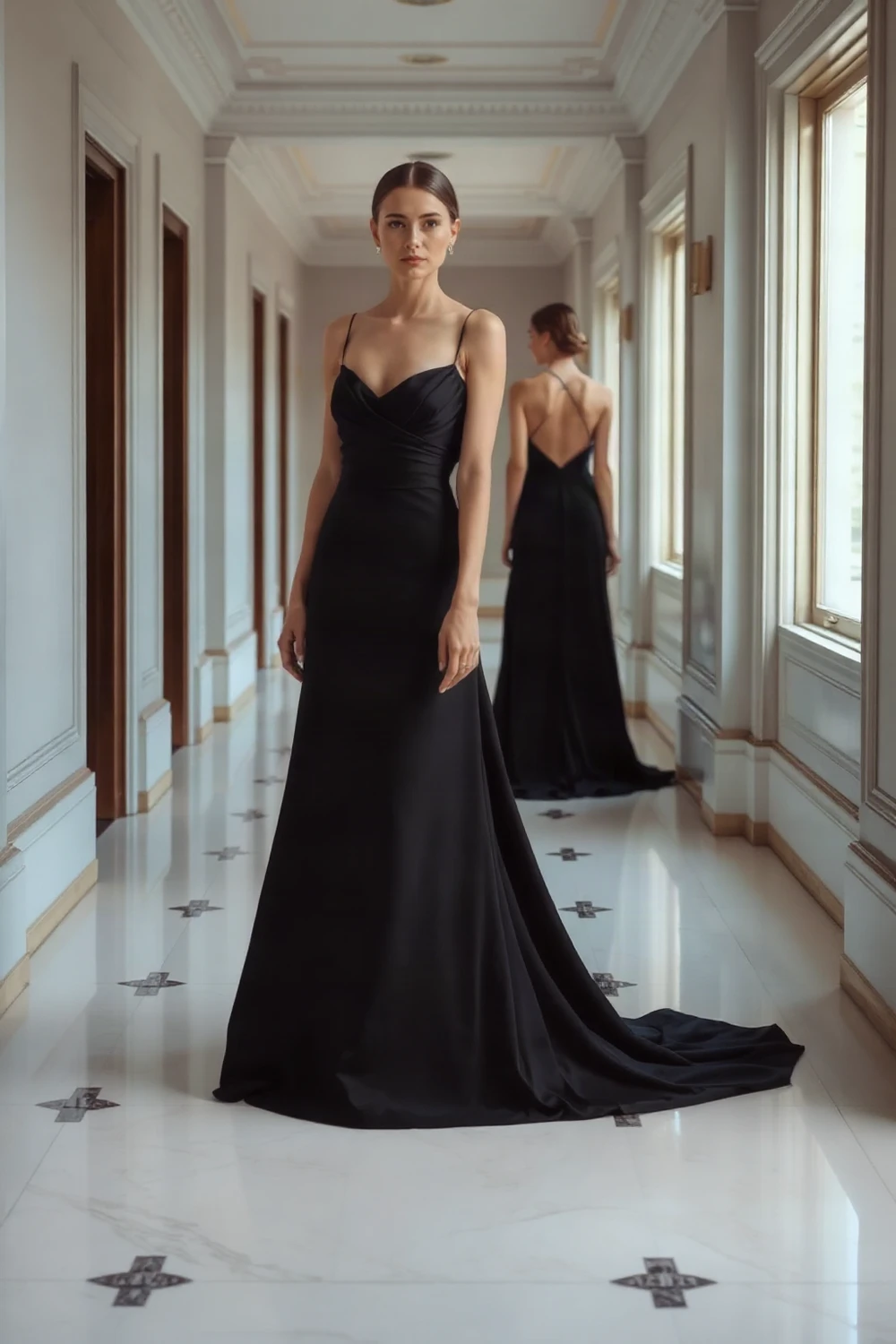
A Draped Neckline and Moderate Train with Slim Straps
Fine shoulder straps and crossover draping create a soft V neckline. A close bodice opens below the hips, while the train crosses the floor without making the skirt especially wide. The bright corridor and polished floor sharpen the uninterrupted black outline. A background view shows the deep V back and rear fall, placing front and rear proportions in one composition.
This silhouette offers a visible train without a full skirt’s scale. Test strap length, upper support, and arm movement together; a still pose reveals only part of the fit. Draping softens the bust, while the plain surface leaves room for earrings or hair detail. Skip a long necklace to preserve the crossover. Walk the route in the intended shoes, checking corners, stairs, and the dance floor.
A Vertical Halter Line with a Narrow Skirt
The high halter encloses the neck’s base while leaving both shoulders visible. A slender keyhole and pleats entering the waistband guide the eye vertically. From the defined waist, the close, nearly straight skirt reaches the floor and ends in a small train. The plain gray studio background prioritizes proportion and subtle light shifts across smooth black fabric.
This neckline feels more graphic and enclosed than the first dress’s open drape. The skirt uses less surrounding space than the broad third and sixth looks, useful on narrow routes, though its stride must be tested. Because the halter frames the neck, omit a necklace and consider small or medium earrings. Waistband placement changes the apparent torso and skirt lengths; check its natural position and whether it folds when seated. Turning, taking a full step, and bending slightly reveal more than a front view.
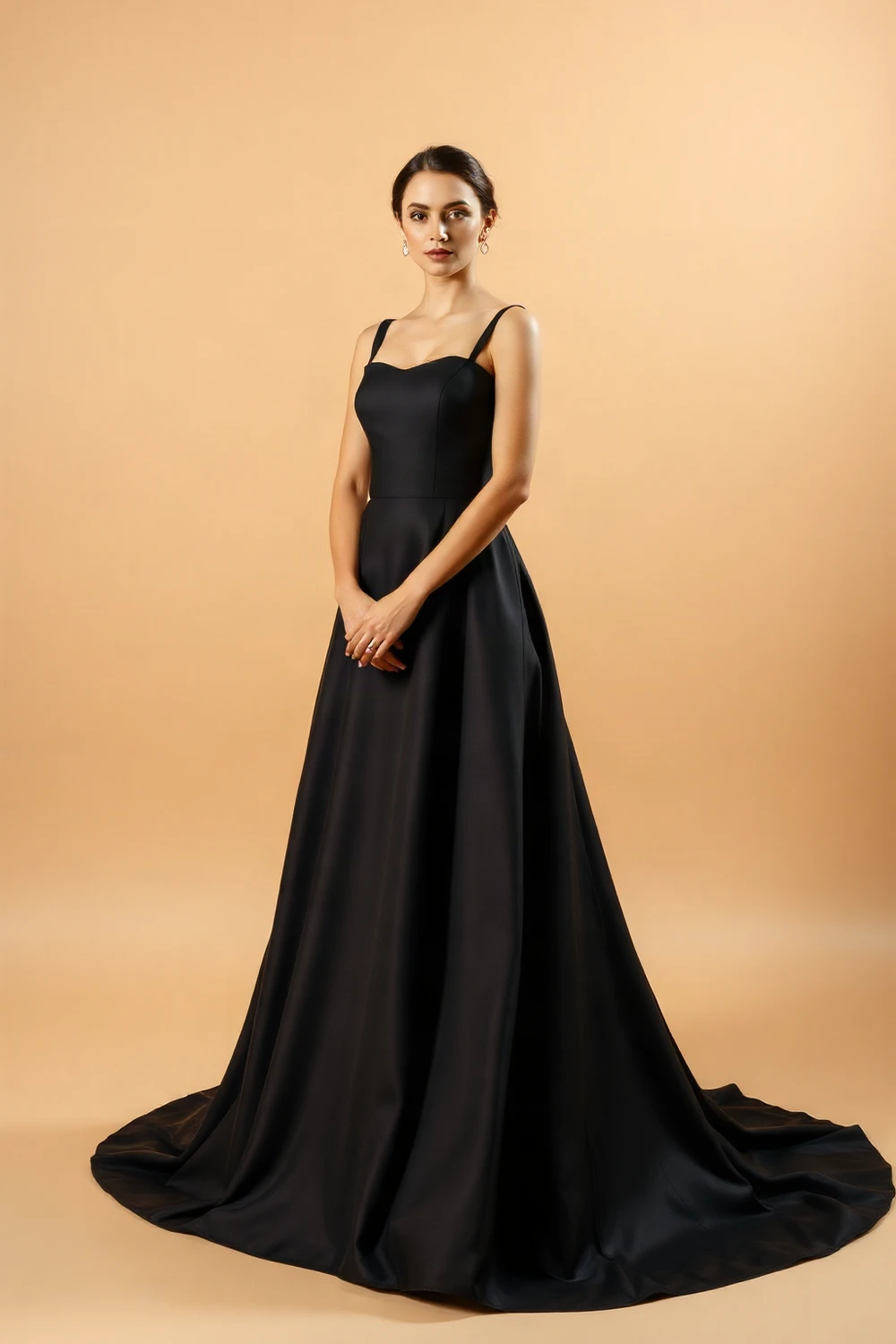
A Structured Bodice over a Broad A-Line Base
Substantial straps, a gently curved square neckline, and vertical seams structure the upper body. From a defined waist, the A-line skirt opens into broad folds around the feet. Its train spreads to both sides and behind, making the silhouette expansive rather than merely long. The warm background makes the black dress’s sculptural edge and uninterrupted front folds clear.
An A-line can offer more leg room than a narrow mermaid, but its circumference still needs management at doors, tables, and stairs. In an open ceremony area, the train creates a strong frame; plan its lifting or fastening before a more active reception. The straps set a clearer boundary than the first look’s fine lines and offer a different support concept from strapless construction. Since the large skirt is the statement, control accessories. A medium, clearly bounded bouquet is less likely than a wide arrangement to obscure the waist.
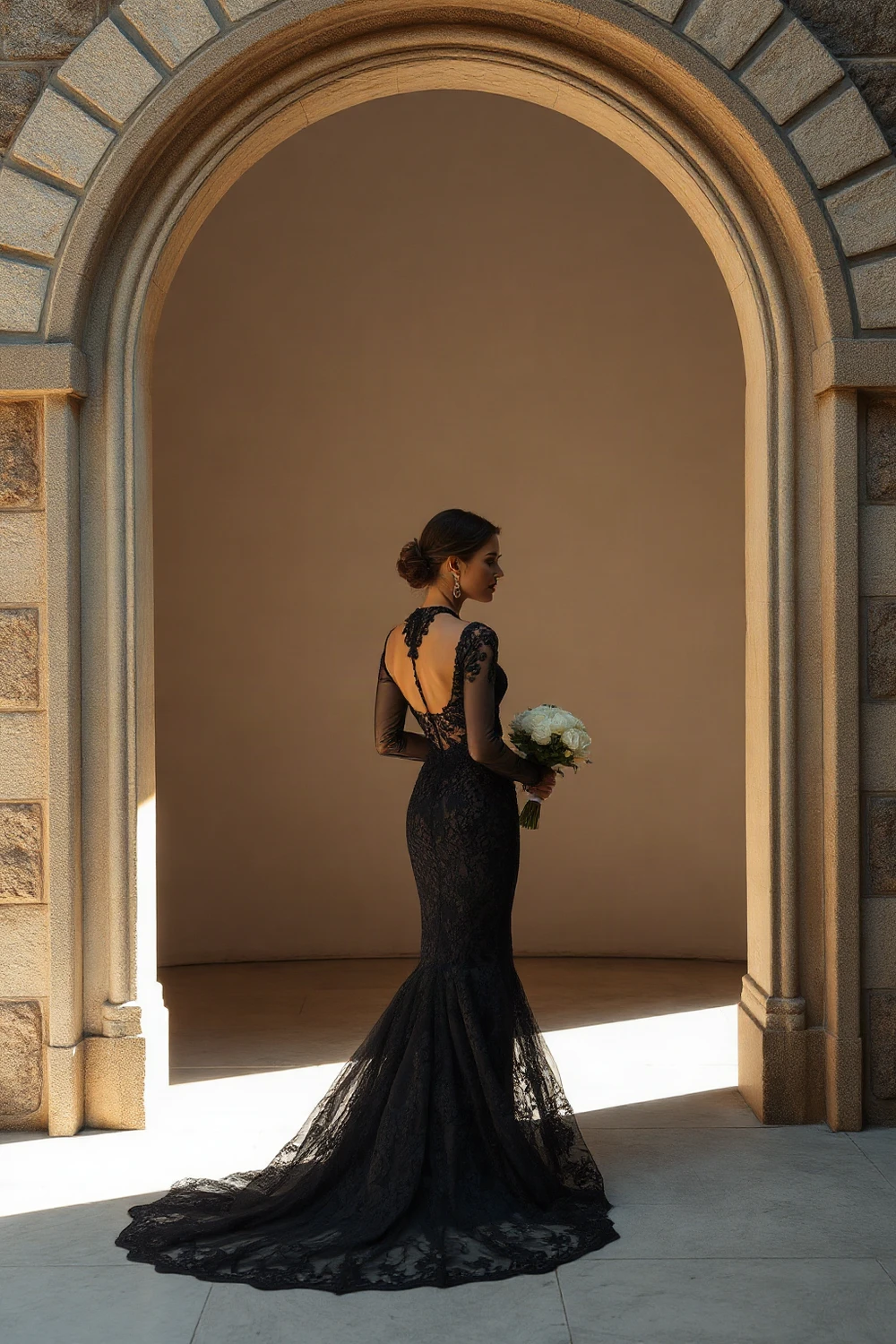
Back and Surface Detail in a Lace Mermaid Shape
The fourth concept concentrates upper-body detail in a patterned black surface, semi-sheer long sleeves, and a deeply open back. Its mermaid skirt stays close through the hips and upper legs, then flares below the knees into a rounded train. The stone arch’s rigid geometry contrasts with the organic dark motifs and defines the outer line. A compact white bouquet provides a small but powerful contrast.
Pattern, sleeves, back opening, and train already compete for attention, so set an accessory hierarchy. An updo preserves the back; a long veil or large trailing ornament could conceal it. The narrow upper skirt behaves differently from an A-line when sitting or taking a long step, so test turning, stairs, and straight walking. Check the semi-sheer-looking areas in daylight and evening illumination, as dark motifs may quieten under flat light. Unlike the smooth fifth dress, this look makes surface detail the focus rather than uninterrupted outline.
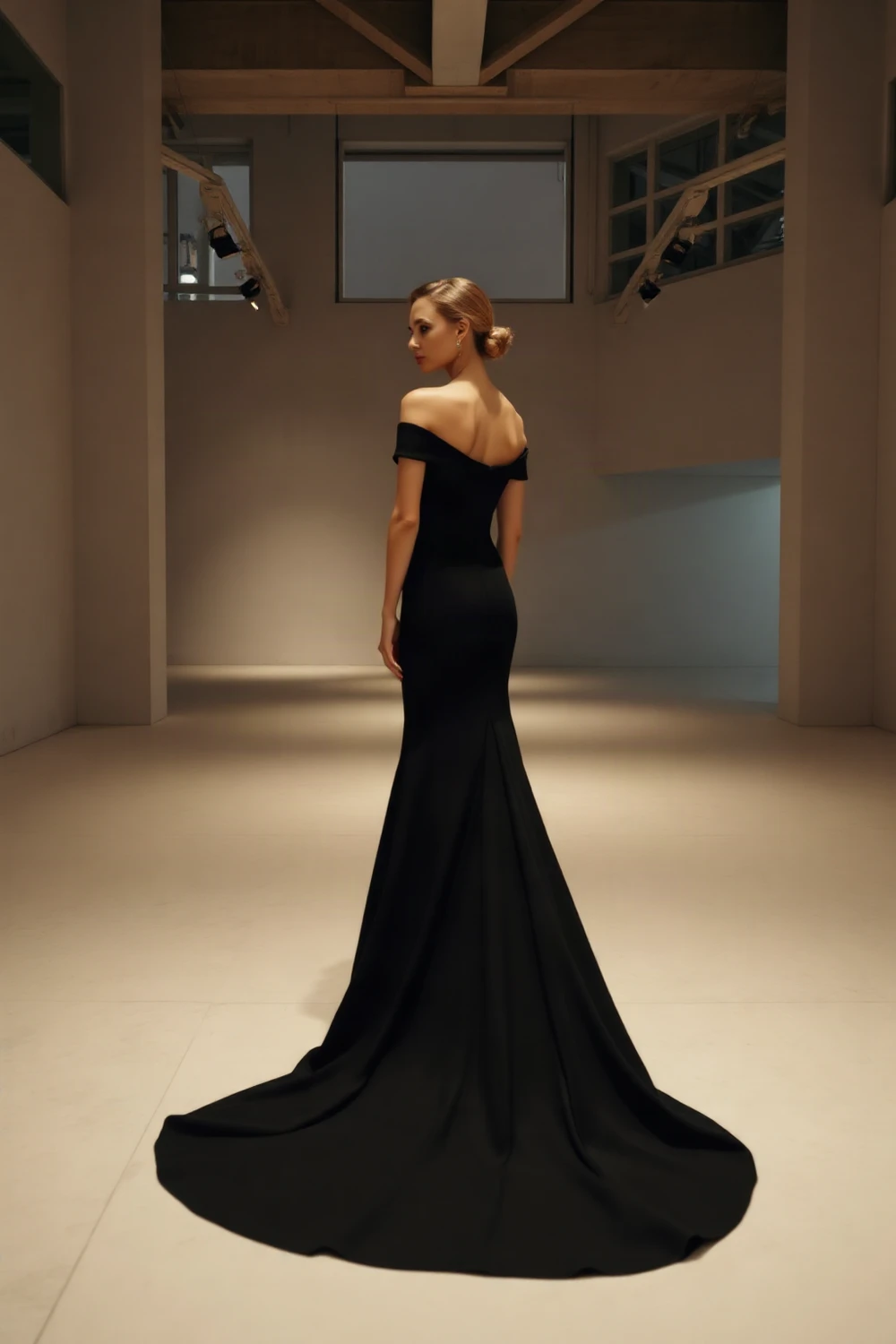
An Unbroken Long Train beneath an Open Shoulder Line
A horizontal off-the-shoulder band exposes the neck, shoulders, and upper back. The smooth black body stays fitted through the hips before widening gradually into a long, rounded train. Against the pale floor, it forms a clear teardrop-like perimeter. Symmetry and centered light in the modern interior emphasize the sculptural, unpatterned contour, unlike the previous dress’s intricate lace.
Assess the band for mobility as well as appearance. Raising the arms, embracing, and dancing can shift it, so repeat those actions during fitting. A short necklace can occupy the open neck area; earrings alone keep the horizontal neckline and train primary. The broad rear view suits ceremony and photographs, but narrow reception spaces may require a secure way to lift the train. In dark interiors, check that light and background contrast preserve the outline. A low updo keeps the upper back visible without interrupting the simple line with loose hair.
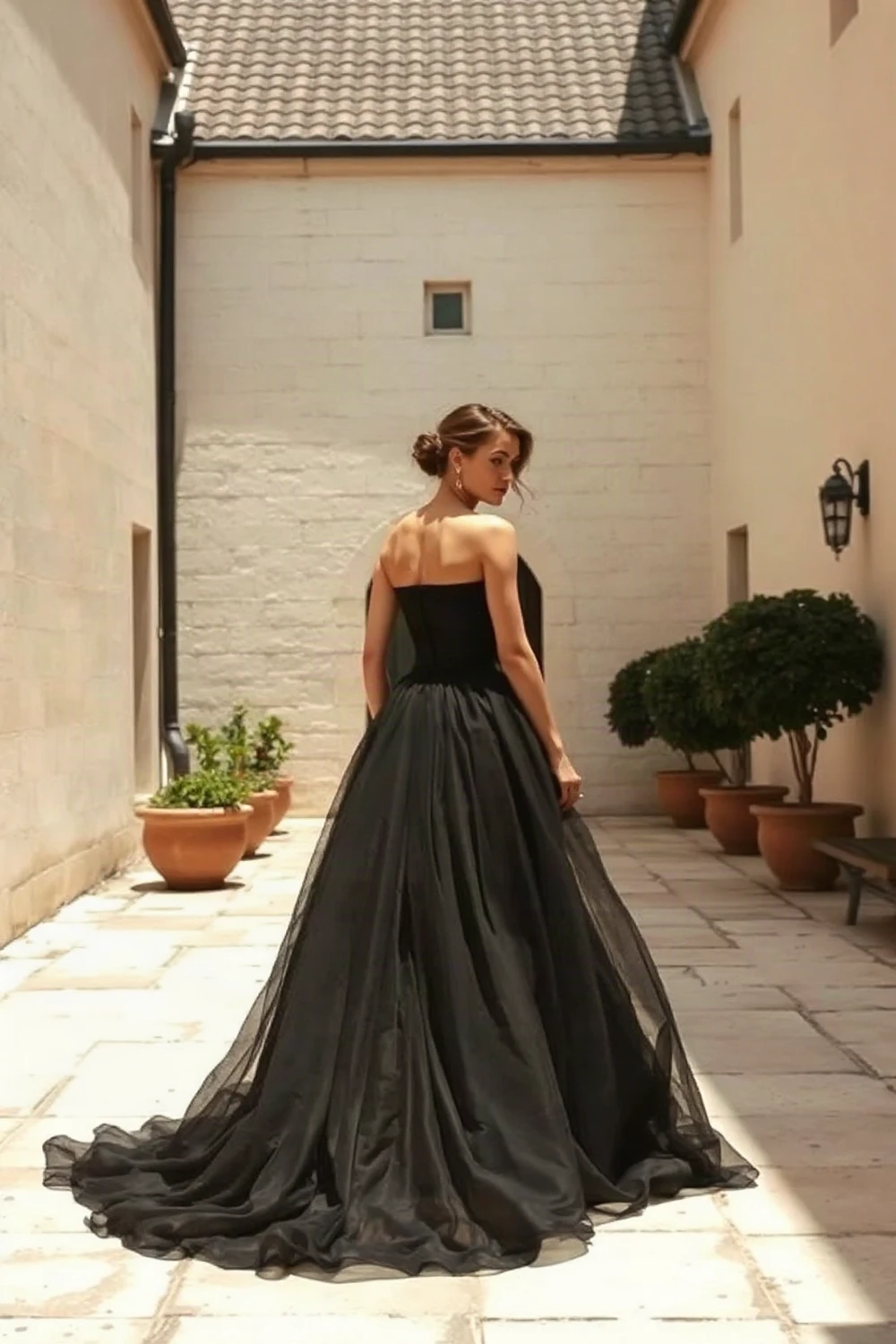
Layered Volume below a Strapless Bodice
The sixth concept joins a straight strapless bodice to a full skirt expanding from the waist. A fine, semi-sheer-looking outer layer covers the main skirt, softening the train’s border with irregular, light folds. Bright courtyard sun reveals density differences among the black layers, so overlapping surfaces create volume alongside width. The rear view makes the exposed shoulder line and immediate waist expansion easy to compare.
For a broad ceremonial entrance, compare this shape with the third A-line. Its layered edges may respond differently than a smooth hem to rough stone, gravel, or narrow steps. If the route is uncertain, plan a practical way to gather the train. Test strapless security while sitting, turning, and lifting the arms, not only while still. Because the neck and shoulders are open, emphasize just one of earrings, a short necklace, or a hair ornament. A bouquet that is not too wide preserves the transition from fitted bodice to full skirt.
The strongest black wedding dress is not necessarily the most detailed, but the one whose neckline, skirt, and train suit the setting and movement. Slim-strapped and halter styles control volume; A-line and layered strapless skirts create broader ceremonial presence. Patterned mermaid lace foregrounds surface and back detail, while the smooth off-the-shoulder dress relies on uninterrupted contour.
Build a shortlist by assessing front, back, and moving views separately. In the intended shoes, walk, sit, turn, and raise the arms, then decide how to manage the train after the ceremony. This keeps black’s dramatic impact balanced not only in a composed image, but through the event’s actual flow.
Compare modern black wedding dresses with slim straps, halter, lace, off-the-shoulder and strapless necklines, focusing on skirt volume, back detail, surface contrast and train management.
Frequently asked questions
Is an A-line or mermaid black wedding dress easier to move in?
An A-line often leaves more room around the legs, although its wide skirt and train need management in narrow routes. A mermaid occupies less surrounding space but may restrict the knees and stride. Test walking, sitting, turning and dancing before deciding.
How should I choose between a halter and off-the-shoulder neckline?
A halter encloses the base of the neck, exposes the shoulders and creates a vertical emphasis. An off-the-shoulder neckline draws a horizontal line while opening the neck and upper back. Compare arm mobility, support and planned jewelry in both shapes.
Which venues are easiest for a long train?
A broad, level and clean ceremony area makes it easier to spread and move a long train. Narrow corridors, stairs, rough stone and dense table layouts require a secure lifting method. Rehearse important transitions in the intended shoes whenever possible.
How can a black lace wedding dress be accessorized?
If pattern, semi-sheer sleeves and an open back already create several focal points, reduce the number of accessories. Earrings or one restrained hair detail may be sufficient. Check the complete front and rear views before adding anything that could cover the motifs.
What should be tested when fitting a strapless black wedding dress?
Check that the upper edge stays secure while sitting, turning, embracing and raising the arms, not only while standing. Assess waist support, the back line and whether the weight of a full skirt pulls on the bodice while wearing the intended shoes.