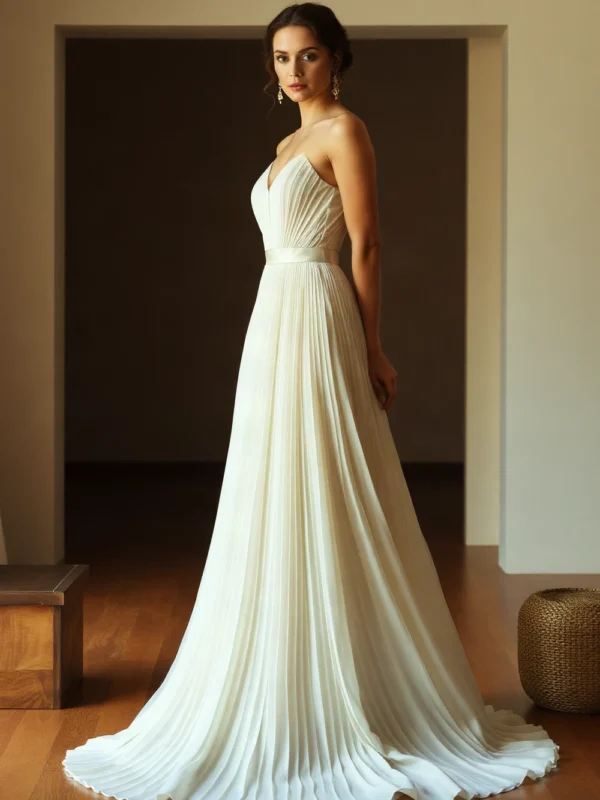
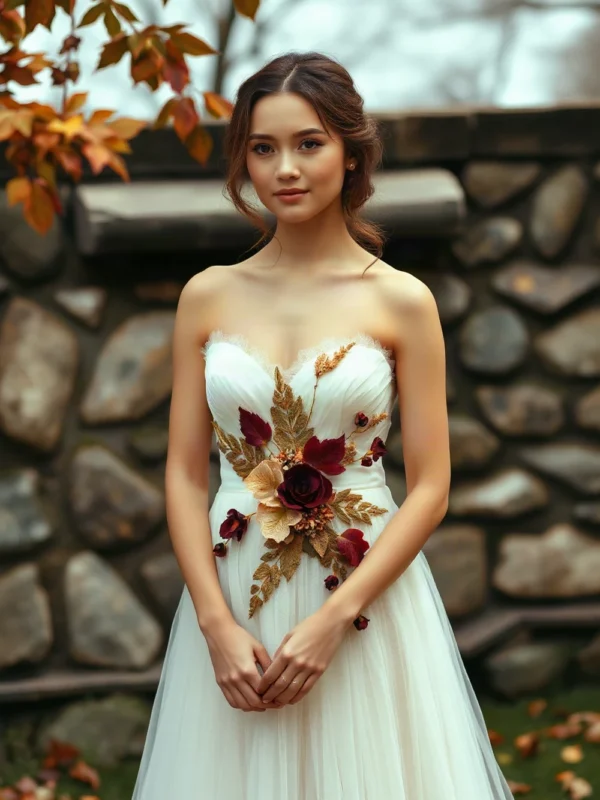
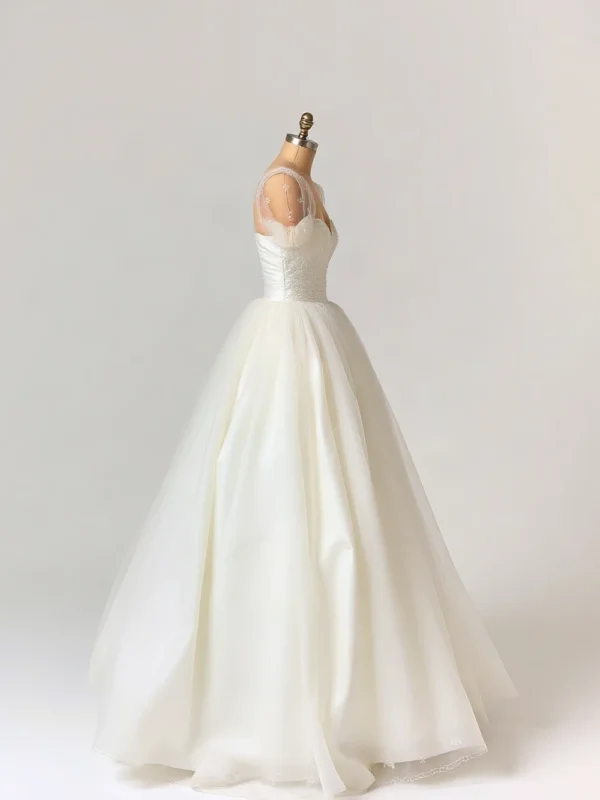
In minimalist satin-look wedding dresses, a quieter surface makes proportion more visible. The width of the neckline, position of the waist, point where the skirt begins and amount of length left on the floor become the primary design language when lace and dense embellishment are absent. It is therefore useful to look beyond the smooth sheen and consider how the relationship between bodice and skirt changes while the wearer moves.
The six visuals here offer very different solutions within the same pale, restrained palette: a square-neck midi, a long wrap silhouette with a sash, a dress with an oversized back bow, a close column with a peplum, a quiet high-front column and a strapless mermaid shape. They are best treated as visual concepts for setting fitting priorities rather than as specific purchasable products. The goal is not to identify one universally ideal outline, but to understand how waist emphasis, hem length and volume can work with movement, ceremony layout and accessory choices.
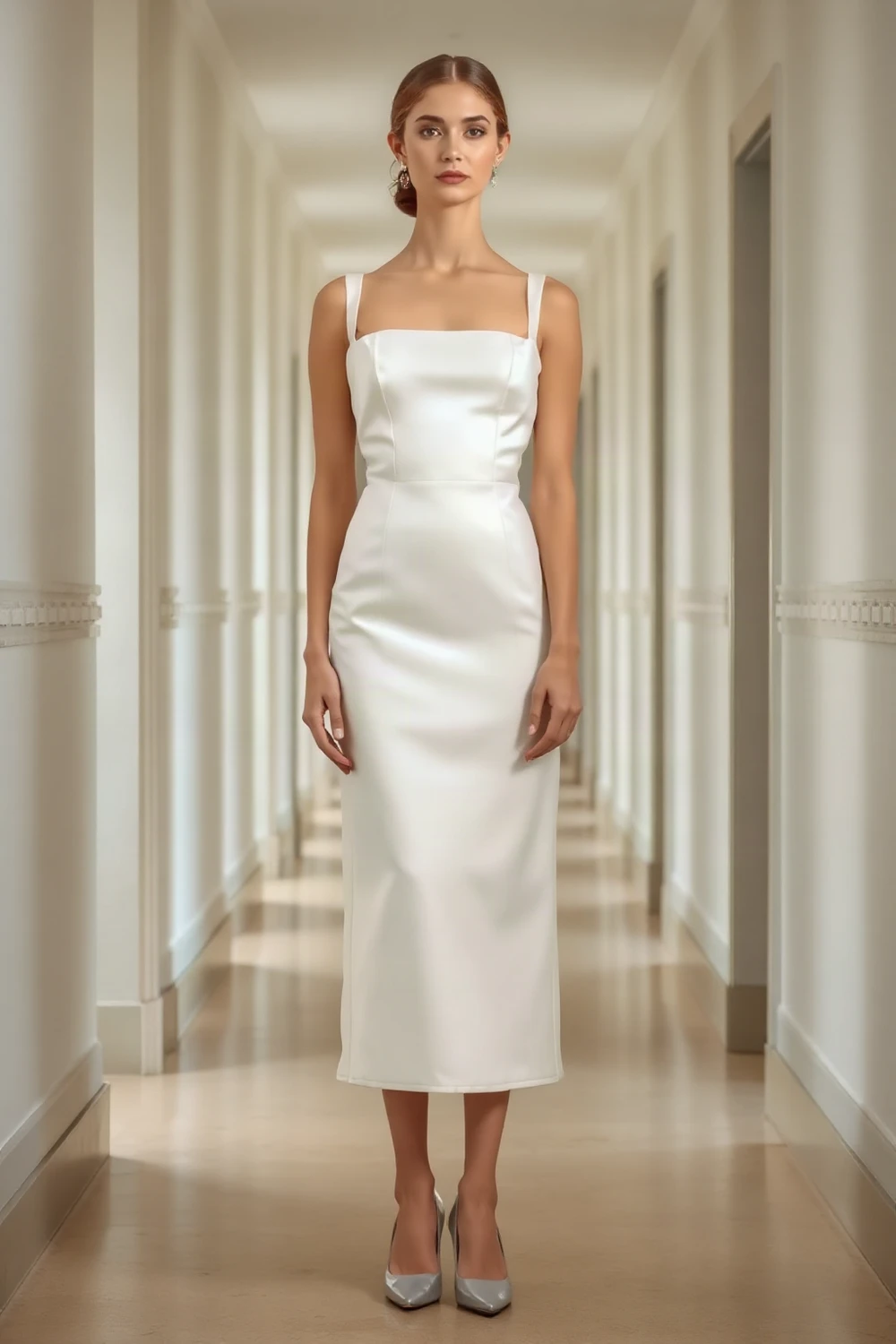
A crisp ratio with a square neck and midi hem
In the first visual, the square neckline, narrow straps and straight waist seam divide the upper body into clean geometric areas. A close midi skirt leaves the ankles uncovered, replacing the traditional train with a short, controlled line completed by visible shoes. The symmetrical corridor makes that proportion feel even more precise, while slight folds on the reflective surface soften it without obscuring the cut.
When considering a midi hem, view its exact stopping point with the intended shoes. A hem across the widest part of the calf can read differently from one ending nearer the ankle. Test a natural stride, a longer step and sitting because the skirt remains narrow. The square neckline leaves the collarbone open for jewelry, but those wishing to preserve its strong horizontal shape could make earrings or shoes the main accessory instead.
Diagonal movement in a wrap silhouette
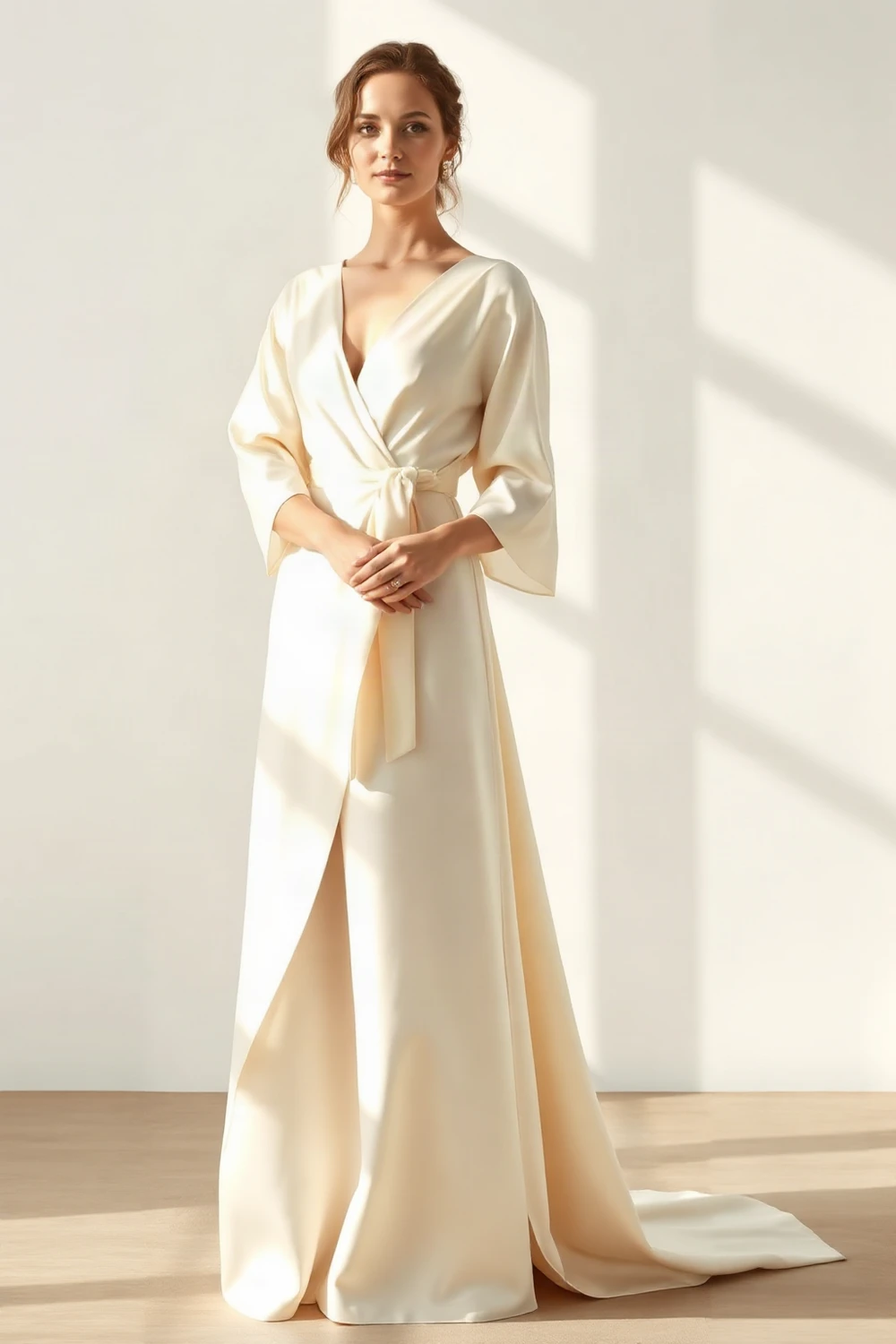
The second image creates one continuous diagonal from the deep overlapping V neckline to the sash tied at the side. Wide elbow-length sleeves add volume above, while the long skirt opens softly toward the floor. Its overlapping front and slight rear extension produce more visible flow than the compact midi shape in the first image.
A wrap-inspired design should be assessed for more than neckline depth. Check whether the layers shift while walking, whether the sash moves when sitting and how the sleeves interact with a table or bouquet. The side knot draws the waist visually off center. Someone seeking complete symmetry may prefer a straight waistband, while a wearer who likes softer, directional movement may appreciate this construction. Keeping the chest free of a large necklace also allows the wrap line to remain legible.
Making the waist memorable from the back
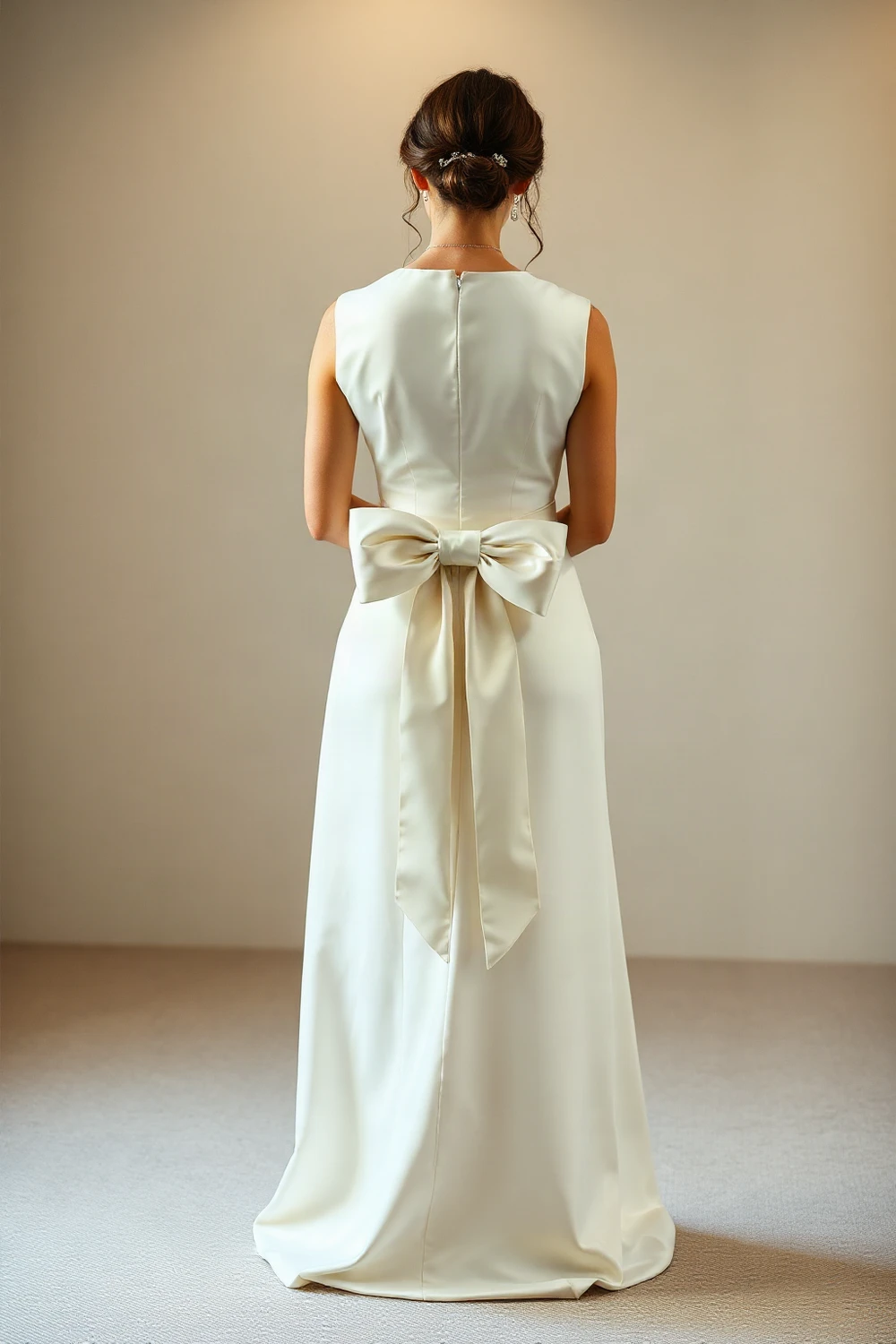
The third visual places its waist emphasis behind the wearer. A simple sleeveless bodice stays restrained, while the oversized bow expands horizontally across the waist and its long tails descend vertically over the plain skirt. A single feature therefore supplies both volume and a sense of length without covering the whole dress in ornament.
A bow should be tested as a physical detail, not judged only in photographs. Lean against a chair, add the intended veil and check whether the tails catch against the skirt. A long, dense veil may conceal the bow, whereas a shorter or more transparent layer can leave it visible. Wearing the hair up keeps the rear composition open. Additional jewelry down the back may be unnecessary because the central closure, bow and hair detail already occupy the same visual axis.
A peplum transition from waist to hip
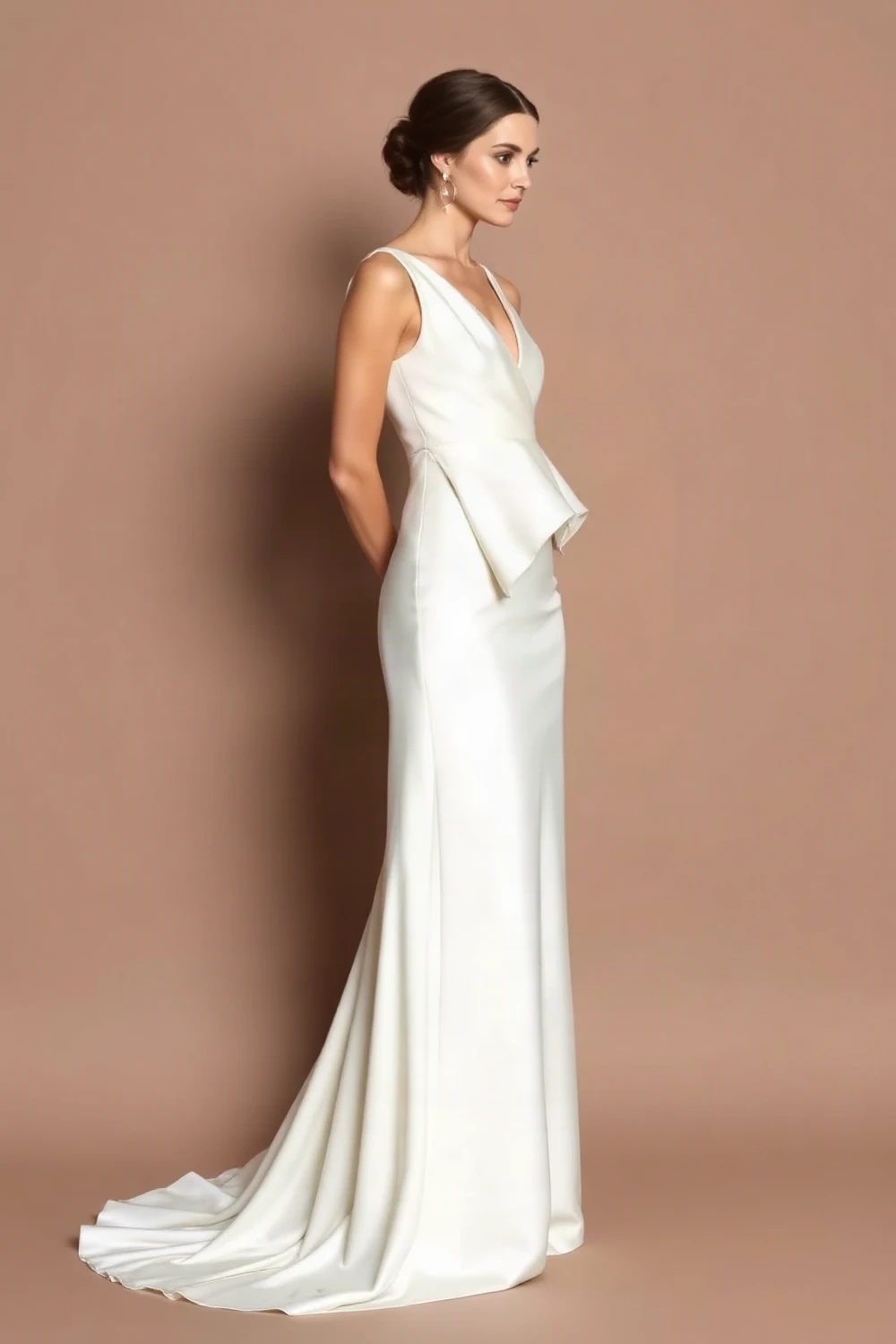
In the fourth visual, an angular peplum forms an architectural bridge between the V-neck bodice and the close, floor-length skirt. Its asymmetric points are especially apparent from the side, while a short train extends the column slightly at ground level. Unlike the bow, which concentrates volume behind the waist, this layer projects around the body.
Peplum placement can change the apparent proportion significantly. A layer beginning near the natural waist may start the leg line earlier, while a lower placement brings more attention to the hips. Examine it from the front and side, then sit to see how the points fold. Since the peplum is already a strong graphic feature, another belt is unlikely to be necessary. Earrings can echo the open V without adding a competing focal point directly at the waist.
A quiet column with a slim waistband
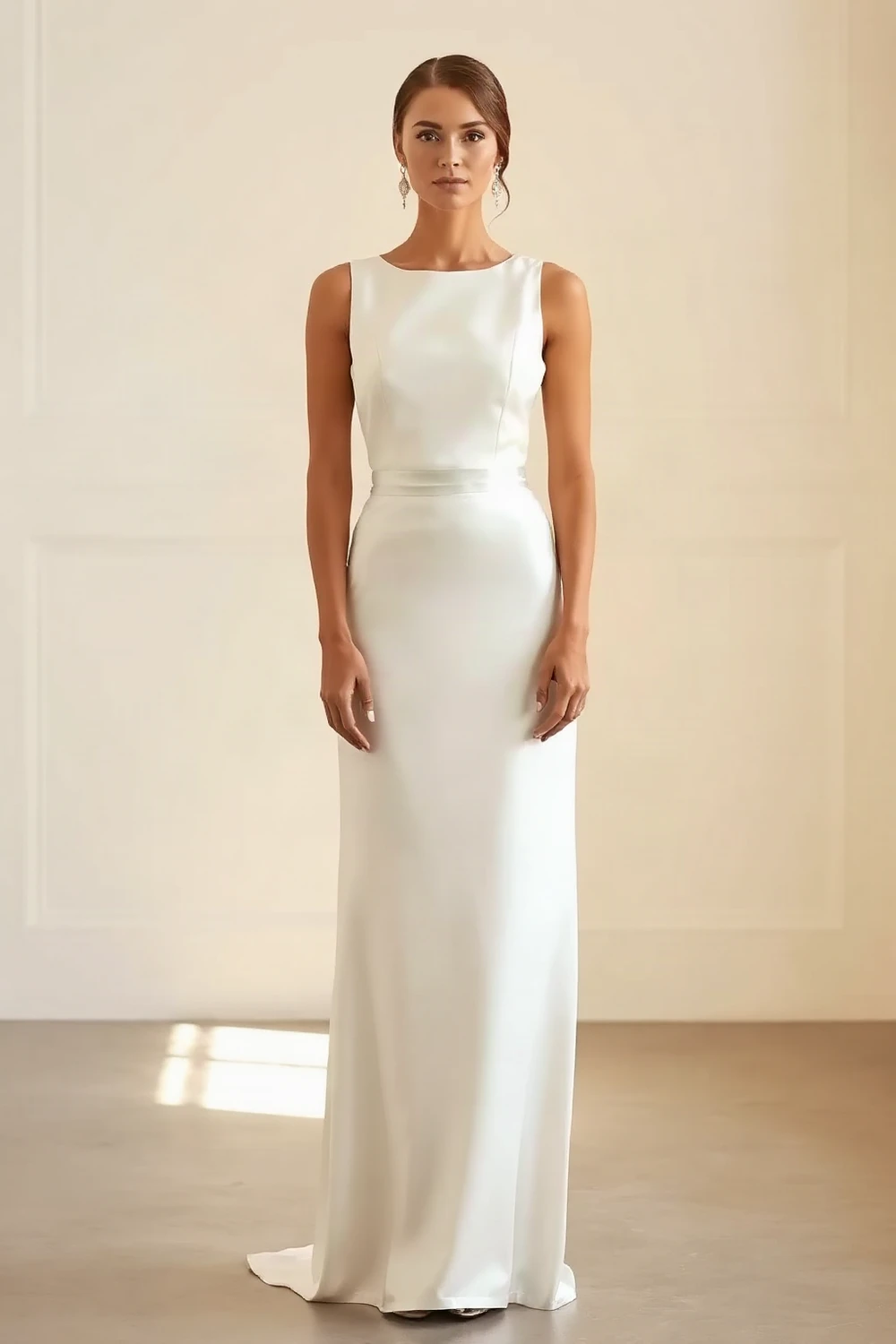
The fifth image shows one of the gallery’s most continuous vertical lines. A bateau-like neckline creates a broad curve across the collarbone, while a slim waistband identifies the waist without adding volume. The long skirt falls almost directly to the floor and ends with only a slight extension, giving the look a calm and controlled outline.
Fit becomes particularly visible on a simple column. Check that the waistband remains level, the skirt does not pull across the hips and the front does not bunch during walking or sitting. For someone who wants less waist drama than a peplum or bow, the narrow band offers a measured alternative. Because the neckline sits high across the chest, earrings, a hair ornament or a light veil may provide clearer spacing than a short necklace placed close to its edge.
A close line opening into a mermaid hem
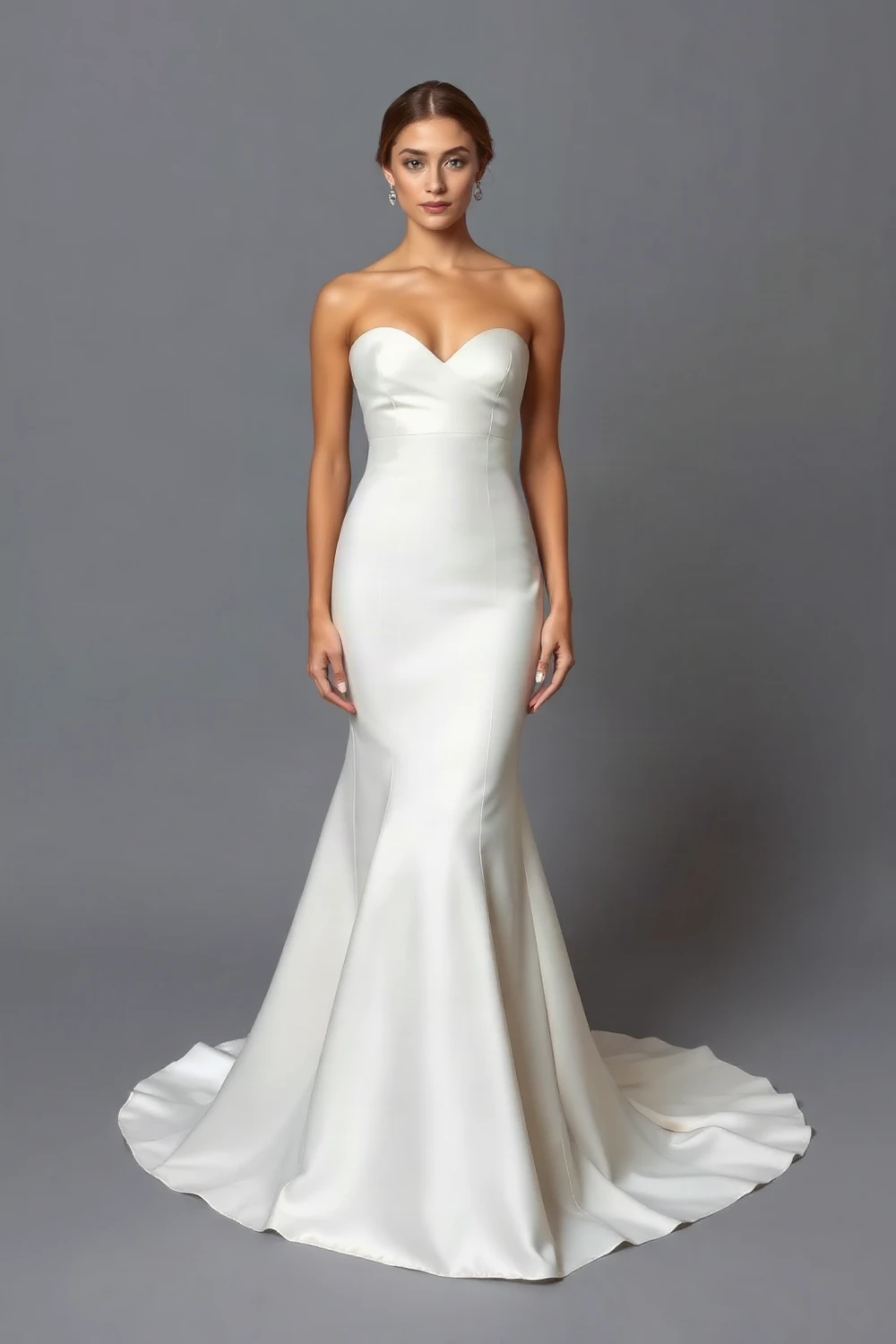
The final visual combines a strapless sweetheart neckline with a torso and skirt that stay close until approximately knee level. From there, the hem widens into a broad base and spreads across the floor. In contrast with the nearly parallel sides of the column silhouettes, it establishes a pronounced hourglass relationship between waist, hips and train.
The level where a mermaid skirt begins to flare controls movement as much as appearance. A close section extending to the knees can make the outline sharper, but it may reduce stride length. Test stairs, turning and sitting rather than taking only a few small steps. The strapless neckline should also remain stable when the arms move. Since the sweetheart edge and broad train are already assertive, restrained accessories help preserve the main contrast of the silhouette.
Begin by deciding which element you want people to remember: visible shoes, a diagonal sash, a back bow, an angular peplum, an understated waistband or a broad mermaid hem. Then test the preferred direction with comparable support garments and the intended shoe height. Walk, sit, turn and use stairs, viewing the waist-to-skirt transition from the front, side and back. Small proportional changes are especially legible on a minimalist satin-like surface, so the strongest choice is not necessarily the one with the most detail. It is the silhouette whose length, volume and focal point remain coherent with the setting, movement and personal comfort required on the day.
Six minimalist satin-look wedding dress ideas are compared through waist placement, hem length, movement and focal detail, from a square-neck midi column to a flared mermaid silhouette.
Frequently asked questions
Which shoes should be worn when fitting a midi wedding dress?
Use the heel height intended for the event because the hem exposes the shoes and changes how the calf and ankle are framed. Review the hem position, shoe shape and color as one composition.
What should be tested with a wrap wedding dress?
Check that the neckline layers remain secure while bending and sitting, the sash does not shift and the front overlap does not open farther than intended while walking. Determine any needed support during an actual fitting.
Can a veil be worn with a large back bow?
Yes, but veil length and density can hide the bow. Try a shorter, lighter or more transparent veil if the detail should remain visible, and confirm that the layers do not bunch at the waist.
Does a peplum or slim waistband look more minimal?
A slim band usually creates a more continuous line because it marks the waist without projecting outward. A peplum adds architectural volume around the waist and hips, so assess it from the side and while sitting.
How can movement be checked in a mermaid dress?
Note where the skirt begins to flare, then test full strides, stairs, turning and sitting. With a strapless bodice, also raise the arms to ensure that the neckline remains stable and comfortable.