Choose a lace party dress by comparing visible pattern, its background and the areas you want covered. These six references show different floral and dotted-looking surfaces, sleeves, necklines and short skirts. A photograph cannot reliably identify a particular lace-making method or fibre. Use the images to describe your preferred effect, then clarify the actual offer’s construction separately. Liking its pattern does not establish which pieces are included or how the layers connect.
1. View pattern and background together
The black long-sleeved dress shows floral open-looking areas above a denser inner front. A broad quiet waist divides the bodice from a short tiered-looking skirt. On the burgundy dress, a high floral translucent-looking neck area and shorter sleeves meet a closer lower line. Dark tones make these two views useful for comparing pattern contrast and distribution. They are not established variations of the same lace, and each needs to be read within its own photograph.
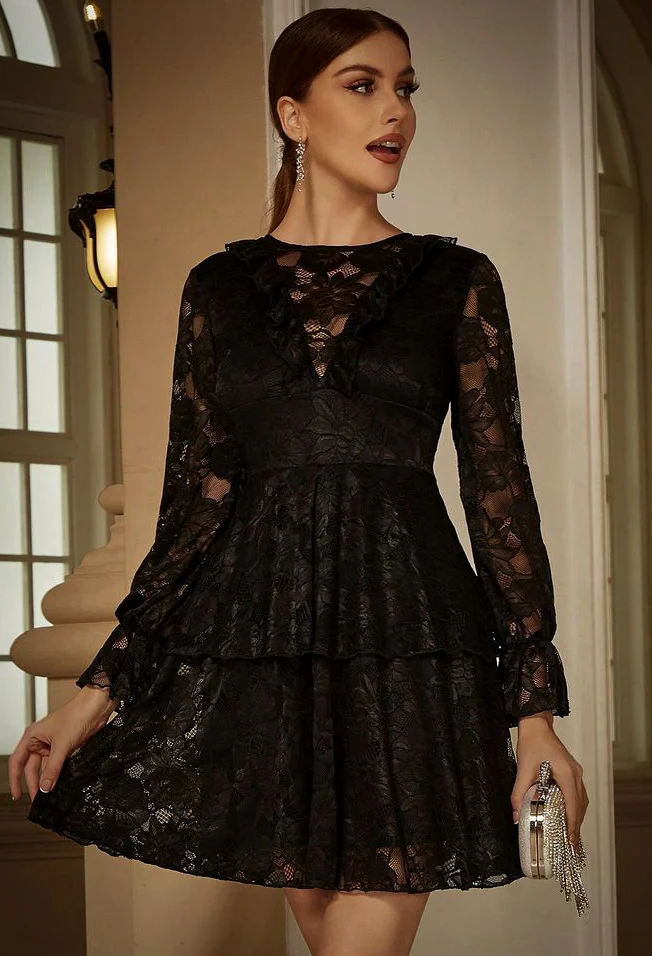
View the whole dress first, then move closer to the motifs. Which areas look dense, and where can a background be seen? A floral neckline can have a different effect from similar-sized motifs across a skirt. Turn the observation into a preference, such as a higher patterned neck frame with a quiet waist. The floral party dress comparison develops motif scale and placement. It does not replace information about actual workmanship. Keep your preferred pattern position separate from an unconfirmed production technique.
2. Clarify the real model’s inner layers
Visible pattern and the surface underneath belong together at a fitting. Ask which pieces are included and how they are arranged on the actual dress. See the upper area, waist and skirt from behind too. A dense-looking area can be described as a visible surface, but a photograph does not automatically establish whether it is a separate slip, lining or another construction. A removable function cannot be assumed either. An apparently open area does not identify the exact layer beneath it.
A limited manufacturer example illustrates why precise information matters. self-portrait explicitly lists a removable cami lining for its Black Sequin Lace Mini Dress. This information applies only to that named product. It establishes neither the maker nor inner construction of these six archive references. Use the example to ask which layers your actual candidate includes and whether changing them is intended. Assess only the states confirmed for the real offer. A similar photograph cannot settle an unanswered construction question.
3. Check sleeves and hands in the complete outfit
The black reference carries pattern along long sleeves to gathered, flared wrist endings. Sleeves on the burgundy dress finish substantially higher, around the elbows. First compare how much arm area you want visible, then the particular ending. A wide wrist finish and a shorter sleeve are different preferences. Neither follows from dark colour alone. Similar colours can produce quite different lines beside the hands, so keep that comparison separate from the neckline.
Try the actual sleeves with your bag and any required outer layer. A pale bag with hanging decoration is held beside the black dress, making contact points with the pattern a useful question. That placement does not prove that nothing touches or catches. The long-sleeved party dress guide develops arm area and hand endings. Try your intended reach for the bag before reading everyday behaviour into a stationary pose. The combination needs your own grip and real pieces.
4. Choose floral bodice and skirt separately
Three rose references distribute pattern and quieter skirt areas differently. The sleeveless V view shows broader floral shoulder connections and a clearly floral short skirt. On the thin-strapped dress, larger drawing concentrates above a finer dotted-looking full skirt. A third rose view combines floral bodice, large bow-like shoulder and upper-arm accents, and quieter short skirt layers. These differences deserve separate decisions rather than being grouped together simply because their colours are similar.
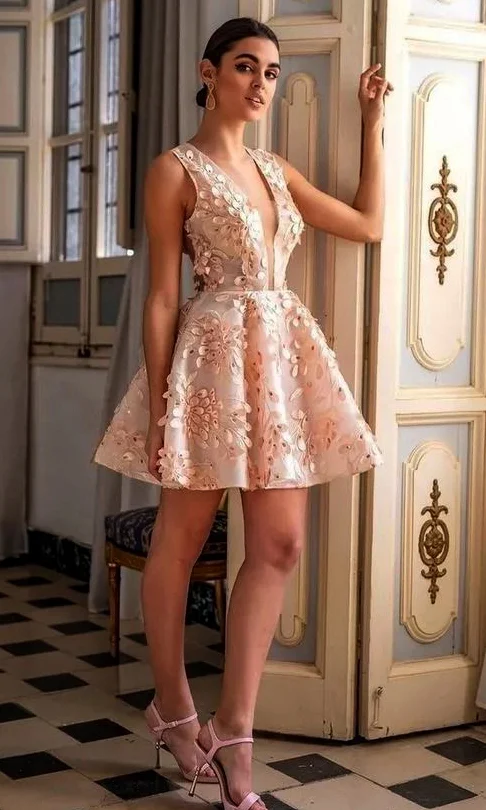
Write down whether you want pattern mainly above, below or across both areas. Large shoulder accents are an additional shape question rather than evidence of removable decoration. Place a relaxed-arm view of the actual dress beside the photographed pose. If a skirt is lifted or held to one side, its neutral fall remains unseen. Have it shown without that hand placement before deciding. This separates the fullness created by a hand from the garment’s ordinary lower line.
5. Do not identify dense dots as lace too quickly
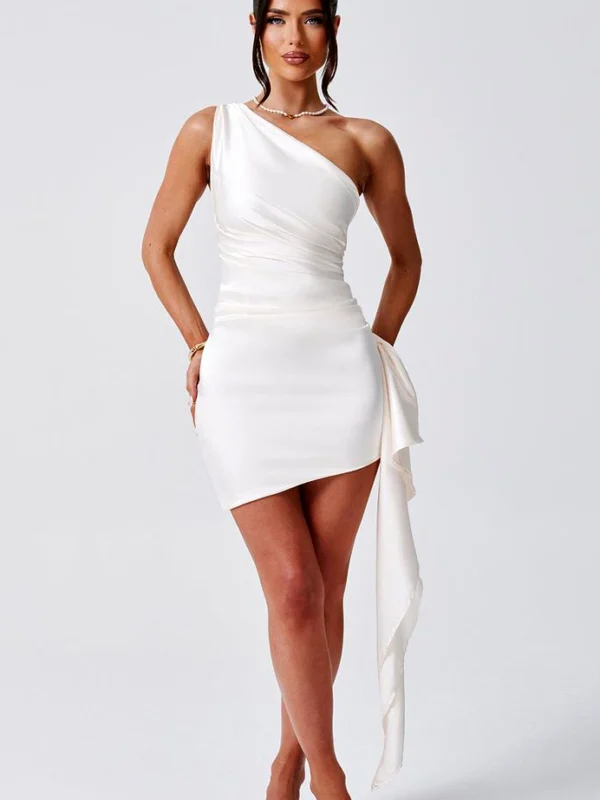
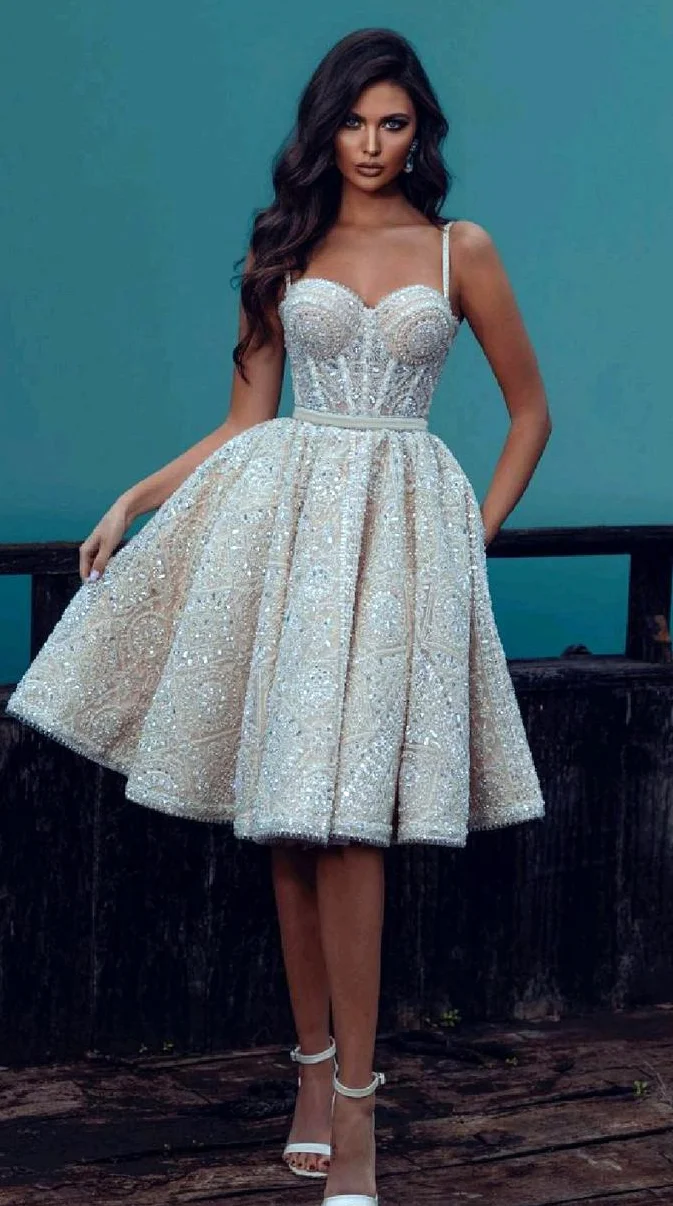
The pale short reference covered with small circular-looking ornaments provides a useful counterexample. A curved upper edge, vertical bodice lines and a narrow waist division are visible. Dense decoration alone does not prove lace. It can still show whether you prefer finely distributed details to larger floral motifs. That design preference remains useful even when the production method is unknown. Visible scale and distribution can describe what you like without assigning an unconfirmed lace name.
Ask about material and the actual product description rather than inferring handmade work, guipure or Chantilly from a photograph. Bring your intended shoes to the fitting. Only some references show the foot area sufficiently completely; a cropped shoe cannot explain the whole combination. The evening dress shoe comparison helps assess open straps and closed shapes beside the real hem. Complete the missing view on that same actual model when making your own footwear decision.
6. Complete invitation, additions and care decisions
A pale floral reference is not an automatic recommendation for a wedding guest. Clarify the invitation and hosts’ expectations before deciding colour and length. Then choose a bag and any outer layer you can actually try together with the dress. The party outfit with a blazer guide develops which patterned areas remain visible with and without that layer. Liking the photographed colour does not remove the need to understand your event’s requirements.
Walk, sit down and make the intended hand movements in the complete outfit. Check your preferred coverage rather than assuming it from the patterned photograph. Care decisions depend on the actual garment’s markings. GINETEX explains care symbols; a floral surface establishes no general washing or ironing method. Finally compare two real candidates with the same additions and fully clarified inner layers. This turns a pattern idea into a concrete selection without filling gaps in product information through visual resemblance.
Choose pattern distribution and preferred coverage for a lace party dress first. Clarify real inner layers, then try shoes, bag and outer layer on the complete model.
Frequently asked questions
What should I ask about the inner layers of a lace party dress?
For a lace party dress, ask which layers are included and how they connect. A removable inner layer must be confirmed for that exact offer rather than inferred from the patterned photograph.
Is a pale lace party dress automatically a wedding guest option?
A pale lace party dress is not a general recommendation for wedding guests. Clarify colour, length and dress code through the particular invitation and the expectations of the hosts.
When should I add a bag and blazer to a lace party dress?
On the actual lace party dress, try reaching for your bag and check sleeve contact points. Compare visible pattern with and without any intended blazer.