A floral party dress can work through large dark leaf forms, small multicoloured branches or floral drawing close to its background colour. Those differences often describe the choice more precisely than the general word flowery. Four references show a short full skirt, a shorter straighter dress with large sleeves, a closer lilac shape and a long dark garment over lighter-looking areas. Compare motif size, colour contrast and placement separately from length. This helps select the pattern you actually want without adopting an entire photographed combination as one fixed choice.
1. Inspect a floral party dress from two distances
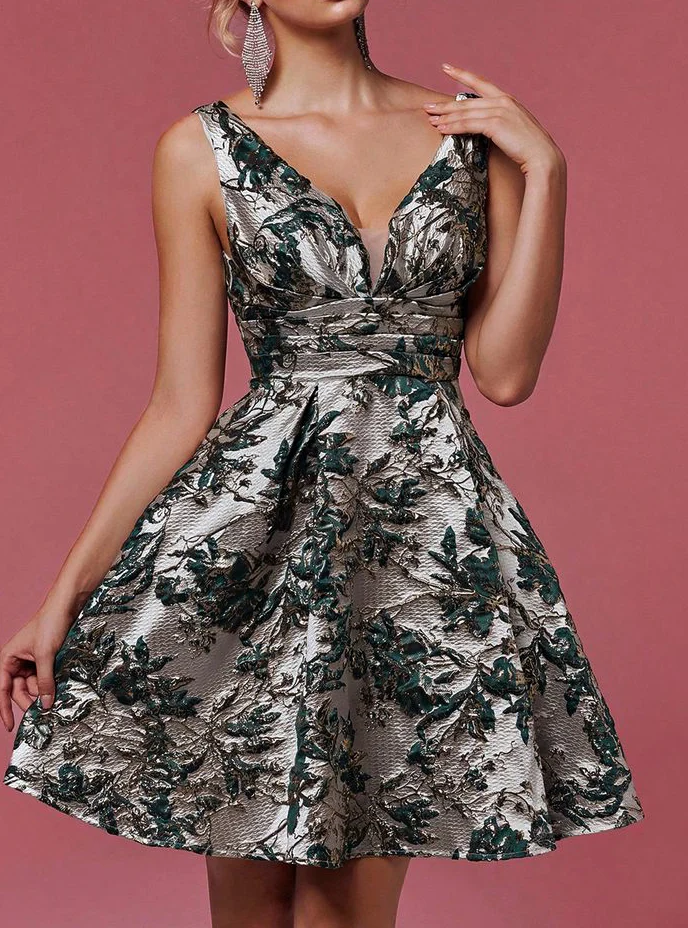
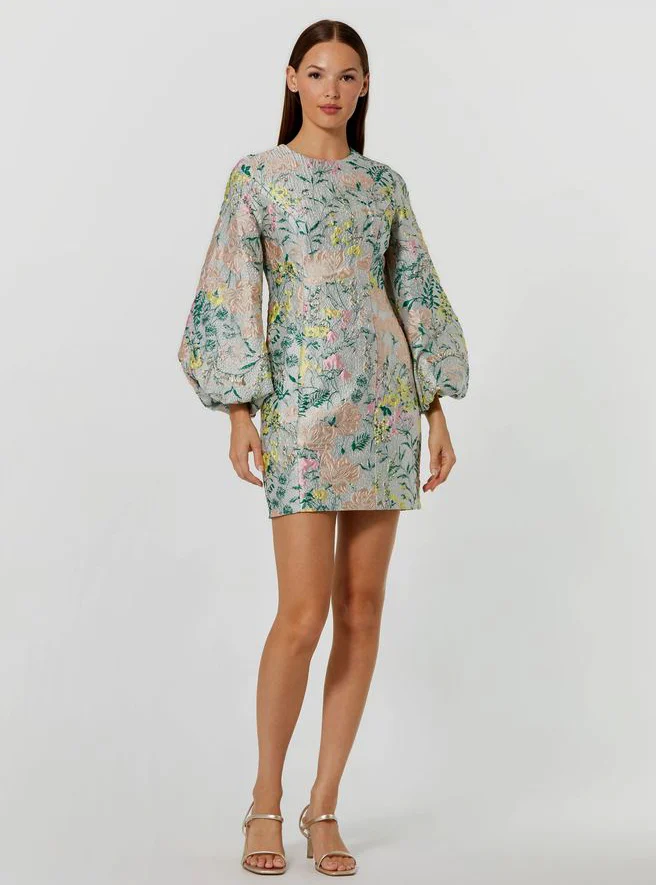
Begin from ordinary conversational distance. On the short full example, darker green and brown plant forms stand apart from a pale shiny-looking ground. Motifs remain recognisable as larger units. The shorter dress with voluminous sleeves instead distributes smaller green, yellow and pink elements across a lighter area. Decide whether you want individual larger forms or a finer multicoloured overall surface. Both can be floral while creating different visible arrangements. The same general pattern name does not mean that their complete effects will be interchangeable on a real outfit.
Approach the garment only afterwards. You might especially enjoy one leaf while finding the full area different from what you expected at a distance. Record both impressions together. Choose two real patterns initially at a fitting and keep shoes and bag unchanged. This reveals whether motif scale or a new companion influences the decision. A close picture may explain a favourite spot without silently replacing the complete worn effect. It also clarifies whether the feature worth retaining concerns one small detail or the distribution across the whole garment.
2. Separate contrast and colour from motif size
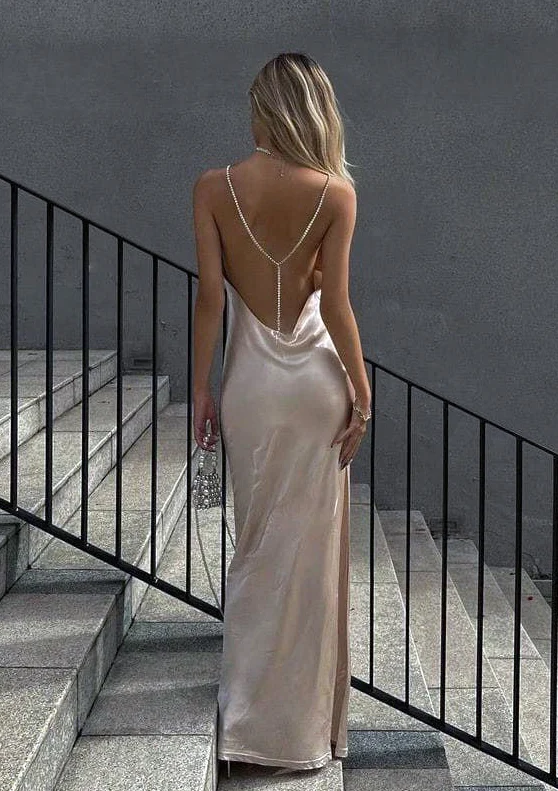
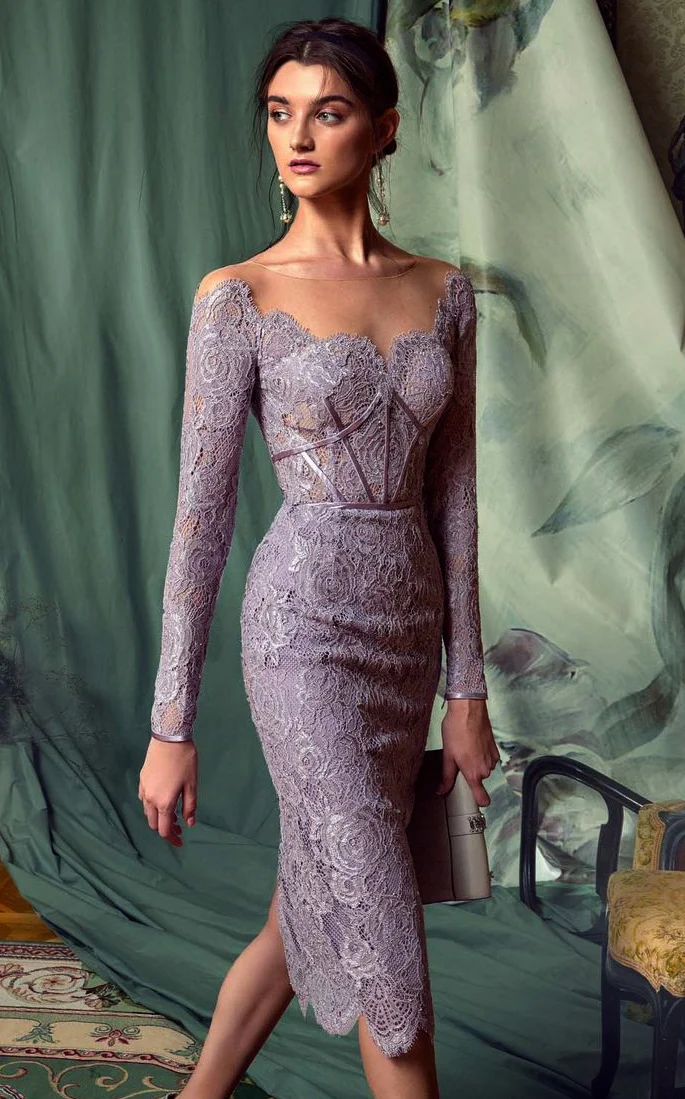
The long black reference places dark floral areas beside a lighter-looking ground. The lilac dress stays more closely within one colour direction even though its motifs remain visible. Compare this quality independently of skirt length. Do you want a clearly drawn flower or quieter drawing close to the base colour? Large motifs with little colour change might appeal while small motifs in several colours do not. Size alone therefore cannot answer the colour question. Record the two preferences separately so a strong shade does not automatically settle your whole pattern choice.
Hold two actual candidates together under similar lighting, then wear them. Inspect the area beside face and hands especially. Rather than asking which pattern must universally suit you, identify the visible relationship you prefer. A dark bag can repeat a plant colour; a lighter one can connect to the ground. Choose the dress first. Add further shoe and jewellery colours individually afterwards, keeping several simultaneous changes from obscuring the intended contrast. Knowing why one piece remains prevents every small motif colour from becoming another accessory requirement.
3. Follow placement across waist, sleeves and hem
A broader gathered waist area interrupts the drawing on the short full dress. Plant forms spread across a wider skirt beneath it. That sleeveless example leaves shoulders open, while the other short model carries pattern across large long sleeves. The lilac version connects floral drawing to clear bodice lines and a scalloped lower edge. Follow those transitions rather than inspecting only the middle of a fabric sample. The same flower appears differently at a narrow boundary from a large continuous area, giving motif placement its own specific fitting question.
Request front, side and rear views of the actual candidate. Indicate the position that matters: a freer waist area, an uninterrupted larger form at the skirt or a quieter sleeve transition. Check those places on the offered piece. One product photograph does not automatically explain every other size or version. If a particular distribution appeals, record that exact position and have it shown on the real dress before reducing the choice to one general pattern word. This makes clear why another similarly named model may still appear different.
4. Treat floral drawing and skirt shape as separate decisions
The short full skirt displays plant pattern across a larger lower area. The lilac dress sits closer and ends in a scalloped edge, while the black version continues into a long shape broadening below. Compare the outline you want initially. A floral party dress need be neither short and wide nor long and narrow. Record a picture’s drawing as a direction and seek another suitable lower shape on a real garment if wanted. Enjoying one flower arrangement does not require accepting every contour in the same photographed outfit.
Use the cocktail dress guide for questions about an actual shorter shape and the midi dress guide for hem and shoe relationships. Transfer each useful task to your patterned candidate. Keep colour distribution reasonably similar in a length comparison. Otherwise a strong new pattern may receive more attention than the length you intended to assess. Two specific comparisons are clearer here than many dresses changing simultaneously, leaving it understandable which earlier choice a newly introduced feature actually needs you to reconsider.
5. Choose one motif colour as a starting point for companions
The multicoloured pale example has gold-coloured-looking open shoes beside its plant drawing. A small structured pale bag sits near the lilac dress’s hip; the long black reference shows a small dark bag. These additions perform different colour tasks. Select one visible colour on the actual dress as a possible connection. Try a quiet bag, then another. Decide whether to repeat a plant shade or continue the larger ground without needing every small motif colour represented in accessories. One chosen tone need not become a checklist of matching additions.
Introduce jewellery after bag and shoes. Larger earrings can add another clear form beside a patterned shoulder edge, while smaller ones may leave the area quieter. Try actual hair as well and look again from conversational distance. If an accessory covers the favourite detail, change its position or size initially. Another dress need not be the immediate answer. Companions support the intended motif distribution instead of turning every independently attractive colour into a new focal point, allowing one small useful change to preserve an otherwise appealing garment choice.
6. Confirm pattern and underlying area on the worn dress
Assess a floral party dress within the full combination. Walk, sit and hold the intended bag at its actual position. Inspect the drawing afterwards standing normally. The lilac and black references have lighter or sheer-looking intervals; actual layers and intended coverage need clarification on the offered model. Choose which pattern sections you want visible through the worn area. One isolated image confirms neither the underlying layer nor a particular manufacturing technique. Complete the appearance preference with actual information rather than letting either question replace the other.
Read composition and care information for the real garment too. The GINETEX care-symbol explanation supports interpreting the label; floral drawing prescribes no treatment. Record three points finally: preferred motif scale, intended contrast and the companions with which both were tested. A new dress can then be compared deliberately. The reason for your choice remains attached to visible features even when colour, length or one addition changes later, helping assess what a new candidate actually contributes without beginning every earlier decision again.
Compare a floral party dress from an ordinary distance and close up. Choose motif scale, contrast and placement before introducing individual companions.
Frequently asked questions
Are larger motifs always more contrasting?
No. Motif scale and colour contrast are separate qualities. Compare larger quiet forms independently from smaller multicoloured motifs.
Must a floral dress be short and full?
No. The images include short fuller, shorter straighter, closer and long shapes. Select pattern and intended contour as separate qualities.
Should every motif colour repeat in accessories?
That is unnecessary. Try one colour or the ground as a connection for bag and shoes first, adding further pieces individually.
Does floral appearance establish a manufacturing method?
No. Images show drawing and surface; establish composition, actual layers and manufacturing on the real offer.