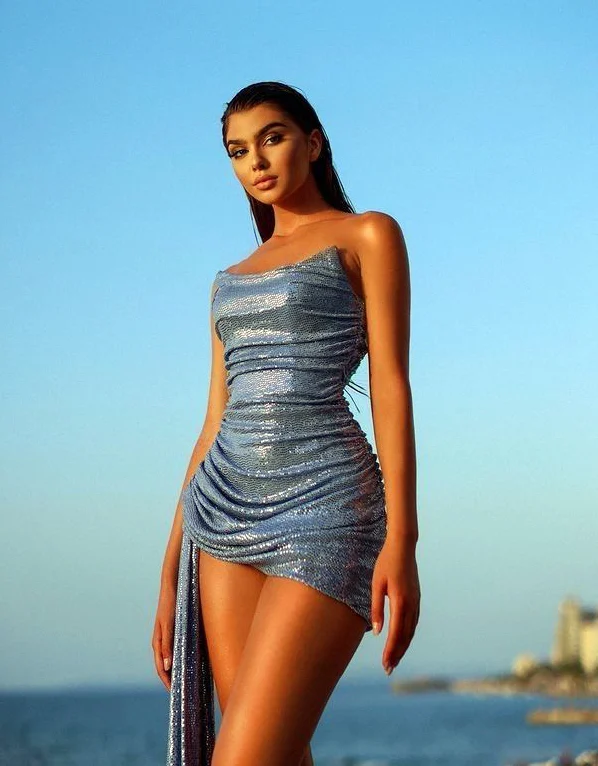
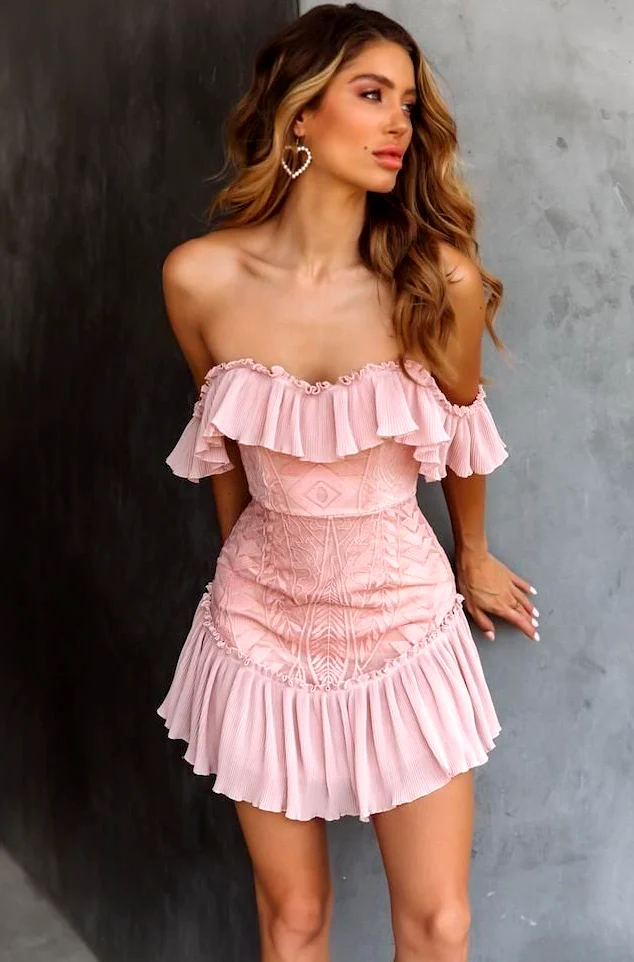
Choose a cocktail dress for an actual sequence rather than only a short or long photographed line. The four references show a broader burgundy skirt, a short silvery asymmetric form with a long side piece, a pink ruffled short dress and a green shape with a neck fastening and feather-like hem. Compare which features you want while standing, greeting and sitting later. Your invitation sets the frame. Length, upper line and accessories can then be chosen in stages rather than treating every detail in one picture as a fixed package.
Connect a cocktail dress to the actual reception first
Check clothing wording, place and timing. Debrett’s describes cocktail attire among the more general invitation expressions. For your choice, that creates a question about the specific event rather than one compulsory skirt length. Clarify unfamiliar information and record whether you expect a short reception, meal or longer shared evening. The pictures can show your shape preference without explaining the hosts’ actual expectation themselves. Clear information also lets you assess existing clothes against the same needs before choosing something new.
Select two clearly different directions for the first fitting afterwards. You may want to compare a quieter longer skirt area with a shorter decorated form. Perhaps an open shoulder matters first. Choose one principal question instead of comparing four complete outfits simultaneously. The grey asymmetric reference may appeal through length or its reflective surface. Record which feature you want retained even if another real model eventually serves the need better. Enjoying the complete first impression does not mean every detail has equal importance.
Assess skirt length and extra side area separately
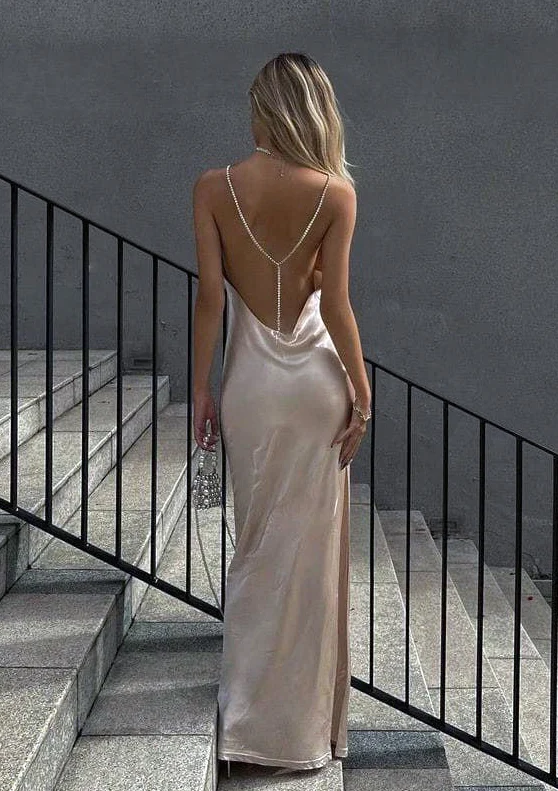
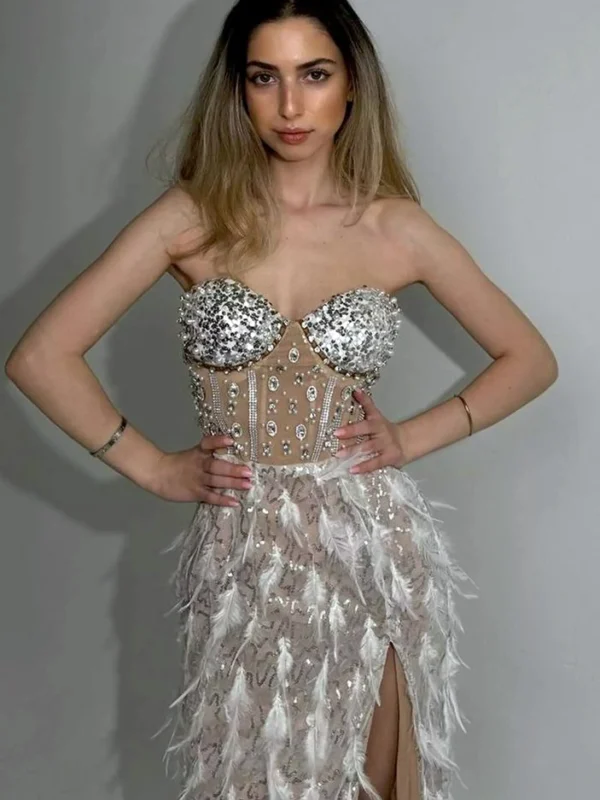
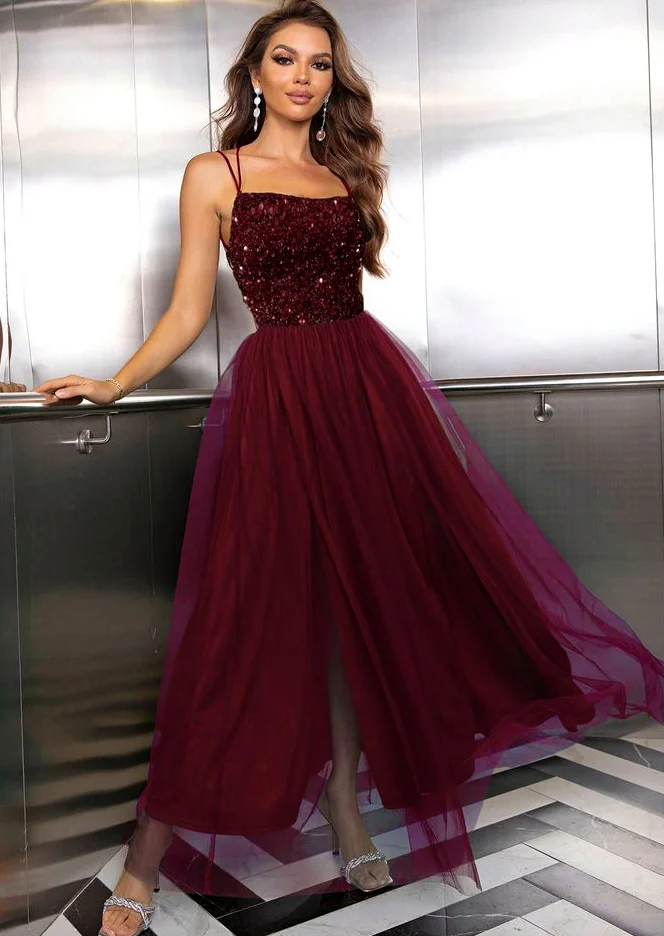
The burgundy reference shows a broader longer lower area with shoes and lower legs partly visible. The silvery short dress adds a longer narrow fabric section at one side. These ideas distribute length differently. Compare them on actual garments with your shoes: walk several steps, turn and stop. Do you want a more even continuation below or a clearly changing contour? Both deserve a look at their normal fall. Repeating the same action in both models makes that distinction easier to explain.
A long side piece does not automatically cover the entire shorter area. Check the complete contour seated and walking. A cocktail dress may appeal with uneven length; decide how you want to handle the extra fabric along a narrow route too. Our high-low party dress guide adds questions about changing lengths. It helps compare shapes without establishing the offered model’s actual hem arrangement. See that demonstrated on the garment and agree changes after the trial with your own shoes rather than from one photograph.
Choose the upper line for greeting and a drink
The pink model frames open shoulders with a broader ruffle line. The green reference carries fabric to the neck and shows exposed upper back in the mirror. Burgundy uses finer shoulder lines above a straighter front edge. Compare those arrangements independently of colour. Which upper area do you want visible with your hair? A similar short length cannot answer that question. View front, side and back of the same actual dress, separating upper preference from the lower length in its reference.
Try greeting and hold a planned object such as a glass without simultaneously holding the top edge. Reach forward and bend your arms. Notice whether you want to rearrange something and which area is involved. Ask about the real bodice connection if support matters. A visible ruffle or neck fastening cannot explain the whole interior. Your selection should work with ordinary hand use rather than requiring the quiet moment in front of a mirror. A specific movement and location gives the shop a clearer question to assess.
Check seated use and coverage before jewellery
Include an ordinary chair trial even if the reception is mainly standing. The pink short dress has further ruffles at the lower edge, while green shows another decorated hem. Sit with planned shoes and stand without immediately straightening the skirt. Decide which lower area you want visible in those postures. You can enjoy an upper shape while preferring another length; neither needs to remain tied to the photographed combination. Standing and seated views belong together in the choice for your evening.
The green reference sits on a basin edge and adds part of the back in a mirror. Request an ordinary standing view and clear direct rear pictures for an offer. That pose replaces neither chair nor complete back construction. Try underwear before a final upper adjustment. A cocktail dress becomes an understandable combination when preferred coverage is checked with the actual inner layers, instead of adapting them afterwards to an already altered neckline. Repeat the final fitting with the same intended arrangement so the comparison remains clear.
Choose bag and outerwear for several outfit states
Bring the actual bag with your evening contents. Compare holding, putting it down and another carrying position if you want free hands at the reception. More strongly designed upper or lower areas may look clearer to you beside a quieter bag. You may prefer another colour point as well. Decide on the complete outfit. A bag need not repeat the dress surface to work beside it; its real position makes a useful first comparison. Knowing which hand you use when connects the appearance to an actual task.
Put the jacket or coat on properly, sit and remove it again. Look especially at its relationship to the broad pink shoulder edge or decorated green hem. Our tiered party dress guide adds questions about overlapping areas. Transfer only the useful part. A cocktail dress does not have to show every accent at every moment. Arrival, reception and return can have different visible states when you have tried and deliberately chosen their handling. Carrying outerwear on an arm cannot assess how it works worn.
Compare two cocktail dress options with clear product information
Compare two real options with similar shoes and additions finally. Record the leading feature: a quieter longer skirt, short asymmetry, ruffle or upper area running to the neck. Repeat your movement sequence. A cocktail dress is deliberately selected when visible shape and your actual evening work together. Have desired length or bodice alterations explained separately and plan a final fitting with the pieces you will use. Explain what should remain so the intended result can be assessed under the same conditions later.
Ask about composition of main fabric, trim and inner layers. Reflections, ruffles and feather-like details cannot supply it. Read the care label; GINETEX explains the symbols. Choose the actual offer rather than a claimed current trend in a picture. The four references provide understandable alternatives without defining a fixed cocktail uniform. Your invitation, preferred upper and lower forms and complete trial turn them into a choice for your own evening, with visual preference and product information kept clear on the same model.
Choose your cocktail dress for the actual sequence. Compare length and upper shape separately, test standing and sitting, then add the real bag and outer layer.
Frequently asked questions
Do these pictures establish one compulsory cocktail length?
No. Clarify the actual invitation and test different lengths for your sequence. Style pictures cannot set the hosts’ requirements.
Does a long side piece cover the entire short shape?
No. Test the shorter area seated and walking separately, and decide how you want to handle the longer piece.
Is the green seated pose enough for a back decision?
No. Add ordinary standing and direct rear views of the same model, then try its actual upper connection.
When should bag and coat join a cocktail dress fitting?
After the first length and upper-shape comparison. Test real carrying positions and dressing transitions with the complete outfit.