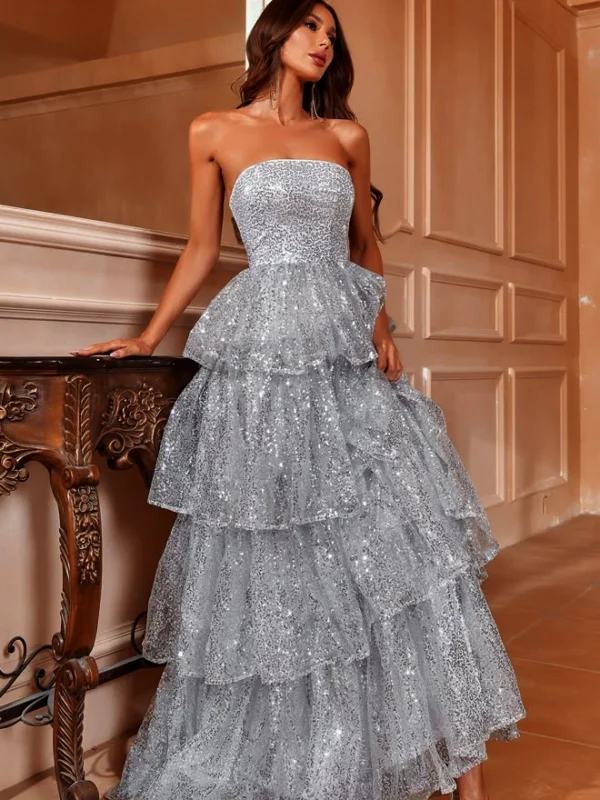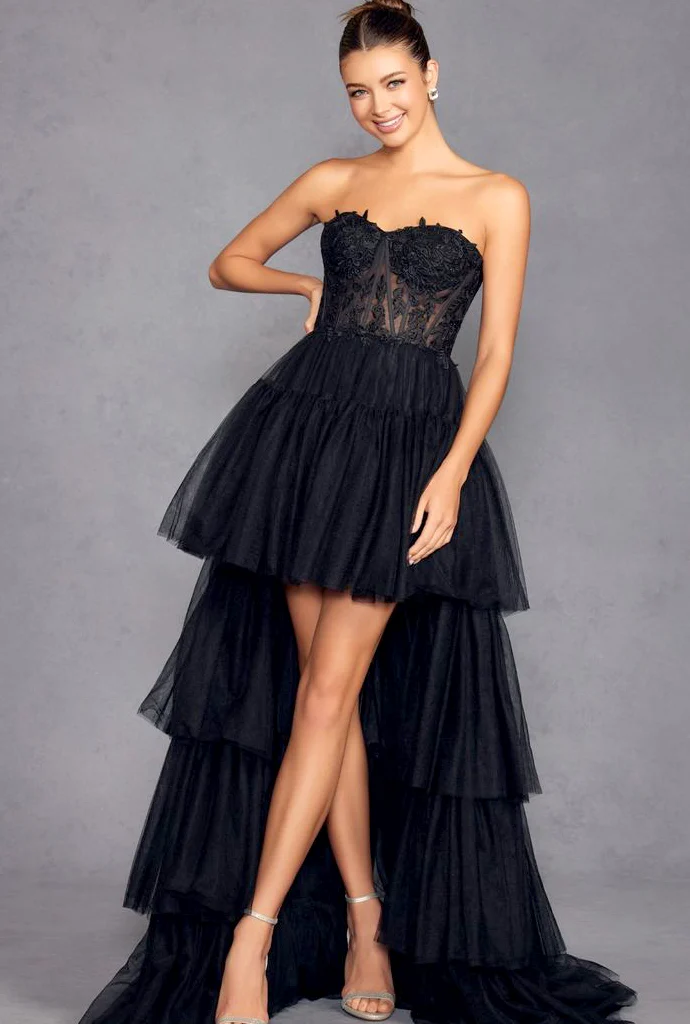
A high-low party dress combines a shorter front hem with a longer back, so assess the side transition as well as the front view. The difference can be subtle or dramatic, with a curved edge, separate layers or a train-like back. When choosing one, examine the whole outline and the way the longer section moves. A front photograph alone does not show how the dress will work on steps or beside a chair.
Our gallery compares a black layered look, a dark blue patterned look and a grey-green dress with broad ruffles. The images are styling references rather than product listings. They do not verify fabric composition, brand, price or current availability. The practical questions below help you use the references at a fitting.
High-low party dress: read the hem from several directions
Notice where the shorter section ends, how it joins the sides and how far the back extends. These three points matter more than a single label such as mini or maxi. A dress may show the knees from the front while covering much more from the side. Ask to see the actual garment from all angles instead of assuming that the photograph reveals the entire hem.
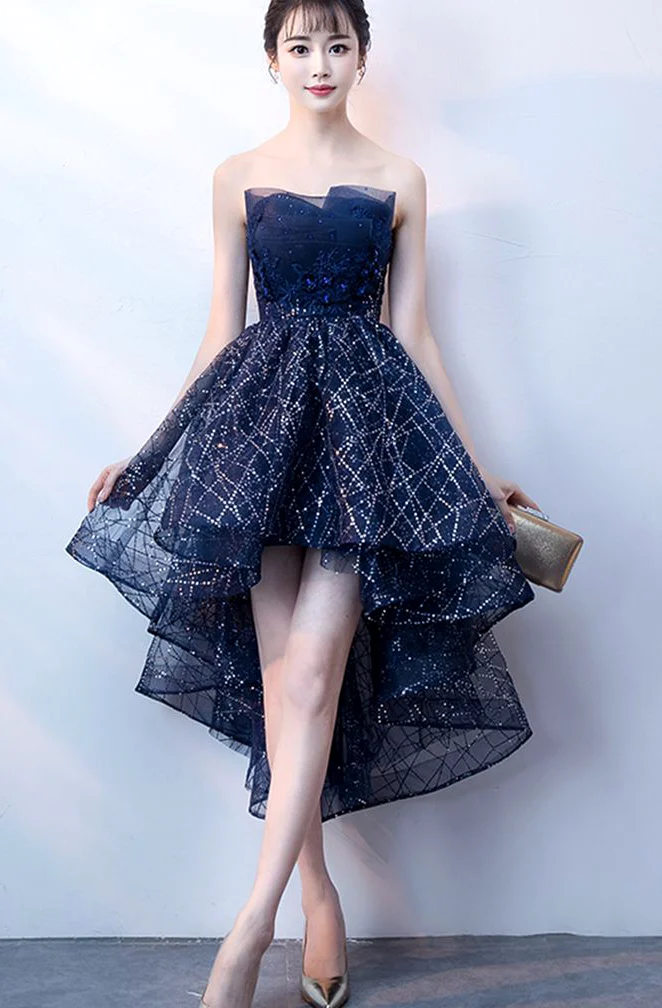
Compare a gently curved hem with a strongly stepped design if both interest you. Stand naturally rather than copying a model's pose. Look at the shape with your arms relaxed, then walk towards and away from a mirror. You are assessing your preferred balance of exposed leg, skirt volume and trailing fabric.
Three references, three focal points
The black look combines a patterned, sheer-looking upper section with a short front skirt and longer layers behind. The upper detail and the stepped hem both attract attention. A restrained shoe or bag is one way to keep those elements central; compare it with a stronger accessory rather than treating either choice as a rule.
The dark blue dress uses a visible light-coloured line pattern across the skirt. Its shorter front opens into a longer back, and the neckline forms a more angular line than the black reference. Look at the pattern from a normal distance as well as close up. A detail that appears busy in a crop can read differently across the full outfit.
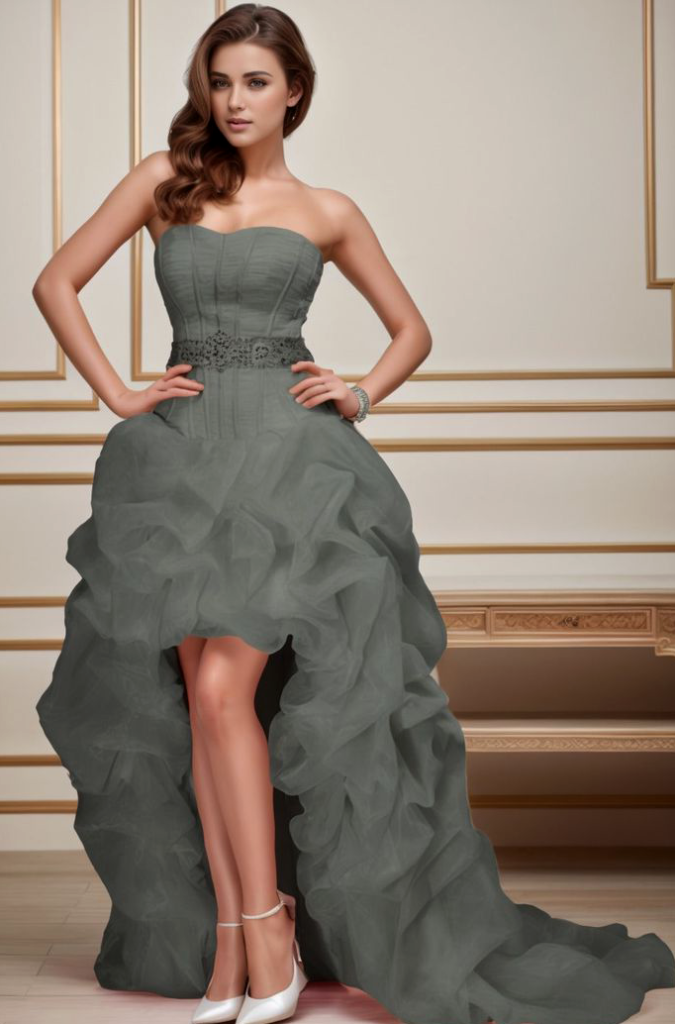
The grey-green reference places broad ruffles around the high-low edge. The ruffles make the boundary of the skirt a focal point, while the bodice looks quieter. Consider how much attention you want the hem to receive. Try an outer layer with the real dress so that you can judge how it changes the upper-to-lower balance.
Choose shoes with the actual hem
Because the front is shorter, shoes are clearly visible in many high-low looks. Try the intended pair before finalising the length. Compare heel shape, straps and colour with the front and side views, then walk in them. A photograph can suggest a combination, but it does not establish whether a particular shoe is comfortable for your event.
If you plan to change shoes later, bring both pairs to the fitting. A longer back section may sit differently when the heel height changes. Discuss any adjustment with the person altering the dress rather than choosing a final length from a single pair. Think about the route you will walk, not only the floor used for photographs.
Test walking, turning and sitting
Take several ordinary steps and turn without holding the skirt in a pose. Sit down, then stand up again. Notice where the longer section falls and whether you need to move it clear of the chair. Ask how you should manage the back when using stairs or moving through a crowded room.
A practical test is to hold the bag you expect to carry while moving. This shows whether you have a free hand when you need one. If dancing is part of the plan, test familiar movements and ask whether the design needs special handling. Resolve these questions before alterations are agreed.
Use the invitation as a guide
High-low describes a hem, not a complete dress code. The suitability of a specific dress depends on the invitation, the setting and the outfit as a whole. Debrett's explains formal evening conventions such as black tie; ask the host about an unfamiliar or event-specific term. Do not assume that a long back automatically makes every dress formal enough.
For an outdoor celebration, check the ground and the route between locations. For an evening mainly spent at a table, spend time sitting in the fitting. These considerations help you choose a length and shape that suit the actual occasion without applying a universal rule to every party.
Balance layers and accessories
Add one element at a time. With a ruffled hem, compare a simple bag against a more decorative one while keeping the shoes unchanged. With an intricate bodice, try the outfit without a necklace before adding jewellery. Keeping most elements constant makes each styling decision easier to judge.
Photograph the same front, side and back views if the shop permits it. Check the complete outfit under similar lighting. Your notes should describe specific observations, such as a hem that clears the floor or an accessory that covers a detail, rather than rely only on whether a photograph feels dramatic.
Ask about alterations and care
Describe the shorter front and longer back separately when discussing length. Ask how a change would affect layers, ruffles and the transition at the sides. Get the proposed work, cost and timetable clarified. A complex-looking edge is not necessarily altered in the same way as a simple straight hem.
Use the actual care label for cleaning decisions. GINETEX explains textile care symbols, but the image itself cannot identify a suitable treatment or fibre. Keep the instructions with the purchase details. For decorative or layered areas, ask the supplier about the complete garment rather than assuming that similar-looking fabrics share the same care requirements.
Open the gallery to compare each hem on its own page. The descriptions focus on visible features and practical fitting checks, helping you turn inspiration into a useful shortlist.
Assess the front, side transition and back together. Test the hem with your intended shoes while walking, turning and sitting.
Frequently asked questions
What should I check if I plan to change shoes while wearing a high-low party dress?
Bring both planned shoe pairs to your high-low party dress fitting. With each pair, compare the short front hem, side transition and the longer back’s distance from the ground. Walk a few steps and discuss both heel heights before agreeing the final hem length.
What should I ask before shortening a high-low party dress with ruffles or layers?
For a high-low party dress, describe the short front, side transition and longer back separately. Ask how alterations would affect layers, ruffles and the balance between lengths. Confirm work, cost and timing for the actual model instead of assuming the same approach as a straight hem.
Does a long back automatically make a high-low party dress formal enough?
The hem shape alone does not determine the dress code. Check the invitation, venue and complete outfit, and ask the host about unclear wording. Consider the actual routes between spaces and any long periods of sitting when choosing the length, shoes and an extra layer.