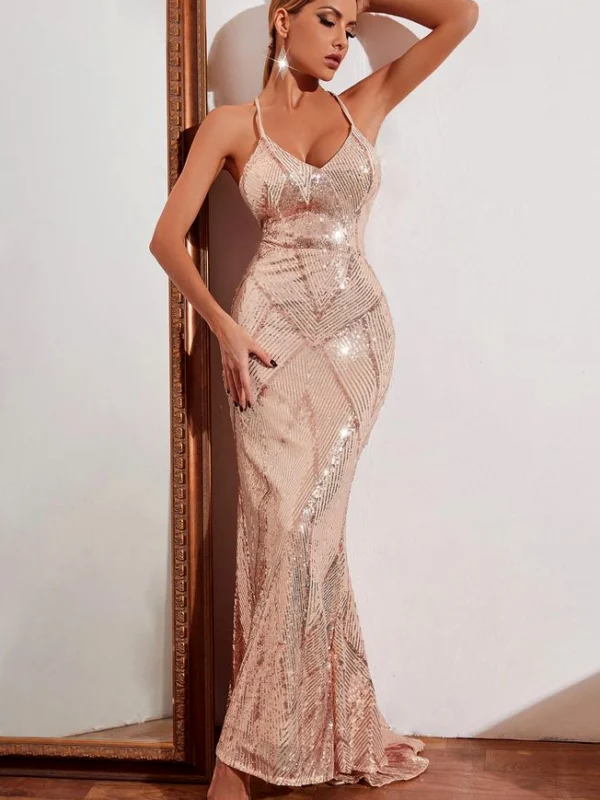
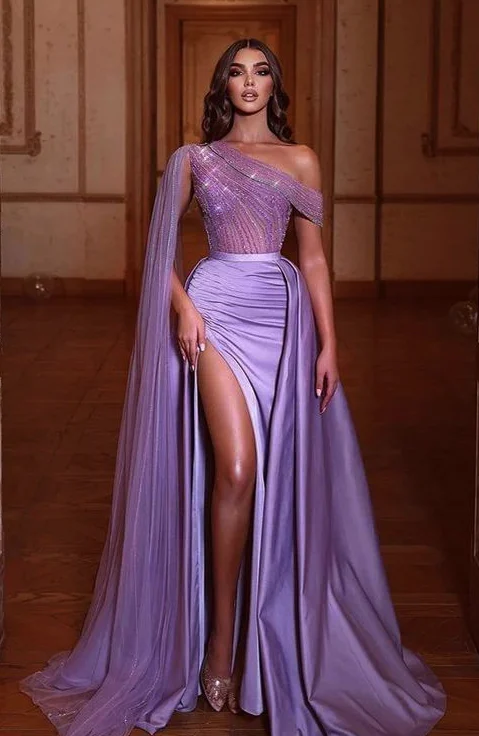
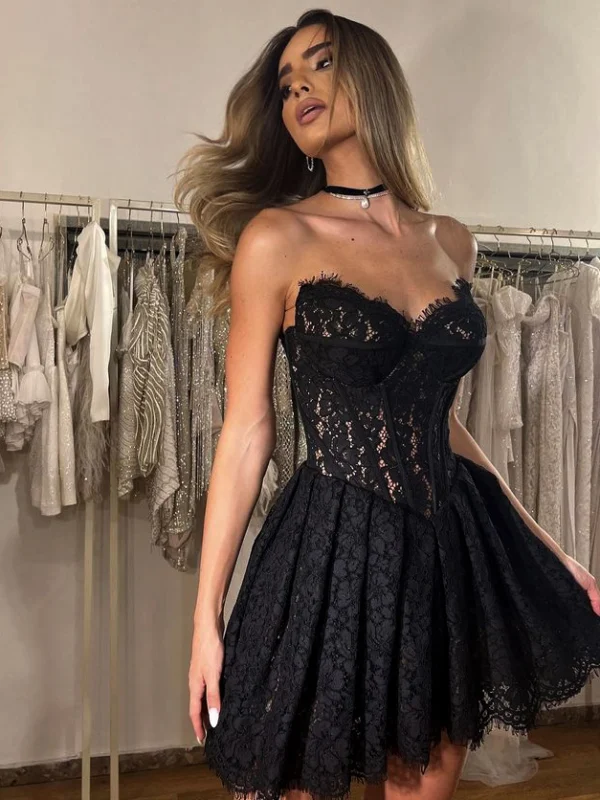
Shoes for an evening dress define the small part of an outfit visible between skirt and floor. The four long dresses show different transitions: pale ankle accents beneath dark green, pale open straps beside black, a narrow ankle line under olive and closed silver-coloured toes beside a sparkling skirt. Not every picture shows the whole shoe. Use them for those visible contrasts, choosing the actual heel height and handling only with the complete pair worn alongside your dress.
Compare shoes for an evening dress as visible shapes first
Begin by asking which parts of the foot you want visible in the complete outfit. An open strappy shoe leaves different spaces from a closed toe. The silver-coloured view shows a rounder closed front beneath the long skirt. Toes and fine straps remain visible in the black and olive examples. Keep the dress unchanged for the first comparison if you can try both options on the real outfit. The difference can then be attributed to the shoes rather than a simultaneous change of colour or skirt shape.
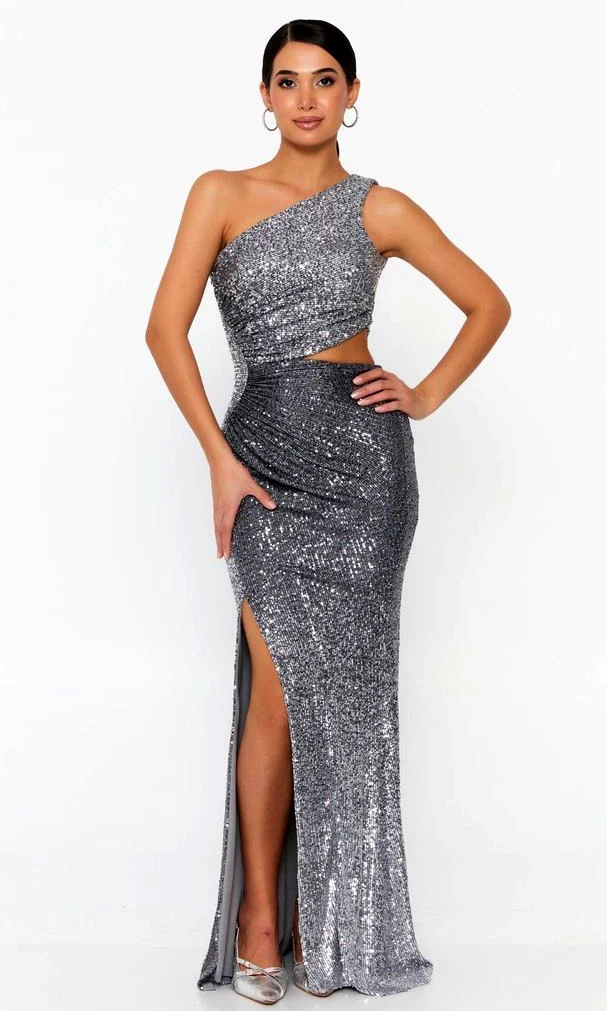
Stand before a full-length mirror with both feet in your ordinary position. A leg extended forwards may show more of the shoe than feet placed alongside each other. Compare both views instead of saving only the more decorative pose. For an online selection, request front and side pictures of the pair as well. A narrow strap line in a dress photograph does not explain the whole shoe shape or its fastening around the heel, leaving those product details to be checked separately.
Treat the leg opening as a frame for the shoe
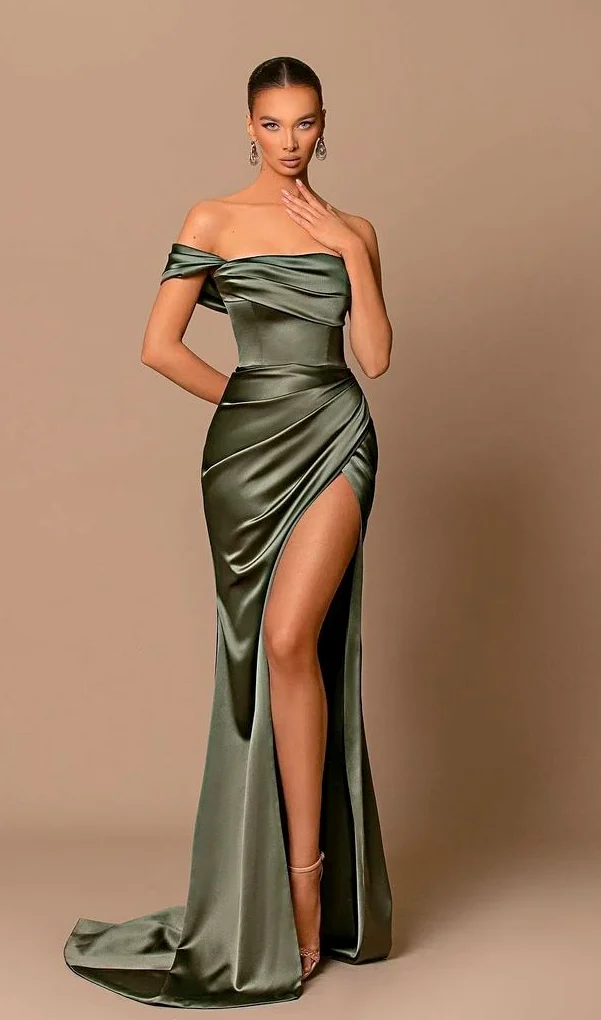
The black and green dresses leave a longer opening between draping and footwear. That can make the connection from ankle to lower skirt more noticeable. In the olive view, a narrow line circles the ankle while glossy-looking folds travel down beside it. Decide whether you want a fine interruption or a stronger accent there. You do not have to enlarge the opening or change all the dress draping to compare those footwear choices. Begin with the particular line visible at the ankle.
Check the actual opening standing, walking and seated with your selected shoes. Compare how much footwear appears during movements you genuinely plan. The dark-green photograph leaves part of the lowest shoe area outside the frame, so it is not a complete reference for the pair. Our long evening dress guide adds the whole lower-length decision. The specific question here remains how the visible shoe finishes the opening, rather than how closely you can copy a pictured leg position.
Choose brightness and colour beside the skirt
Metallic-looking straps and silver-coloured closed shoes create different pale areas. A rounded closed front provides a larger continuous surface, while fine straps distribute brightness through smaller lines. Compare that effect beneath the real skirt. You may want a shared light accent with the dress or prefer a quieter shoe colour. Pale footwear does not need to repeat every reflective point in the cloth. Decide how much attention you want at the bottom of the complete outfit rather than judging the shoe close-up alone.
Assess shoes for an evening dress under lighting relevant to your choice. Start with unfiltered photographs and an unchanged camera position. The olive dress looks smoothly glossy, black distributes light differently and the silver-coloured option has many small reflections. None establishes fibre or leather information. When assessing colour online, request an unchanged product view and actual material details. A colour that appears suitable in a photograph and confirmed construction are separate pieces of information, both belonging to the real model when they matter to your order.
Add bag and jewellery to the strap choice in stages
The dark-green photograph includes a small pale sparkling bag, necklace and wrist accent beside the light ankle lines. You can like the whole arrangement without adopting every object together. Begin with dress and shoes, then add the bag. Decide whether its pale area should connect visibly with the footwear or become an independent accent. The bag’s scale matters alongside its colour. Compare both in a complete view rather than trying to combine isolated accessory photographs mentally before the pieces have been seen together.
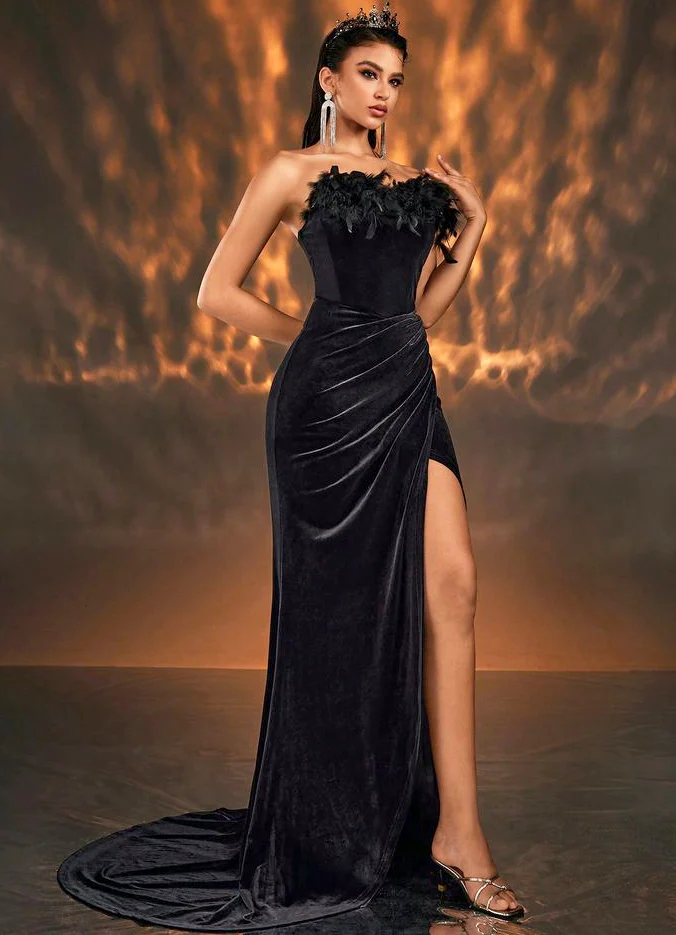
The black dress has a strongly projecting dark neckline trim and long earrings. Its open shoes do not therefore need an equally large extra detail. You can deliberately choose fine straps or test a more noticeable pair. Our jewellery with a statement dress guide explores accent distribution. Change only one addition at a time for the shoe decision. You can then recognise whether another earring or the actual footwear changed the impression instead of treating the complete arrangement as an indivisible package.
Agree heel height and skirt length with the real pair
The photographs do not show every heel or establish a dependable shared height. Select it on the actual pair rather than having it guessed from the dress picture. Put on both shoes with the garment before agreeing length. Check the front and side hems against the floor. If you plan another pair for a change, try that too. Different footwear can alter the visible distance from floor to hem, so it belongs in the discussion before a final alteration is agreed.
Rehearse the route you actually intend at the fitting, including an ordinary step and turn. Hold your bag if it belongs to the plan. Observe whether you can handle the skirt as intended and ask for the real dress’s recommended handling to be demonstrated. A long side panel need not meet the second pair for the first time after purchase. Record which pair the agreed length concerns. That is more precise than a general instruction to make the hem suitable for high shoes without identifying the footwear.
Record product details and the finished combination
Before ordering shoes for an evening dress, establish the exact model, size, fastening, materials and care information. The details should concern what will be delivered rather than a similar photograph. Clarify fitting conditions when buying online. Compare left and right shoes as a pair with the dress afterwards. The closed silver-coloured toe and different open straps provide useful ideas, but neither prove a particular maker nor predict how an unidentified product will feel. A picture highlighting one foot is not a substitute for seeing the complete pair yourself.
The dress still follows its own care label. GINETEX explains textile care symbols; those are not general shoe-care instructions. Keep the respective information separate. Two complete combinations with the same bag and a normal standing view can make the final choice clear. Decide whether you prefer open lines or a closed toe and how much brightness you want near the floor. Shoes for an evening dress then become actual pieces you have deliberately selected, rather than an unseen pair completed from a photographed pose.
Choose shoes for an evening dress through the visible foot, leg opening and hem. Compare open and closed shapes before agreeing the final skirt length.
Frequently asked questions
Do evening shoes have to be open at the toes?
No. The closed silver-coloured front provides a different visible finish from fine open straps. Compare both shapes with the actual dress.
When should I settle heel height?
Choose the actual pair before agreeing the final skirt length. Put on both shoes and check the front hem and side floor clearances with the dress worn.
Can I choose another pair for a planned change?
Try both pairs with the same garment before altering the hem. Record which pair the agreed length concerns and how you intend to handle the skirt during the change.
How can I compare shoe brightness beside a pale bag?
Retain bag and dress initially, changing only the footwear. Decide whether you prefer a few fine pale straps or a larger continuous closed front at the bottom.