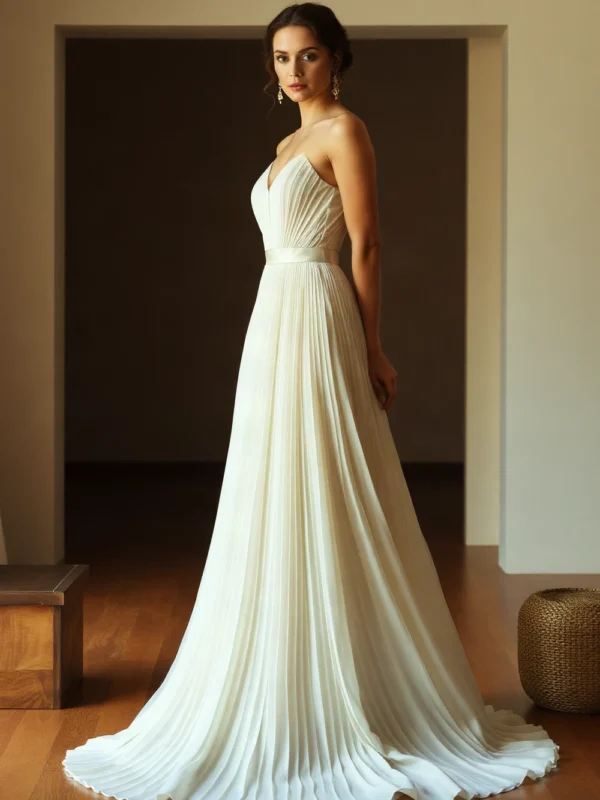
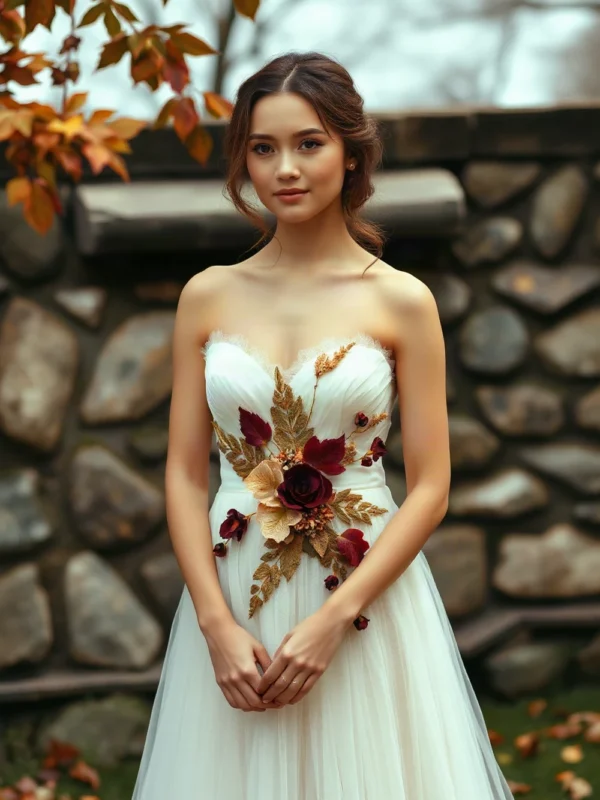
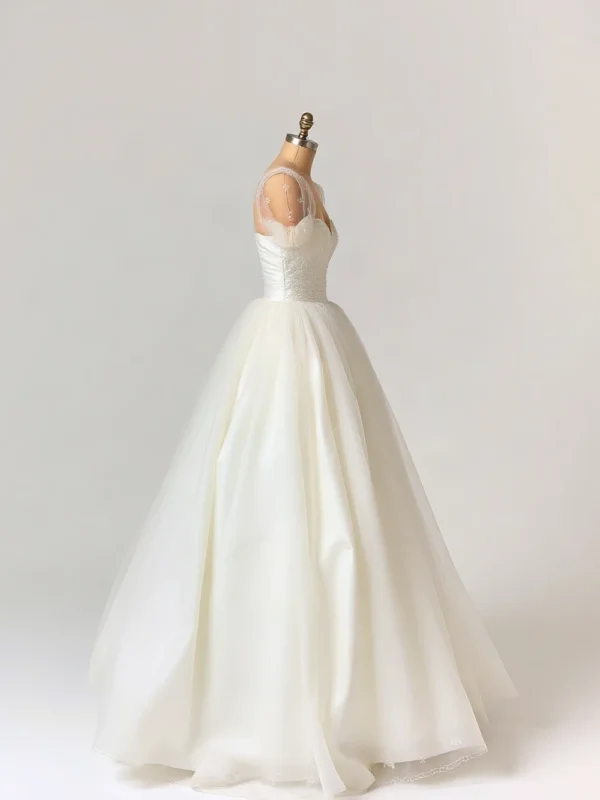
A mermaid silhouette is shaped by more than a fitted upper section and widening skirt. Neckline placement, botanical lace direction and the point where the skirt flares can transform the outline. These six concepts compare off-the-shoulder necklines, sheer-look long sleeves, a quiet train with ornate edging, scattered motifs and diagonal appliqué.
A useful comparison must go beyond one still image. A low shoulder band can affect arm movement, limited knee space can shorten stride, and a broad train needs room for walking and turning. Motif density also determines how much visual space remains for jewelry, hair and a veil. Each image is therefore treated as design inspiration, not evidence of a purchasable item, with visible details translated into practical fitting questions.
An Open Shoulder Line and a Soft Flare Transition
In the first look, a low shoulder band draws a horizontal frame around the sweetheart-like bodice. Dense botanical lace effects continue from the neckline through the hips, then the skirt changes near the knees into lighter, more open layers. This directs attention first to the face and torso, while scattered lower motifs soften the division between fitted and fuller sections.
Check whether the shoulder band stays comfortable when the arms reach forward or upward. The gradual flare looks fluid, but walking space inside its layers still needs testing. The greenhouse-like setting reinforces the botanical theme, though the same density could read differently elsewhere. Fitting photographs in daylight and indoor light can show whether the surface pattern remains distinct from the silhouette.
A Lace-Edged Train on a Quiet Surface
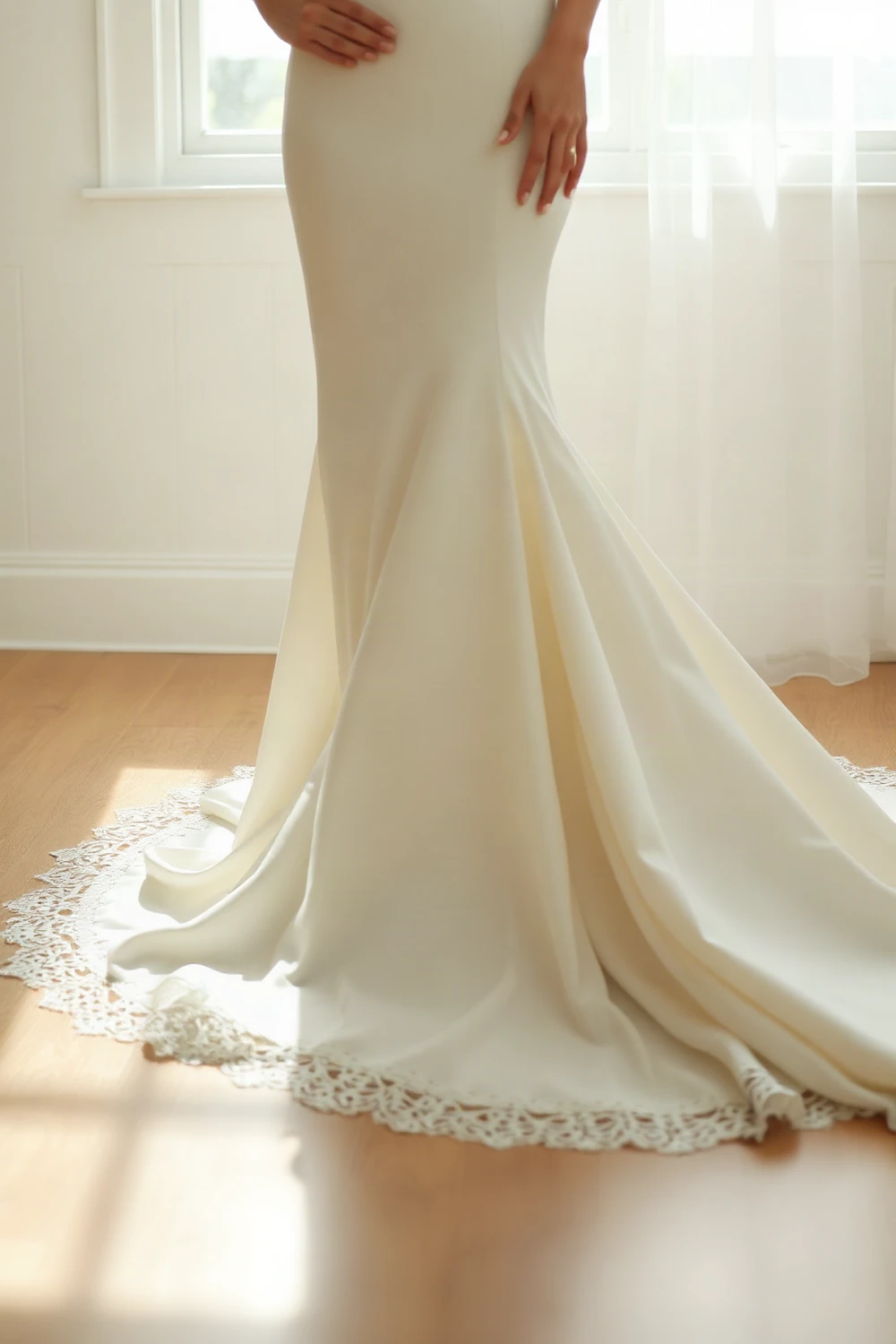
The second image isolates the skirt and train. A smooth-looking surface runs uninterrupted from the hips through the knees, then opens into broad floor-level folds. A patterned scalloped border traces the perimeter without disrupting the plain center, so decoration emerges in movement and near-floor photographs rather than dominating the silhouette from afar.
This offers an alternative to an entirely patterned skirt, but the crop cannot support judgments about the neckline or back. Evaluate the train's width, the amount of edging touching the floor and the volume when it is gathered or lifted. Its orderly shape on flat wood may behave differently on carpet, stone or stairs, making the intended venue surface as relevant as the hem pattern.
Botanical Motifs Across Illusion-Effect Sleeves
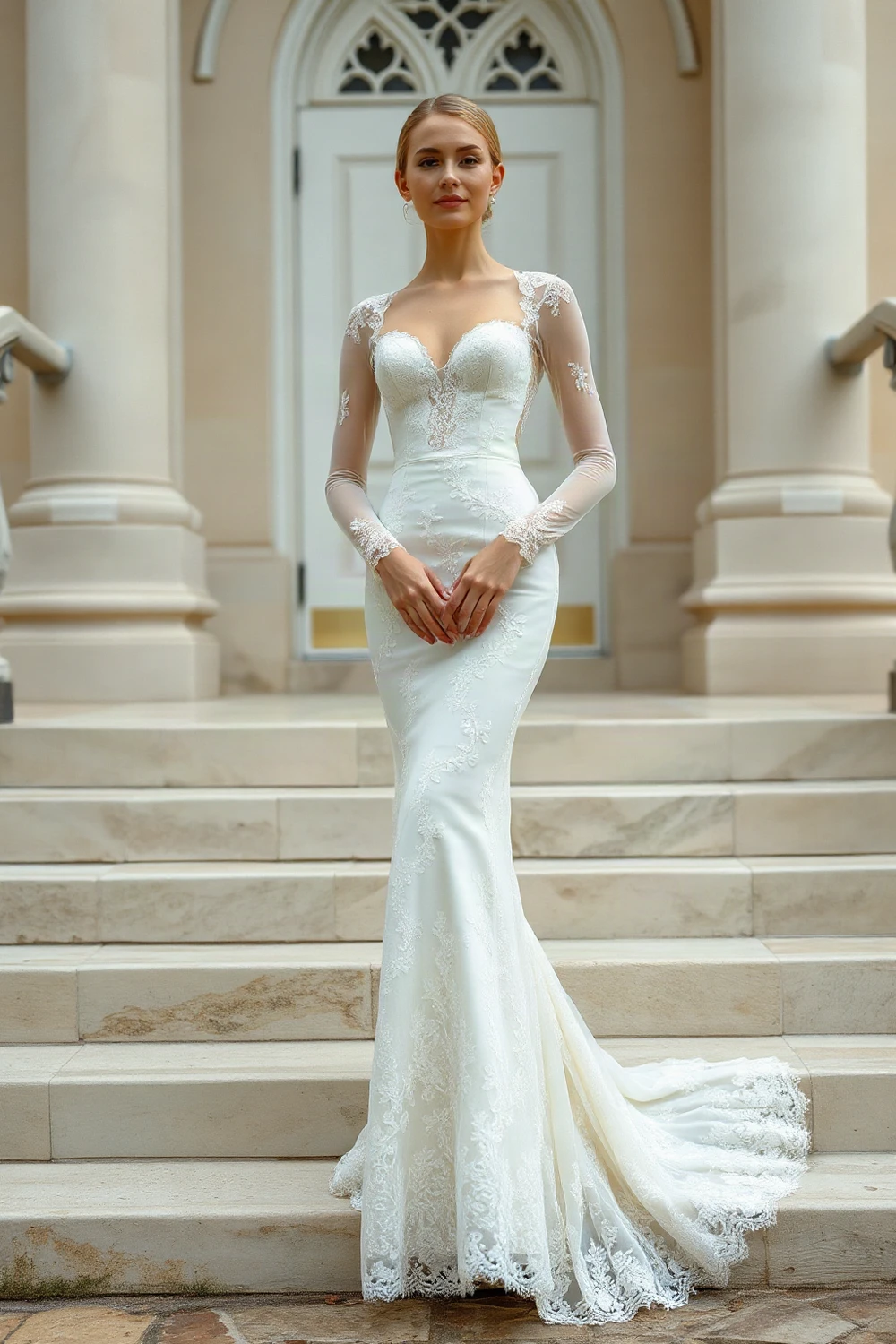
The third concept combines a sweetheart neckline with long, sheer-look sleeves. Motifs cluster at the shoulder caps and cuffs, leaving each sleeve's center more open. Smaller groups descend across the bodice and skirt, connecting the sleeves to the design, while a gradual flare and patterned hem carry the same visual language to the floor.
Assess long sleeves for more than coverage: elbow flexion, cuff contact with the hand and movement at the shoulder seam all matter. Contrast among the transparent-looking ground, its underlayer and the wearer's skin can change how light or defined the motifs appear. Compared with the first design's exposed shoulders, this creates more framing without the weight of a fully opaque sleeve. Shoulder details register in portraits, while the descending pattern appears in full-length views.
Off-the-Shoulder Sleeves and a Dramatic Flare
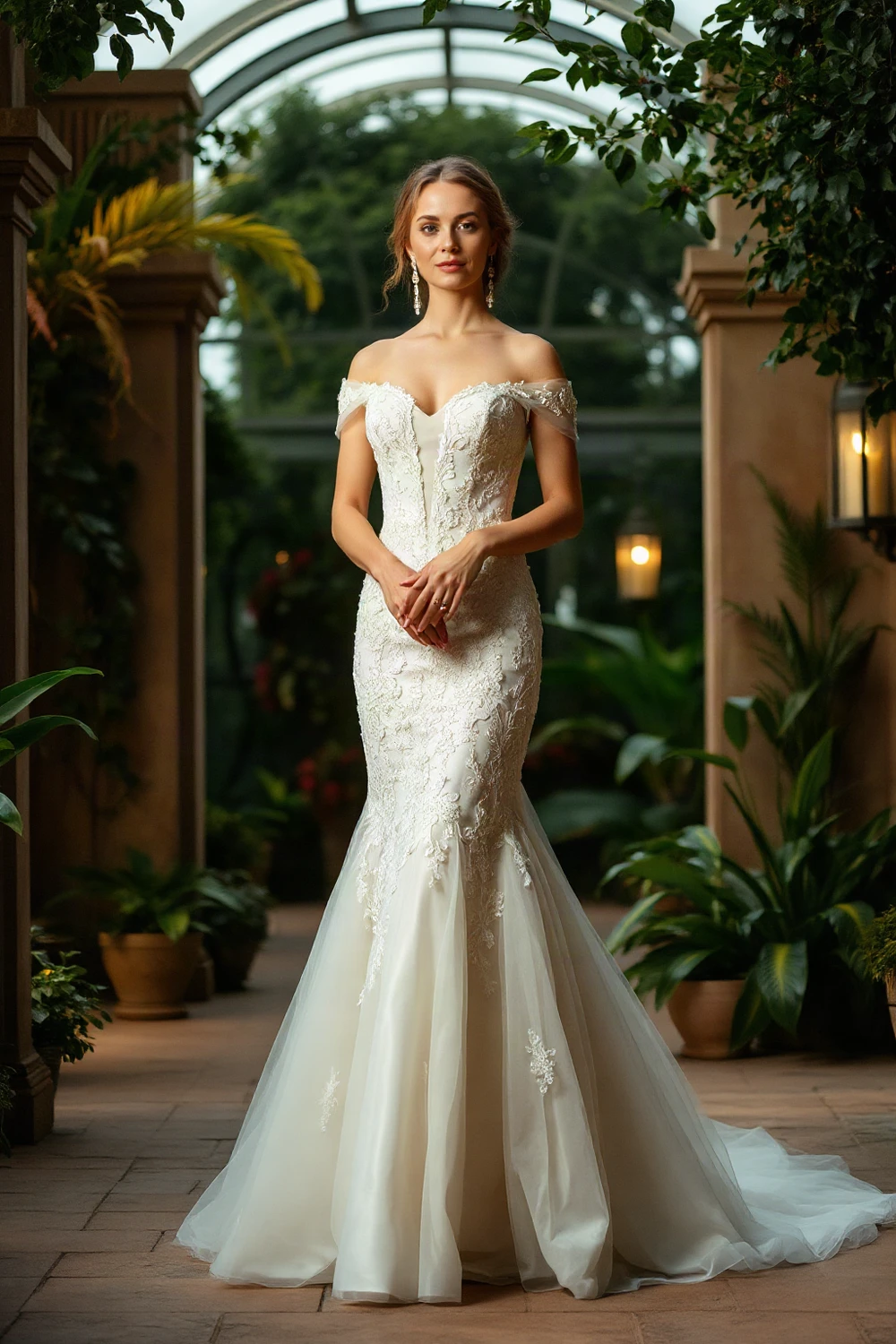
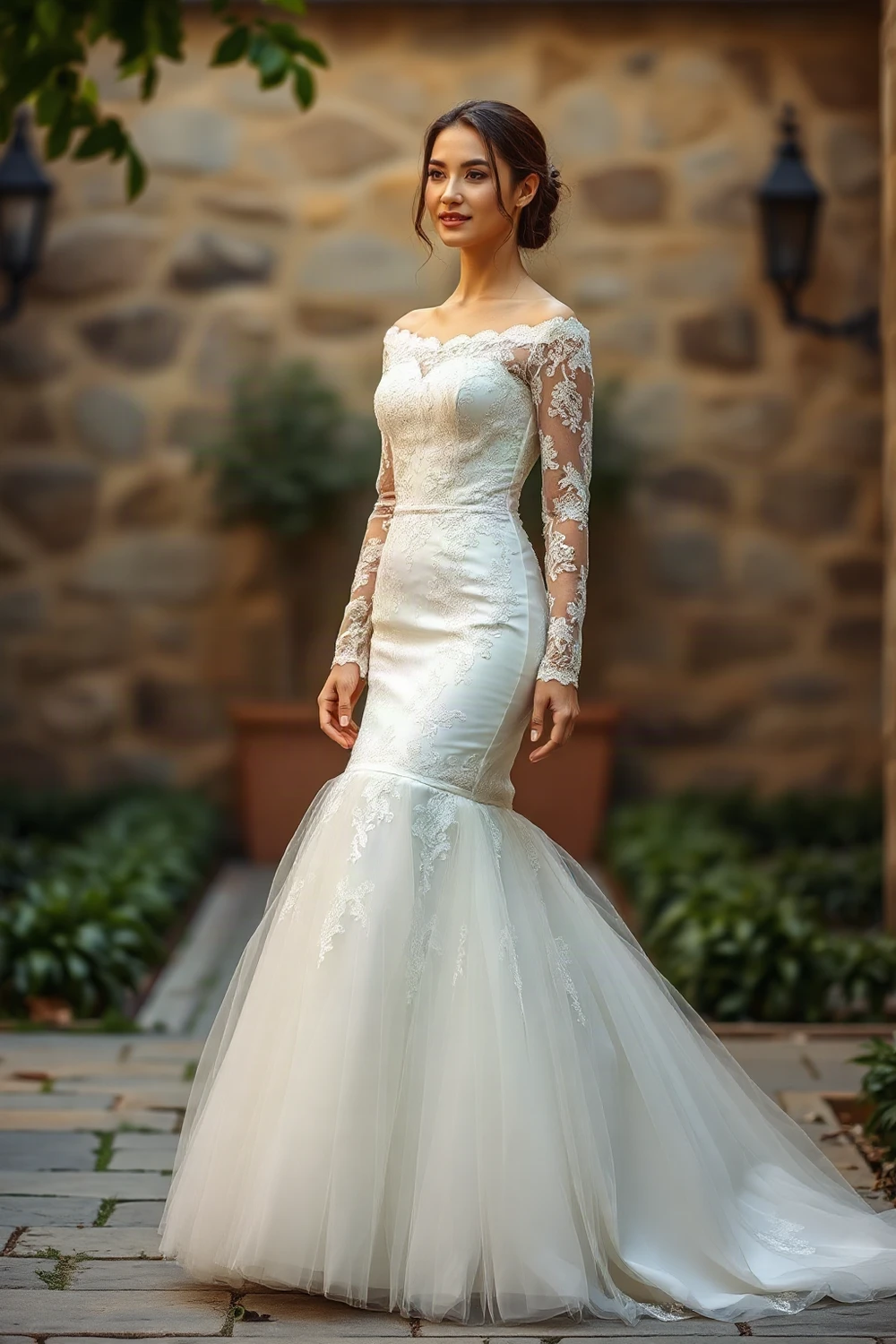
The fourth design pairs an open shoulder line with full-length, sheer-look floral sleeves. Its bodice stays fitted until the skirt expands sharply from just above the knees into a broad, layered, tulle-like lower section. A narrow horizontal waist detail reinforces the divide between the sculpted upper portion and voluminous flare, producing a more graphic change than a gradual mermaid transition.
An earlier flare makes the lower skirt prominent from the front, but its narrow section may feel different while sitting, climbing steps or turning. Try normal steps, a longer stride and a full turn during a fitting. The sleeves and low neckline must also move together. Compared with the first image, this concept is more theatrical and defined; compared with the second, volume is concentrated across the front rather than mainly in the trailing hem.
Slim Straps with Spaced Botanical Clusters
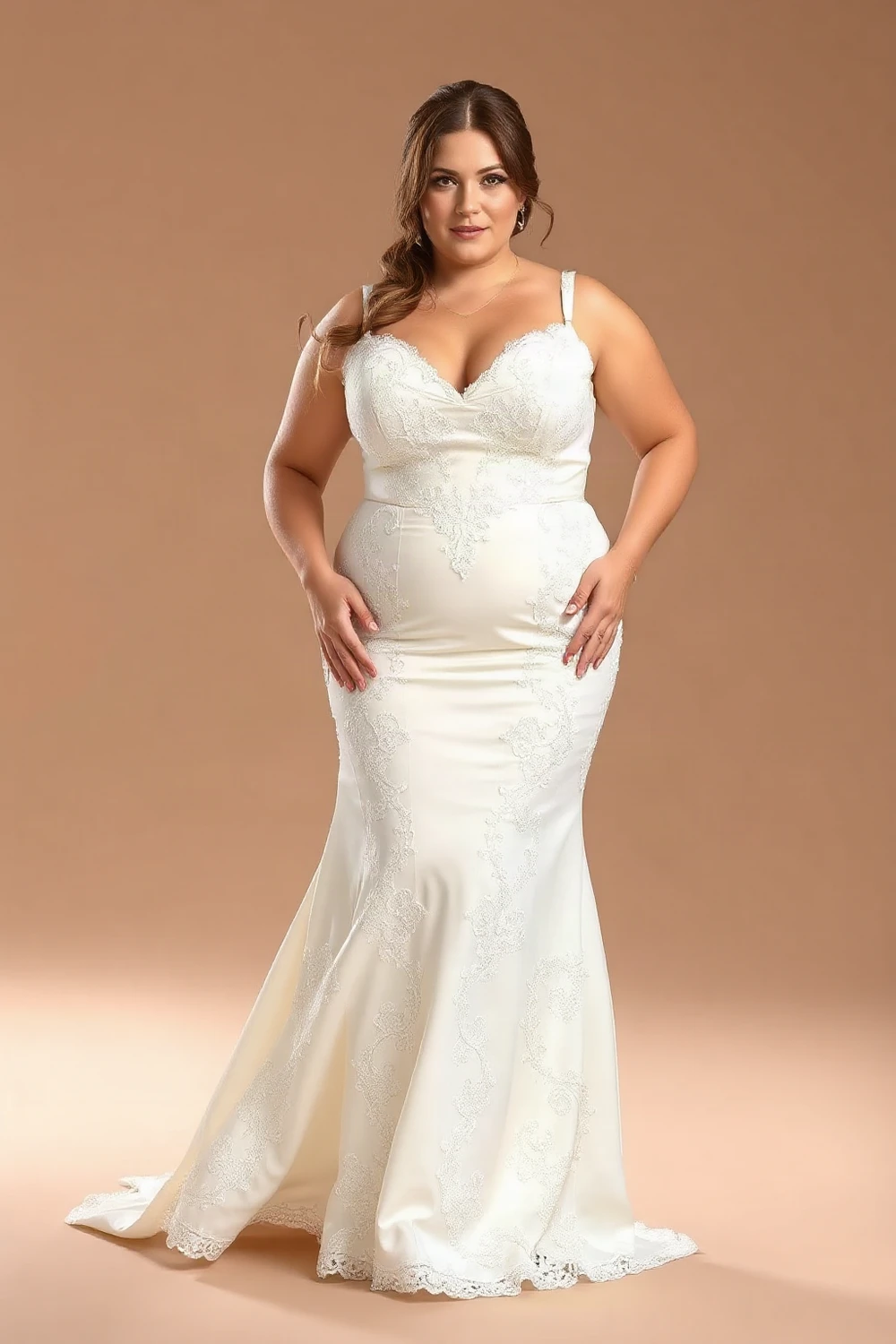
The fifth look opens the shoulders with slim straps and a softly crossed sweetheart neckline. Botanical lace effects form separated clusters around the neckline, waist, hips and skirt rather than covering the full surface. The smooth pale ground defines each group's edge, while a gradual flare enlarges the lower silhouette without a sharp horizontal break.
Spaced decoration offers more surface interest than a plain dress but less density than continuous lace. Consider strap position and neckline depth together with required support; proportion alone cannot answer that question. Also ask whether waist or side-seam alterations would meet nearby motifs. Compared with the fourth concept's sleeves and forceful flare, this arrangement frees the arms, leaves more visual quiet and moves more calmly into the skirt.
Asymmetric Direction Through Diagonal Appliqué
The sixth concept uses a strapless sweetheart neckline and diagonal lace-look placement over broad smooth areas. One large motif group begins near a hip and travels toward the skirt's opposite side, directing the eye downward at an angle rather than straight across. Smaller side motifs balance the composition without removing its deliberate asymmetry. A controlled lower flare completes the mermaid outline without interrupting that direction.
This creates a clearer focal route than the fifth image's scattered clusters. For a strapless structure, test neckline security while seated and during dance-like movement, not only while standing. Because the diagonal appliqué lies near possible alteration lines, preserving its continuity may influence tailoring choices. Simple jewelry or a veil with a quiet edge could keep the asymmetric front distinct, but assess the full combination in the relevant lighting.
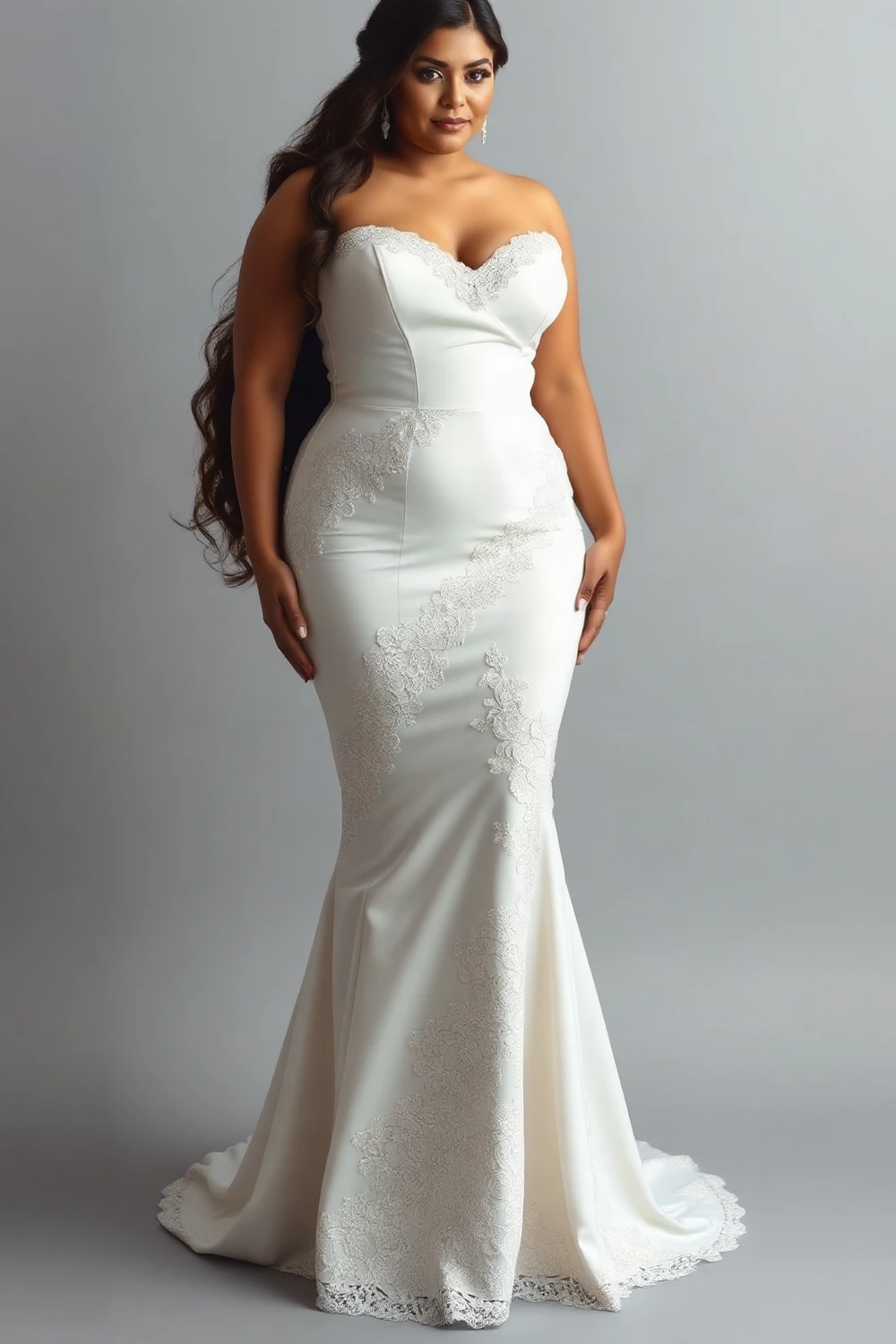
Together, these concepts show that lace mermaid wedding dresses have no single ideal motif density or flare point. A soft off-the-shoulder transition creates continuity, while illusion-effect sleeves make a defined frame. A plain train with patterned edging moves decoration toward the floor; diagonal appliqué directs it across the front.
Start a shortlist with movement priorities that are hard to compromise: neckline security, knee room, sleeve flexibility and a manageable train. Then judge how motifs register in portraits, full-length views and the venue's expected lighting. At a fitting, take front, side and back views, then sit, walk and turn. These observations reveal more than a fixed pose and help turn visual inspiration into a practical choice about comfort, proportion and a coherent overall look.
Compare lace mermaid wedding dresses through botanical motif placement, necklines, illusion sleeves, smooth surfaces, asymmetric appliqué and different flare shapes, using six distinct visual concepts as practical inspiration.
Frequently asked questions
Where should the flare begin on a lace mermaid wedding dress?
A higher, sharper flare creates pronounced volume, while a gradual expansion below the knees appears more fluid. Choose by testing normal strides, sitting and stairs as well as comparing the outline in a mirror.
Is an off-the-shoulder neckline or an illusion sleeve more practical?
An off-the-shoulder line emphasizes the shoulders, while an illusion-effect sleeve carries botanical detail onto the arms. In either case, test raised arms, bent elbows and whether the neckline and shoulder area remain comfortably positioned.
Can lace detail be limited to the train border?
Yes. A smooth surface with a lace-look border concentrates ornament near the floor and remains quieter from a distance. Consider contact with the ground, the method of gathering the train and the venue's flooring.
What visual effect does diagonal lace appliqué create?
A diagonal arrangement leads the eye from the waist toward the skirt and feels more dynamic than symmetrical placement. Check whether anticipated alterations would intersect the motif path before finalizing the layout.
How should a veil and jewelry relate to lace density?
Dense motifs across the shoulders, sleeves and bodice can pair well with visually quiet accessories. If decoration is confined to the train or a few clusters, a more defined veil edge may work; compare all pieces together in daylight.