
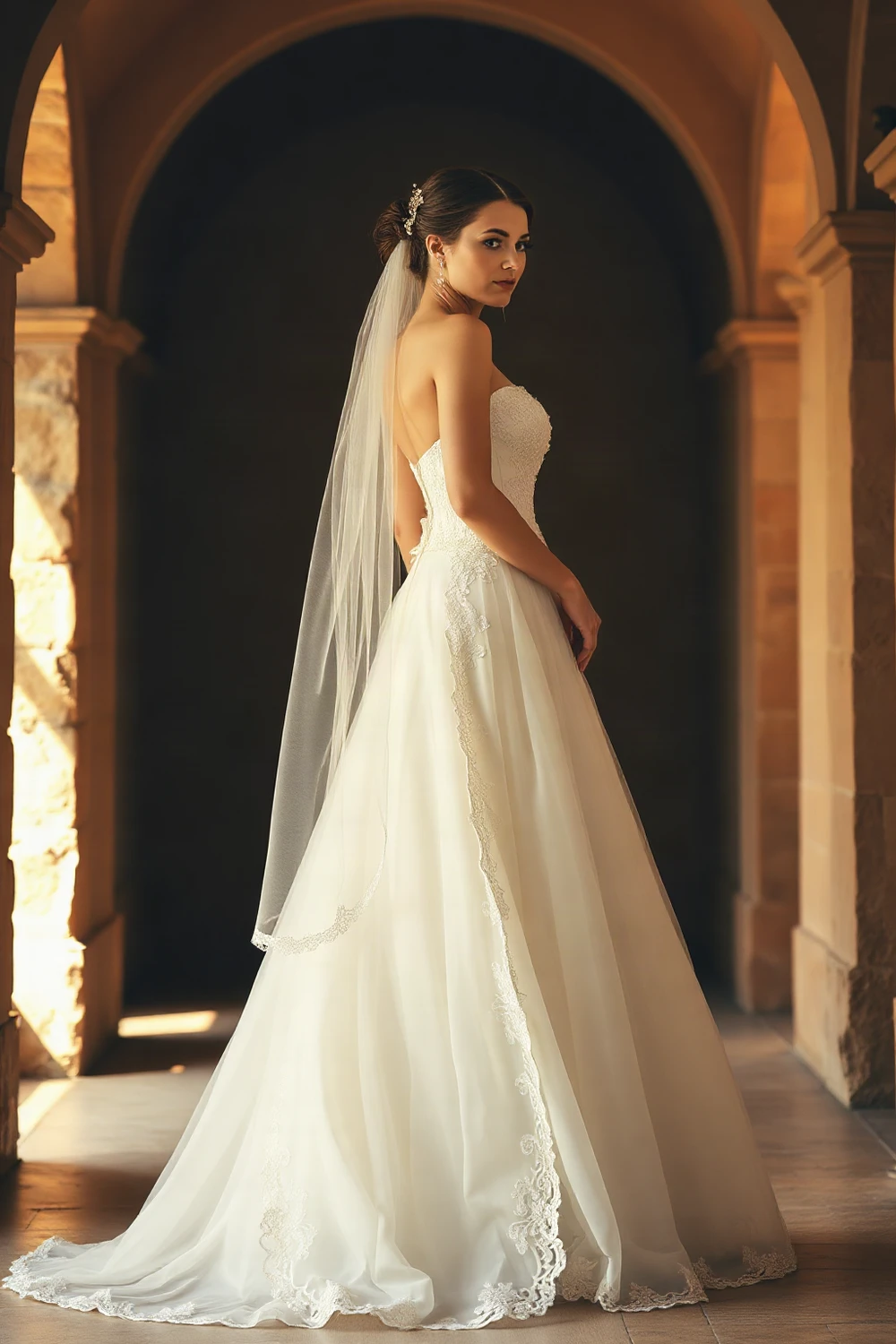
The fifth image uses a three-quarter rear angle in a dark passage framed by warm stone arches. The strapless bodice has a finely textured surface and a low, open back, while the skirt widens in softer, more matte-looking layers toward the floor. Attached beneath the hair, the veil ends around hip level and forms a light horizontal pause across the longer dress. A separate, denser lace trail begins near the side of the waist and continues down toward the hem. The shadowed center and amber stone columns create strong contrast around the ivory silhouette.
This concept demonstrates that the veil and dress decoration need not end at the same height. A shorter veil can frame the face and shoulders while the descending lace line preserves continuity through the back of the skirt. It may be easier to control while turning than a floor-length veil, although its border should still be tested where it meets hands, jewelry or bodice appliqué. The contrasting background makes a fine edge easy to see; it could become much quieter in a bright hall. If the rear view matters, plan the hair ornament, veil attachment and lace trail together so they form a clear sequence rather than several competing focal points.