
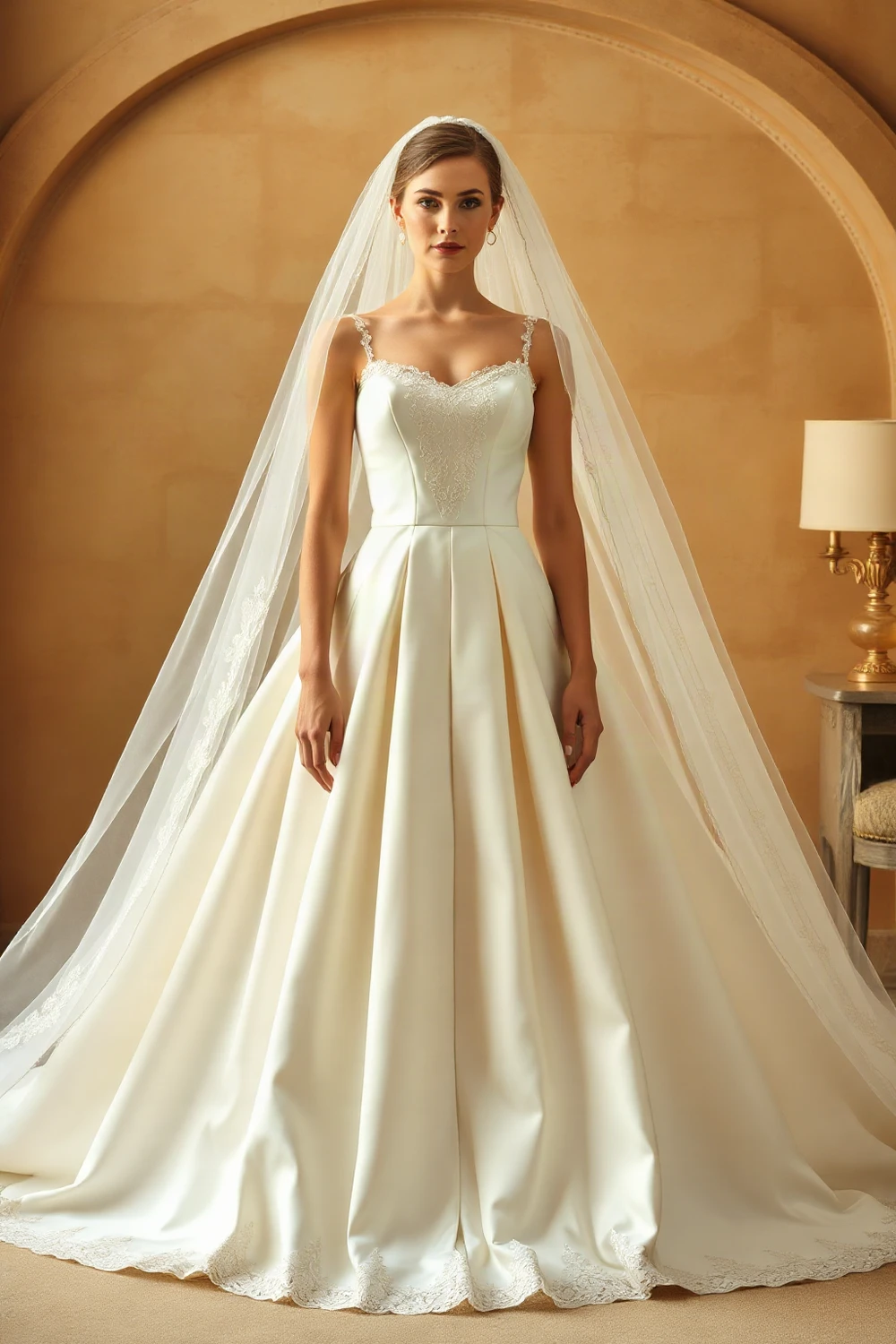
The fourth concept uses a centered, deliberately symmetrical frontal composition. Fine lace straps support a softly shaped neckline, and a restrained panel of lace forms a downward triangle across the upper bodice. The smooth ivory skirt begins at the waist in deep, regular pleats, with lace returning only near the floor-level edge. A very long translucent veil falls from the head and opens evenly to either side, drawing a large triangular frame around the figure. The honey-colored wall arch repeats that geometry, while a lamp and chair on the right add a small counterweight to the otherwise formal symmetry.
This arrangement favors a strong outline and controlled lines over abundant surface decoration. Compared with the third image’s densely patterned bodice, its quieter front lets light and shadow across the pleats carry more visual responsibility. A long veil can create an impressive ceremonial entrance, but it needs greater management in narrow aisles, between seats or outdoors. During a fitting, check whether both sides fall evenly, whether the attachment feels secure and whether the veil conceals the dress’s hem border. A straight-on photograph emphasizes balance; a three-quarter view may be more informative about the depth of the pleats and number of veil layers.