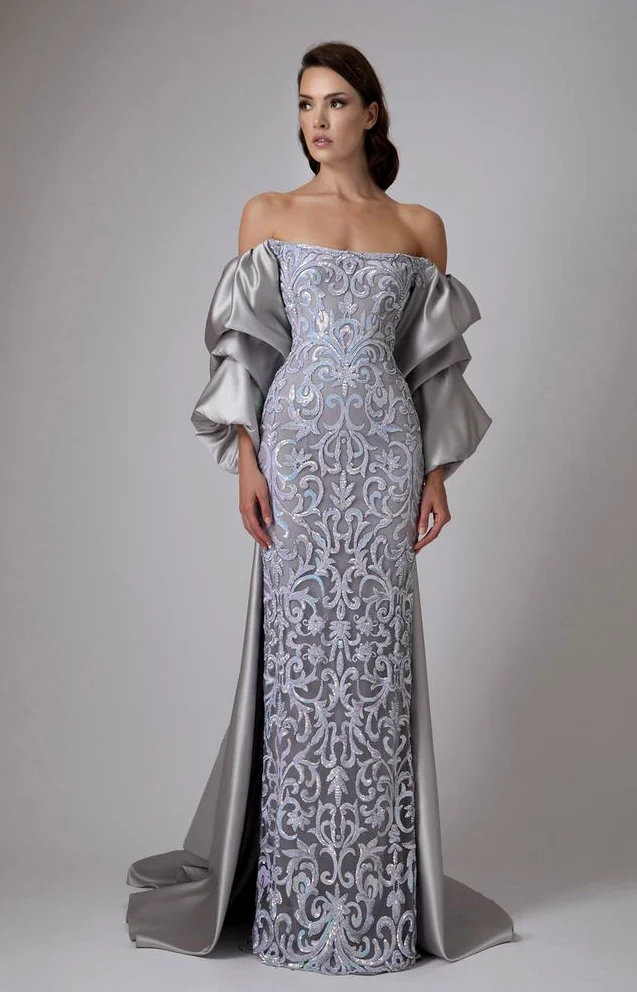
A grey dress with folded sleeves places larger smooth-looking areas beside a long densely patterned middle. The upper boundary leaves shoulders bare, with several substantial folded sections running along the arms. A longer quieter surface continues beside or behind the middle to the floor. Both hands remain visible at the sides. Pale curling motifs spread across the closer-fitting main area. Fabric name and connections of the side pieces are not established by this view, even where their colour resembles the central surface.
Use it as a two-sided alternative to the single pink shoulder form. Would you frame both arms more broadly or leave one side quieter? Test that question without another bag first. The patterned middle can remain a separate preference even if you seek different sleeves.
Let arms rest at the actual fitting and reach forwards. Inspect the upper edge afterwards before arranging it. Put intended outerwear on and off completely. Clarify included pieces and their handling. The substantial sleeve picture can then become a specific width-and-location decision without assuming removable construction or adopting every other visible feature.