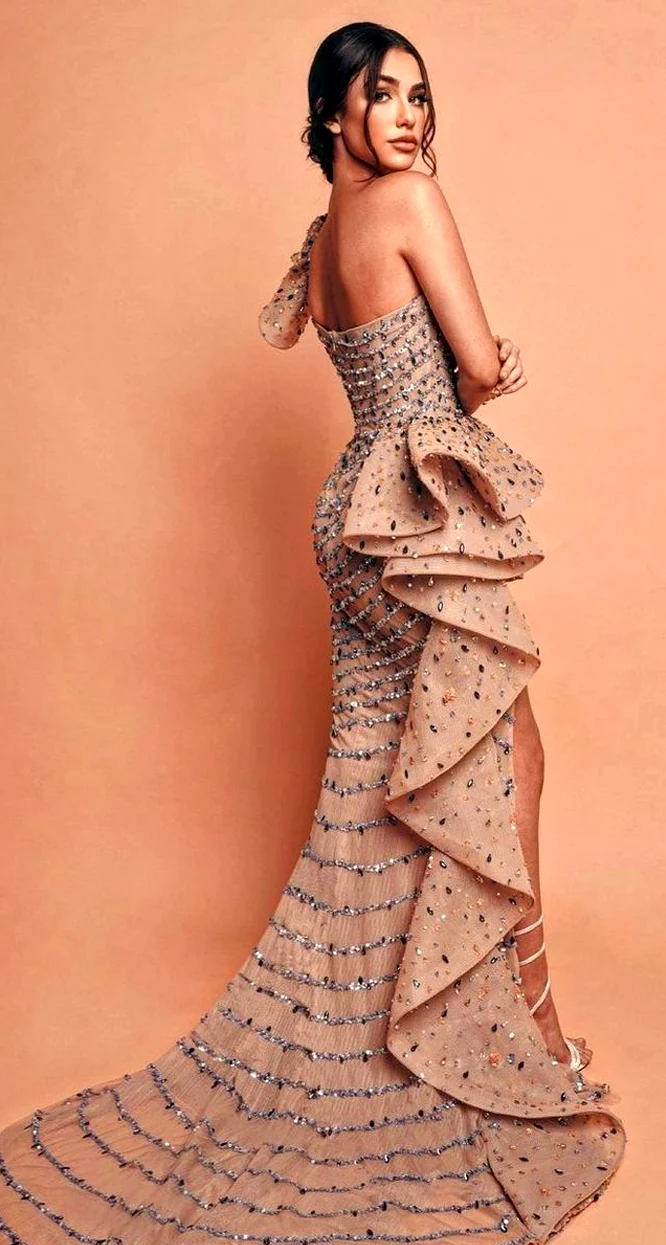
Side folds create larger stacked surfaces beside a closer beige body contour. Smaller pale reflections travel in organised rows across the back, hip and longer lower extension. The upper back remains largely bare. A more decorated arm area is partly visible on the opposite side. An open leg area and narrow shoe straps appear towards the side front. The wearer turns towards the camera with arms held closer together. This angled view is not a complete demonstration of the opposite neckline or arm arrangement.
Compare where the larger side areas begin with the single shoulder bow in pink. Should additional volume sit beside the upper body or farther down? Keep colour and jewellery out of the initial description. Spatial arrangement is a different question from the number of reflective details across the surface.
Add ordinary views with hands free. Test sitting and actual bag position without artificially moving the side area away. Ask about connected pieces and lower extension on the real garment. Similar shine makes these side forms neither a shoulder bow nor proof of a particular material.