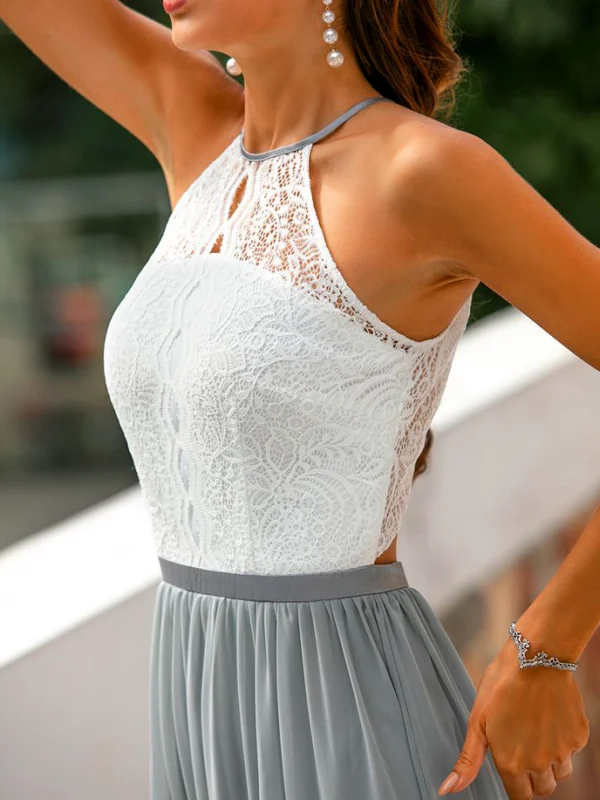
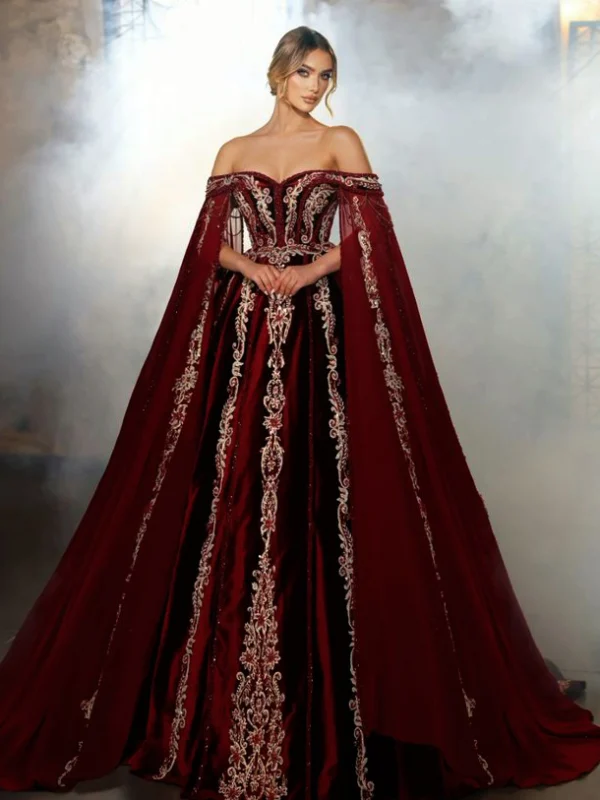
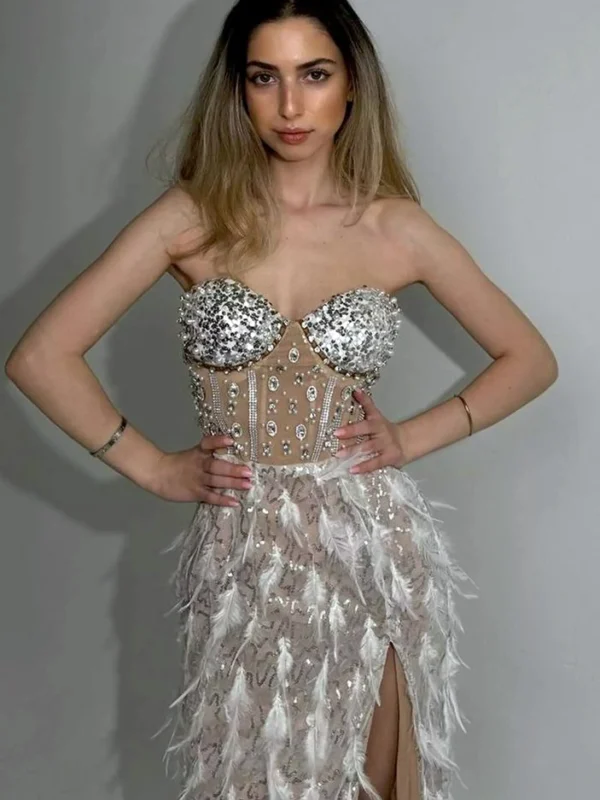
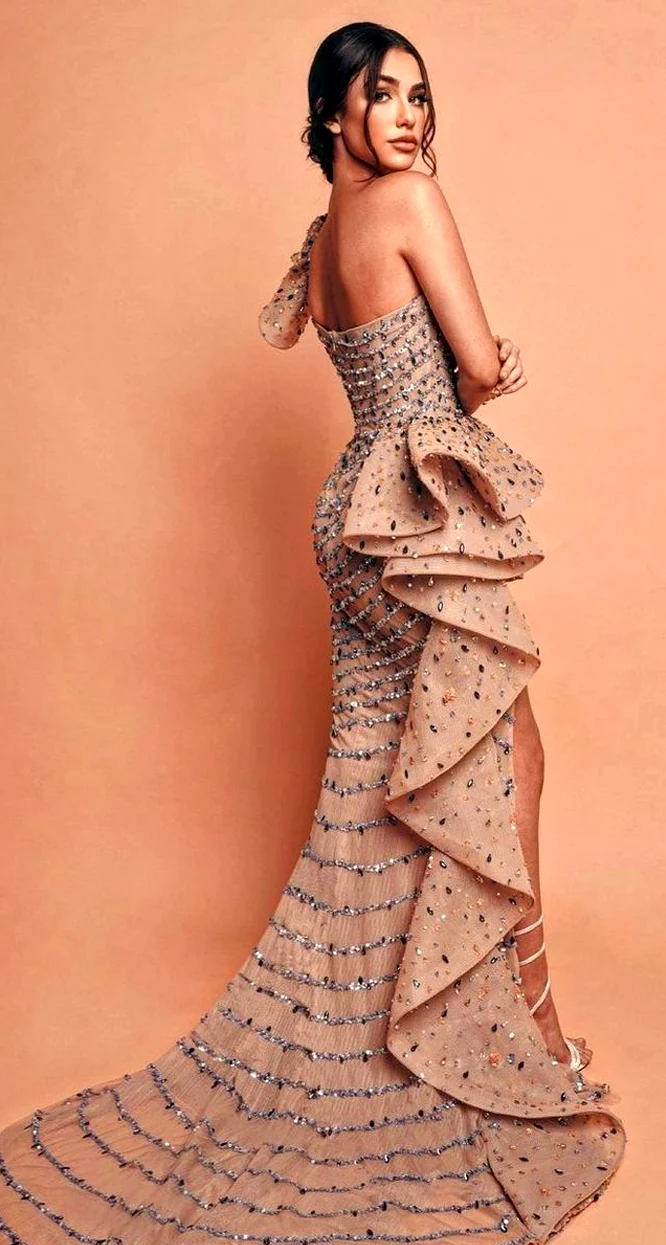
A bow evening dress changes more than a small neckline detail. A large folded shape at the shoulder can broaden the upper outline, emphasise a rear area or create a separate focus beside a quieter skirt. The pink rear view supplies one concrete idea. Other references deliberately offer different solutions: sculptural side folds, substantial sleeve areas and a quieter teal dress. Compare their locations before deciding on colour or additional jewellery. Not every shaped fold is the same kind of bow, even where several photographs initially seem equally dramatic.
Choose a bow evening dress through the bow’s actual position
Begin by asking where you want the accent visible. In the pink photograph, the large folded form sits on one shoulder while the upper rear edge travels diagonally. A larger smooth surface remains below. This has a different job from a bow centrally at the back or waist. Describe the intended position explicitly rather than recording only the word bow and later finding a different relationship between neck, arm and skirt in the actual garment you are considering.
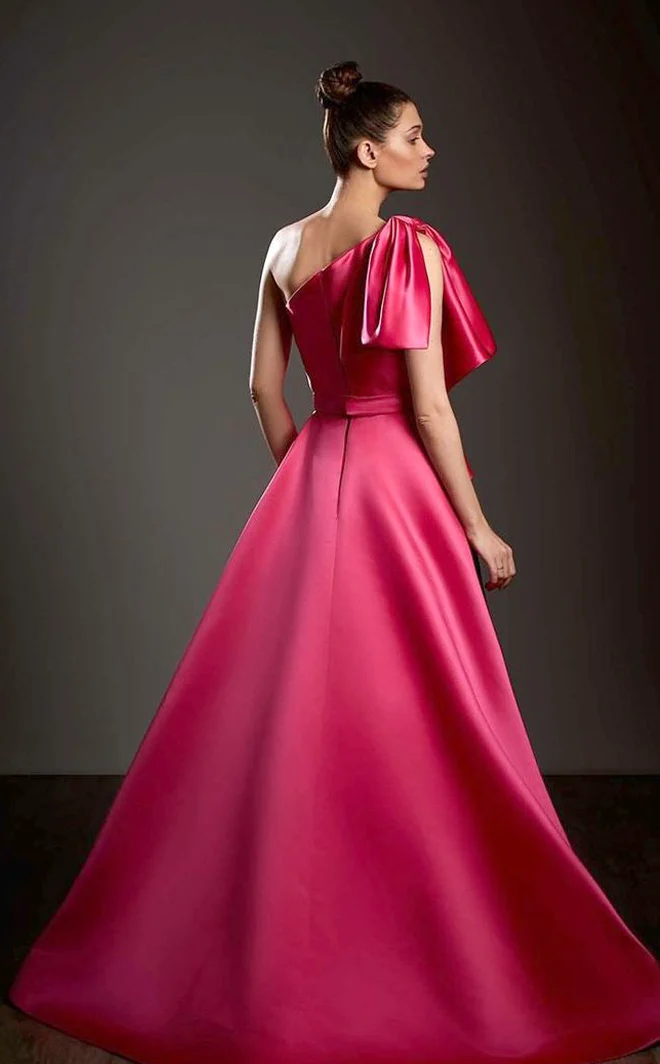
Request matching front, side and back pictures of the real offer. A rear photograph cannot fully show how the shape sits beside your face from the front. Inspect both sides with hands free. Should the accent lead during conversation from the front or become particularly noticeable when you turn? Either preference is possible. Choosing the viewing direction before a specific bow size makes the comparison clearer and lets you assess the ordinary complete outline rather than an attractive isolated detail.
Distinguish a bow shape from other substantial folds
The angled beige view carries larger stacked surfaces down one side of the body. Smaller reflective rows run across the closer middle and longer extension beside them. This is not another demonstration of the same shoulder bow. It helps ask whether you prefer additional area high on the body or beside the skirt. Compare those locations separately from their different colours initially. You can identify the relationship between body contour and projecting surface that actually interests you without letting shine decide every part.
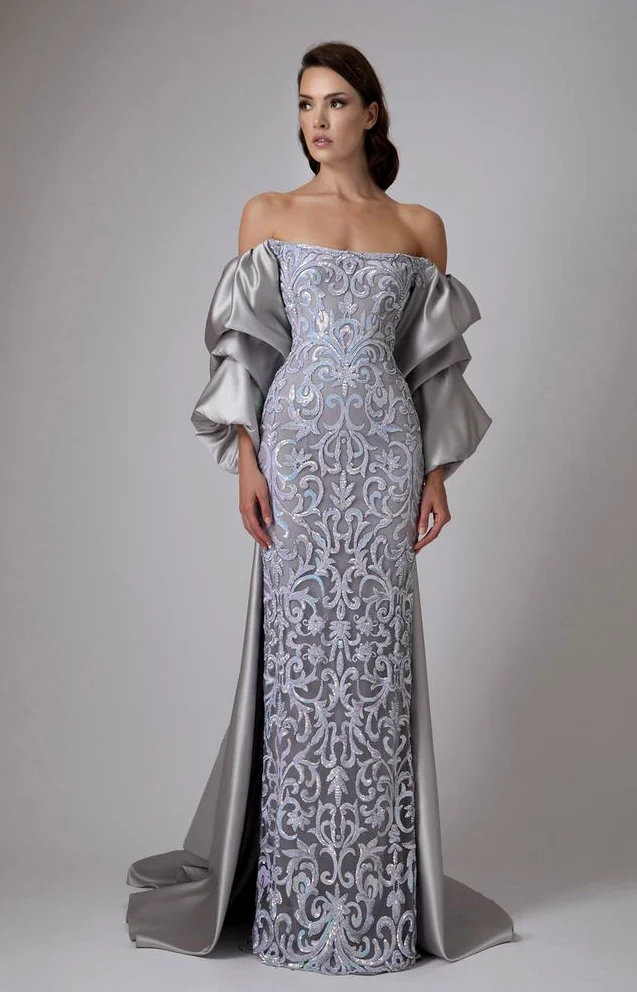
The grey dress instead places substantial folded sleeve areas beside a densely patterned long middle. Would you frame both arms or prefer one accent beside open space? Our evening dress with ruffles guide offers more distributions to compare. Use it for location and extent of folds. A similar outside effect establishes neither identical fabric nor interchangeable or removable parts across photographed garments. Take a search idea from the reference and establish included components on the real offer separately.
Coordinate size and neckline with your hairstyle
Try a preferred bow arrangement without another necklace initially, keeping hair away from the area. Inspect the space between face, neckline and folded surface. Would you like a clear separation or a denser frame? Arrange hair as you intend to wear it afterwards. A substantial shoulder shape may remain differently visible with loose hair and an updo. Choose that relationship within the complete outfit rather than leaving hairstyle as an independent detail to add only after purchasing the garment.
Compare two jewellery options individually next. You may want smaller earrings beside the large bow or another clear accent on the opposite side. These are styling preferences rather than a universal requirement for symmetry. Keep other pieces consistent. If the bow evening dress already supplies the effect you want without jewellery, that can remain your first version. An open area need not automatically be filled with an object simply because the other shoulder has more prominent decoration beside it.
Treat the skirt area as its own decision
The pink rear view connects the upper form to a quieter skirt extending broadly downwards. The teal dress instead shows a decorated upper middle over softer broader falling areas with shoes visible. It supplies a quieter shoulder alternative, not another bow version. Compare preferred lower length and width first. You may retain the upper idea while seeking another actual skirt arrangement. Describe both requests separately before selecting a complete concrete model, instead of assuming one appealing shoulder commits you to every other pictured feature.
For length, our long evening dress guide adds shoe and extension questions. Use intended shoes at every fitting. A longer surface lying across the floor does not explain how it should be handled while walking; ask about the actual garment’s arrangement. A shoe visible in another photograph likewise supplies no recommended heel height for your combination. Choose the finished relationship between your hem, ordinary steps and real shoe pair, comparing two options on the same garment if needed.
Test shoulder shape, movement and outerwear together
Reach forwards in the actual dress, greet someone and lower your arms again. Inspect the shoulder accent before arranging it. Ask how the form is connected and intended to work on the real model. A large bow may be offered fixed, separate or in another arrangement; photography cannot decide that. Have appropriate handling demonstrated during the fitting. Avoid changing an unknown connection simply because a folded surface appears like an independent accessory in the picture rather than an attached part.
Put your intended jacket or coat on completely and remove it afterwards. Would you like the accent visible on arrival or revealed indoors? Compare both states without immediately changing shoes and jewellery too. If the combination does not meet your preference, try another outer layer or bow position. A bow evening dress needs a specific solution for your route rather than only an attractive uncovered standing view without the remaining pieces that you plan to use during the occasion.
Complete two full versions with a clear priority
Finally compare two understandable options: a substantial single shoulder form with a quieter skirt, for example, and a side-fold accent with another neckline. Record which distinction changes your decision. Add bag, hair and outerwear to the genuinely preferred shapes. You are then comparing two full possibilities rather than accumulating increasingly conspicuous details. The quieter option may win if the large accent appealed only as an individual picture idea; enjoying a reference creates no obligation to adopt its complete arrangement.
Read actual care labelling before pressing or cleaning. GINETEX explains the symbol groups; a shiny bow surface identifies neither fibre nor treatment method. If requesting alterations, clarify affected parts and the resulting shape. Your final bow evening dress plan should record position, size, skirt line and complete additions. This makes the preferred relationship reproducible with your own pieces at the next fitting instead of depending on an unknown construction guessed from an attractive photograph.
Choose a bow evening dress through accent position and viewing direction first. Test size, skirt outline, hair and outerwear on the real model next.
Frequently asked questions
Is every substantial fold a shoulder bow?
No. Compare actual location; stacked side surfaces and larger sleeve areas have different jobs from the single shoulder form.
Which view should accompany the pink rear reference?
An ordinary front view of the same model showing the large form beside face and front neckline.
Does the picture establish a removable bow?
No. Ask about actual connections, included pieces and intended handling on the offer.
When should outerwear be tested?
After selecting the preferred shape. Put it on and off completely and inspect the shoulder accent again.