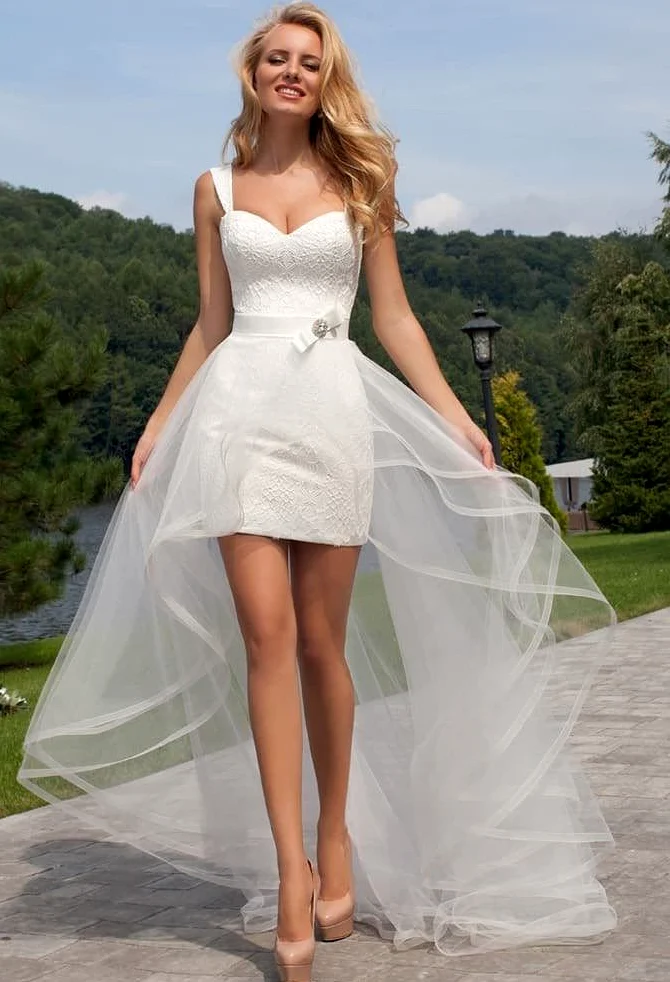
A short inner area stays visible between longer sheer-looking sides here. The upper section has broader straps and a slightly rounded middle point, with a small accent at the waist. Both hands hold the outer area sideways. This makes the narrow inner shape and broad outer fullness particularly distinct. Their actual connection is not explained by the photograph, so two visible areas should not automatically become two separately available garments.
Check the short edge on your own candidate with hands falling normally first. Assess the outer line from side and rear afterwards. Decide whether you particularly want the relationship between narrow inside and fuller outside. A similar short length alone cannot produce the same overall shape when the outer area is arranged differently. Include the actual shoes when comparing both short and long points.
Ask about real construction and included pieces next. Plan a removed version only if that function is confirmed on the specific product. Walk and sit without continually spreading the sides. The picture supports the visible length relationship, not an available two-piece outfit or a particular fibre composition. Clarify those details separately before planning the complete use sequence.