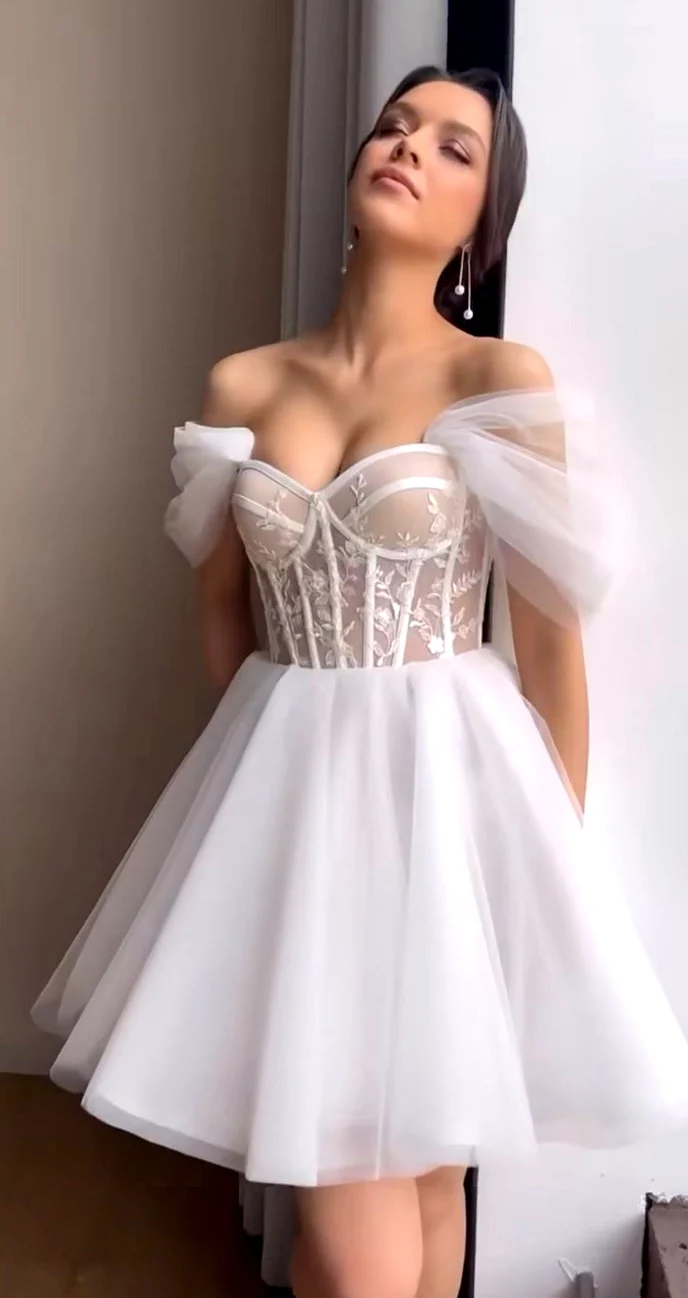
A short full skirt begins at a clear waist line here. Above it, vertical and floral shapes mark a sheer-looking middle. Larger light-looking fabric areas beneath the shoulders add side width. The skirt edge sits above the knee. The close crop does not show a complete connection to shoes, so another full view is needed for that decision. Use this reference particularly to consider its two separate areas of volume.
If the idea appeals, choose skirt and shoulder fullness independently. You may like the short full shape but prefer a quieter upper edge. Compare two real candidates of similar length so that the shoulder difference stays easy to identify. Try the upper area with intended underwear rather than assuming its construction from the photograph.
Let your arms fall normally and then hold a small object. Decide whether the side fabric shapes sit as you want to wear them. Sit and assess the hem with the intended shoes. Visible lines establish neither fibre nor support. The picture supports size and position choices; clarify the actual construction on the real model before settling the complete arrangement.