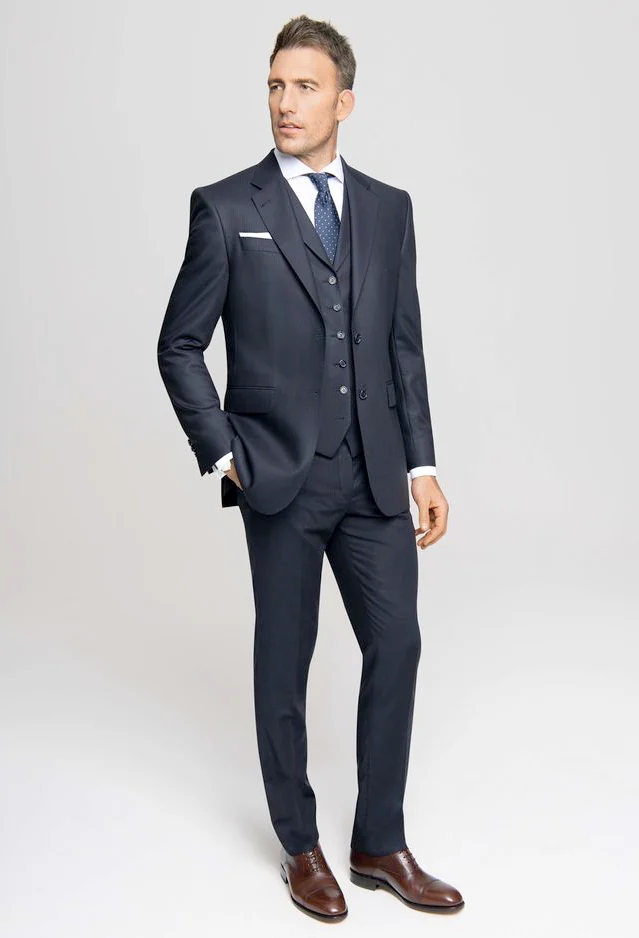
The white shirt front sits between a navy waistcoat and a dark tie with small dots here. Jacket and trousers continue the dark direction. A narrow white pocket square and brown lace-up shoes complete the full view. One hand rests in a trouser pocket and the other hangs beside the body. This is expressly a tied-neck comparison, rather than an already pictured suit without a tie.
Use it to identify the small pale area’s task. Do you enjoy white beside navy or particularly the shape limited by waistcoat and tie? Try the same shirt colour without the tie on the actual outfit first. Choose an opening afterwards. Removing one central piece need not coincide with a new shirt and different square, keeping the actual effect of the first change understandable.
Inspect the combination without the jacket next. The waistcoat retains its own shirt frame, but the neckline has changed. Decide whether this is the state you want kept. Brown footwear is a visible companion; it need not change simultaneously to answer the open-neckline question. Keep the other pieces available as a consistent comparison.