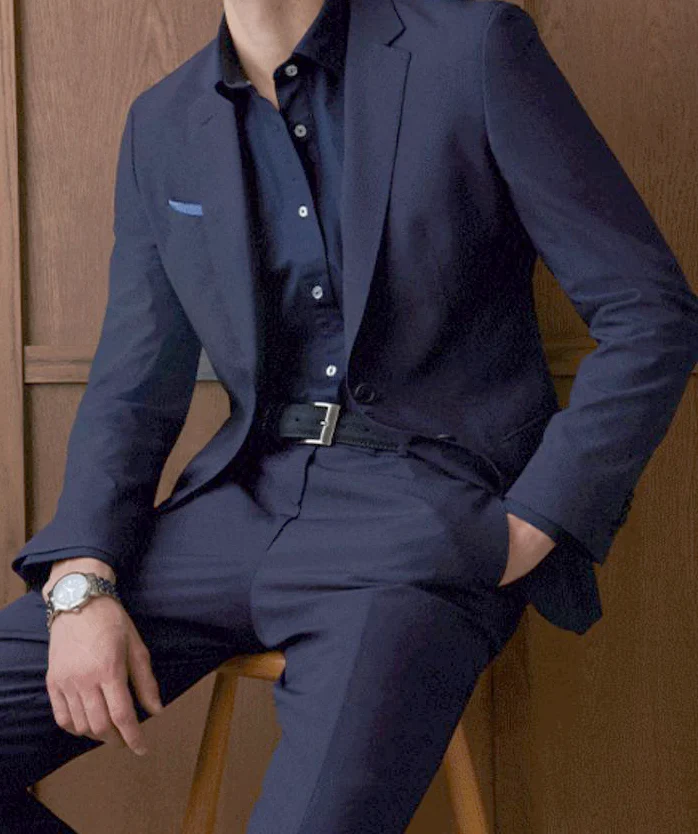
A dark blue shirt appears beneath a similarly dark jacket in this seated close view. Its upper area stays open, with a recognisable button row continuing towards the trousers. A small blue square sits at the chest. A black belt with a pale rectangular buckle and a watch complete the middle. One hand rests in a pocket and the other on the leg. Complete trouser legs and footwear are missing from the frame.
Compare this closer colour relationship with a paler shirt on the same actual jacket. Begin with a similar opening so colour is assessed first. Do you want a more continuous dark area or a clearly identifiable inner boundary? A blue shirt need not match the jacket’s shade exactly. Select the closeness you enjoy on your own worn pieces rather than deciding by a colour name alone.
Stand normally afterwards and inspect the belt transition without the seated hand position. Check the collar while looking sideways. Keep the small square initially, then remove it for a separate comparison. Name whether its lighter accent is needed without deriving finished overall proportions from a crop lacking complete legs.