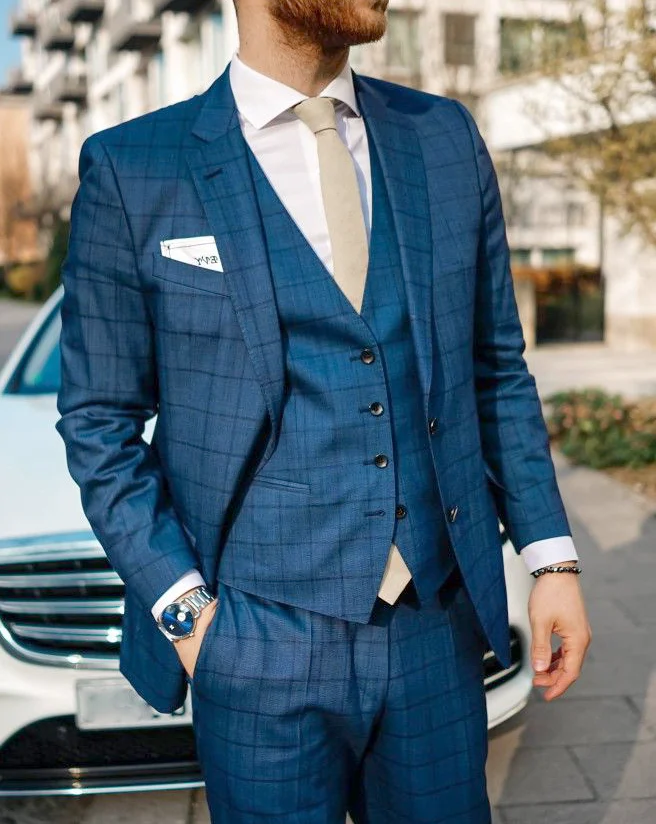
A white shirt with a waistcoat remains visible as pale surface between face and patterned blue middle here. The quieter pale tie travels towards the front waistcoat opening. Jacket and waistcoat carry a similar grid, with an angular pale pocket accent beside them. A watch and smaller wrist detail complete the upper crop. One hand sits at the trouser side. Head and legs are not fully shown, so the picture supplies no reliable shoe or complete hem information for the lower choice.
Compare how the waistcoat restricts visible shirt area first. Would you prefer white as a clear frame or a shirt closer to blue? Include the real waistcoat from the beginning of the shirt comparison. Inspect its front with the jacket removed afterwards so its own arrangement stays understandable.
Choose your tie next and pocket square last. Add a complete view with your shoes for the lower decision. Similar blue pattern establishes neither shared included pieces nor identical fabrics. The picture mainly helps compare shirt brightness with the more limited visible surface within a waistcoat frame deliberately.