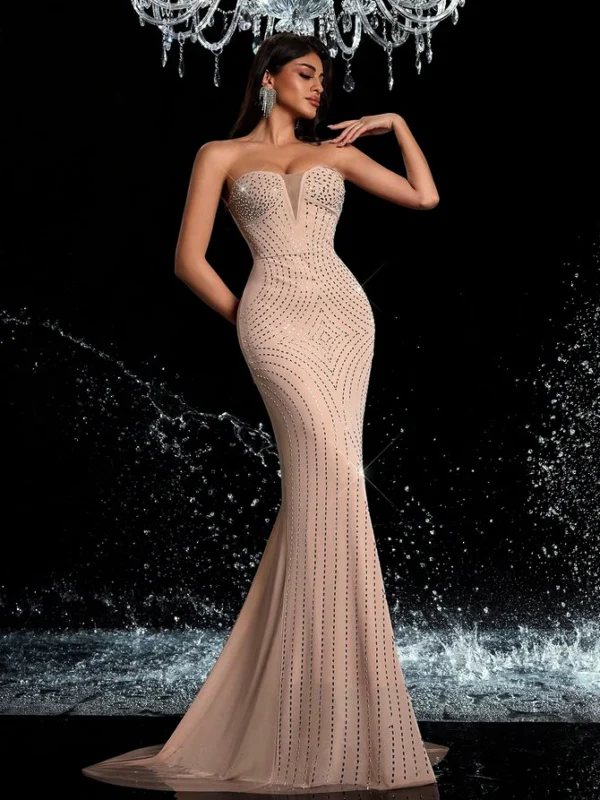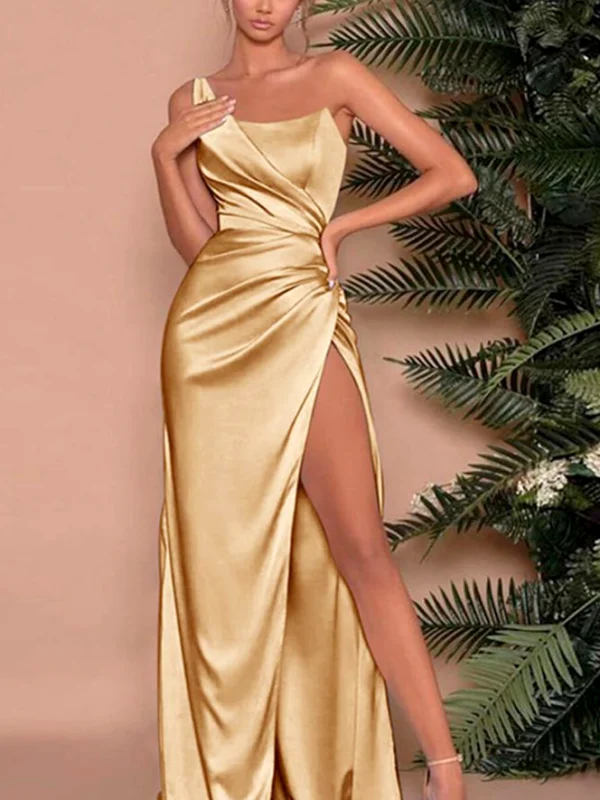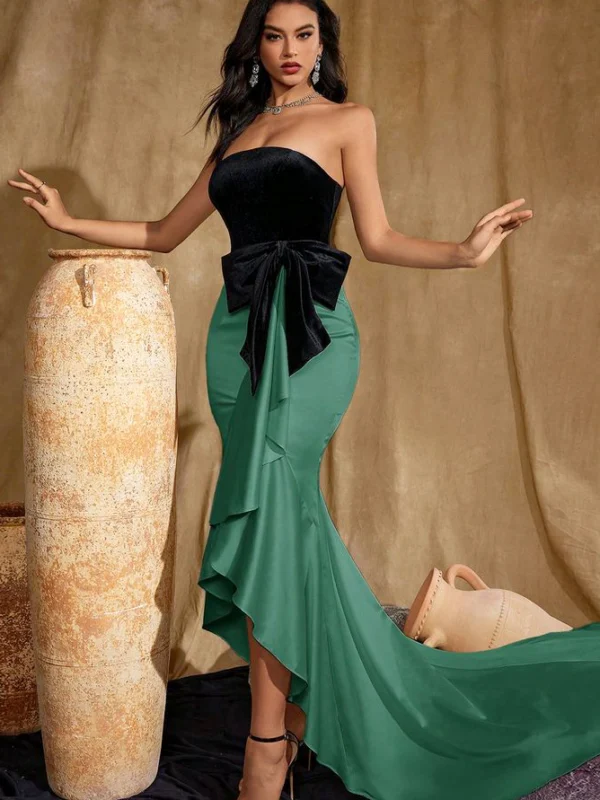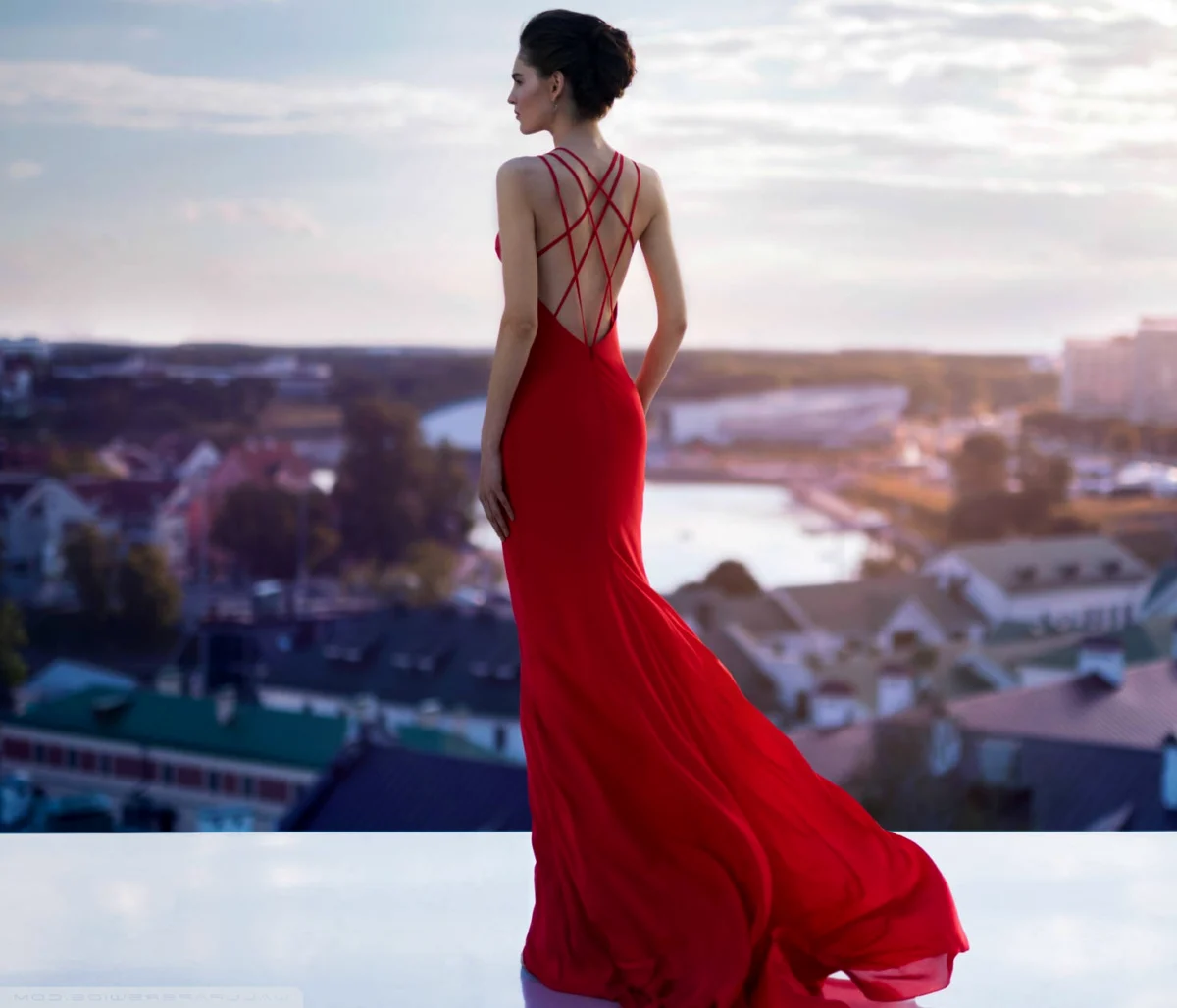
An evening dress becomes a complete combination when you plan occasion, garment and the accompanying pieces you will actually use together. Begin with the invitation and your own coverage preferences. Choose a leading detail afterwards, such as an exposed back line or a distinct pattern. These four references show long dresses with different upper and lower areas. They are not matching front and rear views of one model. Use visible differences for specific questions and add what each photograph leaves unresolved on the real candidate.
1. Establish the occasion before choosing an evening dress
Read the actual invitation and ask about unclear instructions. The Emily Post Institute Attire Guide lists formal long evening gowns and dressy cocktail options for Black Tie. That is a named orientation rather than automatic approval of every long dress for your event. Specific host requirements and your preferred coverage belong in the decision. A city view or pale interior in a photograph cannot supply those details or identify the actual occasion attended.
Record how you intend to use the combination next. Is there a longer journey, a mainly seated event or an outer layer to remove later? Choose real pieces you can try together completely. The photographed amount of skirt cannot answer actual walking questions. If you are deciding between lengths and upper lines, the evening dress comparison helps separate those preferences. Keep the whole outfit as the reference point for this selection rather than allowing one particularly attractive image to settle every practical question.
2. Compare colour and decoration as different accents
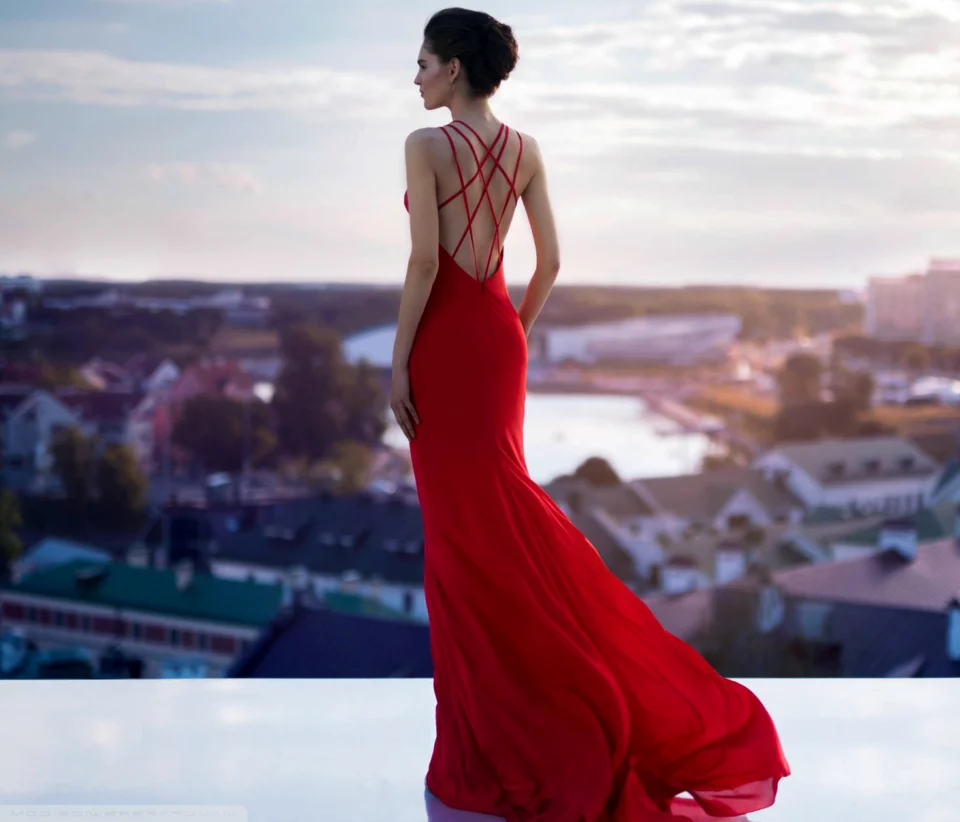
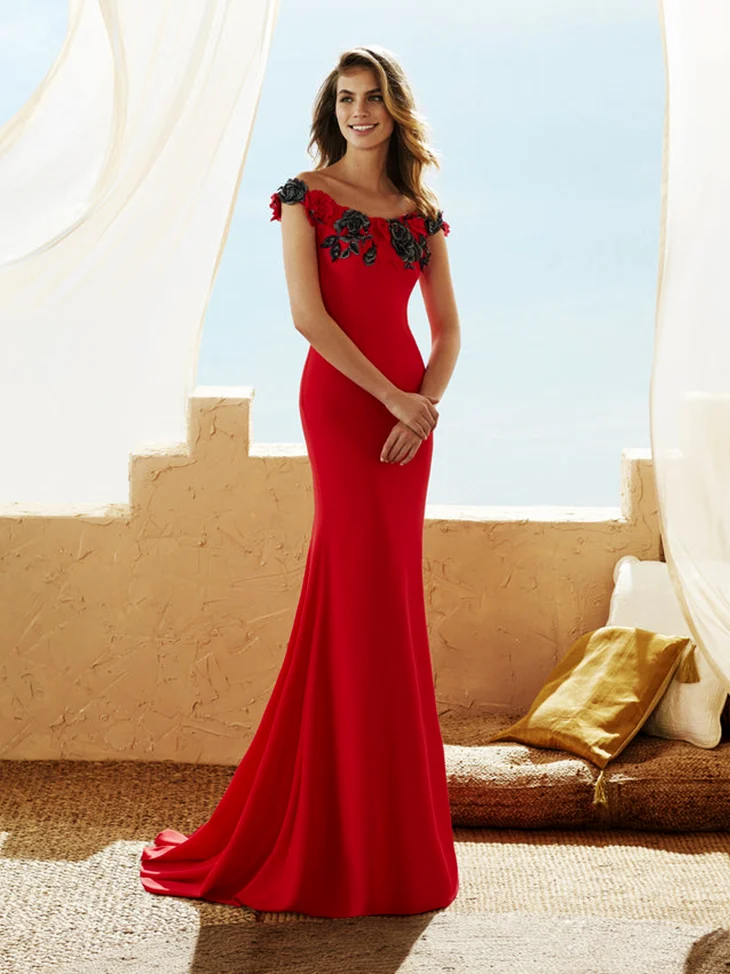
Two references are red but supply different information. The front has darker floral forms around an off-shoulder edge and a quieter long skirt. The red rear shows several crossed narrow lines and an exposed centre. They need not be the same garment. Choose whether shade, upper decoration or back shape interests you first. Identify the intended accent without automatically ordering every other property of that photographed arrangement. Similar red colour cannot establish a matching front and back, so request the candidate’s own corresponding views.
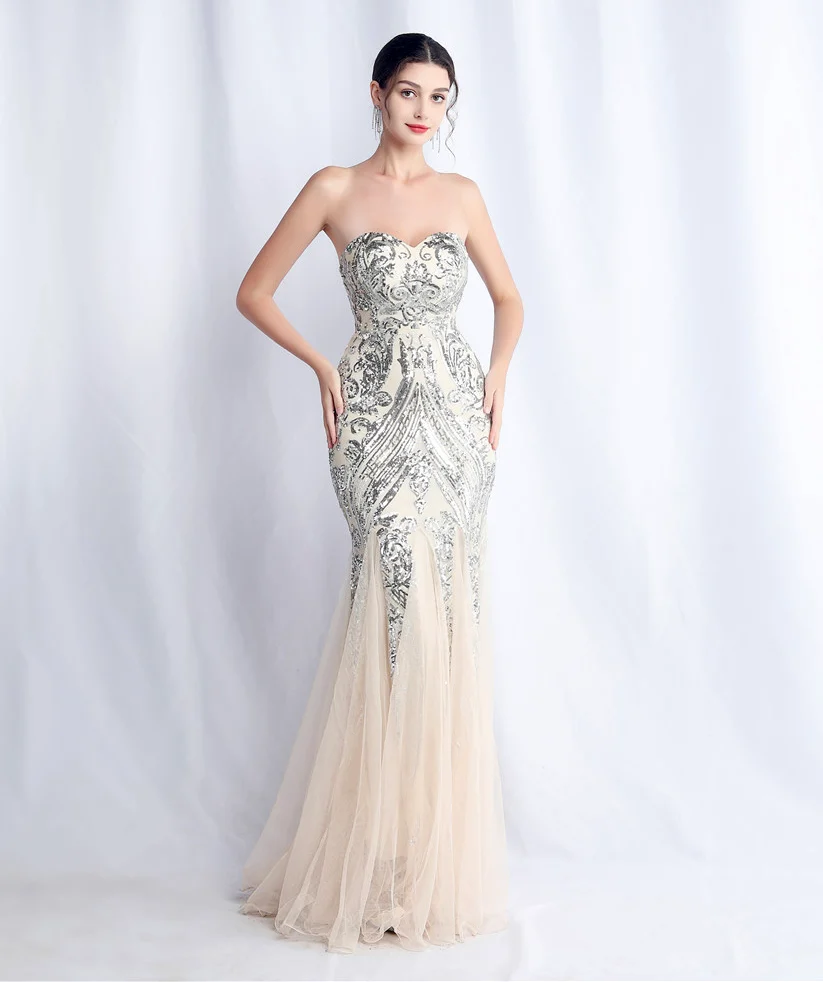
The pale strapless dress places dense silver-looking motifs across the bodice and into the hip area. Darker decoration concentrates above and around the waist in the green reference, with a quieter skirt below. Compare how much surface you want patterned. Keep colour reasonably similar on actual candidates when assessing decoration quantity. Turn the garment slightly afterwards and view it from a little distance. Small reflections are a visible effect, not evidence of genuine metals, fibre or manufacturing method. Obtain that information separately for the actual product.
3. Confirm front edge and back on the same garment
The pale leading front has a strapless curved border. The red floral comparison exposes the shoulder sides. Parts of the green garment’s front and upper line are limited by its turn and arm position. Request complete matching views of your candidate. A suitable rear opening cannot explain front coverage. Try intended underwear and establish the layers actually offered instead of inferring internal construction from a darker area. If another inner version is available, have the actual option shown rather than filling its missing front with another photograph.
Narrow crossing lines particularly stand out on the red back. Choose whether you want that pattern or mainly the exposed area. Ask about the actual connections and handling; the lines establish no particular adjustment range. Let arms hang initially and move hair clear of the back at the fitting. Include your intended hairstyle afterwards. You can consciously choose which edges should remain visible without adopting the photograph’s turned posture as an ordinary fit view. Reassess the same line after bringing your hands forwards and follow the provider’s intended handling before adjusting connections.
4. Assess length and shoes together
The long references fall differently below: quieter broad areas, a finer-looking wider finish or trailing fabric behind the body. Check the actual dress’s front floor-level edge with your intended shoes first. Relax the hands, walk several steps and sit. Add an unobstructed rear view. Another garment photograph’s hem is not a measurement for this candidate. A second pair of shoes planned later needs its own real length trial too. Skirt fabric arranged widely for a picture does not establish its unchanging ordinary fall.
The shoes for an evening dress guide expands comparisons of open and closed front shapes. Choose shoes through more than a visible colour match. Try the real pair with the garment and include the actual journey in your plans. If another length is needed, have affected areas shown. Motif endings would also belong in the question for the pale decorated model. A photograph confirms neither hem allowance nor alteration workload. Decide through the result explained on the actual garment rather than transferring a shoe height from a different reference.
5. Add bag and jewellery individually
After selecting the upper shape, choose which additional accent should show. Longer earrings sit beside an exposed neck in the pale strapless reference. Assess that relationship without adopting material or exact jewellery identity from it. Try your own piece with the same hairstyle before adding a necklace. The jewellery with a statement evening dress comparison helps assess existing decoration beside extra bright points. Every exposed neck area need not automatically receive another jewellery item. Adding one piece with the dress unchanged makes its particular effect easier to identify.
Hold your actual bag in its intended position afterwards and open it with planned contents. Compare before the waist and beside the skirt. A strap may introduce another line across an exposed area you already selected; choose whether you want that. Keep garment and shoes unchanged during the trial. The whole combination shows which parts remain visible and how you intend to carry the bag in use. Two similarly coloured product images cannot answer those questions. Include another natural hand position if you expect to change sides while wearing it.
6. Rehearse the outer layer and complete change
Add the jacket or wrap you actually intend to use. Assess its ending beside neckline and waist from front, side and back. Try opening and removal through the intended wearing arrangement. Reassess afterwards without changing every accessory simultaneously. An outer layer may conceal parts of the back chosen as your leading detail. Decide deliberately when you want that area exposed rather than expecting one uncovered photographic view to represent the whole event. Seeing the same real pieces in both states shows how the selected outfit changes without requiring a different dress.
Have included pieces, actual dimensions and any necessary work explained before ordering. Check real garment labels for care and pressing; GINETEX explains textile care symbols. Colour and shine determine no universal treatment. Record the final combination of dress, shoes, jewellery, bag and outer layer. A complete evening dress outfit develops through real pieces and checked views. References offer accents and unanswered questions, while your own occasion and actual fitting settle the selection. Retain each piece’s own information with that preparation so the last comparison stays specific.
Begin with the real invitation when choosing an evening dress. Compare colour and decoration separately, assess front and back on one model, and add shoes, bag, jewellery and outer layer individually.
Frequently asked questions
Does a long evening dress automatically suit every formal invitation?
A long evening dress cannot answer the invitation alone. Check the host’s actual instructions and clarify unresolved requirements before settling the outfit.
How can I distinguish liking an evening dress’s colour from its decoration?
Compare evening dresses in similar colours with different amounts of decoration where possible. Choose the accent on the complete worn garment rather than automatically adopting colour and pattern as one package.
When should I add a jacket to an evening dress?
Add the actual jacket after selecting the evening dress’s neck and back lines. Keep other pieces unchanged and compare the complete outfit with the jacket worn and removed.