Evening dress styles differ substantially through length, shoulder line and the distribution of fabric areas. A manageable shortlist therefore needs clear contrasts rather than as many similar pictures as possible. These three references offer a quiet navy midi shape, black asymmetric draping and a long gold-toned look with an open shoulder line. Begin with the effect you want for your occasion. A photograph can explain that preference; a particular current collection or availability needs information from the actual offer. Choose the large shape before assembling every accessory.
Narrow evening dress styles through the overall shape
Look at the complete contour from a normal distance first. The navy reference distributes fabric into a broader lower shape and leaves the lower legs visible. Black has a closer upper line and clear leg opening. The gold look keeps a long continuous area with bare shoulders at the sides. Choose two directions for the first comparison. A third can remain an alternative without complicating every decision immediately. Ask which feature you would still want in another colour. This separates a shape preference from attraction to the photographed tone.
Record your idea in a few words: quiet midi length, diagonal draping or a long shape with an open shoulder line. Add the actual events and journey you expect. The connection between effect and schedule forms the fitting brief. Evening dress styles then become concrete options rather than an undefined list of new arrivals. Assess a newly offered model with the same criteria as one available longer. What matters is whether its shape and use meet your requirements, rather than only the timing of its presentation.
Compare evening dress styles against a simple midi shape
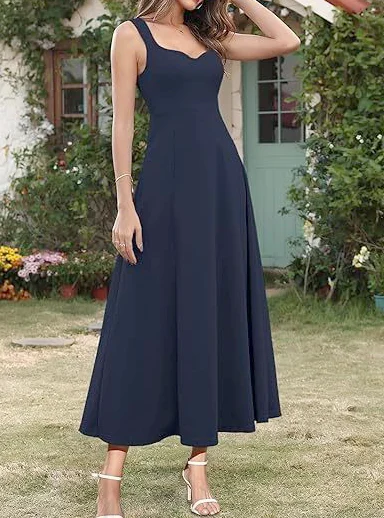
The navy dress has a sleeveless upper area and a skirt broadening below the waist. It finishes clearly above the floor. The larger uninterrupted colour area makes a useful starting point when you want to judge cut and accessories separately. Try a comparable actual look without a conspicuous necklace first. Consider shoulder line, waist and length together. Then add a necklace or earrings and see precisely which new line appears. A quieter garment does not automatically require more jewellery. Either arrangement may appeal when you understand its relationship to your preferred focus.
Check length with the shoes for your real route. Sit and stand without immediately rearranging the skirt. Do you enjoy its ordinary fall? Compare the outer layer open and fastened if it belongs to your arrival. Midi length describes the visible hem position here rather than universal dress-code suitability. Check any specified requirements in the invitation. This keeps the quiet reference a usable shape base for your other preferences instead of prematurely treating it as a completely suitable solution. Another narrower skirt in the same shoes can clarify whether length or fullness attracts you.
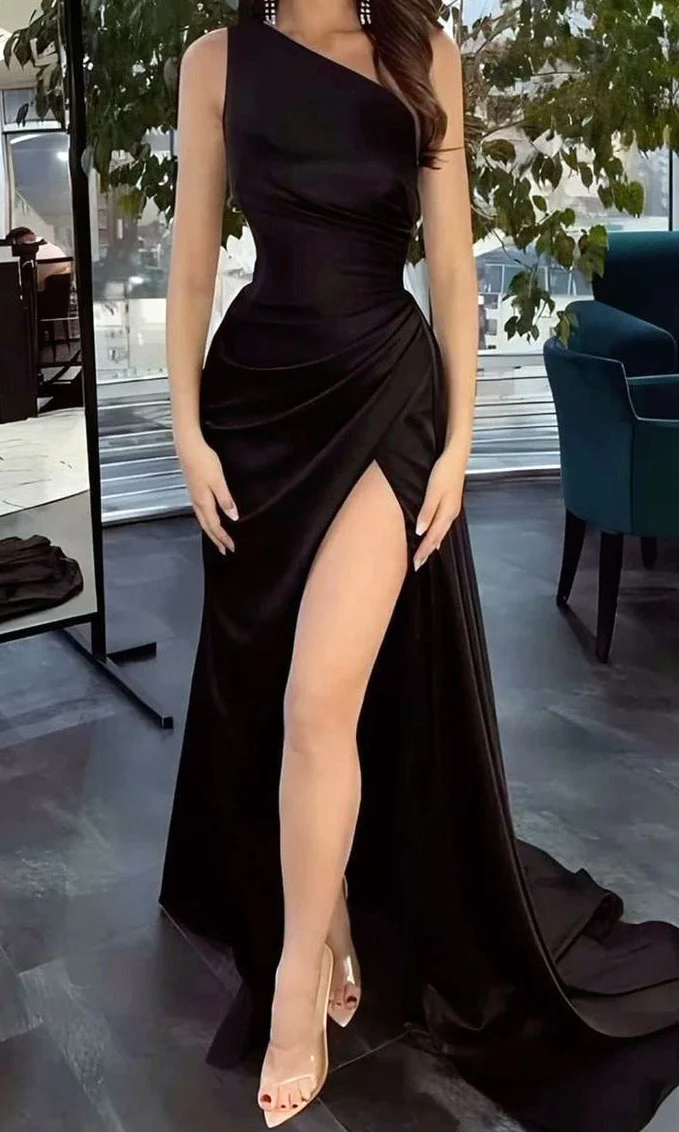
Assess draping and leg opening separately
The black reference combines a diagonal upper line with folds through the middle. A large opening sits over one leg, with fabric trailing on the floor. Together these features create a pronounced effect. For your selection, examine them in sequence. Is the asymmetric neckline, fold arrangement or lower opening the main attraction? You can seek one without repeating the others unchanged. A precise request can expand your comparison rather than restrict it, allowing a similar idea in another length or with different coverage. Treating the whole image as one package conceals those choices.
Walk in the actual garment with your shoes and sit to assess coverage. Look at the draping afterwards before it is rearranged. For an alteration, ask how the folds would continue at the new join. Add a simple bag in its normal carrying position. Perhaps it should remain quiet beside the moving area; perhaps you want contrast. Decide after understanding the dress construction. An expressive complete combination can appeal without every feature becoming your own focus. Changing only the bag next makes its colour effect easier to recognise while the garment stays the same.
Compare the open shoulder with the long surface
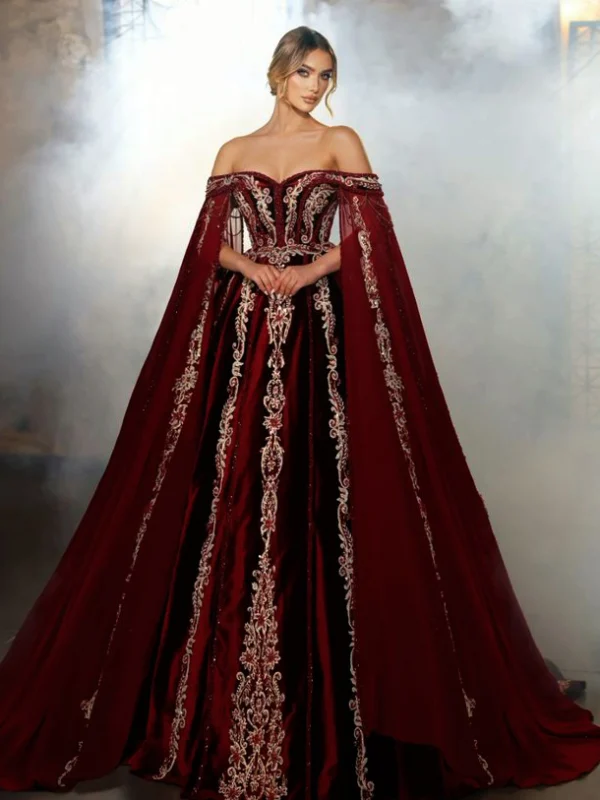
In the gold-toned look, the upper line sits below the shoulders and longer sleeves belong to a narrower overall shape. The surface has many pale points and the lower area reaches the floor. Look at this distribution without additional jewellery first. If you want more movement at shoulder or skirt, the evening dress with ruffles guide offers other detail positions. The gold reference need not contain ruffles itself; it supplies the quieter side of the comparison. Separate the shoulder-line preference from sleeve length as well.
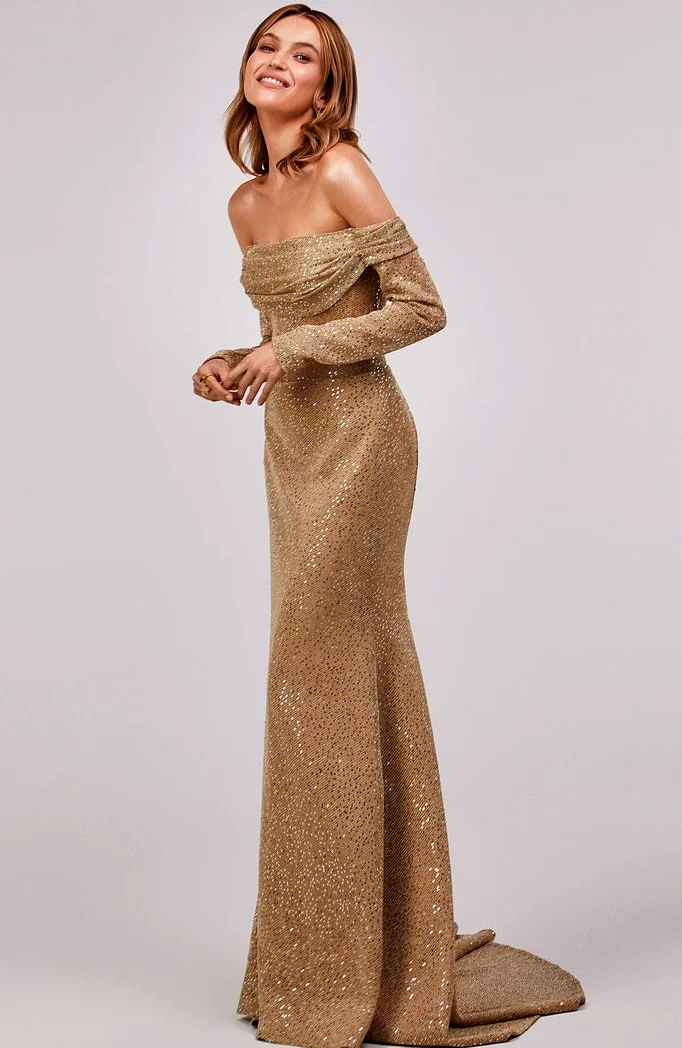
Try bending your elbows and reaching forward in a similar actual dress. Put the intended coat over the sleeves next. The bare shoulder line and long lower shape ask different questions, so assess them separately. The corset-look evening dress guide adds questions for more divided bodices. Decide whether you prefer a continuous upper area or more visible sections. The surface pattern in the gold photograph establishes neither a particular fibre nor internal support. Those details belong to the real product description and fitting.
Change colour and accessories in small steps
The three references show navy, black and gold tones. A shape preference may depend strongly on that colour effect. Ask whether the same model in another colour would interest you equally, and record both preferences separately. Keep shoes unchanged where possible during the actual comparison, changing only bag or jewellery first. This shows what alters the overall impression. Adding many new pieces simultaneously can hide why a combination feels convincing. Evening dress styles are easier to compare when you understand the relationship rather than simply liking every piece individually.
Consider bag use as well as colour. Check space for phone, keys and evening essentials. Carry it beside the dress and sit with it. A strap can lie differently at an open shoulder than on the sleeveless midi. A hand-held bag occupies one hand instead. Either may work when you understand its use. Add your hairstyle last and compare the neckline again. You do not need to recreate a photographed outfit to borrow its useful ideas. Changing only hair position can reveal which upper line remains visible, without altering the other pieces at once.
Try two real candidates under consistent conditions
Choose two actual offers for a serious comparison and use the same inner layer and intended shoes where possible. Walk, sit and try a normal greeting. Record which line you enjoy and which movement still raises a question. With a long skirt, assess handling of the floor-level area too. Request matching side and rear views of the same model. A good front image does not explain every connection, particularly at an asymmetric shoulder. Compare proposed alterations, timing and complete product information before agreeing to an order.
Read the care label as well; the GINETEX reference helps interpret the symbols. Make the final choice on a tested combination whose large shape and smaller additions work together for you. The three references provide clear directions. Your own comparison reveals which connects the occasion and intended effect most convincingly. You may keep one idea from a photograph and change another. An understandable shortlist gives you that freedom while keeping the final decision attached to a garment and arrangement you have actually assessed.
Shortlist two evening dress styles first. Compare shoulder lines, draping, colour and accessories under consistent fitting conditions.
Frequently asked questions
Do I need as many photographs as possible for a good shortlist?
Two clearly different directions can be more informative at first than many almost identical references.
Must I choose the high slit with the black look?
No. Treat asymmetric neckline, draping and leg opening as separate preferences.
What does the navy midi contribute to the comparison?
Its quieter colour area provides a clear base for assessing the cut separately from added accessories.
Does a new-arrival description establish availability?
No. Check the actual model and current offer information with the provider.