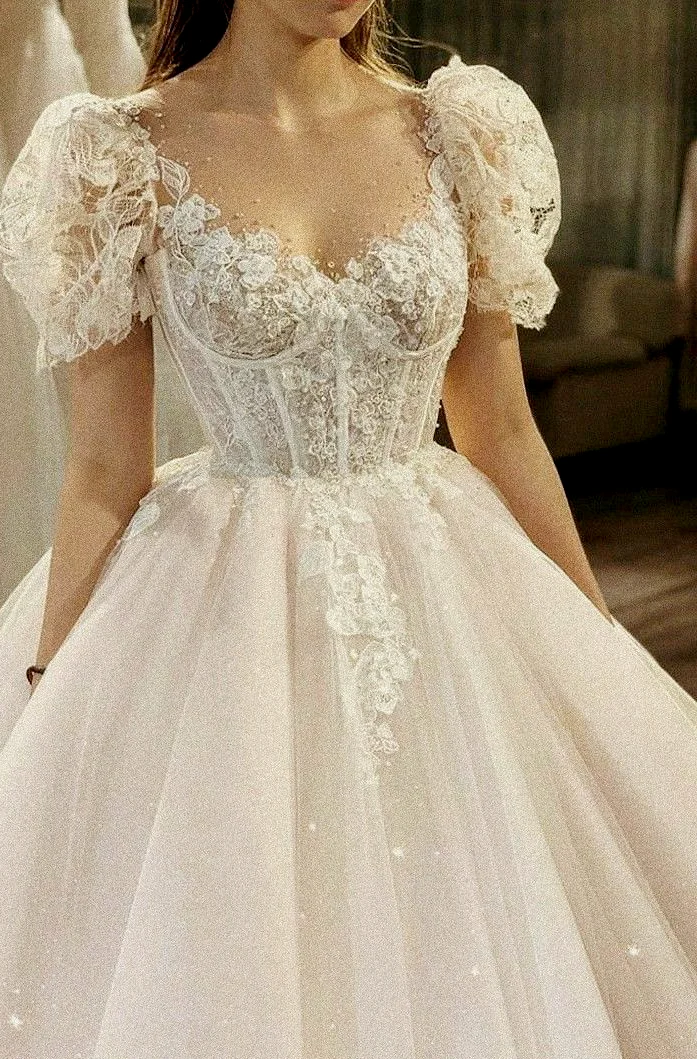
A chiffon wedding dress may appeal because of softer folds or a transparent-looking outer layer. Choosing one requires more than a similar-looking fabric in a photograph. Establish which area of the offered dress is actually described as chiffon and which other layers belong to it. The references show quieter skirts, floral bodices, gathered sleeves and long side panels. Use these forms to compare the arrangement you want. The pictures themselves cannot establish fabric type, fibre or a particular property of the finished dress. An actual sample and your own trial connect the visible idea to a real option.
Choose a chiffon wedding dress through a confirmed sample
Request the specific fabric description and a sample linked to that offer where available. Does chiffon describe the skirt, sleeves, a wrap or only part of an outer layer? Mark those areas separately in a simple drawing. You can then identify what you are comparing. A densely decorated bodice may accompany a differently constructed skirt. A shared product name does not establish identical composition for every visible detail. Knowing which actual area the description concerns makes later colour and layer decisions more understandable too.
The DATS fabric-identification document describes chiffon as a plain weave with highly twisted yarns. That structural description cannot replace information about your particular dress. Specific identification helps more than a general promise of lightness. Keep the received sample associated with the relevant offer and record its proposed additional layers. If another version is offered, request its own description. Compare actual alternatives rather than two similarly named surfaces in separate screen images, without treating a fabric label as a complete account of the garment.
Inspect outer layer and inner colour together
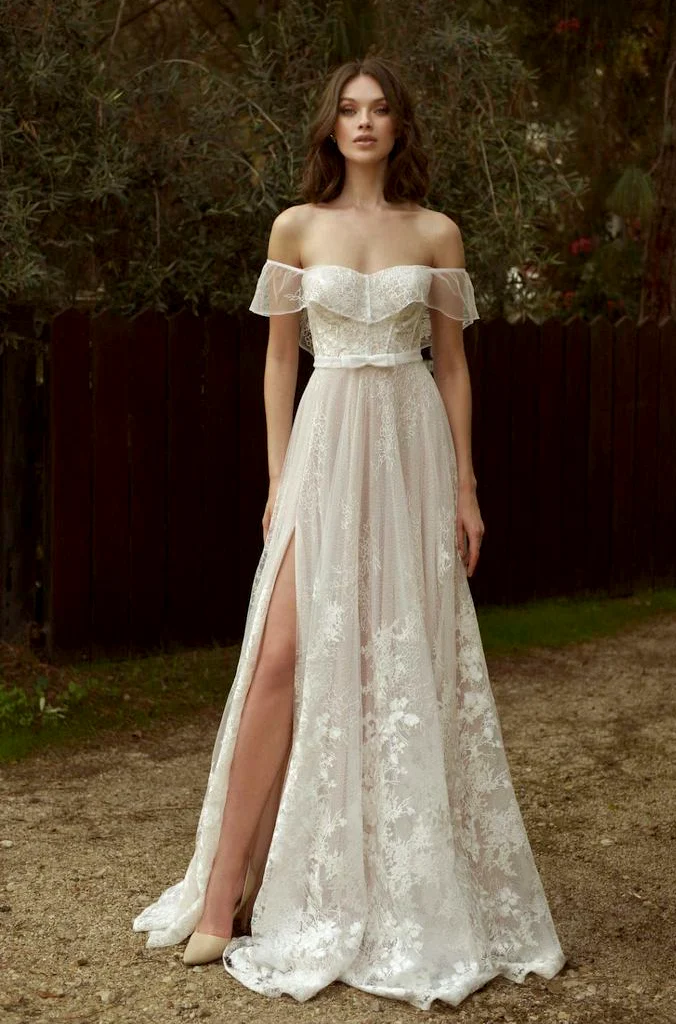
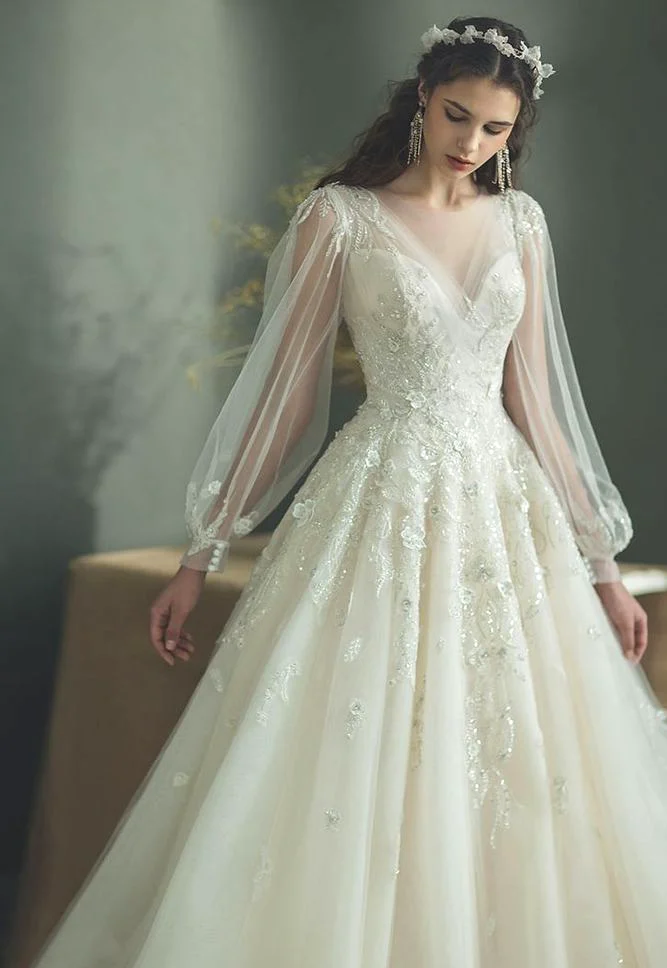
Place a confirmed sample over the actual proposed underlayer first. View the two together against a paler and a darker quiet background. Would you like the outer layer clearly distinguishable or a more even colour impression? The quieter long-skirt reference separates bodice decoration from the lower surface. The more extensively patterned view continues longer motifs across several areas instead. Choose whether that contrast or greater continuation appeals. Your own sample combination provides more specific information than inspecting an isolated white area and assuming it will remain identical over another layer.
Compare similar lighting and distance afterwards. A sample held against a window does not look identical to a complete worn dress with several layers. Do not assess it only against the light; request a view on the finished model too. If colour or transparency is unsuitable, investigate a genuinely offered inner alternative and inspect it again. The Silk wedding dress guide separates fabric description from visible shape for another material request. Borrow the question without transferring that fabric’s properties to chiffon. The actual combination remains the basis for your decision.
Distinguish quiet folds from longer outer boundaries
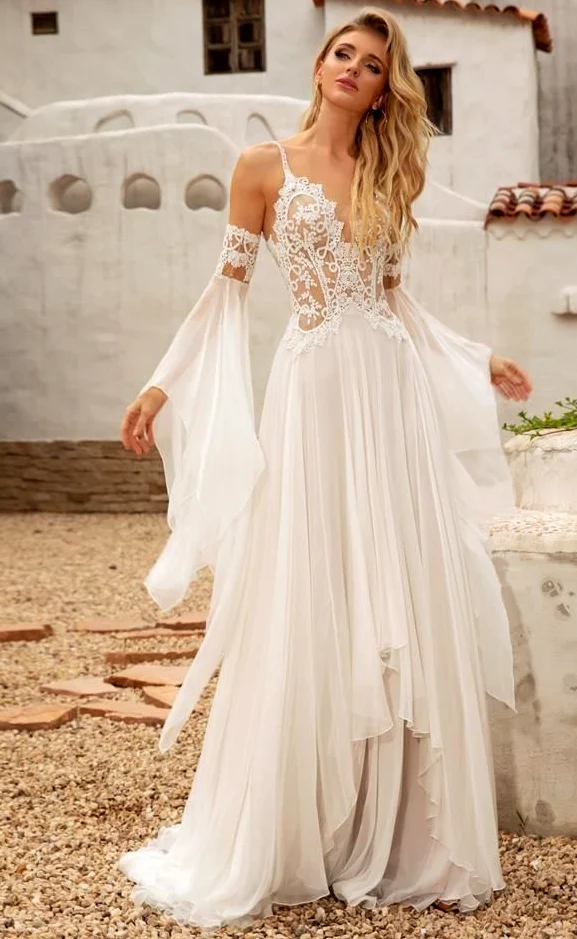
The front with broader shoulder lines and a reflective-looking crossed middle has a quieter long skirt with larger folds. Another reference connects fine straps to outer boundaries ending at different heights. These supply different preferences for visible movement. Would you like a longer more even surface, or individual edges finishing in front of other layers? Describe the direction before requesting a particular quantity of fabric or alteration. A quieter surface does not automatically have the same construction as a stepped-looking outer arrangement, even when both photographs appear pale and flowing.
Try the offered form with hands resting naturally. Walk several steps and inspect the boundaries before spreading them sideways. In the fine-strap photograph, the arms stand slightly to the sides, allowing long arm panels to fan beside the body. That pose does not establish their position with relaxed arms. Compare two candidates with similar shoes and the proposed underlayer. You can then distinguish the outer edge sequence from larger skirt width as the feature you enjoy most. Choose them separately rather than treating a fabric name as a complete silhouette that determines every lower detail.
Test long sleeves and side panels differently
One long-sleeved example gathers sheer-looking sleeves into narrower wrist sections. The fine-strap reference continues longer areas below the upper arms. On the closer dress, large side panels begin at a higher floral shoulder line. Compare their purpose: should the area follow the arm, fall widely beside it or remain prominent while holding an object? These differences are more specific than a shared flowing impression. You may seek a similar skirt with another arm arrangement rather than adopting every pictured feature as a package.
Ask for the actual connections to be explained on the model. A seemingly draped panel is not automatically an independent removable piece. Try reaching for a glass and holding the bouquet with intended bracelets. Observe which edge sits beside the hand and identify a troublesome place on the garment. The Chiffon evening dress guide adds sleeve and layer comparisons for another occasion. Here the next choice concerns which confirmed fabric version should form that particular arm arrangement on your wedding dress, assessed through the pieces moving together.
Choose skirt opening and underlying area together
The pale dress with short shoulder bands leaves a leg visible through its front opening. Larger motifs sit on an outer skirt over a quieter inner zone. The open reference with a crossed middle instead creates another distribution between quiet skirt and visible shoe. Choose whether you want an opening at all and how its neighbouring layers should look. A fabric sample cannot explain where the finished dress remains open or which inner area becomes visible during a step. That requires the complete garment rather than another isolated swatch.
Wear the actual dress with intended shoes. Compare quiet standing and normal walking without pulling the opening larger for every view. Inspect your chosen area while seated too. If another layer is offered, request its extent on the garment. This concerns the particular offer and your coverage preference rather than a universal requirement for one petticoat. Record the preferred length of each confirmed layer, so a later hem discussion concerns the complete arrangement instead of only the most visible outer boundary. Keep the same shoes during that comparison.
Confirm the selected layers on the complete dress
Summarise the choice briefly: confirmed outer fabric version, inner layer, intended edge sequence and actual arm arrangement. Add a specific observation from walking or sitting. The close reference with short puffed forms cannot show the complete length. Use it for the relationship between denser bodice and quieter skirt, while selecting the hem requires a complete view of the real candidate. Each reference then serves the question it can actually answer instead of supplying an imagined missing lower shape from another garment.
Have alterations to confirmed components explained and test the same combination afterwards. Read the finished dress’s treatment information; GINETEX explains care symbols. A name or thin-looking photograph cannot prescribe a universal steaming, washing or spray routine. The choice becomes specific when the sample belongs to the described area, inner layers create the intended impression and you have seen the drape on the complete outfit. Keep that description for further comparisons rather than returning to a search for any similarly pale photograph.
The bridal accessories comparison develops hand and neckline choices. Try one piece of jewellery beside the chosen arm arrangement instead of answering a fabric question with extra decoration.
Establish which garment area is actually offered as chiffon. Compare the confirmed sample with its intended inner layers and assess the drape on the complete dress.
Frequently asked questions
Does a flowing photograph prove the dress is chiffon?
A flowing wedding dress photograph does not establish chiffon. The references show folds and layers; the particular offer must supply its fabric description and fibre composition.
Should I inspect the sample on its own?
Compare the confirmed chiffon sample over the proposed inner layer too. Colour, transparency and motif contrast should suit the combination actually offered.
Can I simply remove the long side areas?
Long wedding dress side panels are not automatically removable. Ask about their actual attachment and request a demonstration of any genuinely offered alternative.


