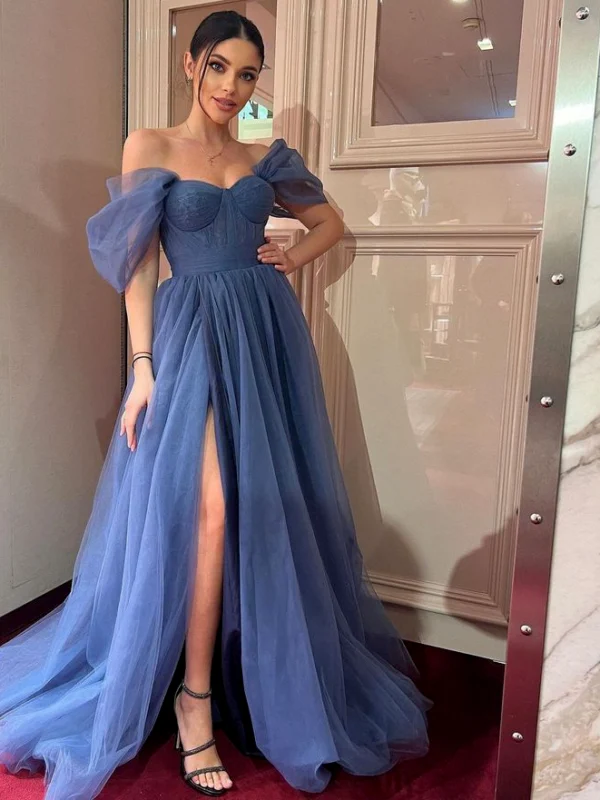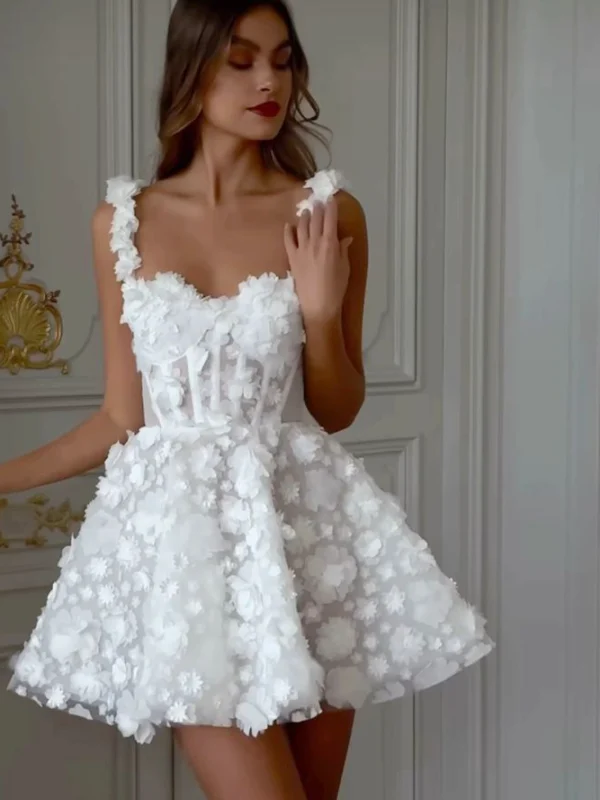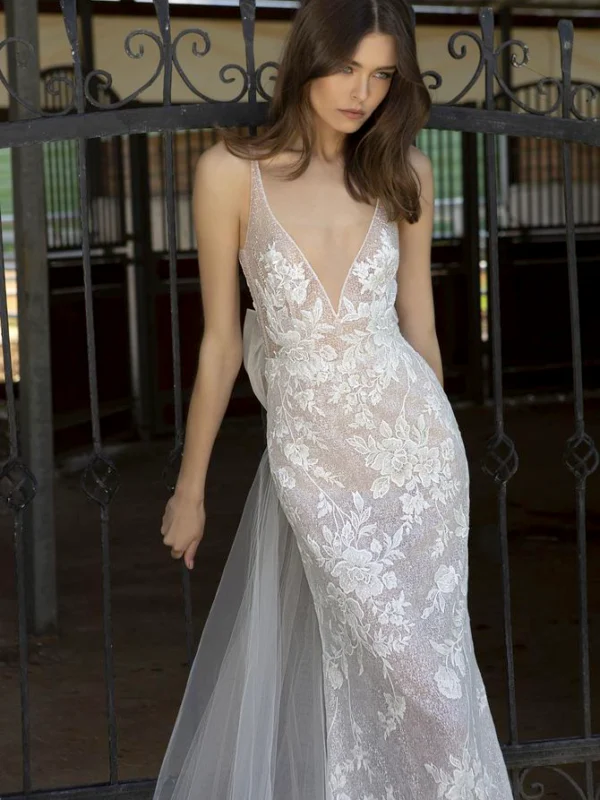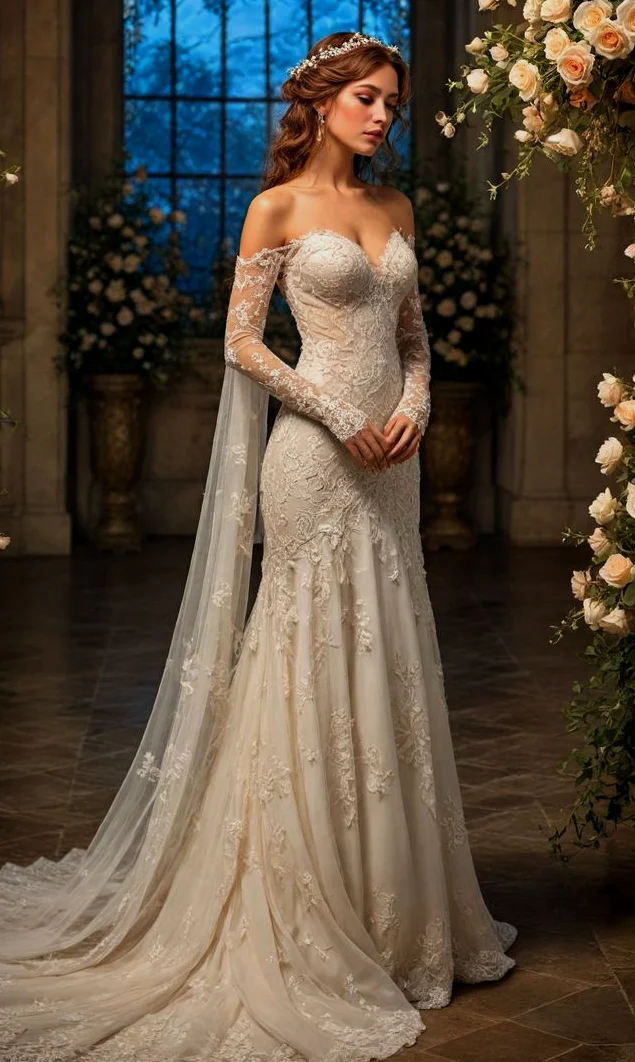
A bridal outfit appears in different situations throughout the day. Walking and rear line become prominent at the entrance, arms and hands join the picture during greetings, and the skirt changes arrangement at the table. Plan these stages as one connected look. The five views show different long dresses, including a broad seated shape and a narrower combination with a visible veil. They supply concrete comparison questions for your own bridal outfit rather than general prescriptions for wedding guest clothing. Relate each reference to a particular part of your plans.
Begin a bridal outfit plan with three situations
Write down three stages first: the entrance route, greetings and your place at the table. Which shoes are you wearing, what are you carrying and does an outer layer join the outfit? You do not need a complete shopping list yet. Establish which pieces you want to keep for all three stages. Consider individual transitions afterwards, such as changing the veil or putting down a bouquet. Each accessory then has a concrete role in the sequence rather than being added solely because it looked attractive in isolation.
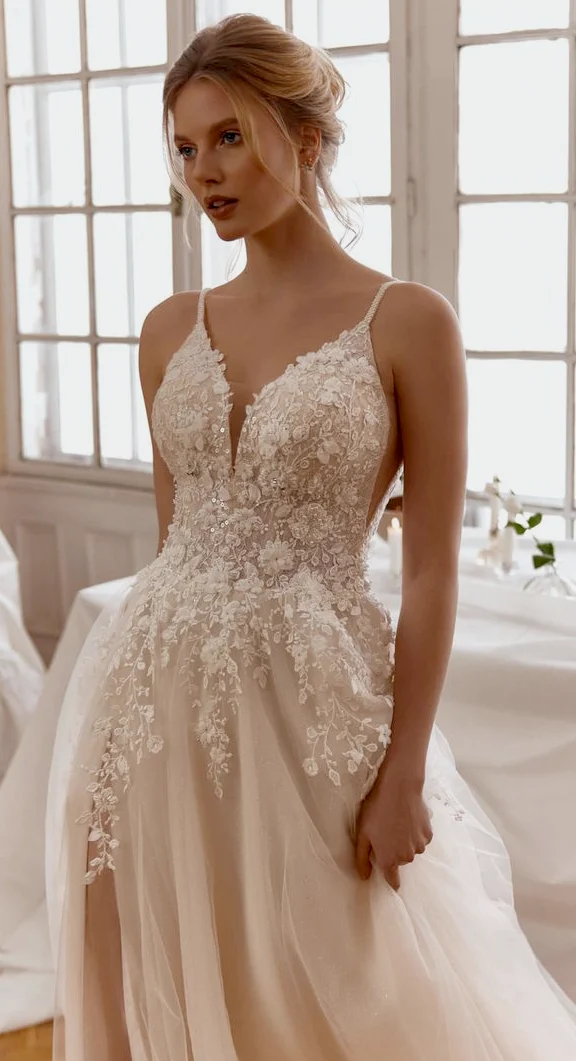
The narrower long shape with a veil supplies another distribution from the broadly spread seated dress. The closer strapped view concentrates drawing on the bodice and reveals an open skirt area beside it. Choose the silhouette you want to wear through several stages first. An attractive photograph of one position need not answer every requirement of your day. Put your actual schedule beside the picture and ask which question it explains rather than gathering several references without a defined purpose for each.
Test the entrance with the skirt falling normally
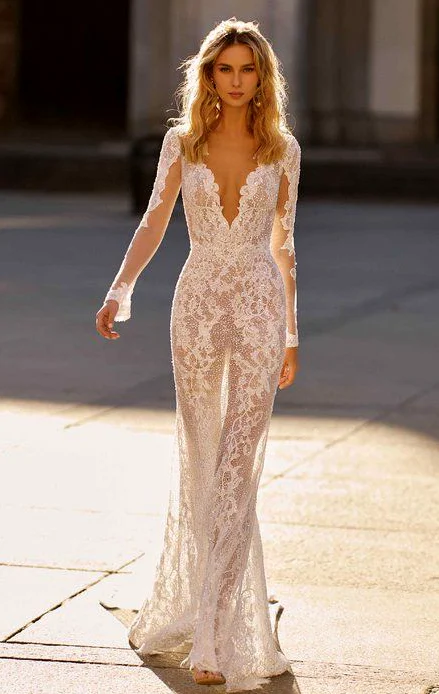
The narrow long-sleeved dress in the standing full view has a continuous pale pattern and deep front line. Its lower shape widens farther down. The broad off-shoulder alternative offers a clearly different relationship between bodice and skirt. Compare both ideas walking in your intended shoes. Where do you want width, and how would you like to manage the hem? Those questions concern actual movement rather than standing volume alone. Include a turn or change of direction relevant to your entrance route.
Let the skirt fall without lifting it initially. Walk several steps, turn and request a complete rear view. Add the veil afterwards. If the front length needs changing, ask about the effect on side and rear edges as well. Our backless wedding dress guide helps compare rear lines. Transfer the relevant question without assigning an open back to every garment. The actual rear view determines which addition makes sense, letting you borrow a useful comparison without adopting another cut’s complete styling.
Try greetings through real arm movements
The pictures show several shoulder arrangements: thin straps, narrow long sleeves and lower side sleeve sections. On the broad seated dress, the upper edge begins below the shoulders and the drawing continues down the arms. Compare these lines with relaxed arms first. Raise them for an ordinary greeting afterwards and hold your intended bouquet or bag. Look at edge and middle again before rearranging the garment. Your own movement gives a more concrete answer than a single posed upper-body photograph.
If a particular upper line appeals, ask about its actual construction on the offered dress. A delicate-looking photograph does not establish a specific support system or removability. Choose the visible form and request an explanation of the practical connections. Check whether long earrings or a necklace sit where you want during greetings too. The bridal accessories guide adds individual selection questions. Here the important issue is how those pieces work together between normal standing and a greeting, so try new additions within the same movement sequence.
Relate the seated skirt to your own table
The seated long off-shoulder view shows substantial pattern across a broadly arranged skirt. It is useful for noticing the visible area while sitting. You need not copy its expansive spread. Try your actual garment on a chair relevant to the celebration and arrange only the amount you intend to use. Should the front drawing stay visible? Do you want your hands at the middle or beside it? These questions alter the view of the same cut and make your own chair-table relationship part of the comparison.
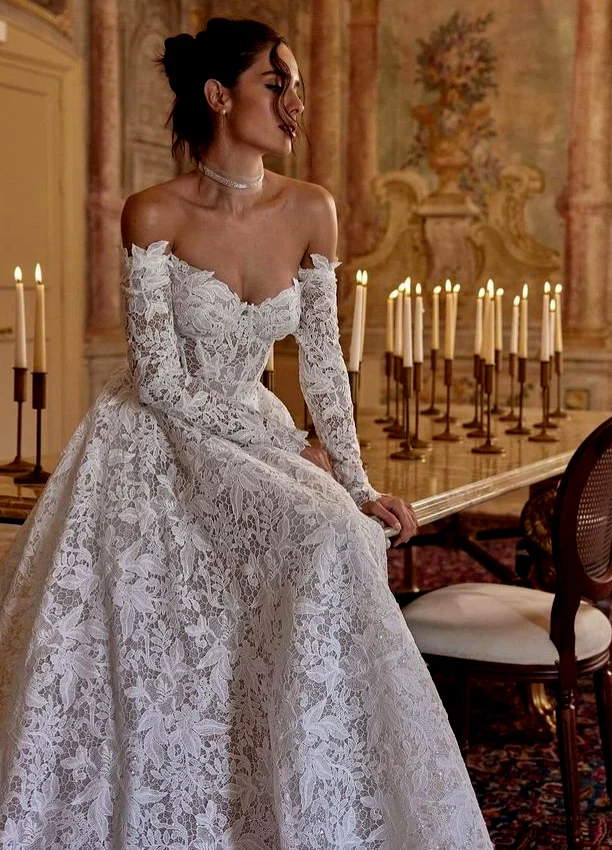
Sit at a table edge and reach for a glass. Hold the bouquet briefly, then put it down. The upper line may become clearer without it, or you may enjoy their combined shape. Put the bag where it should remain while eating. Stand afterwards and inspect the front before rearranging the skirt. You can see which small action the transition needs and whether you enjoy handling the garment that way. Repeat the same sequence with another candidate to compare actual sitting arrangements rather than two attractive still images.
Plan veil changes with the hairstyle
The narrower long dress with a side-falling veil adds another layer behind the body. A patterned garment and a visible veil area can work together or overlap one another. Try the intended length with your hairstyle and look from back, side and front. Request an explanation of the actual attachment. Decide afterwards whether the veil stays through several stages or is removed at a particular point. A photograph does not demonstrate that change. Include how the hairstyle looks afterwards in the same trial rather than imagining it from the initial view.
Carry out the intended sequence once without rushing. Ask which actions are required and who could help if appropriate. Look at the garment again after removal rather than deriving the later outfit from the first photograph. If an accent feels missing, try a smaller addition individually. Another large jewellery piece need not appear automatically. Decide through the newly visible line whether the outfit already feels complete or whether you want a deliberate new emphasis. A quieter later arrangement is a valid choice within the same day.
Confirm two states as one outfit
Record two complete states: the intended entrance and the table combination. Use the same shoes and important underlying pieces so the transitions stay comparable. If you specifically want another pair of shoes or outer layer, include that precise change in the trial. Note which pieces you wear when and where removed items should go. The choice then becomes practical within the celebration’s sequence rather than a collection of separate attractive views. These two confirmed states provide a useful reference for later small accessory decisions too.
Discuss proposed alterations by exact location, target, cost and a further fitting. Read the care information on the real dress and other pieces; the GINETEX care-symbol explanation helps interpret it. Visible pattern density does not determine treatment. A tried sequence of walking, greeting and sitting lets you choose the combination whose shape you enjoy in every planned state. Your own outfit remains the measure for later additions rather than requiring every detail from the references to be gathered into one arrangement.
Plan a complete bridal look for walking, greeting and sitting. Test the transitions with the same important pieces instead of judging one posed photograph.
Frequently asked questions
Is this a wedding guest outfit guide?
The pictured dresses are compared as shape ideas for your own bridal look. They do not create general colour rules for wedding guests.
Do I need another dress for sitting at the table?
Not necessarily. Assess the actual skirt arrangement and removable additions first; changing dresses is another personal option.
Can every veil simply be removed?
Ask about the actual attachment and try the intended change with your hairstyle. A photograph does not fully explain that connection.