Black wedding dress styles are not defined by color alone. Across a dark, continuous surface, neckline openness, sleeve length, waist construction and skirt movement become especially noticeable. These six concepts range from a covered A-line gown to a draped winter look, an embellished mermaid silhouette, a pocketed garden dress, tuxedo tailoring and a sculpted strapless train. Rather than treating the images as purchasable products, the comparisons focus on coverage, ornament, proportion and handling. Venue, floor conditions, seasonal layering, sitting time and dancing plans matter as much as the front view. Each option should therefore be assessed for walking space, accessory balance, support and the effort needed to manage its hem or train.
Balancing a Modest A-Line Shape with a Veil
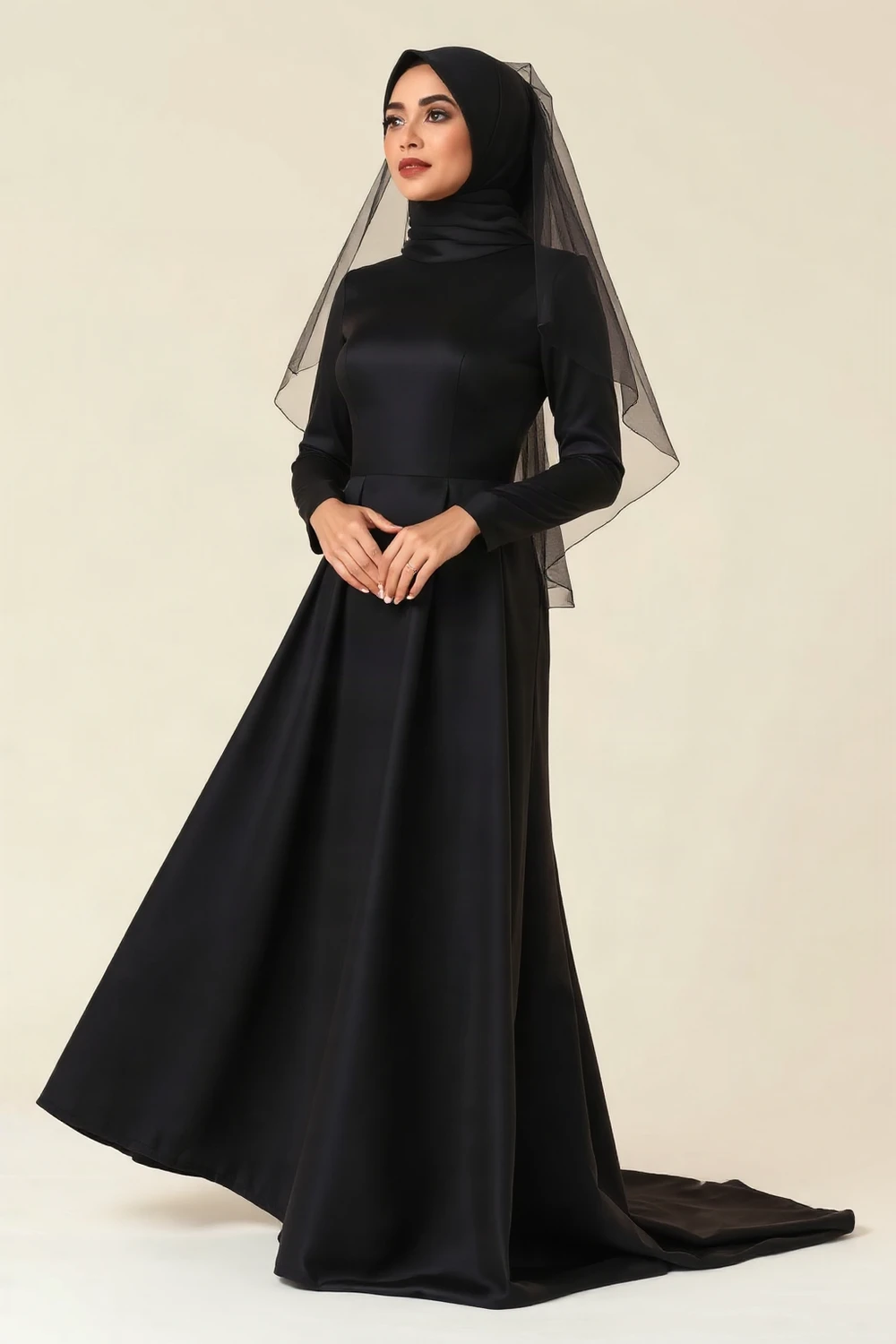
The first concept joins a high neckline and fitted long sleeves with a defined waist and widely opening A-line skirt. A translucent black veil falls around a coordinated hijab, lightening the smooth, opaque surface without adding color. Focus stays on the face, waist and clean skirt rather than dense ornament. The look offers greater hair, neck and arm coverage, but the veil still needs secure placement, peripheral visibility and free shoulder movement. The full skirt may allow easier steps than a close mermaid cut, though the short trailing fabric needs care on stairs and outdoor routes. Small earrings or a restrained brooch can complement the fine veil without overwhelming it. Finally, the sharp contrast against the pale studio background may read differently in a darker ceremony space.
Using a Draped Neckline in a Winter Setting
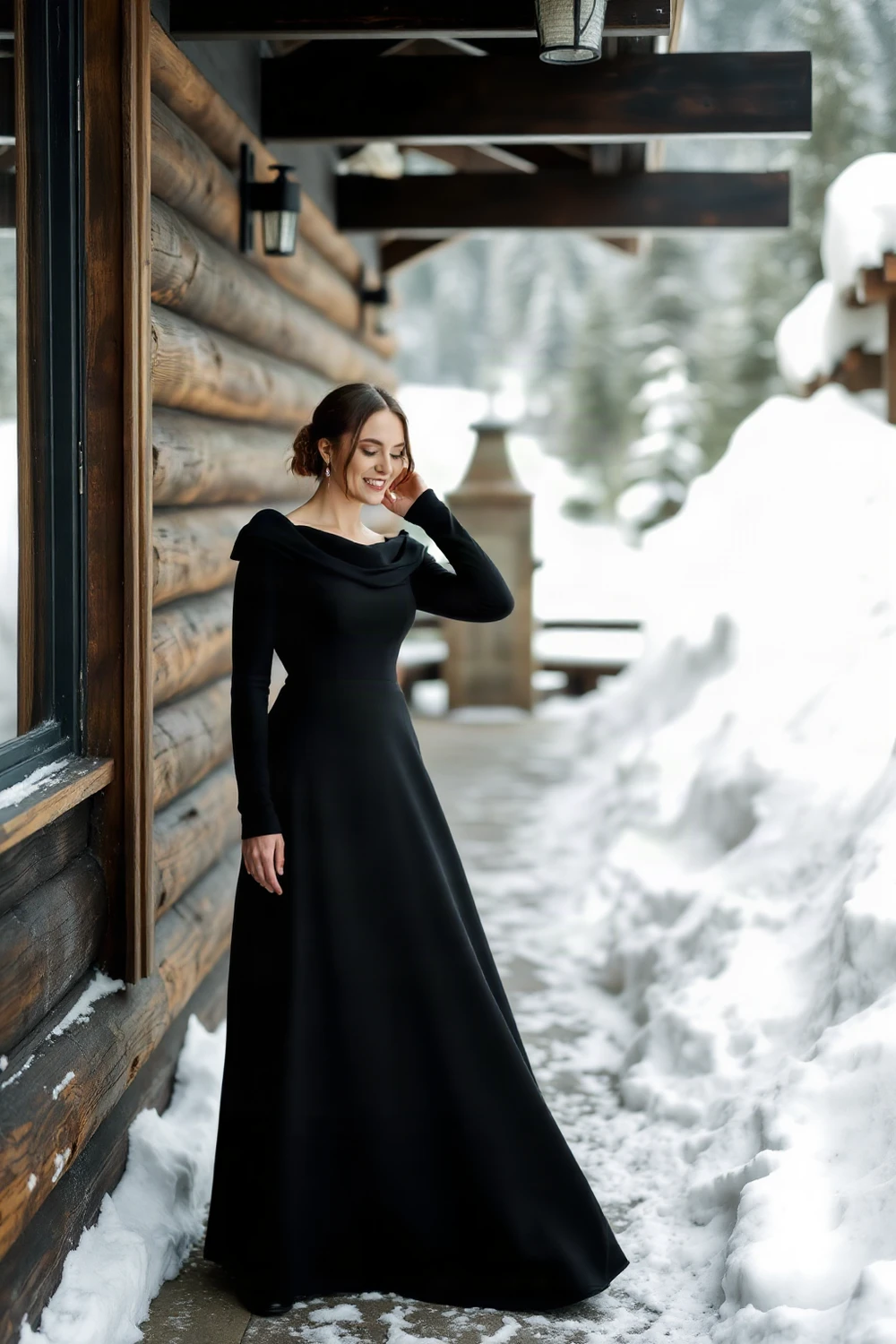
In the second image, the dress stands out between white snow and brown logs on a cabin walkway. A shoulder-wide draped neckline softens the plain, long-sleeved bodice, while the widening skirt forms an uninterrupted line to the ground. Compared with the first gown’s high neck, it opens the neck area and frames the face more gently. The snowy scene does not establish warmth or weather protection. A winter event still requires separate planning for lining, removable outer layers, suitable footwear and indoor-to-outdoor transitions. The folded neckline should remain stable when bending, embracing or dancing. Although a minimal train may be easier than a broad sweep on damp or snowy ground, the floor-length hem must be tested with the intended shoes and walking pace.
Managing Focus in an Embellished Mermaid Shape
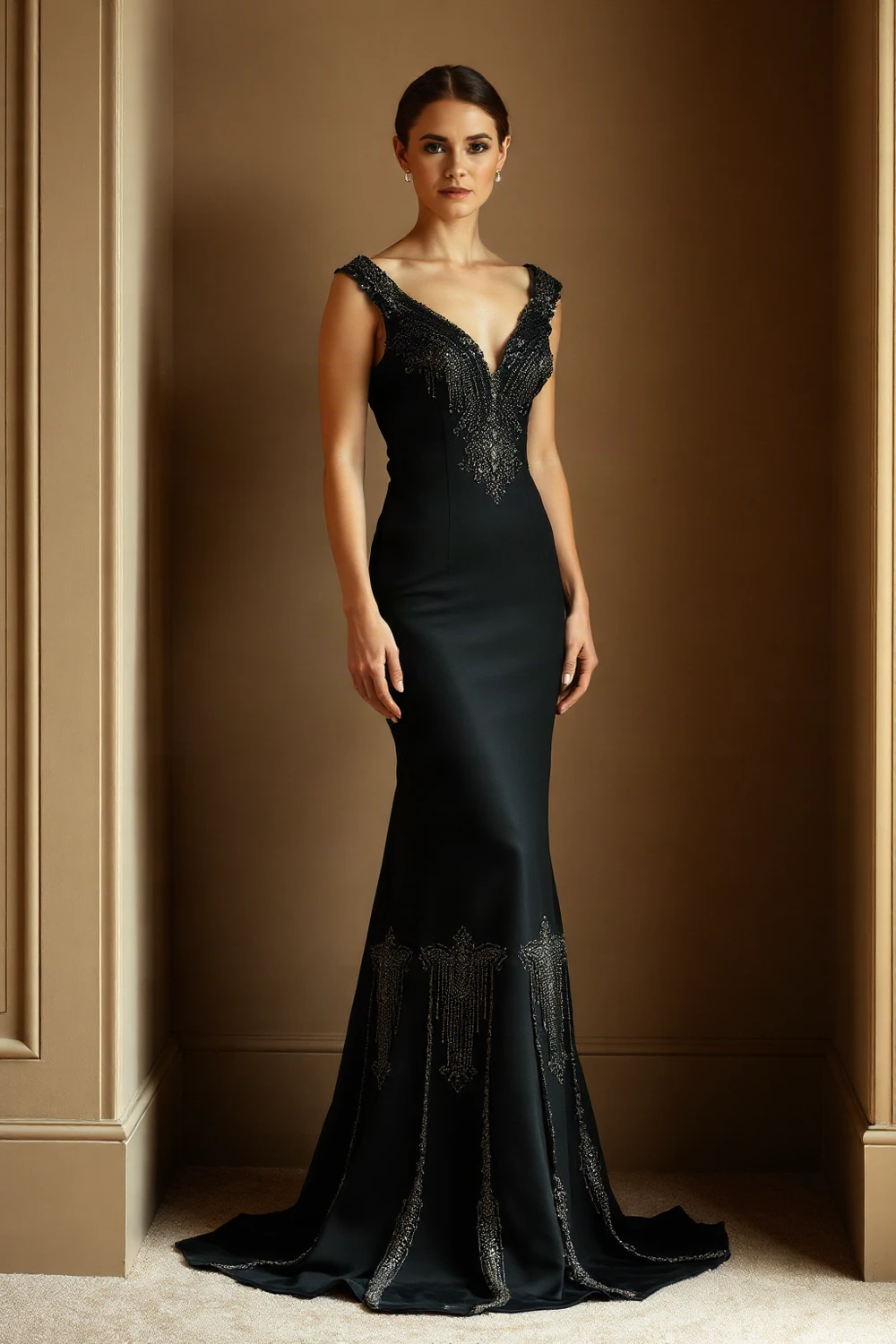
The third design pairs a deep V-neck with a mermaid silhouette fitted through the torso and hips. Light-catching, fan-like geometric ornament surrounds the neckline and repeats near the lower skirt, directing attention between the upper body and the point where the skirt opens. A broad plain-black middle prevents the detailed areas from merging. More dramatic and evening-oriented than the unembellished gowns, its narrow hip-to-knee section should be tested while sitting, taking long steps and dancing. The image cannot confirm internal support or deep-neckline behavior, so both need attention at a fitting. A large necklace could compete with the ornamented frame; small earrings and simple hair preserve balance. View the reflective details under venue-like light, since direction and intensity alter their effect. Their exact material cannot be confirmed by appearance.
Combining Pockets with a Simple Bridal Line
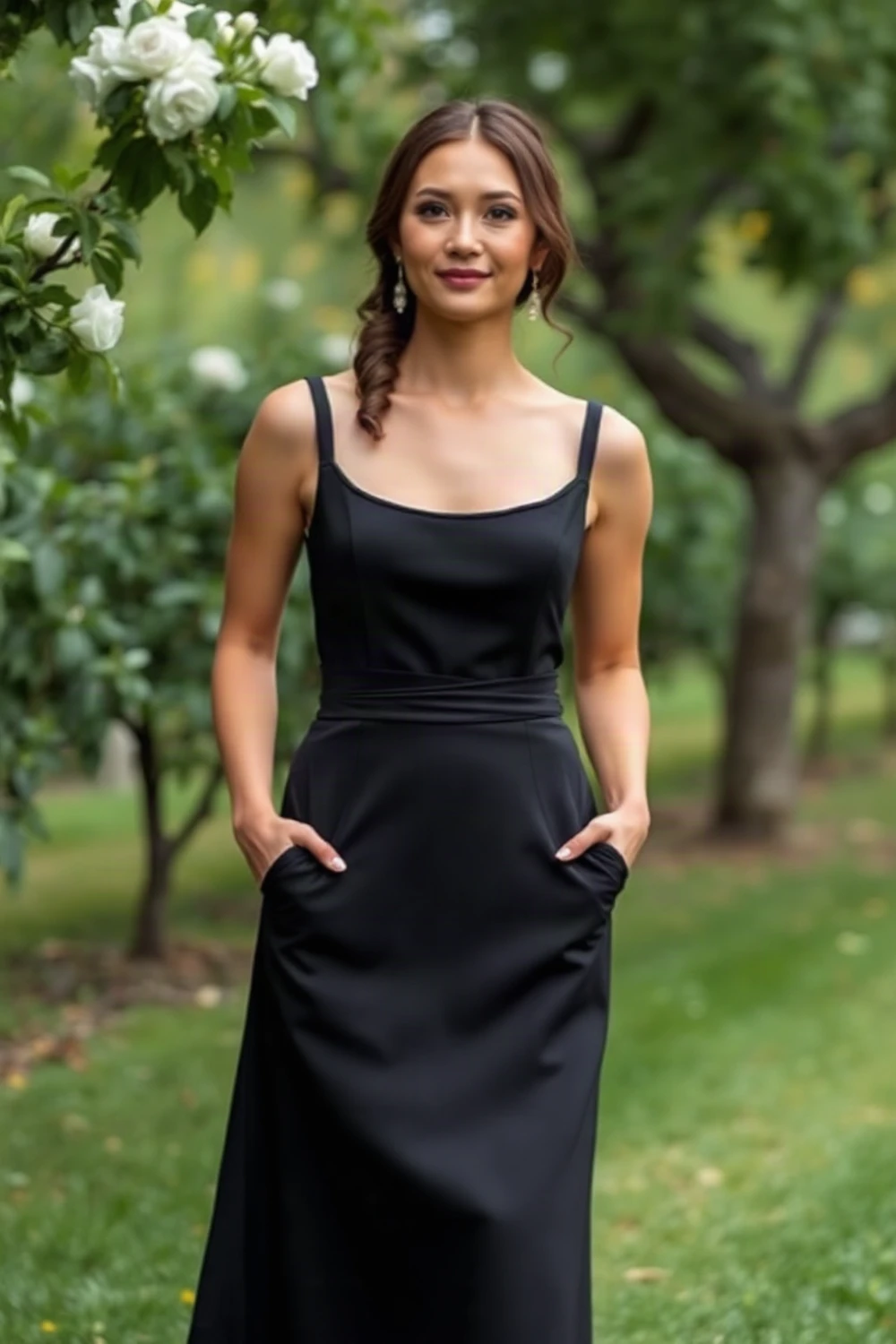
The fourth concept combines slim straps, a softly squared neckline, a broad waistband and two side pockets in a relaxed design. Without visible embellishment, its character comes from proportion and the contrast of black against green foliage and white flowers. Pockets give the hands a natural portrait position and may hold a very small item, but heavier contents can pull the skirt or create a bulge; test their depth and placement on the dress. The open neckline leaves room for a necklace or drop earrings, though enlarging both could disrupt the defining simplicity. Slim straps look lighter than long sleeves, but the image cannot establish their support. For an outdoor ceremony, plan for grass, changing temperatures and a possible later layer rather than treating them as afterthoughts.
Creating Structure with Tuxedo Lapels
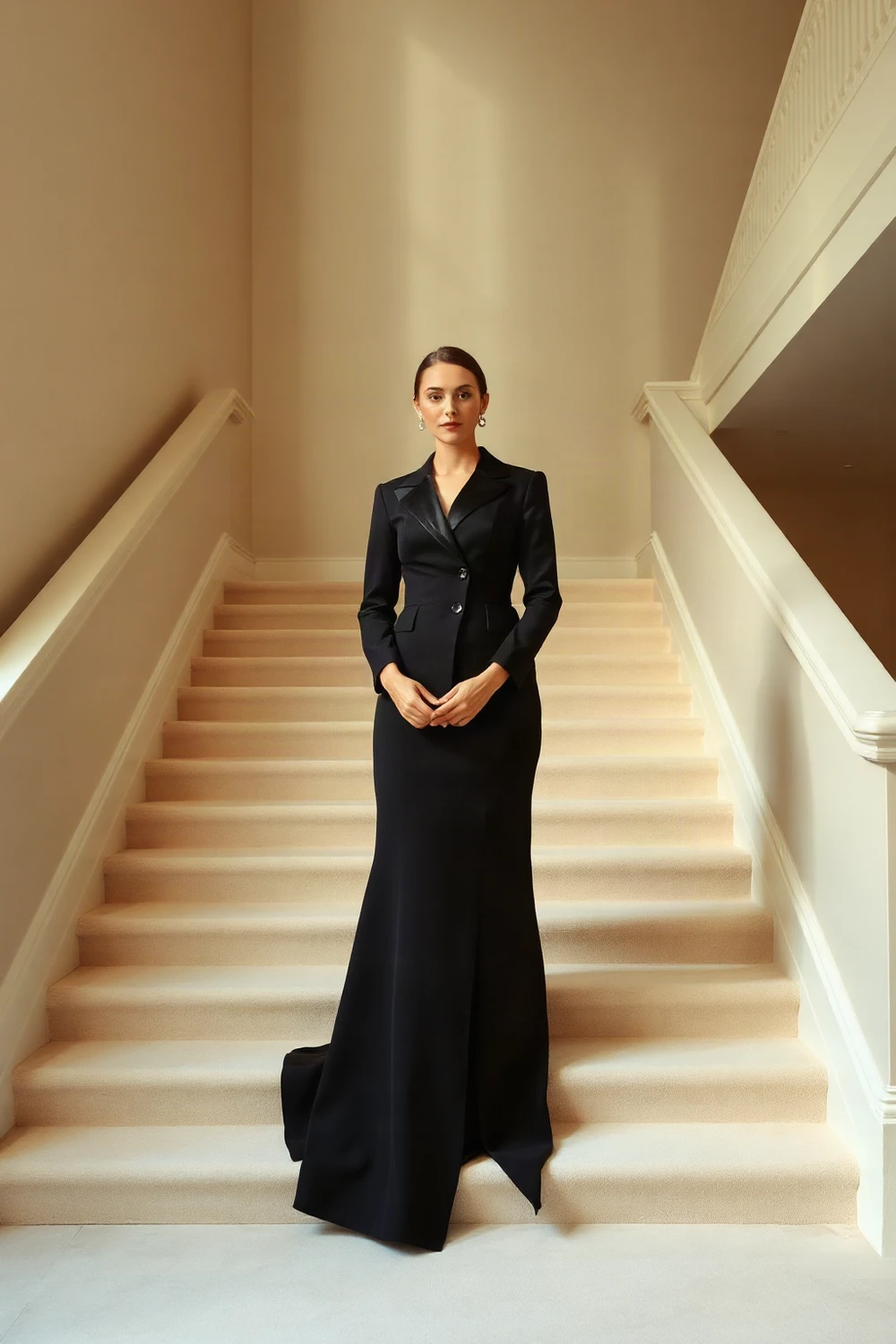
The fifth image brings formal jacket construction into a floor-length bridal silhouette. Sharp shoulders, wide glossy-looking lapels, long sleeves and front buttons create a precise architectural frame, while the narrow skirt continues vertically before widening slightly at the floor. The effect depends on tailoring rather than romantic surface decoration. Consider shoulder width and lapel scale alongside the wearer’s face shape, hairstyle and proportions. An updo keeps the lapels visible; a large necklace may compete with their pointed lines. During a fitting, sit to check whether the buttons pull, raise the arms to assess the sleeves and confirm that the lapels stay flat. Test the slim skirt’s step length, especially for stairs. The spacious staircase shown is a compositional setting, not proof that movement will be easy.
Proportioning a Strapless Bodice and Broad Train
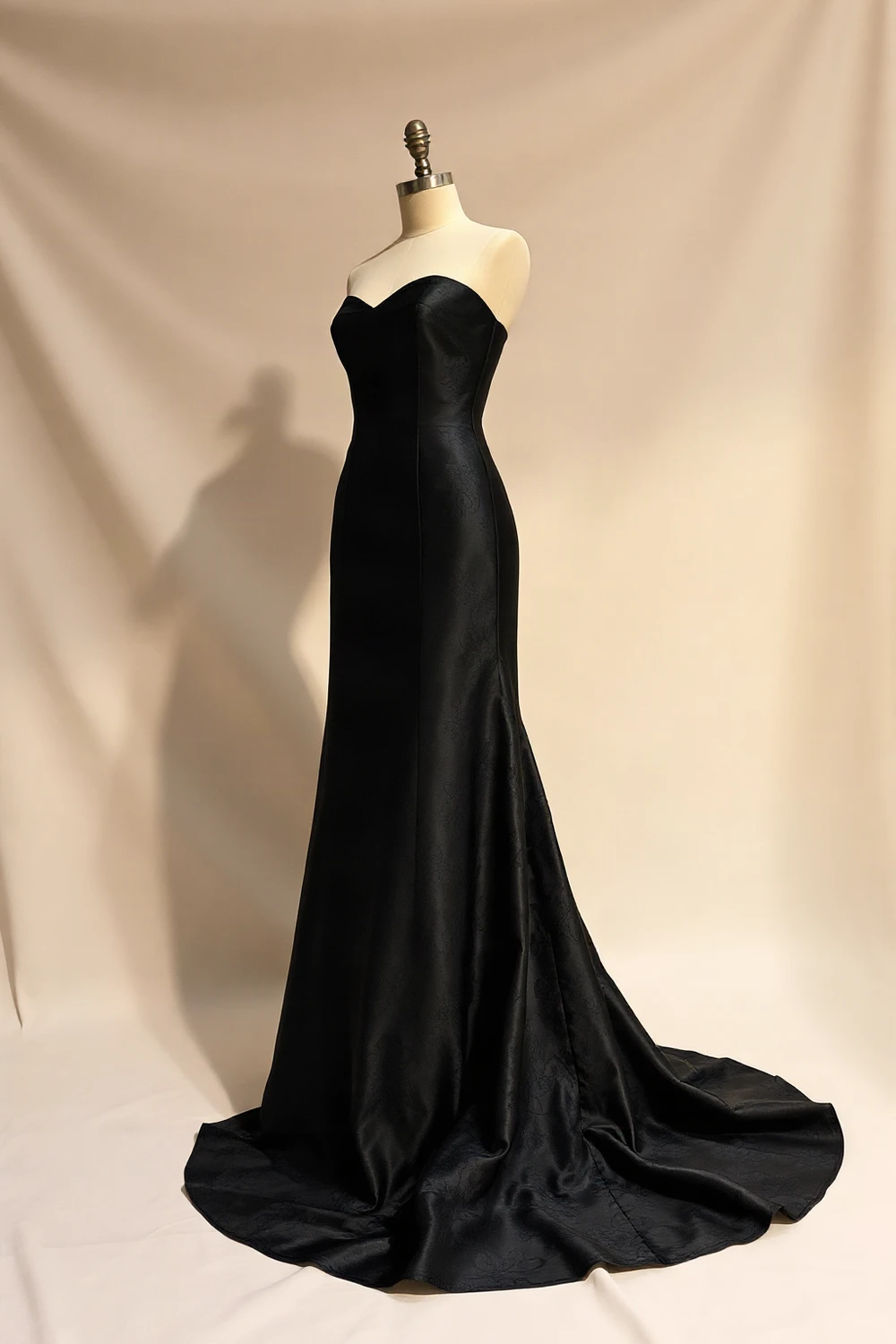
The final concept has a strapless sweetheart edge, vertical shaping lines and a train spread widely across the floor. Its sculpted upper boundary exposes the shoulders, while the close silhouette follows the body before opening dramatically at the hem. Directional light reveals a subtle pattern in the black surface, creating depth without dense applied ornament. Secure bodice fit is essential: a mannequin cannot show support, slippage, breathing comfort or movement effects. A fitting should include sitting, lifting both arms and dancing, with discreet straps or extra support considered if needed. The broad train has strong aisle and portrait impact, but needs more space and active handling than the gallery’s shorter hems. Narrow rooms, rough flooring or a busy schedule may require a bustle or carrying solution. Restrained jewelry preserves the neckline and shoulder line.
Begin by deciding which feature should lead: coverage, soft drape, reflective decoration, practical pockets, sharp tailoring or a sweeping train. Then test that preference against the ceremony. Stairs, grass, snow and a narrow dance floor affect the skirt, while long sitting periods and broad arm movements challenge corset or jacket structure. A mobile fitting in the intended shoes and planned underlayers reveals more than standing still before a mirror. Accessories should reinforce the strongest line rather than compete: an ornamented neckline may need little jewelry, while a simple dress can take a more expressive accent. With these checks, black becomes more than a dramatic color choice; it forms a coherent silhouette suited to the venue, personal comfort and desired formality.
Compare black wedding dress styles ranging from a modest A-line and pocketed gown to beaded mermaid, tailored lapel and sculpted strapless silhouettes.
Frequently asked questions
Does a black wedding dress need a black veil?
No. A translucent black veil creates textural contrast against an opaque gown, while a contrasting veil draws more attention around the face. Test its density, length, security and effect on head movement with the complete look.
Is an A-line or mermaid dress easier to move in?
An A-line skirt generally leaves more space around the legs. Mermaid cuts vary at the knee, so sit, climb steps, turn and try dance movements before deciding. The individual construction matters more than the silhouette label alone.
What should I check when choosing a wedding dress with pockets?
Check whether the opening is comfortable, whether stored items pull the skirt and whether the pockets become visible in photographs. A heavy phone or bulky object can disrupt an otherwise smooth fall.
How should prominent tuxedo lapels be accessorized?
Wide lapels already frame the face and upper body. Earrings or one restrained hair accessory can preserve their clear shape, whereas a large necklace may compete with the points. Test accessories together with the intended hairstyle.
Where can a broad wedding dress train be difficult to manage?
Narrow aisles, stairs, grass and rough floors can complicate a wide train. Consider a bustle or carrying loop, confirm who will help arrange it and rehearse the ceremony route in the intended shoes.