Black wedding dress styles differ through more than color. Where black begins, the silhouette it follows, and how light or colored details interrupt it shape the final impression. These six concepts range from a black column to an ivory gown with one elongated black accent. Silver-toned rays, a flowing outer layer, burgundy roses, oversized bows, patterned sheer sleeves, and an asymmetric trailing element establish focus in different ways.
Rather than reproduce a particular image, consider shape, color proportion, and placement. A dress may look restrained from the front but dramatic from behind, while moving layers alter the balance of black and ivory. Also assess walking, sitting, arm movement, accessory scale, and the setting in which the silhouette will appear.
A Single Bright Focus on a Long Column
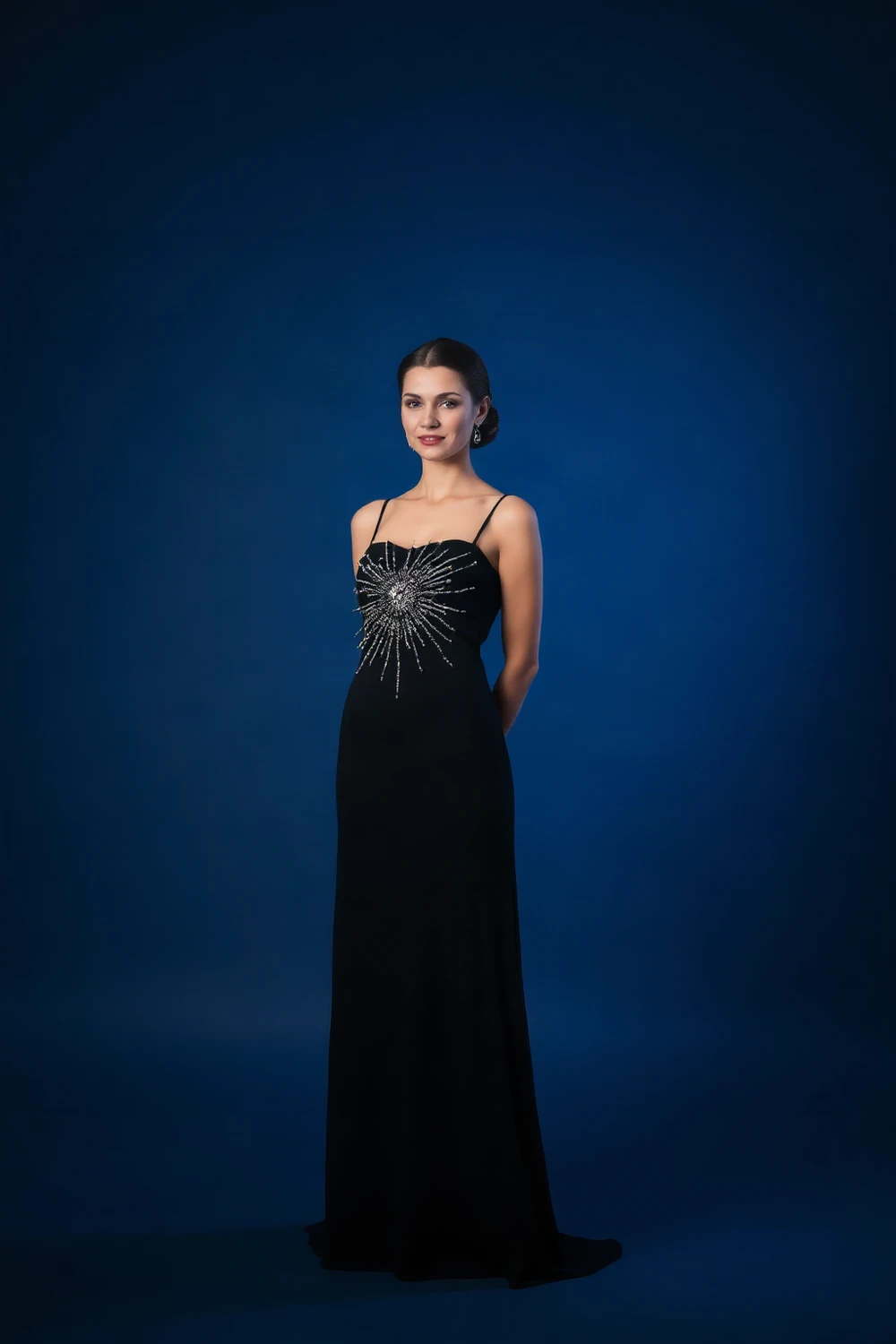
The first concept pairs a narrow-strapped black column with silver-toned decoration radiating from the bodice center. Its uninterrupted skirt stresses vertical length over width, while the ray-like lines pull attention upward. Unlike sparkle scattered over a whole dress, this concentration feels controlled and graphic against the deep blue background.
With one strong central motif, the scale of earrings, hairpiece, and bouquet matters. Another bright feature of similar size could divide attention; smaller accents keep the starburst dominant. At a fitting, move the shoulders, lift the arms, and sit to check that the straps and decoration stay comfortable and positioned. For anyone drawn to a clean line and defined upper-body focus, this shape is an alternative to a full skirt.
A Black-to-Ivory Ratio That Changes in Motion
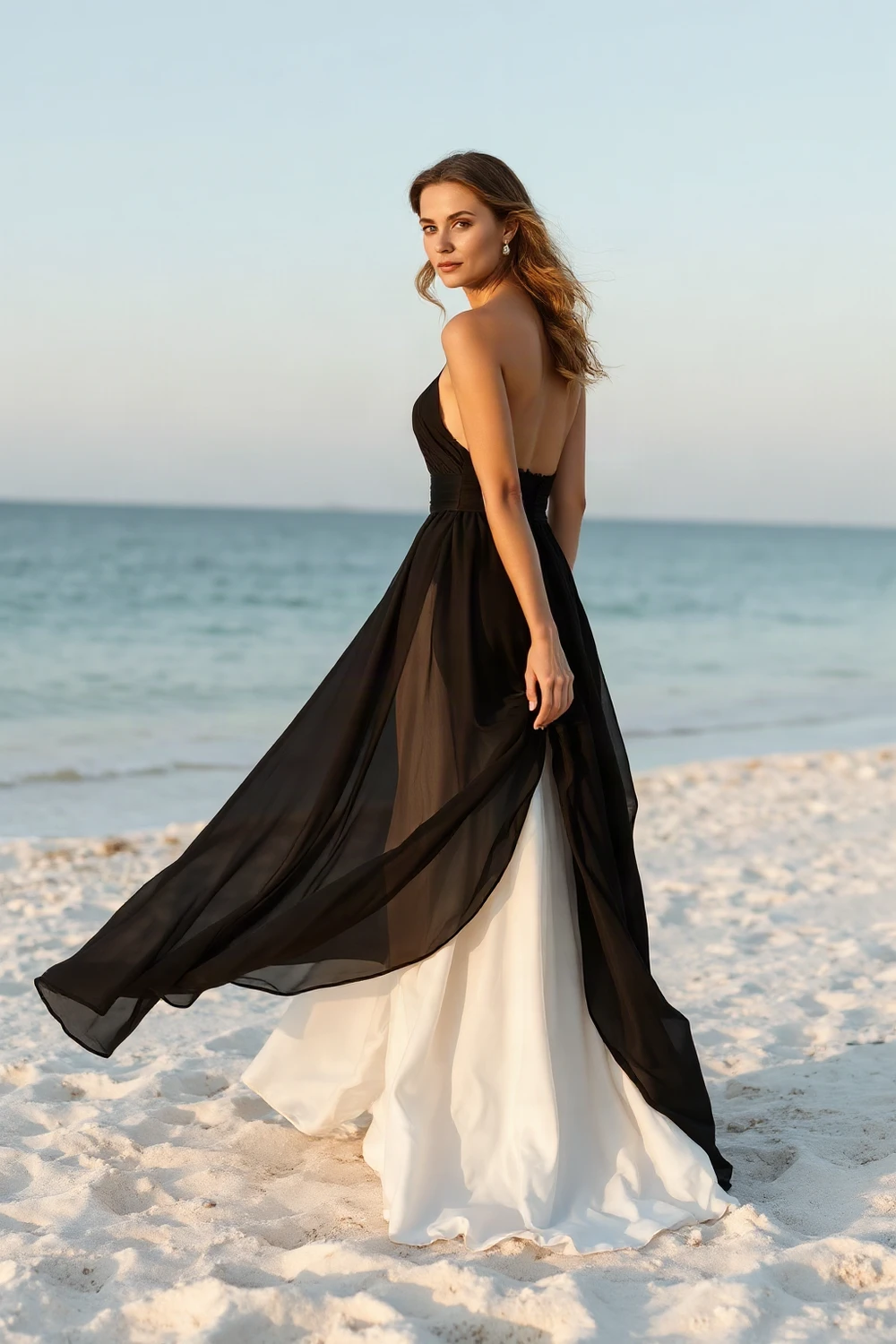
In the second concept, black starts at the strapless bodice and continues as a translucent, flowing layer over an ivory skirt. Beach wind opens it, repeatedly changing the color ratio: the look may seem darker at rest, while walking or wind makes the pale skirt more prominent. A broad waist band calmly joins the fitted top and moving panels.
The movement can be expressive, but length and setting need practical attention. Sand, grass, and uneven paving may change how the fine outer edge travels. At a fitting, turn, take stairs, and gather the skirt as well as walking straight. Raise the arms and sit to test the bodice. Because the moving contrast is already the focal point, restrained accessories keep the composition more coherent than further large decoration.
Burgundy Floral Rhythm across a Full Black Skirt
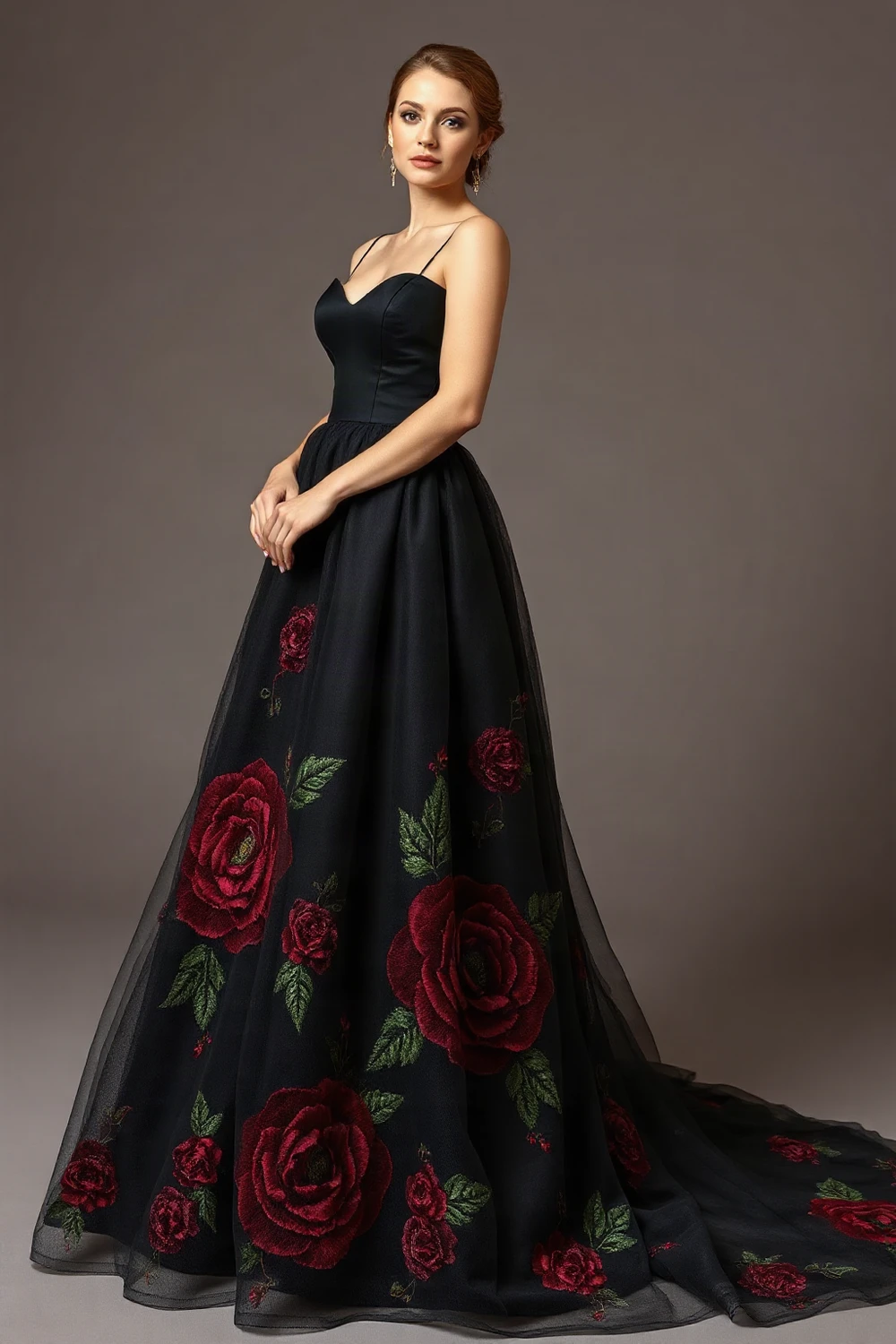
The third look keeps black dominant across a slim-strapped bodice, voluminous skirt, and train. Burgundy roses and green leaves, concentrated mainly below, change its character. Large and small motifs at varied intervals create rhythm across the broad surface; continuing them onto the train prevents an abrupt ending at the front.
Decoration below the waist quiets the upper body and draws attention to the skirt. This suits someone seeking broad impact during an entrance rather than emphasis at the shoulders or neckline. A bouquet need not repeat the burgundy at the same scale; a simpler arrangement leaves the dress motifs clear. Test the full skirt and train for turning radius, seating space, and crowded areas. Against black, the deep floral tones look more graphic while retaining their romantic association.
Two Scales of Ivory Bow on an Open Back
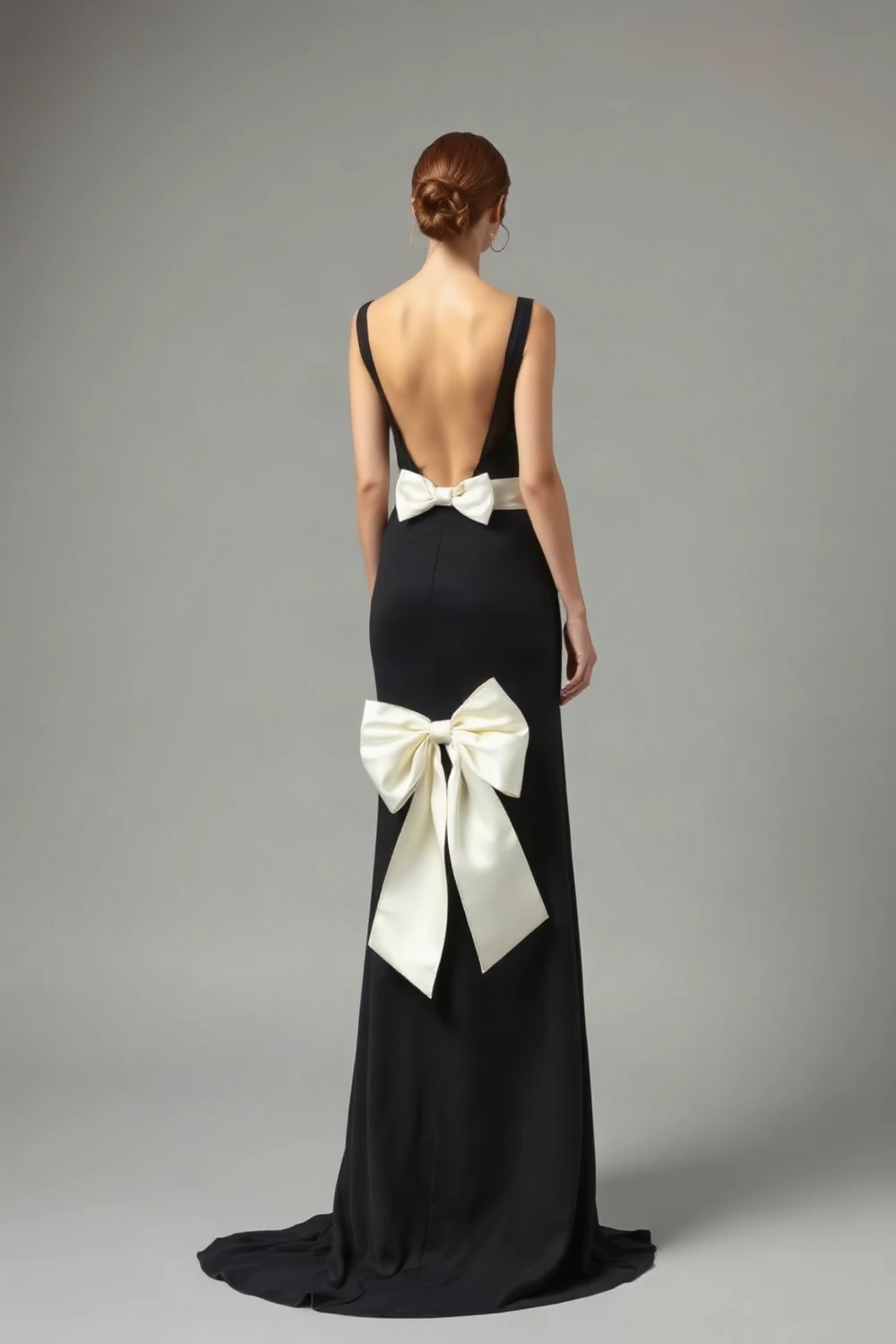
The fourth idea breaks a sleek black line with two ivory bows at the back. A medium bow sits on a narrow waistband below the deep V-shaped opening. A much larger bow rests lower on the skirt, with long tails leading downward. Their contrasting scale establishes hierarchy and makes the rear view central rather than secondary.
The large ornament adds volume to a fitted silhouette without a wide skirt, but must accommodate sitting, walking, and dancing. Test it on different chairs and while gathering the hem; standing still will not reveal compression or snagging. The open back also needs secure internal bodice support. Wearing the hair up keeps the arrangement visible. Small earrings or a restrained hair detail preserve the bows’ clarity better than another large accessory near the head.
Softening Full Black with Patterned Sheer Sleeves
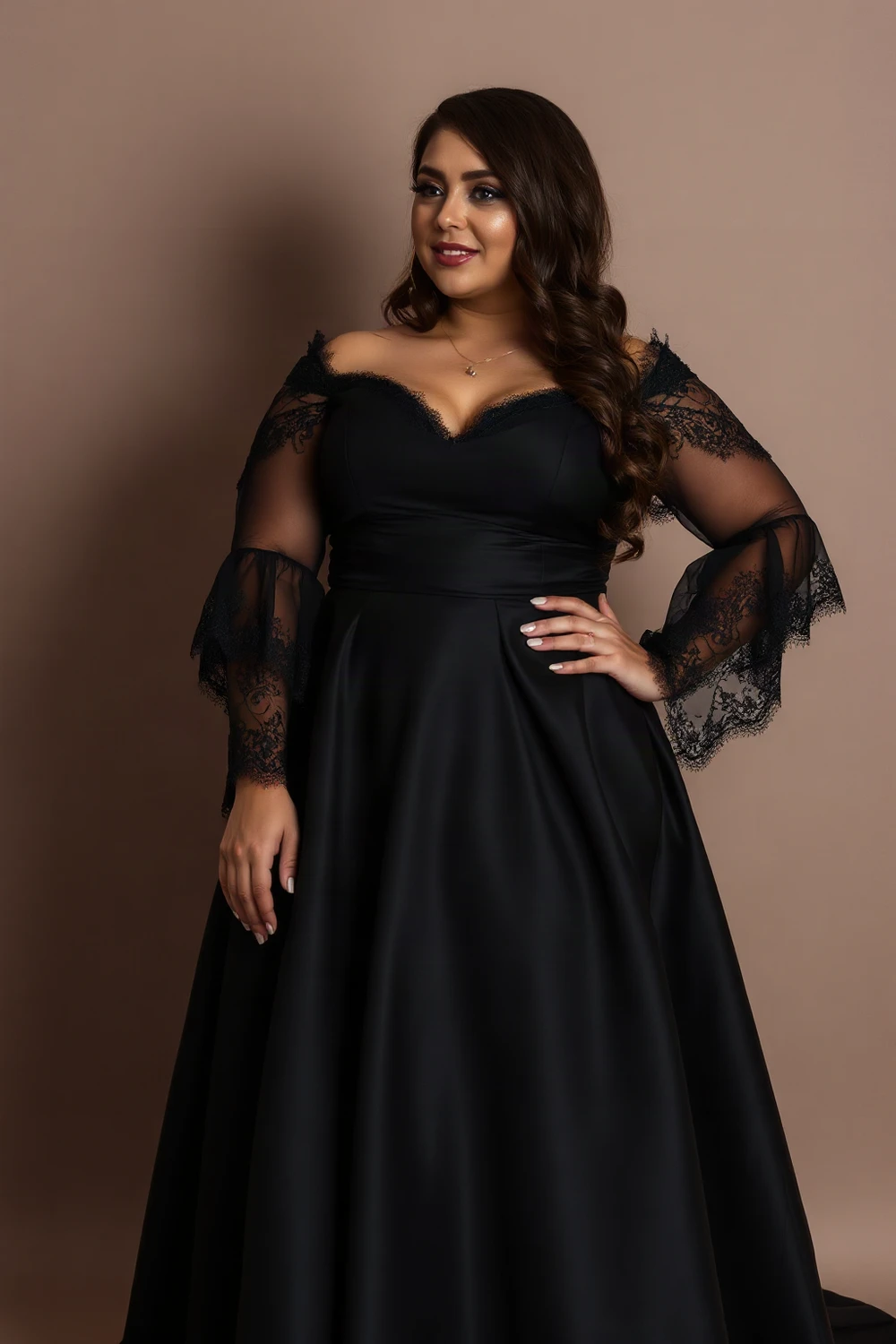
The fifth concept pairs an off-shoulder sweetheart neckline with a long skirt opening gradually from a defined waist. Though entirely black, translucent sleeves and lace-like patterned borders keep the surface from appearing solid. Flared sections below the elbows move beside the relatively smooth, gently reflective skirt. Differences in transparency and pattern create focus without a second color.
Assess sleeves for function as well as appearance. Flared cuffs give a softer, more romantic line than close-fitting sleeves, but may interfere with table settings, hand movements, or an outer layer. At a fitting, bend the elbows, reach forward, and raise the arms. Because the patterned shoulder edge frames the neckline, minimal neck jewelry can preserve its outline. For a plus-size dress, consider bodice support, waist position, upper-arm movement, and walking space together rather than relying on the size label.
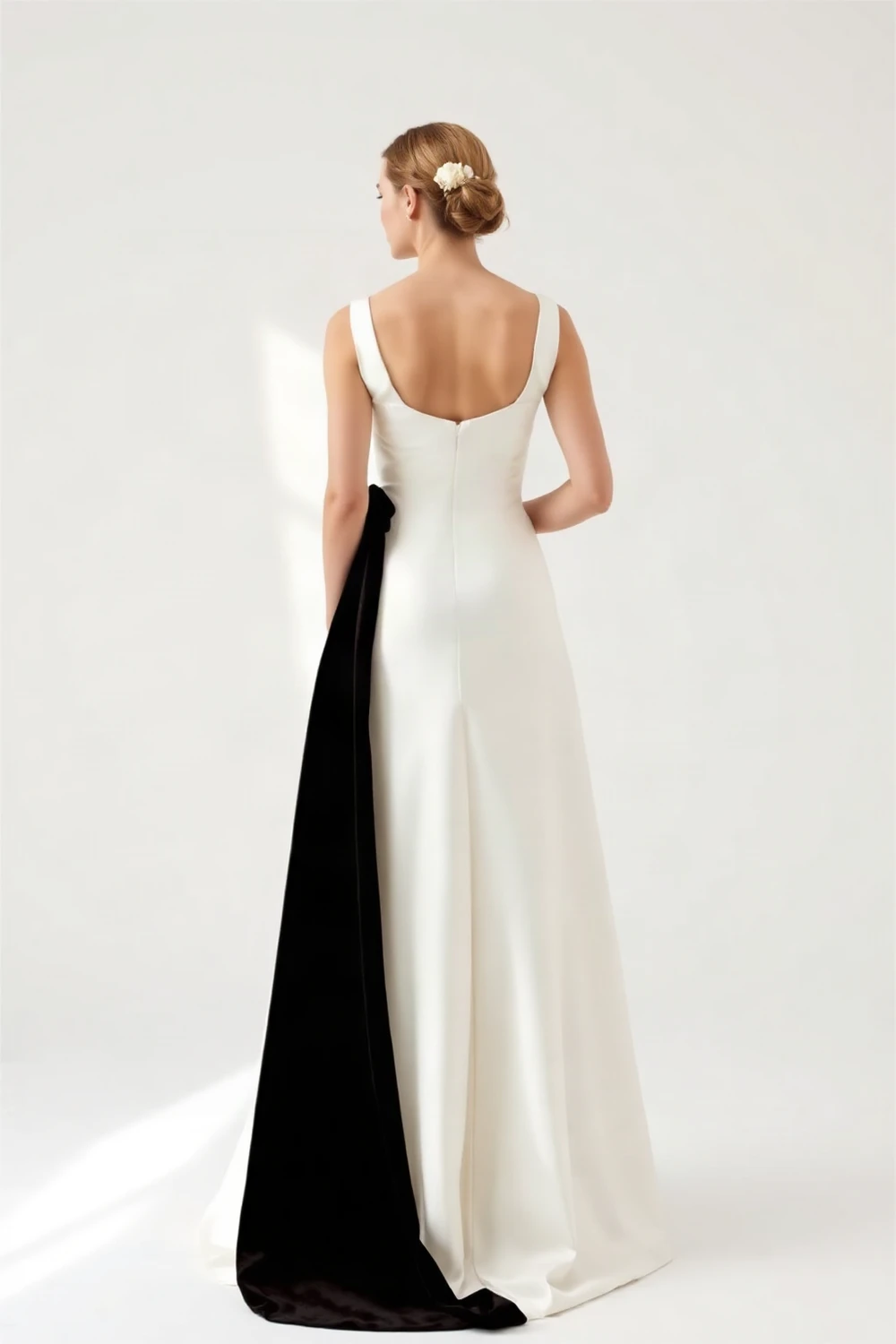
A Narrow Black Train Effect on an Ivory Ground
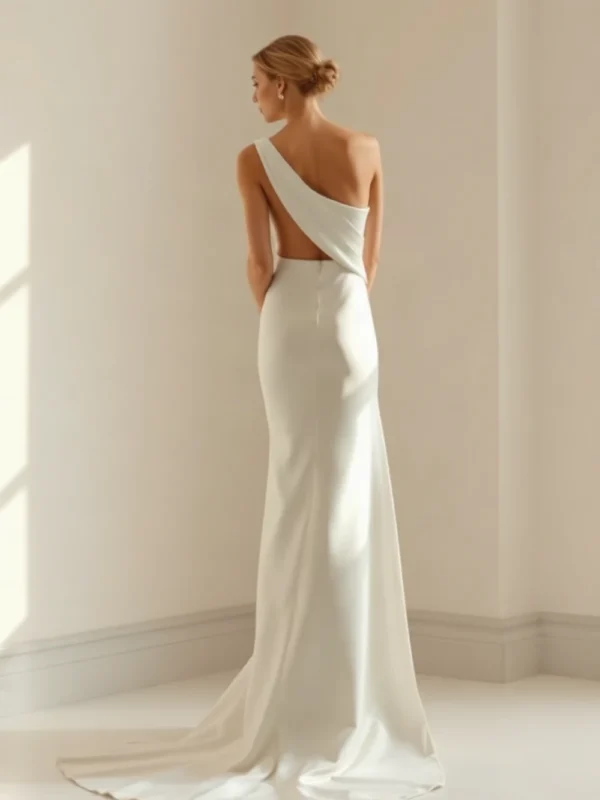
The final concept reverses the full-black balance. The main dress is ivory, with broad straps and an open back, while one black element falls from the left waist to the floor. Its asymmetric placement guides the eye to one side without dividing the otherwise quiet back, and the small floor extension resembles a narrow black train.
This measured contrast suits someone who does not want black near the face or across the bodice. Unlike a symmetrical sash, the side placement creates direction while walking. Because it sits near the feet, test it on stairs, through turns, and while dancing. A simple hair ornament can complement the pale open space without competing with the panel. Avoiding another large black accessory keeps the elongated accent singular and legible, showing that placement can matter as much as the amount of black.
A compelling black wedding dress need not decorate every surface. First decide where attention belongs: a radiant bodice, floral skirt, open back with bows, patterned sleeves, or one elongated accent. Set the preferred balance of black and ivory before comparing silhouette and decoration.
Study the dress from front, side, and back in brighter and softer light. Sit, walk, turn, and raise the arms to expose issues a still image cannot show. Accessories should reinforce the hierarchy rather than multiply focal points. This supports a consistent balance among black’s drama, the setting, and the wearer’s comfort.
Compare full-black and black-accented wedding dress ideas through silhouette, contrast placement and movement, from a silver-toned bodice motif and burgundy roses to ivory bows and a long black side accent.
Frequently asked questions
Should I choose a full-black dress or an ivory dress with black accents?
A full-black dress creates one continuous, forceful color field. Black layers or panels over ivory provide a more measured contrast. Compare the back view and the color ratio in motion as well as the front before deciding.
What jewelry works with a bright central bodice motif?
Small earrings and a restrained hair ornament can preserve a large starburst or jeweled effect as the primary focus. Try all pieces together in fitting-room light; a necklace of similar scale may compete with the decoration.
How can I test whether oversized bows are practical?
Sit on chairs of different heights, walk, turn and gather the hem. Check whether a bow at the lower back or skirt becomes compressed, interferes with arranging the train or catches another person while dancing.
What should I check when trying flared patterned sleeves?
Bend the elbows, raise the arms, reach across a table and try any intended outer layer. Observe whether the patterned edge irritates the skin and whether the flared cuff restricts hand movement.
Can a flowing black outer skirt work outdoors?
It can create expressive motion, but suitability depends on the ground and weather. Test how the layer behaves in wind and how closely it approaches shoes, sand, grass or textured paving while walking.