Asymmetric wedding dress styles distribute visual weight deliberately instead of mirroring every detail from side to side. Their defining gesture may be a one-shoulder neckline, a band crossing an open back, folded volume across the bodice, or skirt layers at different lengths. Choosing among them involves more than deciding which shoulder to bare: consider the neckline’s relationship to the face, support behind an open back, sculptural folds, and skirt movement.
The six gallery images apply this idea differently: a sheer shoulder drape softens a narrow column; a broad folded neckline frames the portrait area; a diagonal back band creates clean geometry; a patterned shoulder connects to a mermaid skirt; sculptural folds shape a sleek bodice; and layered skirt lengths transfer asymmetry below the waist. These are visual concepts for comparison, not claims about purchasable garments. The best choice reflects the setting, expected movement, and area you want to emphasize.
Softening a Narrow Silhouette with a Sheer Shoulder Drape
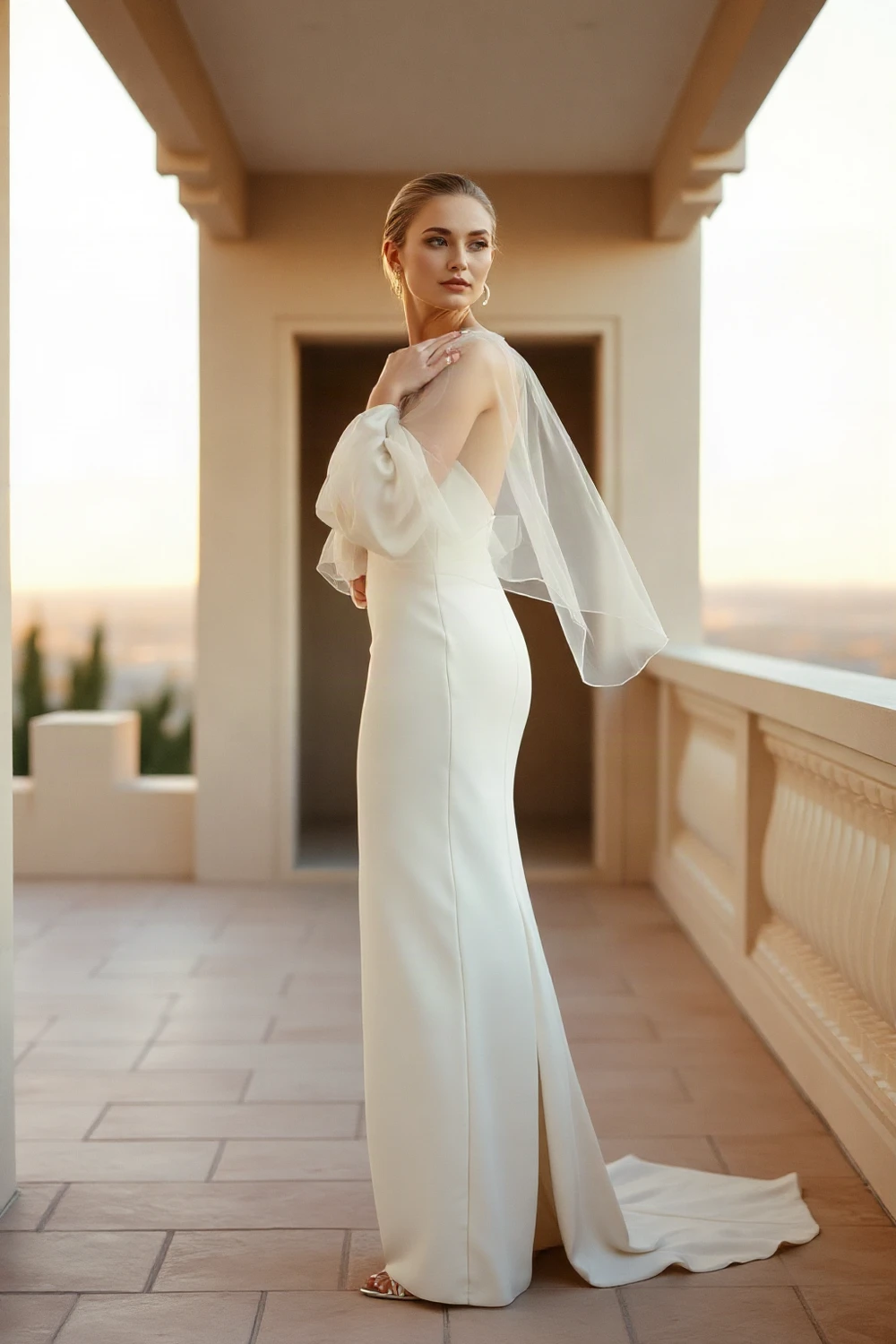
The first look balances a long, body-skimming column with a translucent layer falling back from one shoulder and a voluminous sleeve on the other. Because the narrow, unembellished skirt and short train preserve a strong vertical line, most visible movement stays around the upper body. It is a useful reference for an airy photographic element without the width of a full skirt.
A stationary front view cannot explain the full arrangement. Check how the shoulder layer falls from behind, where the sleeve gathers at the elbow and wrist, and whether the translucent section pulls as the arms rise. Outdoors, the light layer may react noticeably to wind; indoors, it may hang quietly. The effect is softer than a sharply structured one-shoulder neckline, but keeping the drape and sleeve in place may require careful fitting and movement tests.
Balancing the Neck and Accessories Around a Folded Neckline
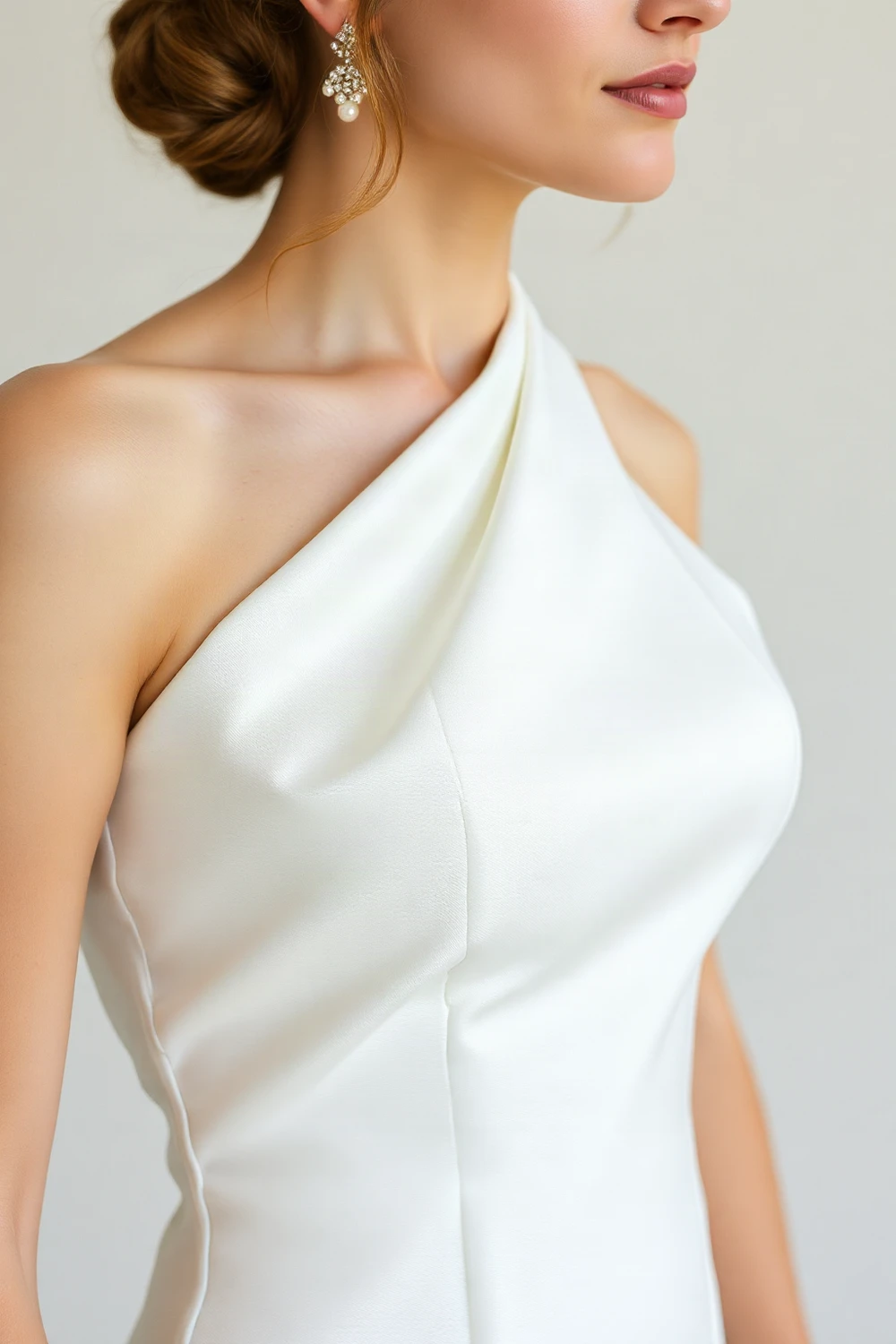
The close view shows how directly an asymmetric neckline shapes the area around the face. A broad ivory fold rises from the exposed shoulder toward the neck, leaving one side of the collarbone open. Its smooth surface and controlled curve feel more architectural than the first look’s sheer drape, so hair and jewelry should be evaluated with the neckline rather than added separately.
A low updo and drop earring define the look without hiding its diagonal line. If considering a necklace, check whether it visually or physically collides with the raised side; one distinctive earring may be enough. At the fitting, assess the edge near the neck, security of the bare side, and internal support while seated. The structure should preserve its line without repeated adjustment throughout the day.
Creating a Directional Back with a Diagonal Band
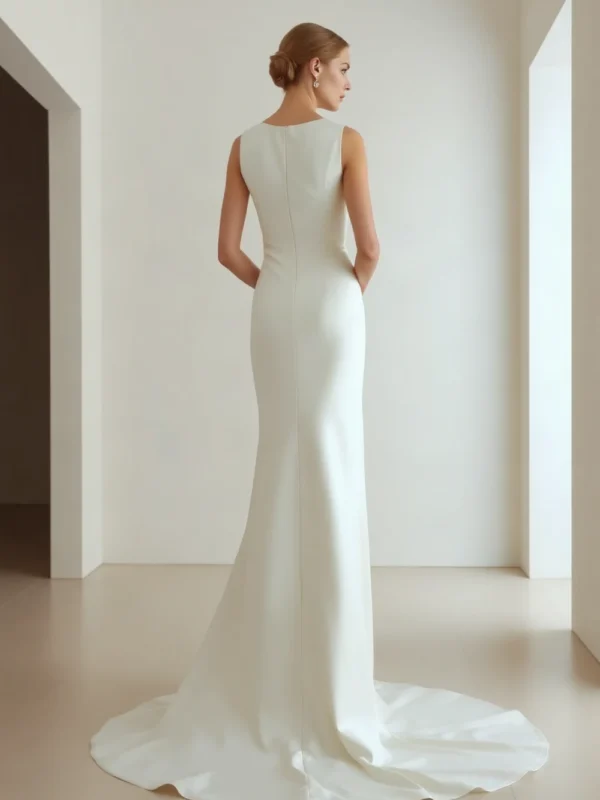
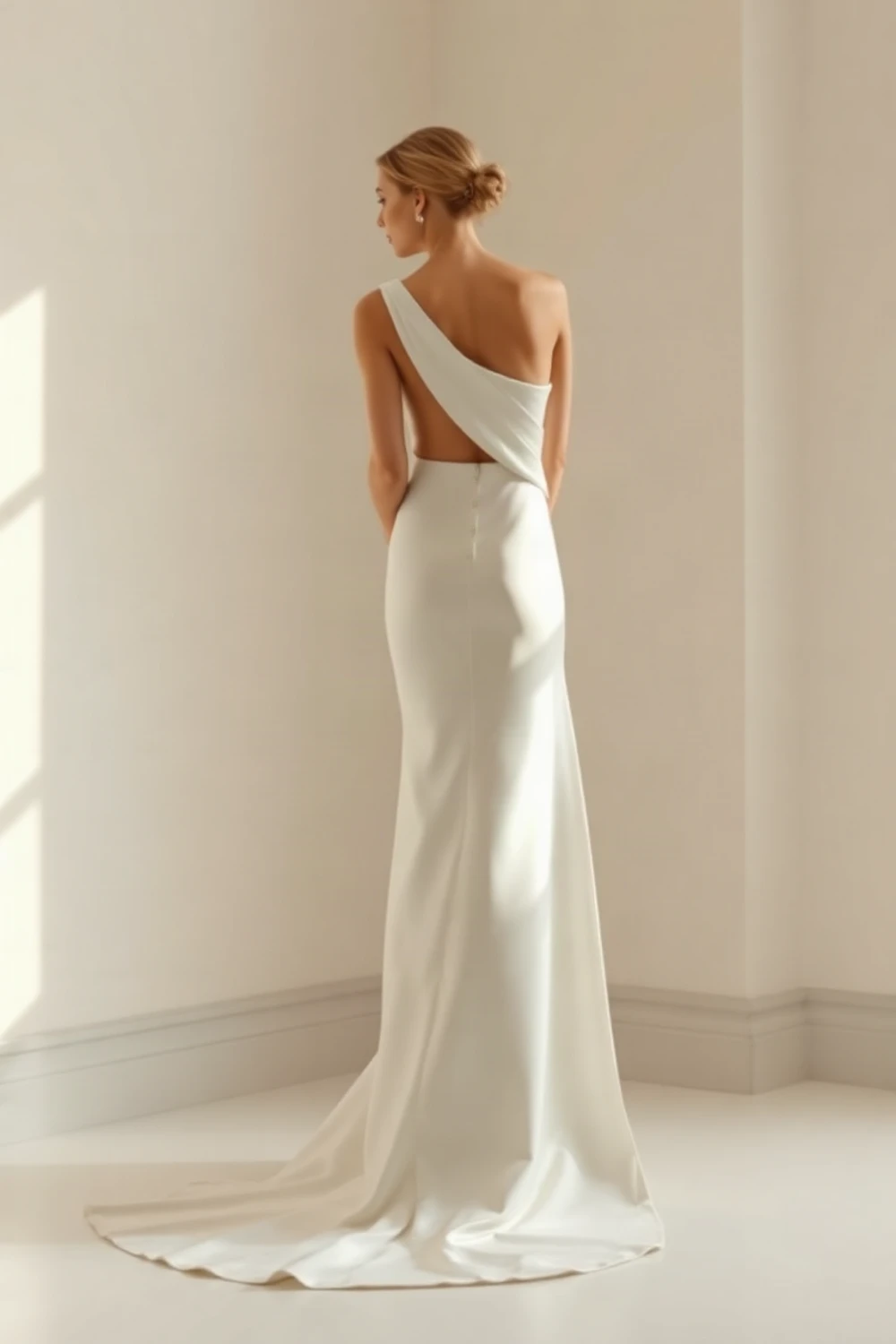
The third look moves the main asymmetry away from the front neckline. A wide band begins at one shoulder and crosses the open back, while a close-fitting skirt and short train create a quiet foundation. Without prominent surface pattern, the design depends on the geometry between the white diagonal and exposed back. It is a useful comparison for anyone wanting a defined rear view without elaborate decoration.
Support and appearance are inseparable in a back this open. Any intended foundation layer must provide security without showing inside the opening. A loose band may shift during turns; a tight one may restrict shoulder movement. Reach forward, sit, and rotate during the fitting. An updo displays the band fully, while loose hair reduces its contrast. Also test the short train on stairs and in a space like the ceremony aisle.
Connecting a Patterned Shoulder to a Mermaid Skirt
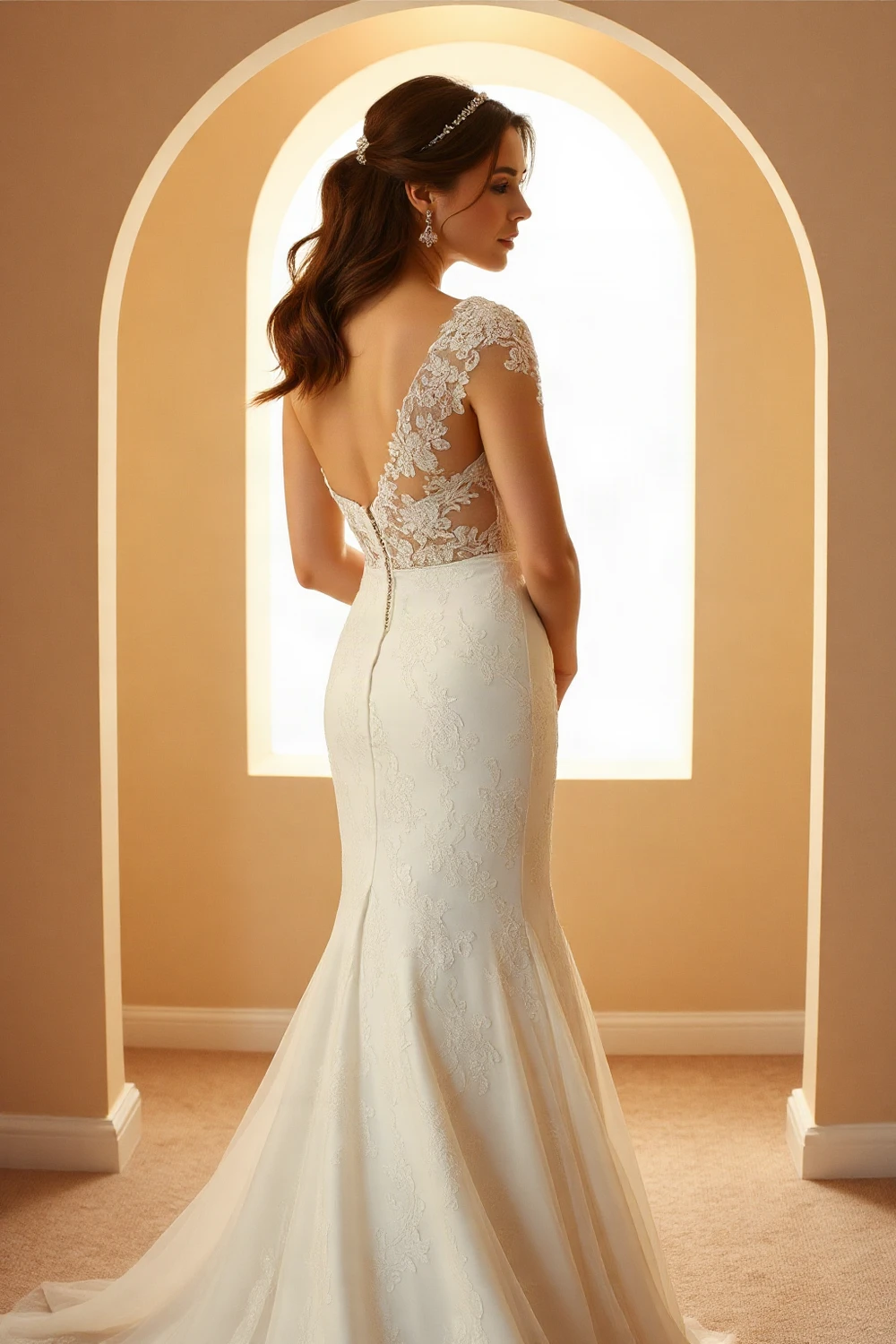
In the fourth image, lace-like patterning gathers over one shoulder and continues down the side of a deeply open back. The skirt follows the hips, then flares below the knees into a mermaid silhouette. Fine motifs on the skirt visually connect the lower shape to the detailed bodice. It is more decorative than the spare diagonal-band design but stays much closer to the body than a broad layered skirt.
With several focal elements, accessories should support rather than compete. Check whether the hairstyle covers the patterned shoulder and how a veil edge overlaps the appliqué-like shapes. The fitted area around the knees can change stride length, so practise ordinary walking, sitting, and using stairs. Throughout each motion, the rear closure should remain straight and the asymmetric shoulder section should stay in place.
Testing Fit and Movement in a Sculptural Bodice
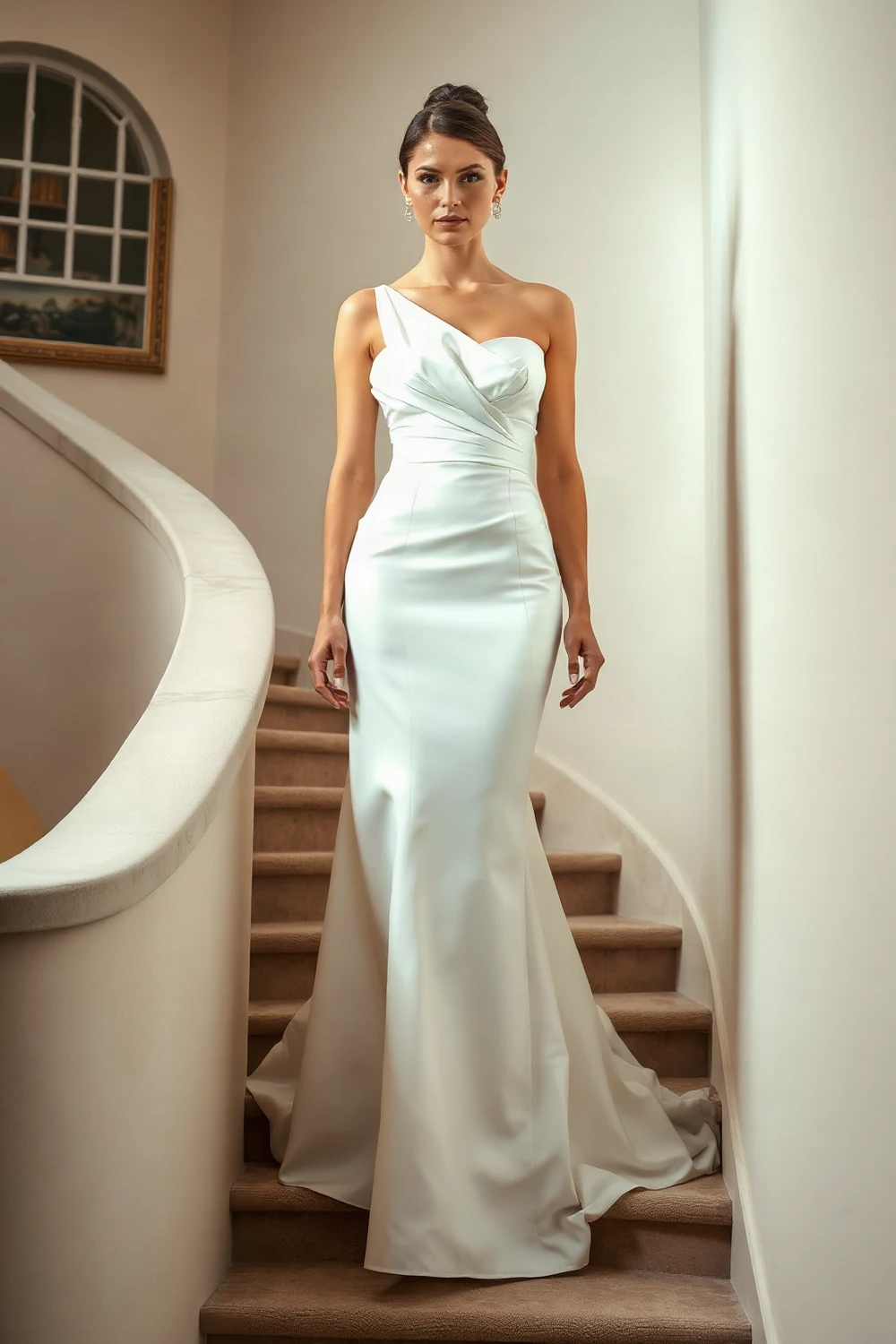
The fifth look pairs one narrow strap with broad folds sweeping across the bust and gathering near the waist. Their diagonal direction creates a sculptural upper-body focus, while the smooth fitted skirt lengthens the silhouette without adding another pattern. Relying on form, highlight, and shadow rather than lace-like texture or transparency, it offers a cleaner, modern interpretation of asymmetry.
A folded bodice can hide the foundation that creates its outer shape, so do not judge fit by visible folds alone. Check strap stability, bust support, and the waist folds while sitting. Stairs and reaching forward will reveal whether the upper section shifts. Because the neckline already has presence, restrained earrings, a clean hairstyle, and a bouquet without excessive width keep the construction clear; a large necklace may compete with the same diagonal space.
Moving Asymmetry into a Flowing Layered Skirt
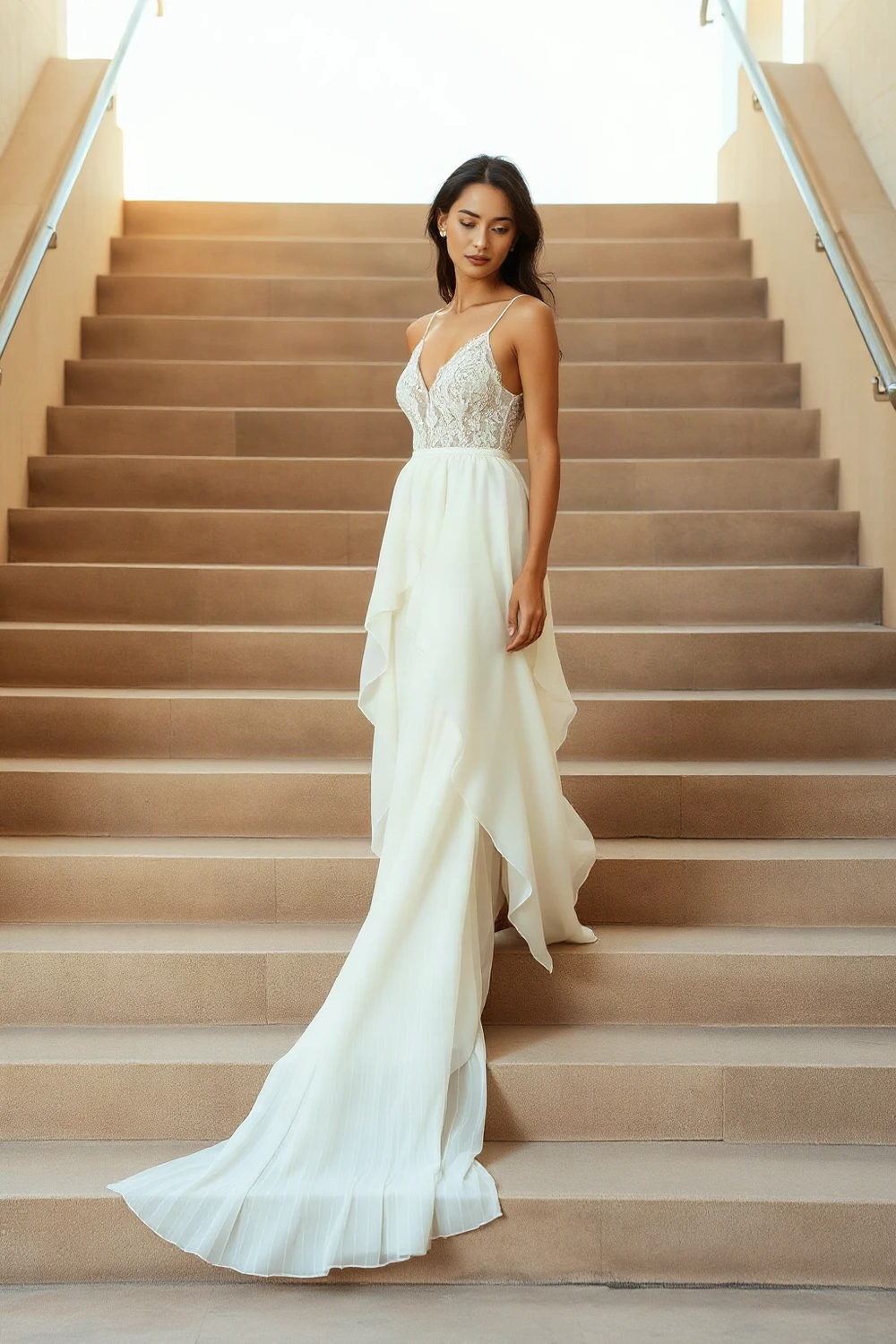
The sixth image shows that asymmetry does not require a one-shoulder bodice. Slender straps and a V-neck balance the upper body, while panels of different lengths direct movement below the waist. The dense lace-look bodice contrasts with plain, light-looking layers, creating two related areas of interest, and a long pleated train extends that motion vertically down the steps.
This approach can suit someone who prefers symmetry around the face but wants a more expressive walking silhouette. Test where the front panels fall on stairs, whether the intended shoes catch in curved edges, and how longer pieces settle after turns. Wind may animate this skirt more than a structured one-shoulder design. Bouquet width also matters: a broad arrangement could hide where the layers begin, while a narrower one leaves their direction visible.
First decide where the dress should hold attention: near the face with a folded neckline, across the back with a diagonal band, at a patterned shoulder, within sculptural bodice folds, or in skirt movement. Hairstyle, jewelry, veil, and bouquet should reinforce rather than compete with that focal point.
Do not decide from a still mirror pose alone. Sit, walk, turn, raise your arms, and use stairs in the intended shoes and foundation layers. Short front, side, and rear videos can show how a strap, back opening, fold, or train behaves. The strongest asymmetry remains deliberate in motion without constant correction.
Compare six visual approaches to asymmetry, from sheer shoulder drapes and diagonal backs to sculptural bodices and layered skirts, with practical guidance on fit, movement and accessories.
Frequently asked questions
How can I choose asymmetry without adding a full skirt?
Compare a column or close-fitting skirt with a sheer shoulder drape, folded one-shoulder neckline or diagonal back band. These approaches keep most of the visual movement above the waist while preserving a narrow lower silhouette.
How should a one-shoulder neckline be tested during a fitting?
Raise both arms, reach forward, sit and turn from side to side. The strap or neckline should not slide, press uncomfortably into the neck or require repeated adjustment along the exposed side.
How can support be planned for an asymmetric open-back dress?
Attend the fitting with the foundation layer you expect to wear and check it from front, side and rear angles. The appropriate internal solution depends on the cut and should be assessed during professional fitting.
Which hair and jewelry choices suit an asymmetric neckline?
An updo or a style kept away from the detailed shoulder makes the directional line visible. When the neckline or shoulder already has strong folds or pattern, earrings often create less competition than a prominent necklace.
Can an asymmetric layered skirt work for stairs and dancing?
That depends on the length and placement of its layers. Test stairs, turns and normal strides in the intended shoes, making sure the front edges do not catch and the train can be gathered comfortably.