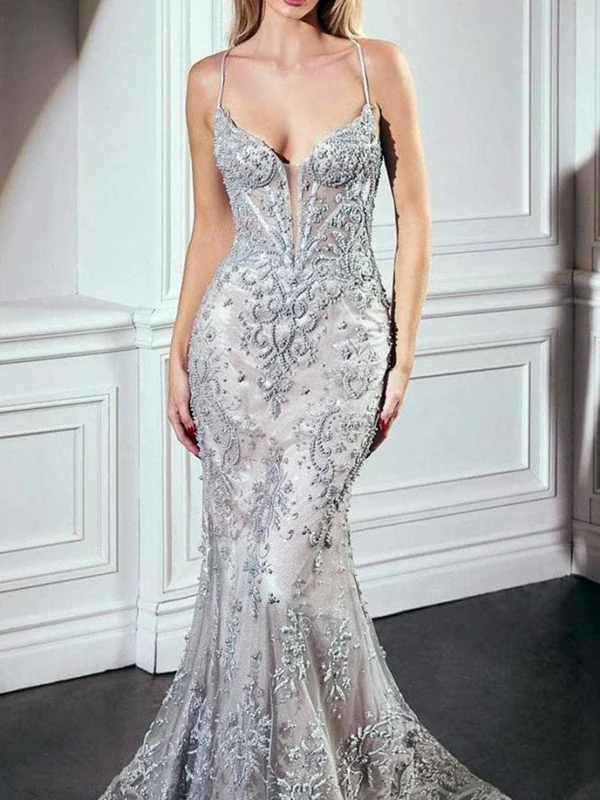
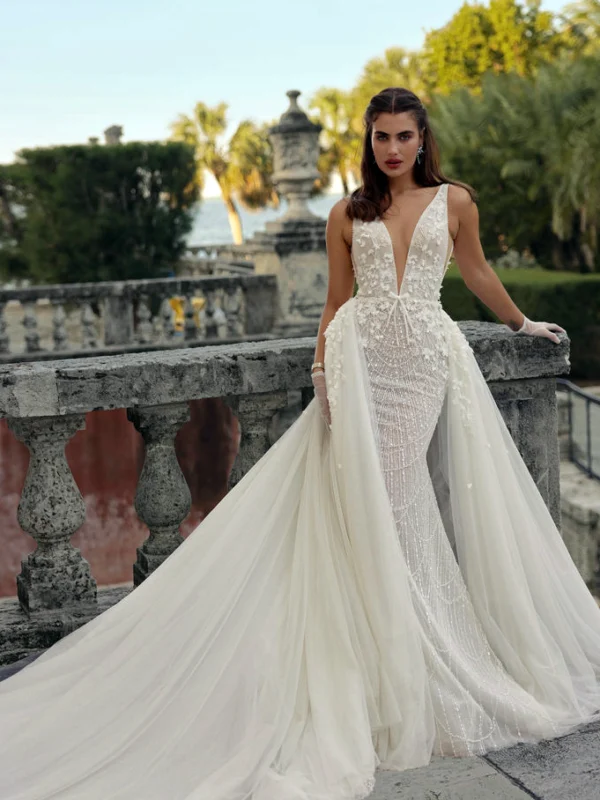
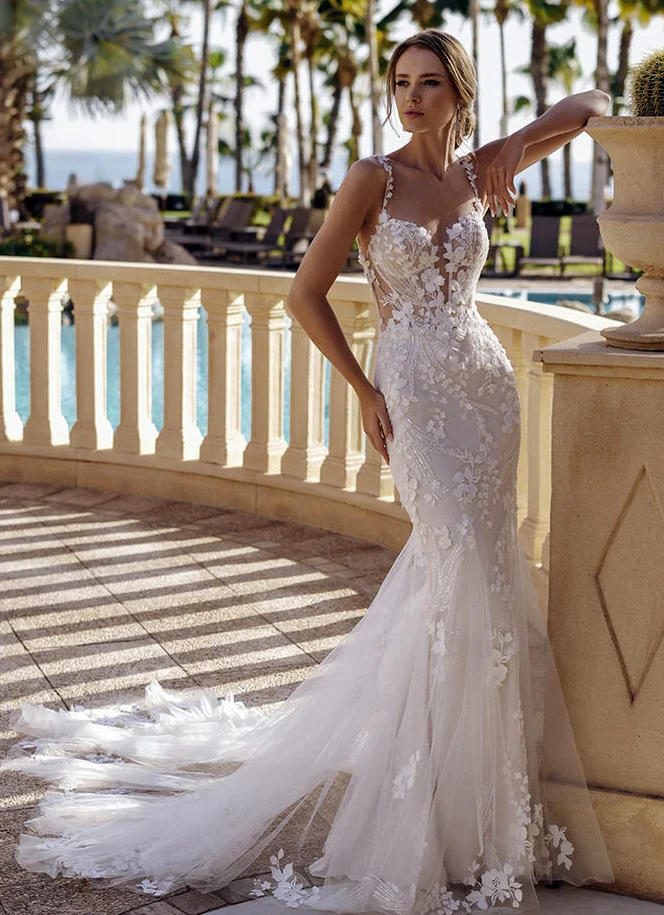
A bamboo wedding dress sounds like a simple material choice, but the name alone does not explain what you will wear. Start with the fibre composition of the offered garment, then ask about its lining, decoration and construction. Keep those questions separate from the silhouette you like. A pale flowing skirt or a floral bodice can be useful visual inspiration without proving bamboo content, animal-free components or environmental performance. This guide helps you compare documented options while still making room for the dress you enjoy wearing.
What bamboo wedding dress actually means
Ask the seller to show the fibre label and identify the fabric in the exact model and colour you are considering. Bamboo may describe a plant used as a feedstock rather than a fibre obtained directly from that plant. The US Federal Trade Commission explains the distinction between actual bamboo fibre and rayon made using bamboo as its plant source. Its guidance concerns US textile marketing; here it is useful evidence for asking a precise material question, rather than a substitute for local product information.
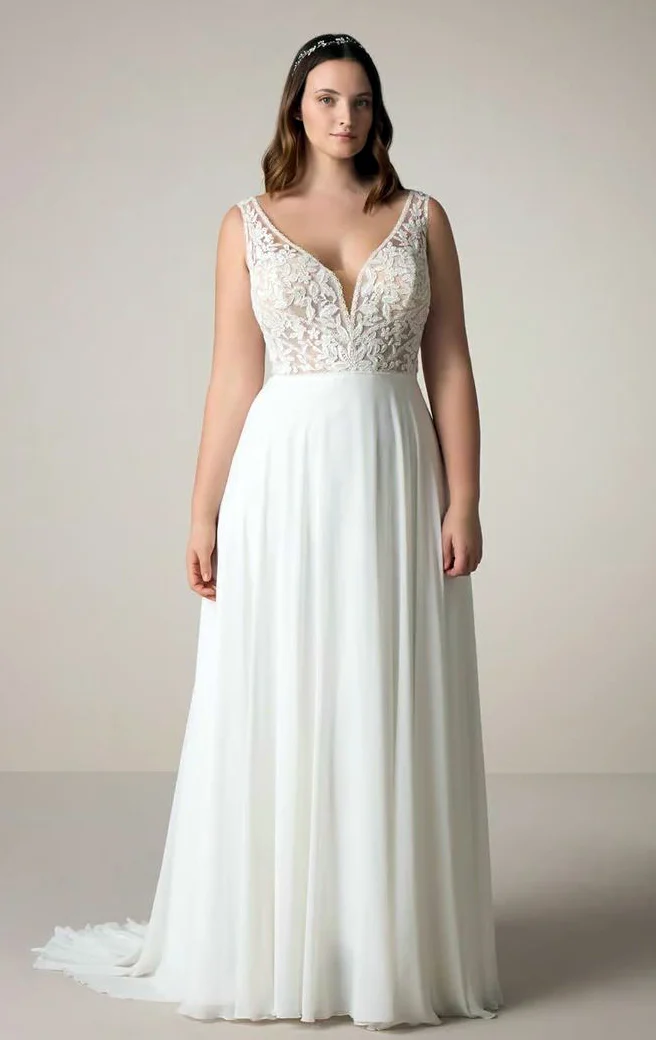
Write down the full composition instead of saving a product name alone. If a listing says bamboo but the label says viscose or rayon, request a clear explanation of the relationship. Do not assume that the discrepancy proves either misconduct or superior performance. Ask which statement describes the finished fabric and retain the response with the product reference. If the seller cannot identify the material, compare another documented option before paying a deposit.
Bamboo wedding dress: check lining and decoration separately
A wedding dress is a collection of parts. The skirt, bodice lining, cups, straps, zip tape and decorative elements may have different compositions. Ask which sections the advertised percentage covers. A statement about the outer skirt cannot answer a question about every component. This matters especially when you are choosing according to an animal-free preference, a personal comfort requirement or a particular certification.
For an animal-free purchase, describe your requirement in writing and request confirmation for the whole garment, including embellishment and adhesive where relevant. Plant feedstock in one fabric does not establish the composition of the rest. If information is incomplete, record the gap instead of filling it with an assumption. Decide which answers you need before ordering and which decorative details you would be willing to change. That makes a conversation with a boutique much more concrete.
Compare environmental statements on equal terms
A phrase such as environmentally friendly does not provide a measurable comparison. Ask what particular aspect is being claimed: fibre origin, processing, recycled content or something else. Request the relevant documentation and identify the product it covers. Avoid comparing one seller’s narrow verified attribute with another seller’s broad promise as though they were equivalent. A clear, limited answer can be more useful than an impressive collection of undefined words.
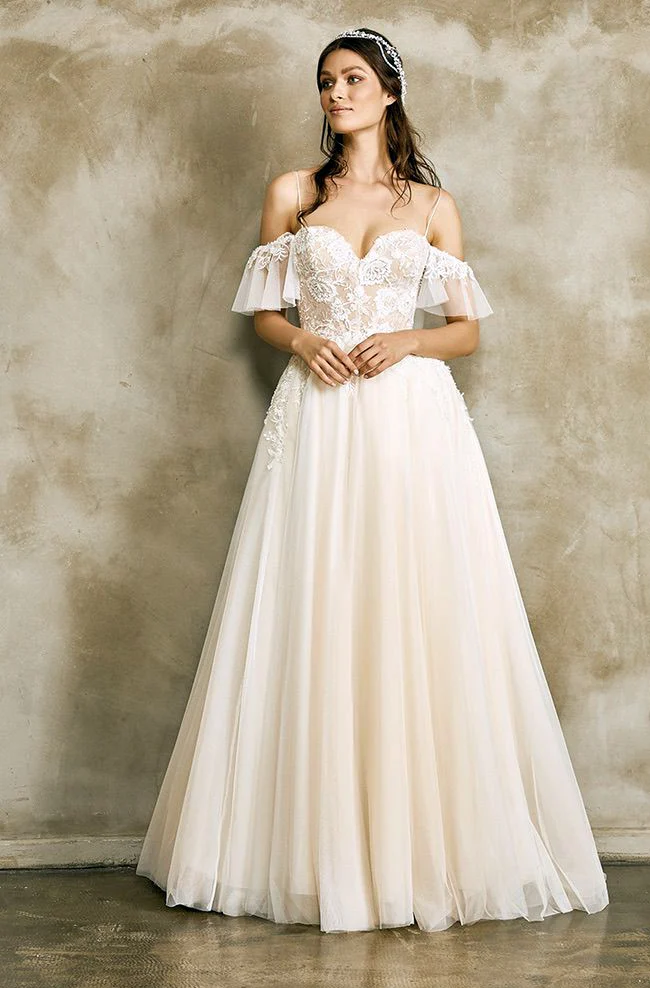
The FTC Green Guides advise against broad unqualified environmental benefit claims and call for specific supporting explanations. That is a sensible reading habit when shopping, without turning this article into legal advice. Do not infer a water saving, lower emissions or safer processing from the plant name. This archive has no product-level measurements for the pictured dresses. Their photographs are therefore treated as shape references, with no environmental endorsement attached.
Turn the photographs into a fitting brief
The four references offer different upper-body decisions: broader shoulder sections, an off-shoulder band, narrow straps and a more voluminous skirt. Choose the detail you want to investigate first. Describe it in ordinary visual language, then ask whether a documented garment with that construction is available. You do not need to accept an unsupported material claim to explain a favourite neckline.
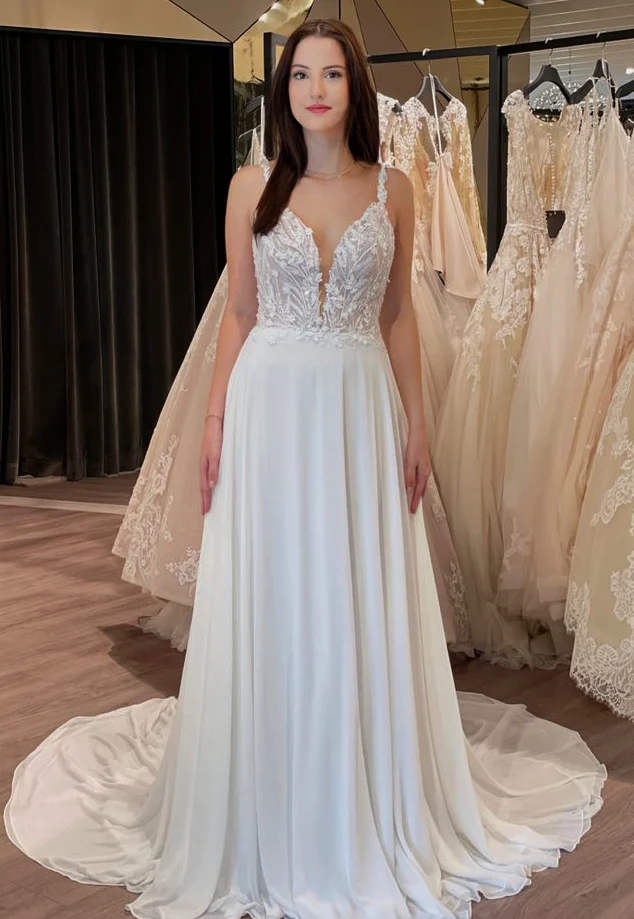
Use the boho wedding dress fitting guide to plan your movement checks, and the crochet-look wedding dress comparison to think about patterned areas and lining. These are styling references, not evidence that either design uses a particular fibre. Take the intended underwear and shoes, and compare the front, side and back before adding accessories.
Test comfort on the actual garment
Wear the dress for more than a single standing photograph. Sit in an ordinary chair, stand again, reach forward and walk at your normal pace. Notice the points that need adjustment: the upper edge, underarm area, waist seam or train. Tell the fitter what happens during the movement rather than labelling the whole fabric uncomfortable. The source of a problem may be fit or construction, and a material name alone cannot diagnose it.
If you want additional lining, discuss its position and appearance before agreeing to the change. Ask to see how the proposed layer affects the skirt and neckline. Bring any personal sensitivity concern to the seller as a specific product question; this guide cannot promise that bamboo-derived fabric is hypoallergenic, antibacterial or suitable for every wearer. Choose on the evidence available for the garment and your own fitting experience.
Plan alterations, care and the next use
Ask for an alteration plan that distinguishes hem work, strap adjustment and changes to the bodice. Get the timing and cost from the actual provider rather than assuming that a simple-looking dress is simple to alter. If the skirt will be shortened, check the result with your intended shoes and decide how the train will be managed. A detachable-looking detail in a photograph is not proof of a removable part.
Read the care label before purchase and ask the provider about decoration as well as the main cloth. GINETEX explains the care symbols; use the symbols on the actual dress to guide the method. Consider storage, repair and whether you want to sell, lend or alter the dress later. Keep the composition, care information and alteration record together. A useful decision is one you can explain through documents and wear, without making the photographs carry claims they cannot support.
For a dress offered as a bamboo wedding dress, check fibre composition, lining and decoration separately, then assess fit and the evidence behind environmental claims.
Frequently asked questions
Does a pale flowing skirt establish bamboo content?
No. These pictures support shape comparisons; check the complete composition of the offered model separately.
Is bamboo feedstock the same as direct bamboo fibre?
No. The FTC distinguishes actual bamboo fibre from rayon made using bamboo as the plant source. Ask about the finished fibre.
Does the outer-fabric label establish an animal-free dress?
No. Ask about the whole garment, including lining and decoration, and record any missing information.
How should I assess a broad environmental statement?
Request its precise subject, product scope and supporting evidence rather than inferring a whole-product benefit from the name.