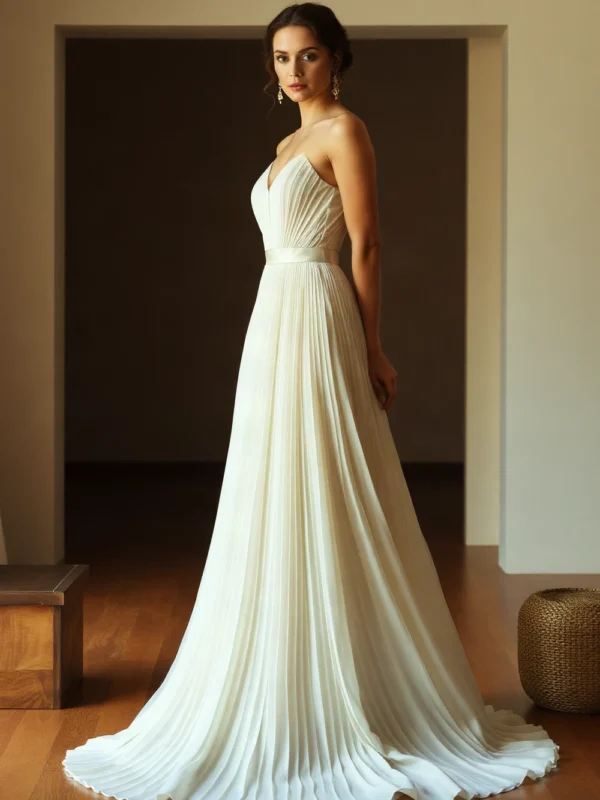
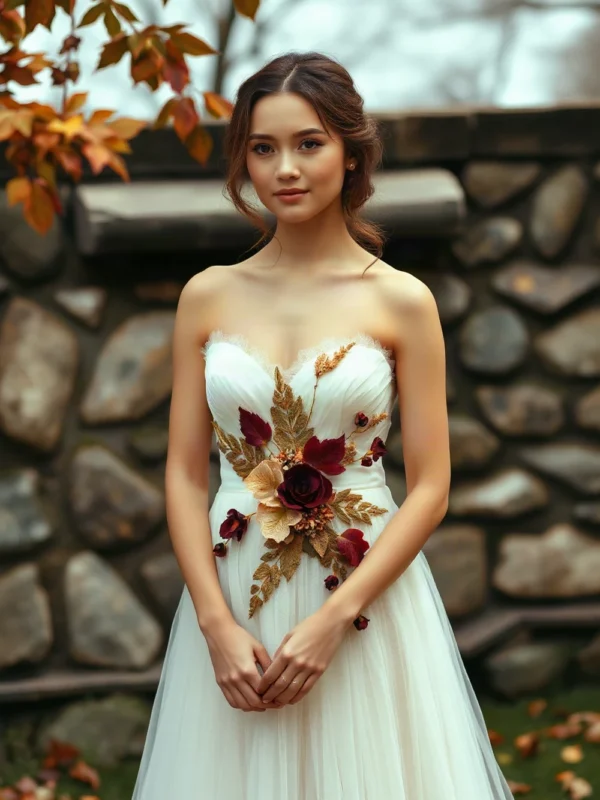
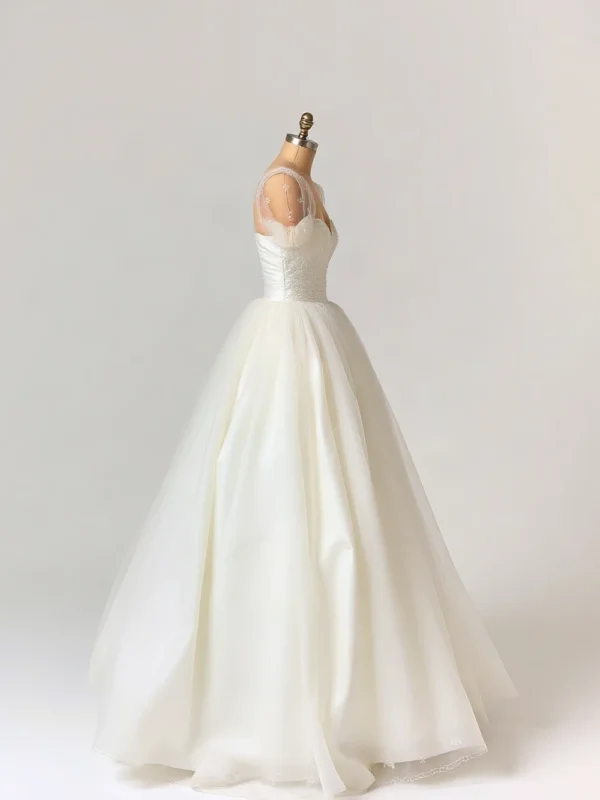
Ball gown wedding dresses share a recognizable foundation: a fitted bodice, defined waist and skirt that expands dramatically toward the floor. Yet the placement of detail across that volume can transform the result. A V-neck and high neck alter the same broad outline, dimensional flowers create depth and shadow, and an unembellished surface makes seams, folds and reflected light the principal features.
This guide compares six approaches through choices that can be tested during a fitting. It considers lace-look motifs, slim straps with an embellished bodice, strapless floral appliqué, an off-the-shoulder edge, crossed ruching on a clean sweetheart bodice, and a high-neck, long-sleeve design. The aim is to balance the bodice seen in portraits with the skirt volume experienced throughout the venue, rather than identify one universally best style.
Balancing Lace-Look Detail Around a V-Neck
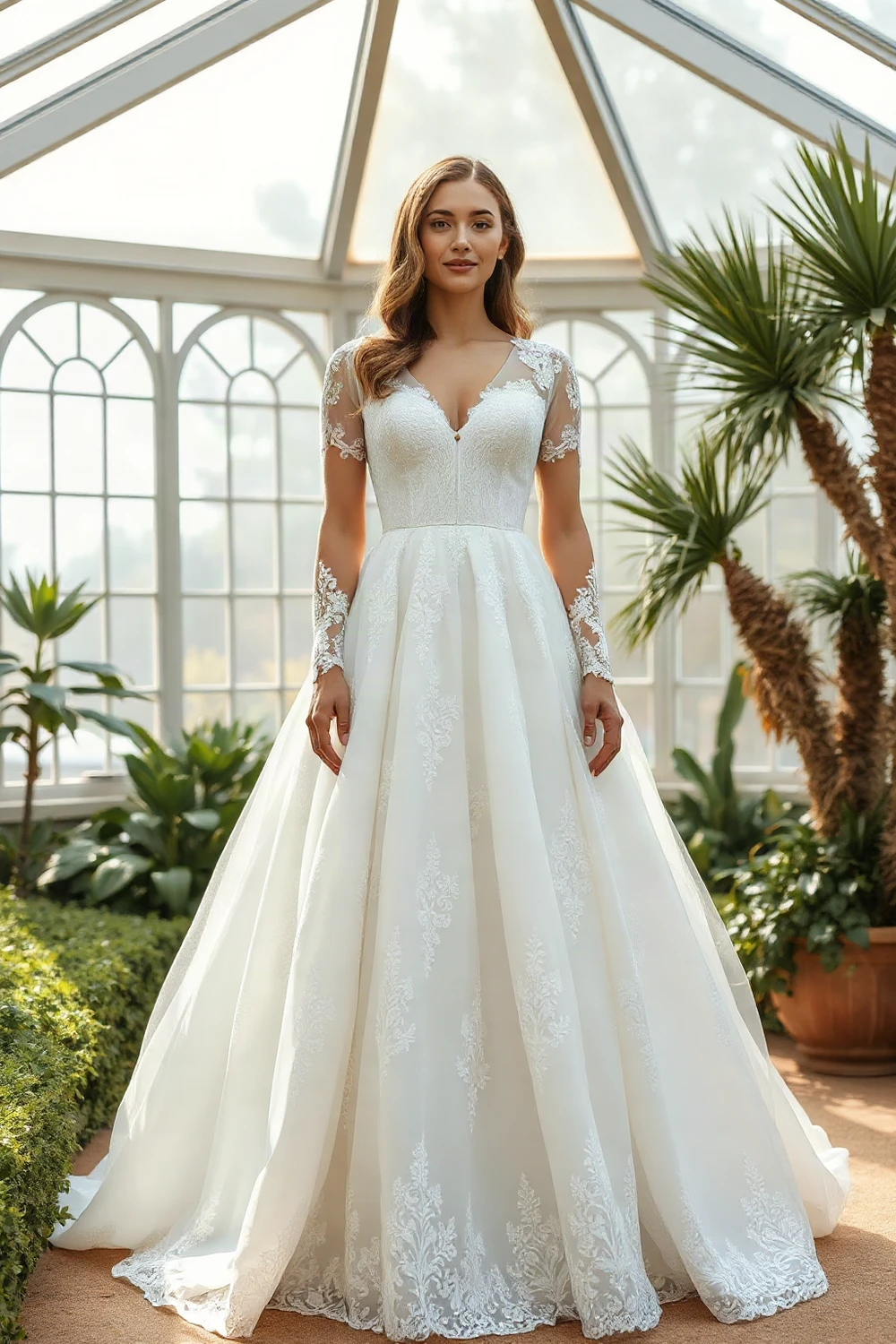
The first concept uses a V-neck to open the center of a lace-look bodice while related motifs extend across the shoulders, short sheer-looking sleeve areas and forearms. Sparse vertical trails repeat the pattern without filling the broad skirt. The eye moves from the face and neckline to the defined waist, then down the long panels toward the hem. Conservatory roof panes and arched windows reinforce this lengthening, symmetrical effect.
This approach combines an open neckline with more shoulder detail than slim straps. During a fitting, check whether the V stays stable while leaning or sitting and whether the shoulder sections move without pulling. Consider forearm embellishment alongside bracelets and the veil edge. Restraining those neighboring elements can preserve the intended distribution of detail instead of concentrating every accent together.
Concentrating Shimmer on a Slim-Strap Bodice
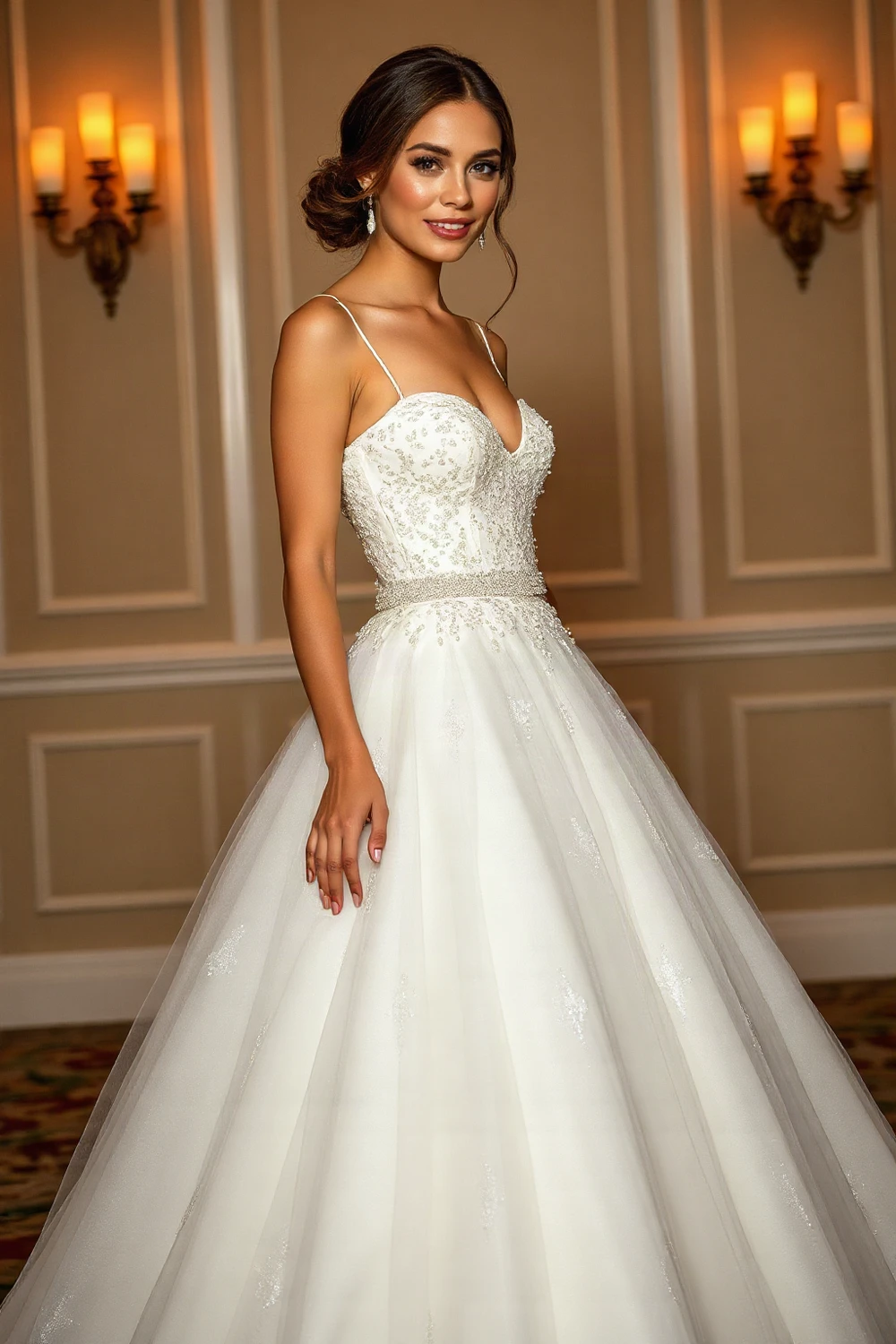
The second design directs attention through reflected light rather than one large motif. Slim straps expose the shoulder line, while a curved V-neck frames a densely embellished bodice. Small bright elements and a defined waistband create a focal area above the fuller, quieter skirt. Warm interior lighting strengthens the contrast, showing how the surface may become especially noticeable in close portraits and directional light.
Delicate-looking straps need not provide all the functional support. Check whether the bodice stays secure while turning or raising the arms and whether the straps remain comfortable. The open neckline brings hair, earrings and any necklace into the same composition; with substantial bodice shimmer, small earrings may be sufficient. Also check the waistband because its position determines where the skirt appears to begin and affects torso proportions.
Spacing Dimensional Flowers Across the Skirt
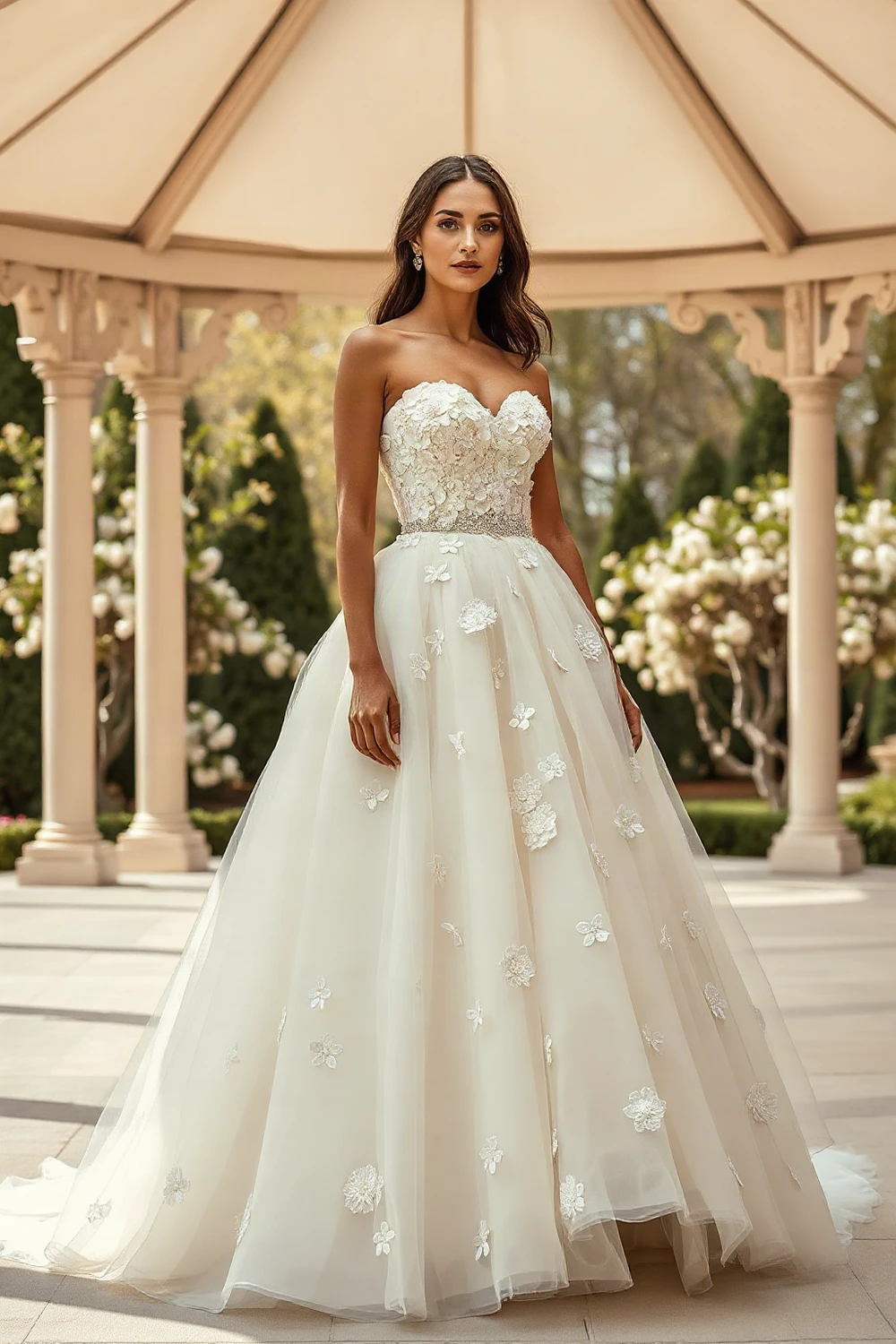
On the third gown, dimensional flowers of varied sizes surround a strapless sweetheart neckline. They form an almost continuous texture across the fitted bodice, then spread out below the narrow waistband. Open areas preserve the scale of the light-colored skirt and help individual blossoms remain distinct. Pavilion columns and flowering plants create a symmetrical garden setting for the organic surface.
Consider each raised appliqué’s size and placement as well as the overall romantic impression. Larger flowers cast defined shadows and remain visible without depending entirely on light, while small sparkling details create a finer effect that changes with illumination. Test whether the strapless edge remains even in motion and how the waistband interrupts the flowers. View a patterned veil over the back and skirt so overlapping motifs can be judged as one composition.
Separating an Off-the-Shoulder Bodice from a Clean Skirt
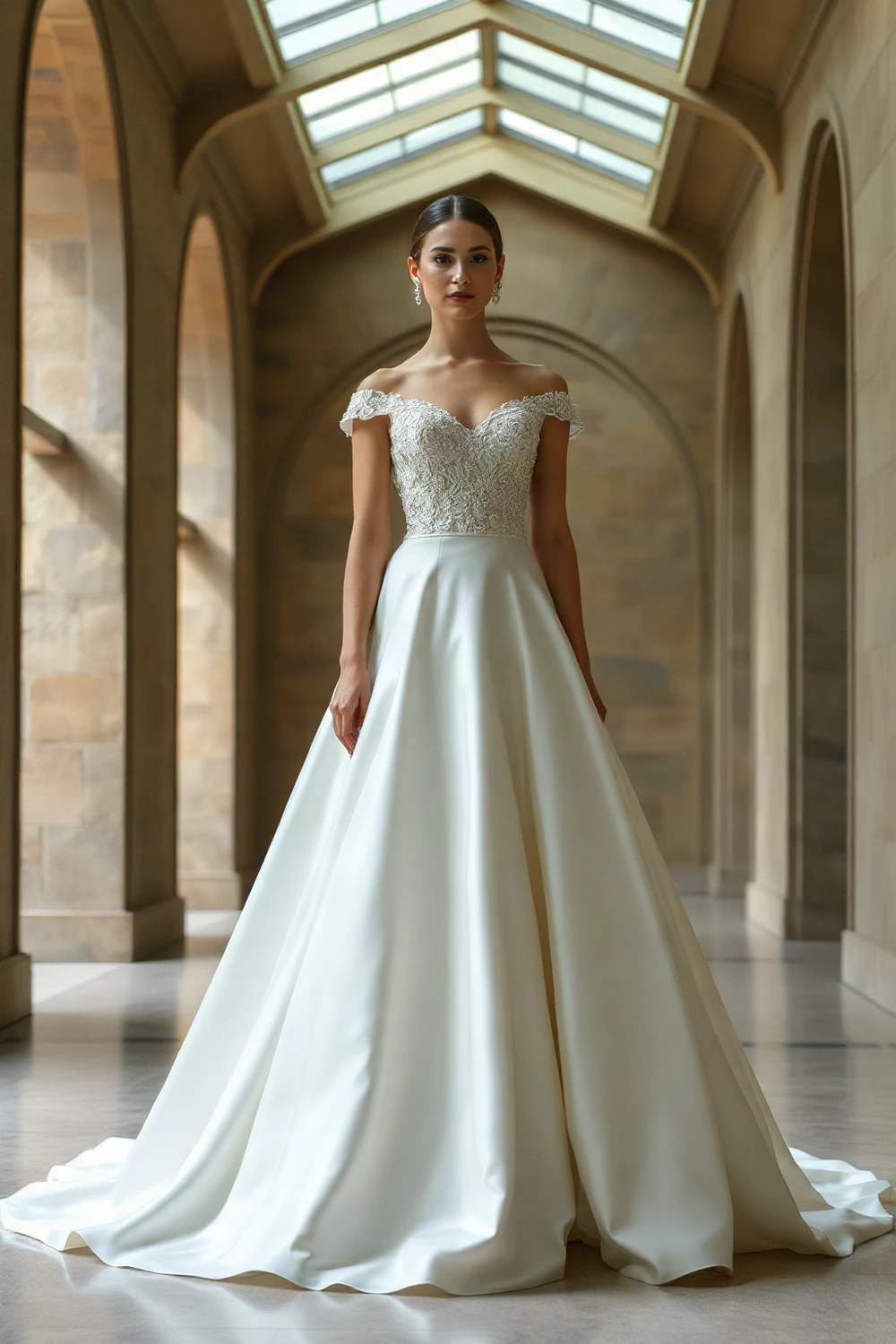
In the fourth look, decoration stops decisively at the waist. Off-the-shoulder bands and a densely patterned bodice frame the face and upper torso, while the softly lustrous skirt falls in large, uninterrupted folds. This contrast clarifies both the fitted waist and the skirt’s volume. Stone arches and long corridor lines complement the simple division between an ornate upper section and open lower surface.
An off-the-shoulder neckline creates strong horizontal emphasis, but movement varies by design. Raise the arms, reach forward, sit and mimic an embrace to see whether the edge shifts or restricts movement. Because the clean skirt relies on seams, folds and light rather than pattern, inspect it from several angles and under varied lighting. Notice how creasing and the skirt’s starting point affect proportions, then select neckline accessories that do not compete with the bodice texture.
Defining a Sweetheart Neckline with Crossed Ruching
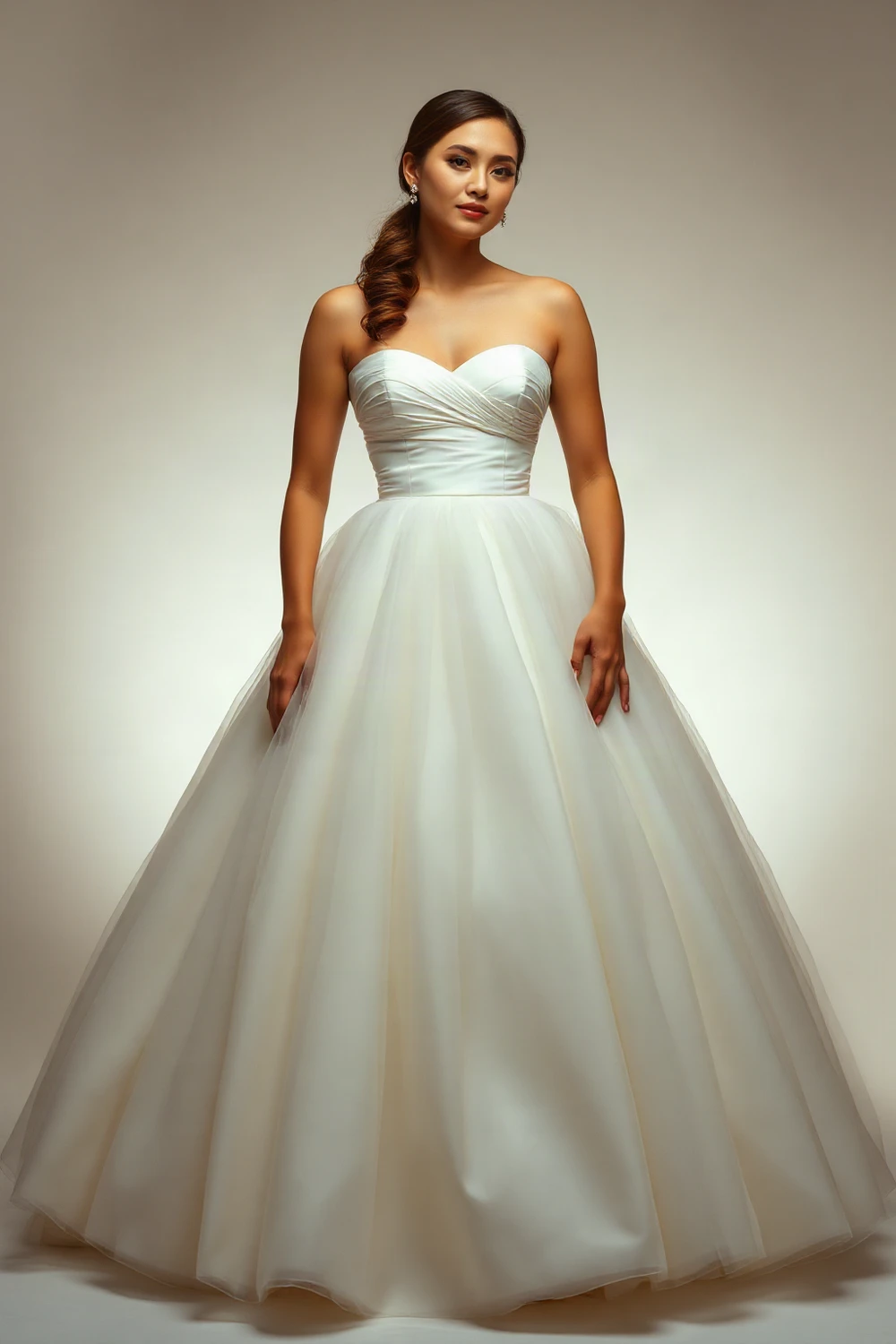
The fifth concept shapes its strapless sweetheart neckline with crossed ruching instead of lace or bead-like decoration. Diagonal folds lead the eye toward the bodice center, and the plain waist makes a clear transition into a softly layered full skirt. Against the neutral studio setting, reduced surface detail makes cut and proportion especially visible. The romantic neckline consequently feels quieter than the embellished alternatives.
Fit differences stand out on a simple bodice. Check that both sides of the sweetheart edge are balanced, the ruching stays smooth rather than twisting, and the waist does not collapse into folds while sitting. The unpatterned surface can accommodate distinctive veil trim, earrings or a more expressive bouquet, but one leading accent protects the design’s clarity. Walk and turn in the full skirt as well, since its movement and spatial requirements matter.
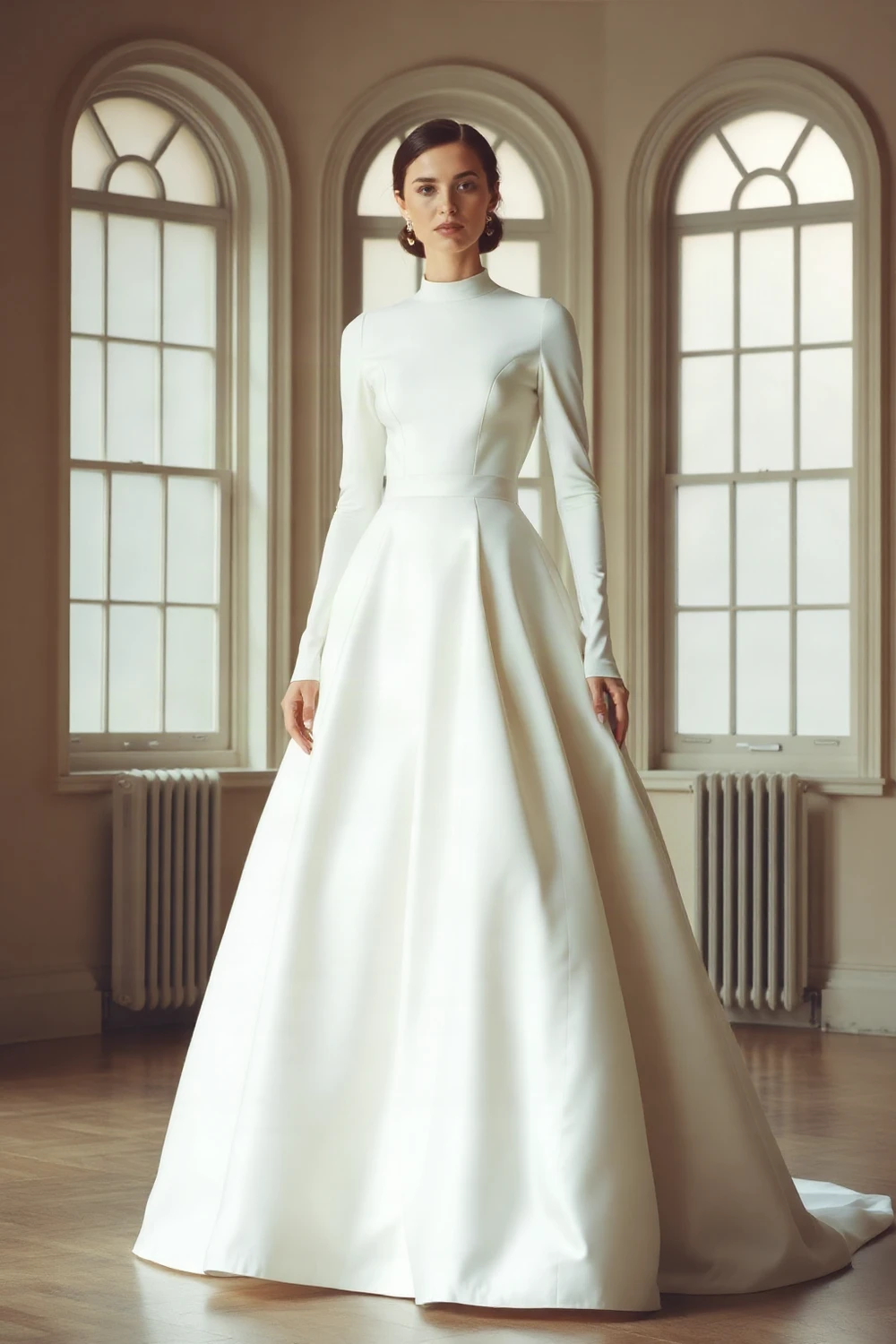
Keeping a High-Neck, Long-Sleeve Silhouette Clean
The final look provides the greatest coverage with a high neck and fitted long sleeves. Curved bodice seams, a narrow waist and controlled skirt folds define the shape instead of surface ornament. The ivory, softly lustrous finish reflects light across broad areas, allowing the silhouette to read clearly without pattern. Arched windows echo the vertical neck and symmetrical skirt spread, strengthening the architectural impression.
Movement-related tension lines can be particularly visible on this clean surface. Extend the arms, bend the elbows, turn the head and sit rather than judging the gown only while standing. The high neckline leaves little need for a necklace and makes earrings or a hair accessory the natural focal point. Also consider managing the broad skirt and slight train on stairs, through aisles and while dancing. These practical checks support rather than detract from the restrained visual idea.
These six approaches show how neckline, coverage and embellishment placement can transform one ball gown foundation. The V-neck carries lace-like detail down the silhouette, while slim straps and concentrated shimmer focus attention near the portrait area. Dimensional flowers add depth; the off-the-shoulder gown sharply separates an ornate bodice from a clean skirt. Crossed ruching offers softer simplicity, whereas the high-neck, long-sleeve design creates the most architectural whole.
A useful decision considers how neckline, waist placement, surface density and skirt movement work together at close range and full length. Repeat the same sitting, walking, turning and reaching motions in different gowns for concrete comparisons. Viewing each option from several angles with potential accessories reveals whether its focal point remains clear. The most balanced choice preserves its visual character while allowing comfortable movement through the day’s spaces and interactions.
Compare ball gown wedding dress styles through lace-look surfaces, shimmering embellishment, dimensional flowers, clean finishes and necklines ranging from open straps to a high-neck, long-sleeve silhouette.
Frequently asked questions
How should I compare slim straps with an off-the-shoulder neckline?
Slim straps leave more of the shoulder line open and can direct attention toward an embellished bodice. An off-the-shoulder edge creates a wider horizontal frame. Test both while raising your arms, reaching forward, sitting and imitating an embrace. Compare not only their appearance but also whether the straps or neckline remain comfortably in position.
Which accessories work with a heavily embellished bodice?
When the bodice and neckline already carry substantial pattern or shimmer, small earrings or one restrained hair accessory may be sufficient. An open neckline does not automatically require a necklace. Try all proposed pieces together and decide whether the dress, earrings or hair detail should be the principal focus around the face.
How can I pair a veil with dimensional floral appliqué?
If the veil overlaps the dress, inspect the combined motifs from close range, from behind and in a full-length view. A densely patterned veil may compete with raised flowers, while a plain veil or a restrained border can leave them clearer. Compare the overlap under more than one type of light before deciding.
What should I test in a high-neck, long-sleeve gown?
Turn your head, extend and lift your arms, bend your elbows and sit. Check for pressure at the neck, strong pulling beneath the arms and movement of the waistline. Because a clean surface can reveal tension lines readily, inspect the gown from the side and back as well as from the front.
How should venue layout influence ball gown skirt volume?
Consider aisle width, stairs, gaps between tables and the available dance floor. During a fitting, walk at a normal pace, turn and sit to observe how the skirt behaves around your feet and chair. If it has a train, discuss how that extension will be carried or secured during different parts of the day.