When choosing an asymmetric wedding skirt, start with the lower outline. Do you want a shorter front with a longer rear, an offset opening, or simply a draped panel? These options show different amounts of leg and footwear without automatically requiring an uneven shoulder line. This selection includes actual length differences alongside deliberately quieter comparisons. Begin by deciding which edge you want to recognise in a normal standing position. A lifted panel or a leg extended towards the camera is not sufficient evidence of the cut.
If the uneven lower outline is your leading accent, choose the upper jewellery afterwards. The bridal accessories comparison helps assess headpiece, earrings and necklace in sequence. Return to the whole silhouette after each addition.
Asymmetric wedding skirt: find the actual edge
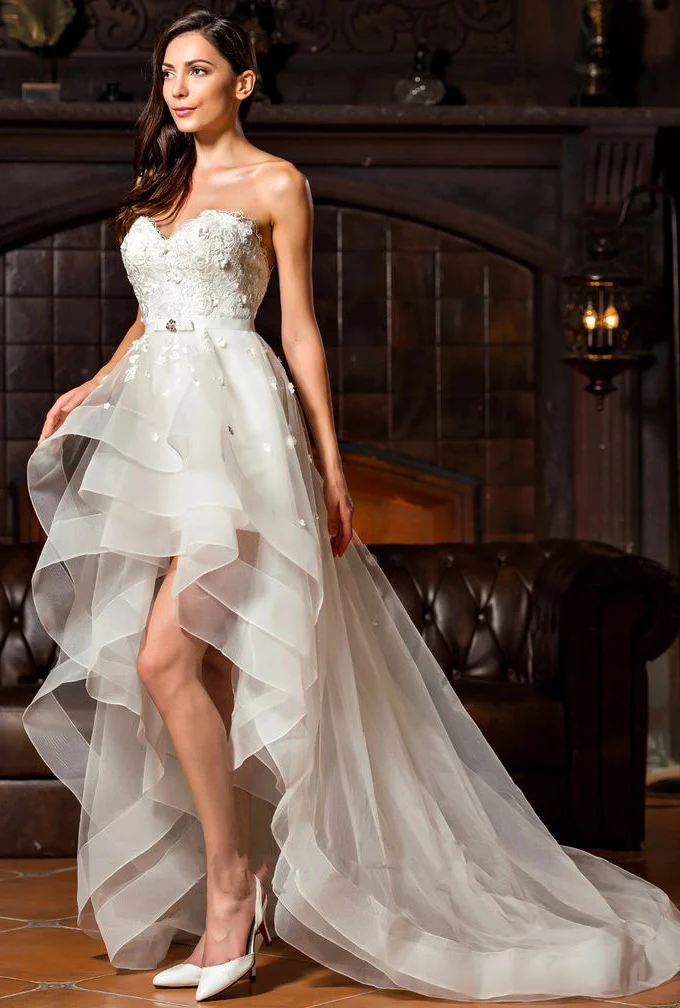
The dress with broad curling ruffle edges has a front finish clearly higher than its long rear section. That unequal length can be followed in a complete view. The open floral combination instead shows a short inner area beside long outer panels. These are two different design routes. Tell the adviser whether you want an uneven outside hem or a contrast between inner and outer lengths.
The word asymmetric can refer to different areas. The Justin Alexander designer selection names asymmetrical waistlines and asymmetrical hip draping as separate features. Do not transfer such a label to a photograph without checking the actual location. Point directly to the front edge, side finish or opening you mean. This makes the conversation more precise and prevents a shared word from disguising a different design decision.
Compare a short front with a long rear
The short front on the fuller example exposes the shoes and a longer section of leg. Its extended back remains visible as a separate frame. Decide whether you like that clear change or prefer a quieter transition from front to rear. Look at the side, where the height difference becomes a continuous line. An attractive frontal photograph does not fully explain that connection.
Try the actual shoes and place both feet naturally together. A forward foot can make the exposed area appear larger. Walk a few steps without lifting the skirt for the photograph, then check which parts of the shoes remain visible. If you want the front hem changed, ask for the new height to be marked and its side connection shown before agreeing to shortening.
Separate an opening from unequal length
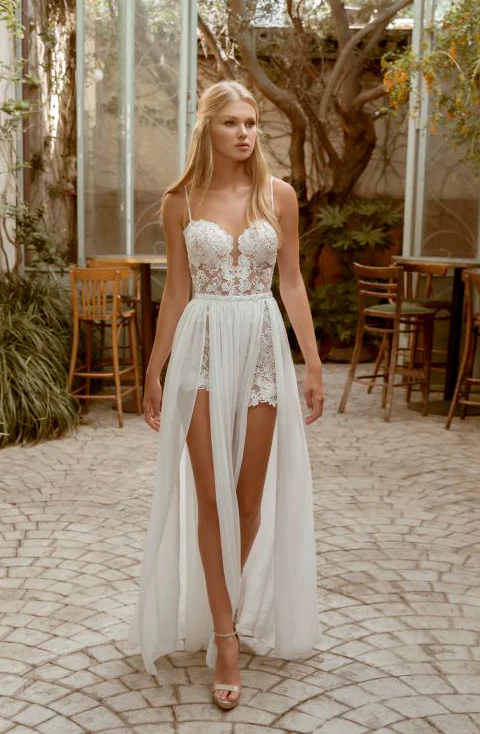
The floral strapless photograph with an open front shows plenty of leg but omits the complete lower edge. You can assess the opening’s placement, rather than the whole hem. Ask how the front panels overlap when the actual dress is released. A central or offset opening can become more or less visible without the outer skirt length necessarily changing. A photographed pose therefore needs to be distinguished from the cut.
The short inner section beside long outer panels supplies another comparison. Decide which surface you perceive as the main finish. Do the shoes and short inner edge matter most, or the long outside line? Construction and possible removability belong to the real product, not an interpretation of the photograph. Ask for a clear explanation and an actual demonstration if that function is offered.
Treat the upper area as a separate choice
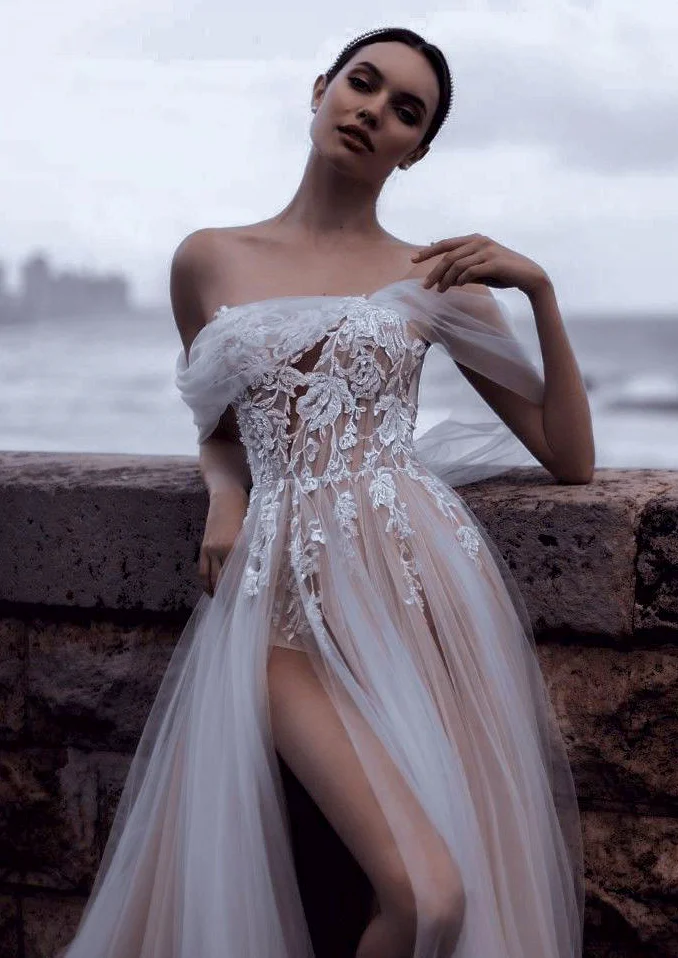
The pale dress with long embellished sleeves and a broad quieter lower area creates another emphasis. Upper decoration remains prominent while the visible lower outline looks less uneven. Use that comparison when deciding how many active edges you want in the whole outfit. An expressive skirt does not automatically need a statement shoulder and several large jewellery pieces as well. You can choose those features individually.
The simple wedding dress guide provides a quieter starting point. Compare a similar bodice with two lower ideas first. Add earrings or a headpiece one at a time afterwards. That makes it easier to see whether the uneven skirt edge is sufficient as the main feature. No particular neckline is compulsory with an uneven hem; the emphasis you want should guide the combination.
Do not confuse draping with an uneven hem
The green fine-strap dress shows diagonal crossing upper folds above a quieter longer lower area. Angled shaping at the top does not establish an equally uneven lower edge. It is an explicit colour and draping comparison here. If a diagonal fabric line is what appeals to you, discuss that preference separately from skirt length. Otherwise, a request for folds can become a different hem decision.
The full bridal skirt comparison helps if a larger lower area matters more than a height difference. Keep three questions separate: how wide should the skirt be, how should its lower edge run, and where should it open? An answer to the first does not automatically settle the others. Request neutral views of each actual offer and avoid constructing a complete shape from a cropped photograph.
Test the intended exposure through the day’s movements
Walk, turn and sit in the complete outfit. Recheck the visible area between the opening and lower finish afterwards. Hold the intended bag or bouquet at the relevant side. Either can cover part of the skirt and change your impression of the difference. Decide which line you want to recognise without a special photographic pose, and keep that priority clear when discussing alterations or additional accessories.
Finish with two specific routes, such as a clearly shorter front and longer back, or a long outer area revealing a shorter inner finish. Note the shoes and handling needed for each. Confirm material, construction and care on the actual offer. Your result is an understandable shape choice supported by your own movement trial, rather than an assumption about invisible functions that a decorative photograph must contain.
Try two different forms of exposed leg area
If your main intention is to show your shoes, compare the shorter front edge with the short inner area and long outer panels first. Both expose footwear but establish a different lower boundary. Use the same shoes where possible and hold an imagined bouquet at a consistent height. Describe whether you prefer the clear front edge or the long side frame.
Check the choice while sitting without immediately covering the skirt with your hand. Decide which visible area you personally prefer. If you want another length, point to the actual location and discuss the change with the adviser. An established footwear idea does not require adopting the entire lower construction of a reference photograph. Keep those decisions separate and carry only the relevant feature into the next comparison.
Separate a genuinely uneven hem from an opened or lifted panel. Then decide how much leg and footwear you want visible in the complete outfit.
Frequently asked questions
Is a slit already an uneven hem?
A slit opens a surface. Whether the outside edge is genuinely different in length still needs checking with the skirt falling naturally.
Must the bodice be asymmetric too?
No. A quieter or approximately balanced upper edge can work with an uneven lower outline.
Does an open outer panel prove a removable skirt?
No. That requires information and a demonstration on the actual dress; the photographs show only the visible arrangement.


