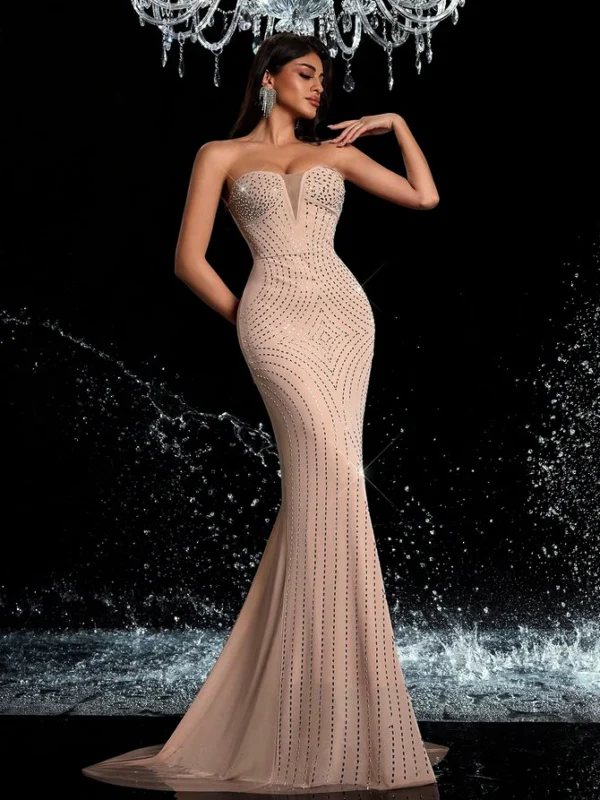
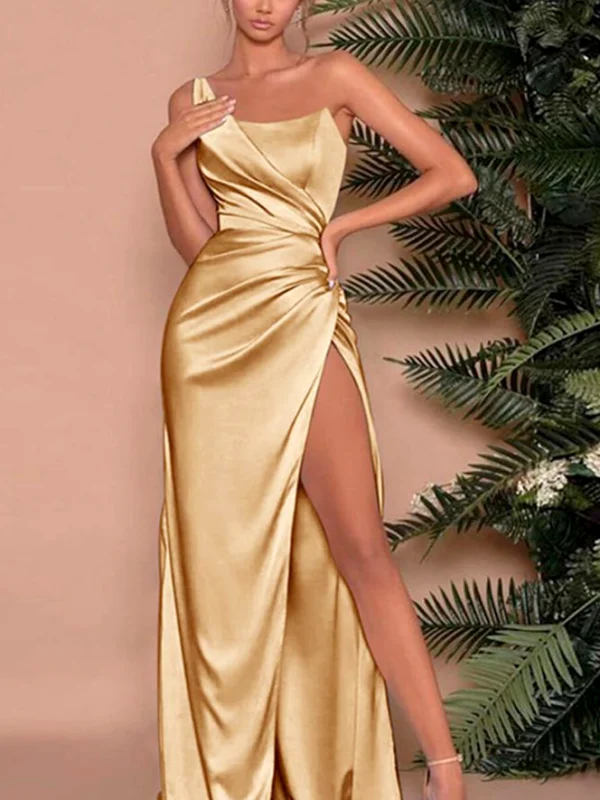
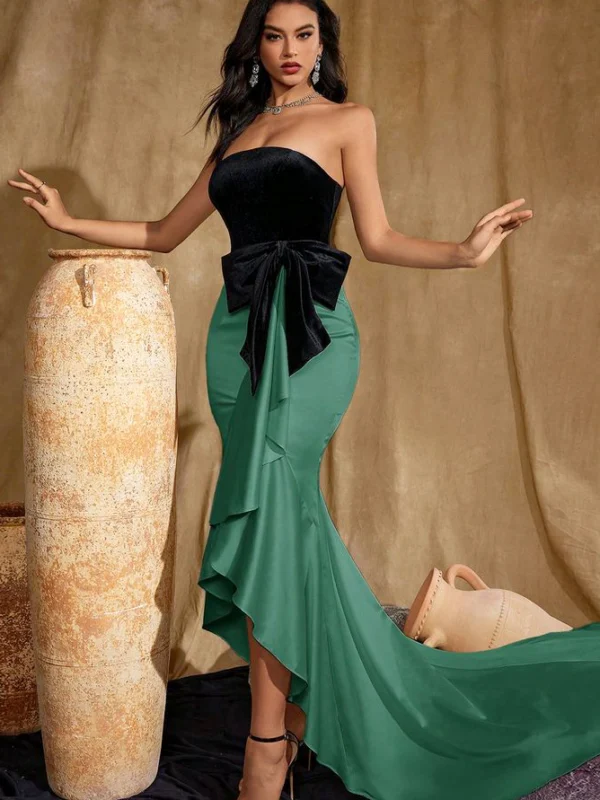
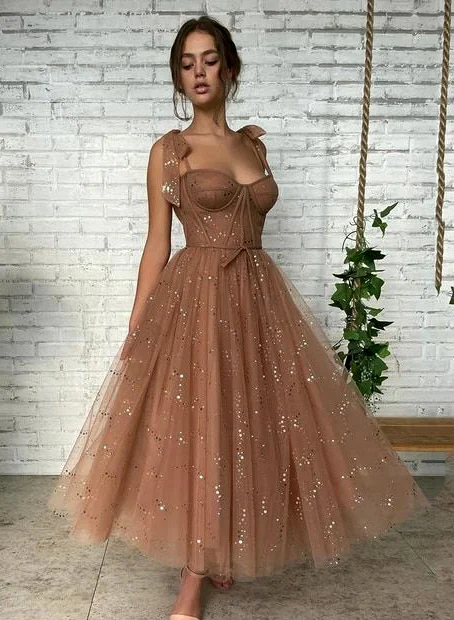
An A-line evening dress becomes clearer through its outer course than through a general promise for every figure. Where does the skirt begin widening, how broad do the sides look and what happens in the centre? The leading rose-looking reference combines a closer patterned central area with finer side surfaces spreading outwards. A shorter warm brown image shows a skirt flaring more distinctly from the waist. Four further views add higher starting lines, tiered edges or a closer bodice crop. They are not automatically classified as identical A-line versions. Describe the visible feature in each before assigning the complete shape.
1. Decide where width should begin
A named guide supplies a specific starting point for the shape term. Maggie Sottero’s bridal silhouette guide describes an A-line through a closer bodice and a skirt gradually widening from the waist. This is a shape description from bridal clothing, not an identification of our independent evening and pale comparison references. General advertising promises about every figure or comfortable dancing are not thereby confirmed for any archive dress. Use only the description of the outline for this comparison.
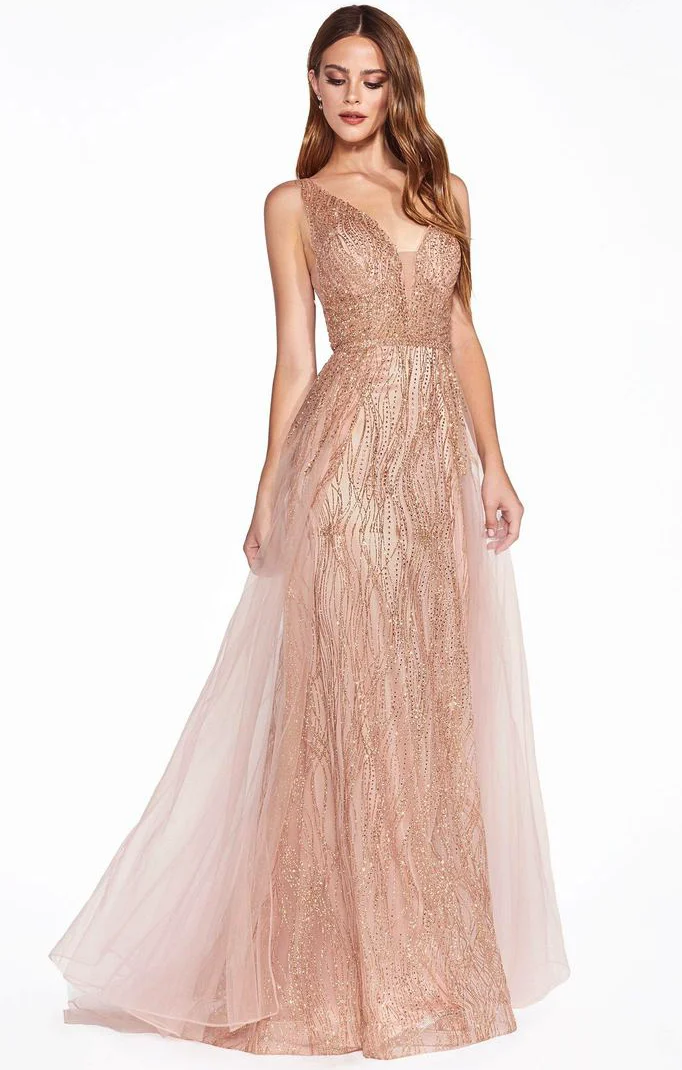
Mark where the lower surface begins widening on the real candidate you want. The warm brown reference opens distinctly at a middle waist line. The pale finely folded bodice view starts its fuller front higher beneath the bust. A higher starting point is another visible decision. The empire-waist comparison helps consider that position separately from overall skirt width. You need not combine both features under one style word. Find the preferred starting point again in the actual product’s own view.
2. Compare the patterned centre and finer sides
The leading long image places denser rose-looking reflective drawing across a closer central area. Finer side surfaces spread farther out from the waist. The outer outline and pattern distribution therefore supply two questions: do you want the broader side line or the longer drawn lines in the centre? Record both separately. The photograph does not explain whether the finer areas detach, how they connect or which inner layers are present. Their appearance together is not a complete specification of a purchasable version.
The warm brown photograph instead opens more distinctly into a broader shorter shape around the waist. Small reflections cover the surface, while bows at the shoulder connections add further accents. Both hands hold some fabric at the sides. Add a stance with hands free on the actual candidate for that reason. The photographed width is neither a fixed measurement nor evidence of the area’s behaviour when walking. Ask about the whole offered version and distinguish its outline from the effect of holding it.
3. Choose the upper edge independently of width
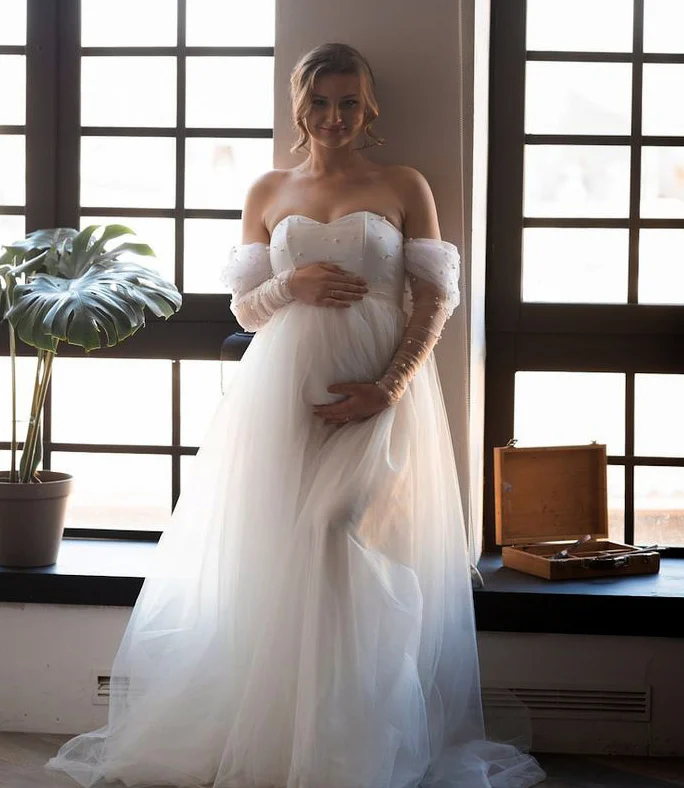
The leading rose shape combines broader patterned shoulder areas with a deep V and a fine pale centre. The brown flared reference carries a shaped front edge and shoulder bands with bow ends. The long pale interior image has a strapless heart-like upper edge and lower side sleeve areas. The close pale patterned crop instead offers a higher neck frame and long decorated sleeves. Those possibilities need not share the same skirt or inner layers.
Compare the shoulder area you want uncovered first. Add your planned hair and ask about the real model’s own upper connections. The close decorated areas confirm neither real pearls nor a particular production method or support. A vertical bodice line is initially only a visible line. Choosing a wider skirt does not automatically answer the neck-frame question. Look for an actually offered combination of your wishes rather than mentally constructing one product from details of several independent dresses. Ask for a clear corresponding view if hair conceals a connection.
4. Separate regular and tiered finishes
The beige patterned reference has a broad side shoulder flounce and several diagonal lower tiers. A front area finishes higher than the longer sides, with parts of pale pointed boots visible below. That interrupted edge is an independent comparison rather than a uniformly floor-length A-line. The finely folded pale bodice view and close higher patterned frame do not show their complete hems. Their lower outlines remain unknown within those crops. A different reference cannot complete the unseen continuation of the same dress.
Your actual length decision needs the candidate’s entire hem with your own shoes. The guide to shoes for an evening dress adds the lower outfit. Adopt neither the photographed boots nor another person’s heel height as a rule. Compare the ordinary fall, walk and sit in the real model. If an alteration is needed, discuss the particular edge and visible pattern together before assuming a specific shortening. The photograph alone establishes no feasibility for that work.
5. Add hands, jewellery and the matching back
Hand position affects the comparison. A telephone partly covers the face in the tiered pale dress, while another hand sits beside the skirt. Both hands lie at different heights across the front in the long white interior photograph. Those are visible poses rather than product features. Consider the dress lines that remain clear and add an ordinary stance on your own candidate. Ask for another view with hands or accessories moved away from an area important to your decision rather than reproducing the entire pose.
Add jewellery and a bag after the first shape comparison. The tiered reference’s turquoise-looking round accessories provide a different accent from the small pale earrings beside the brown shoulder shape. Choose your own pieces individually. A different front image cannot subsequently replace a matching back. Request the rear of the same actually offered model so that the start of width, connection of side areas and complete lower section can be considered together. Similar colour or decoration does not establish that separate photographs show the same product.
6. Confirm included pieces and care on the actual dress
A wide skirt guarantees no particular freedom of movement, and a shiny area no particular fibre. Ask about composition, inner layers and included pieces. Have the real features explained and record the version you want to order. The fringe evening dress comparison adds a different surface distribution to the shape question. It does not turn our images’ fine side pieces into fringe or establish their material. Each real detail needs the offered product’s own description.
Read the actual product’s instructions before any treatment. GINETEX explains textile care symbols; an A-line description supplies no general washing, ironing or storage rule. Finally, record your preferred start of width, central drawing and lower finish. Those checkable features make an A-line evening dress a specific comparison without promising the same effect for everyone from an attractive photographic outline. Keep your visible preference beside the confirmed product information.
Choose where width should begin on an A-line evening dress first. Six independent references show flared skirts, higher starting lines and deliberately closer or cropped comparisons.
Frequently asked questions
Do all the references show the same A-line evening dress shape?
The references show different outer outlines and deliberately cropped comparisons. The A-line search becomes specific through where skirt width begins and its course; not every view confirms the same complete cut.
Does an evening dress's outer width prove freedom of movement?
The widening outline of an A-line evening dress proves no particular freedom of movement or comfort. Check your desired movements on the actual offered dress with your complete outfit.
Are the finer side areas of the rose reference detachable?
The finer side areas of the rose evening-dress reference are visible, but detachability is not confirmed. Ask about the real model's actual connections and included pieces.
Do I need a particular body shape for an A-line evening dress?
The images establish no fixed body-shape rule for an A-line evening dress. Choose the visible lines you want, then check size and actual fit on the specific candidate.