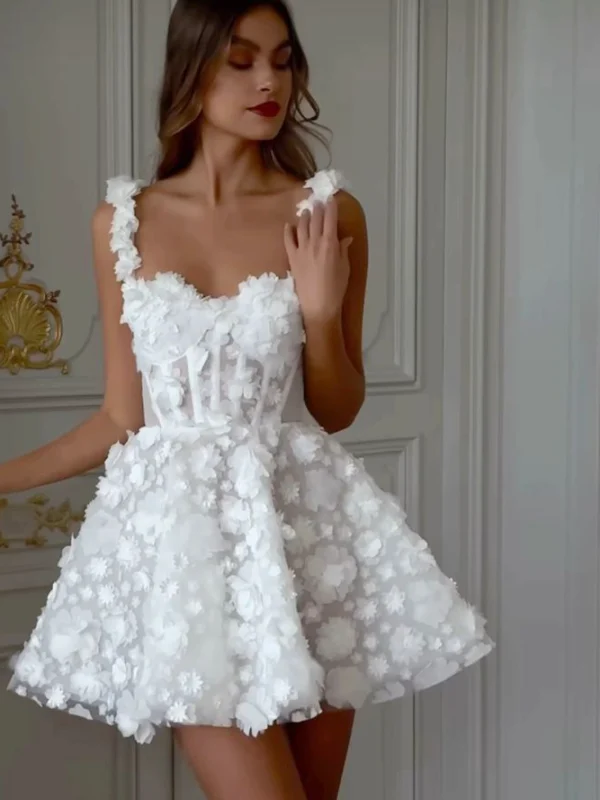
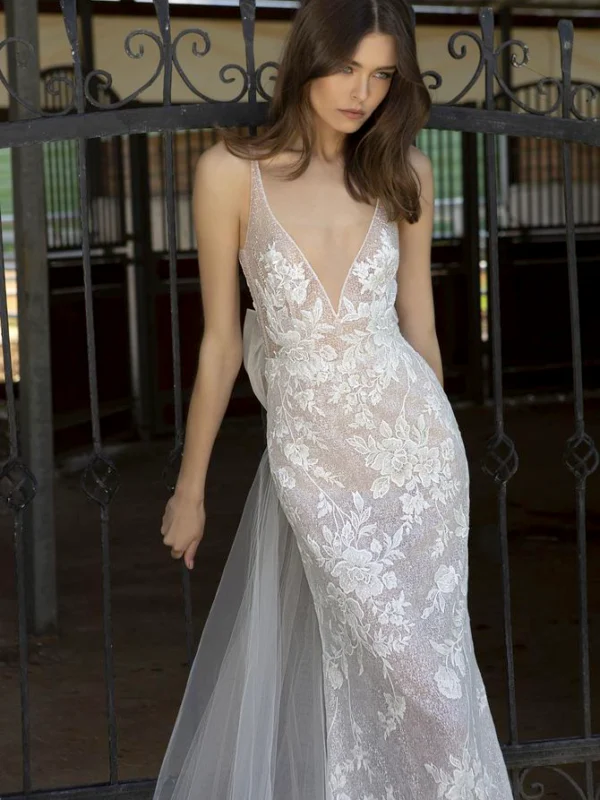
A V-neck wedding dress is not selected through its lowest point alone. Shoulder width, edge shape and the visible middle create the upper arrangement together. Three references show different V-lines: floral edges with broader decorated shoulder beginnings, fine straps above a pale patterned bodice and a narrowly drawn deep opening beside finer motifs. An off-shoulder long-sleeved model supplies another shaped upper boundary. Compare these lines for your fitting without deriving internal support or a particular manufacturing method from the photographed outline. Describe the visible relationship you want before selecting actual candidates.
1. Assess both edges of a V-neck wedding dress together
Begin at the shoulders and follow both edges towards the middle. On the first floral garment, motifs start at broader shoulder areas and lead inward. The second reference begins with fine straps, with floral edges beneath them. The finer linear-patterned dress instead shows a deeper narrow centre. Describe which relationship you want. Asking for a V alone does not yet explain how much shoulder space should remain open or how broad the upper form should appear. The starting points of both lines matter alongside their lowest meeting area.
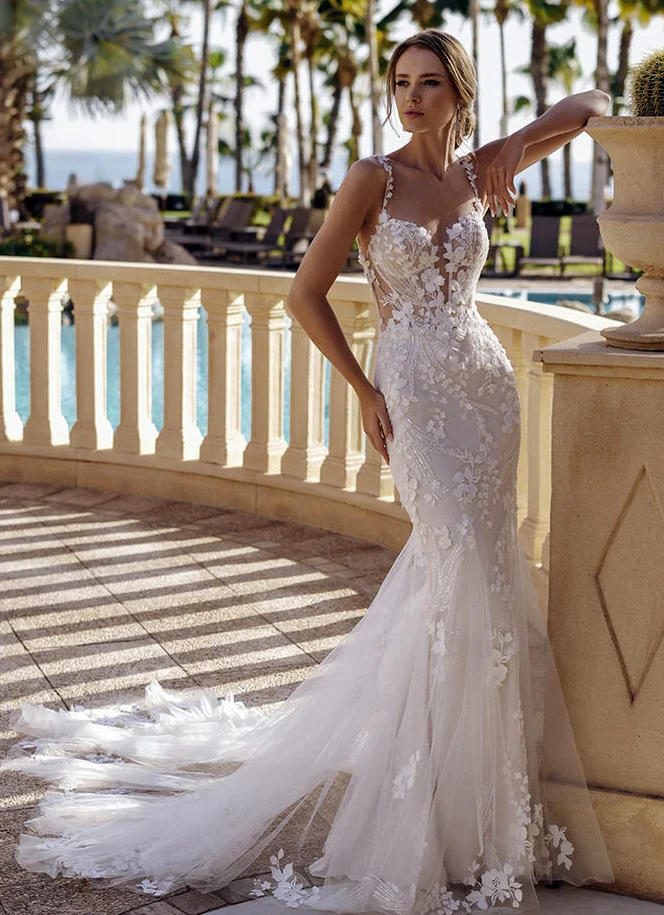
Compare two actual candidates from the same distance initially. Keep hairstyle and important companions reasonably consistent. Indicate the edge you enjoy during a consultation rather than pointing only at the deepest spot. You may like the broad upper opening without wanting its exact centre, or specifically seek the narrower long line. Separating those preferences supports finding a suitable alternative. You need not select every other detail of a photographed garment to use one neckline as a starting point, keeping the next comparison attached to an identifiable feature.
2. Record depth and width as separate preferences
The depth of the front opening and its width at the upper section are different qualities. A longer narrow line may appeal while you want less open shoulder space. Conversely, a broader upper form might matter more than a deep centre. Inspect the entire torso down to the waist on the real dress. The boundary below contributes to its visible order. A single neckline crop on a screen explains that proportion less completely than the worn front with relaxed arms, allowing the desired opening to be judged in context.
Record two specific wishes, such as broader upper edges and a less deep middle. Request actual comparison models afterwards instead of assuming arbitrary changes are possible on the first favourite. If an alteration is discussed, have the proposed line shown on the garment and ask about scope and another fitting. A V-neck wedding dress has existing motifs, layers and attachments. Their actual arrangement contributes to what can be offered. Photographed depth supplies neither a measurement instruction nor an alteration promise, so connect the intended appearance to the real option available.
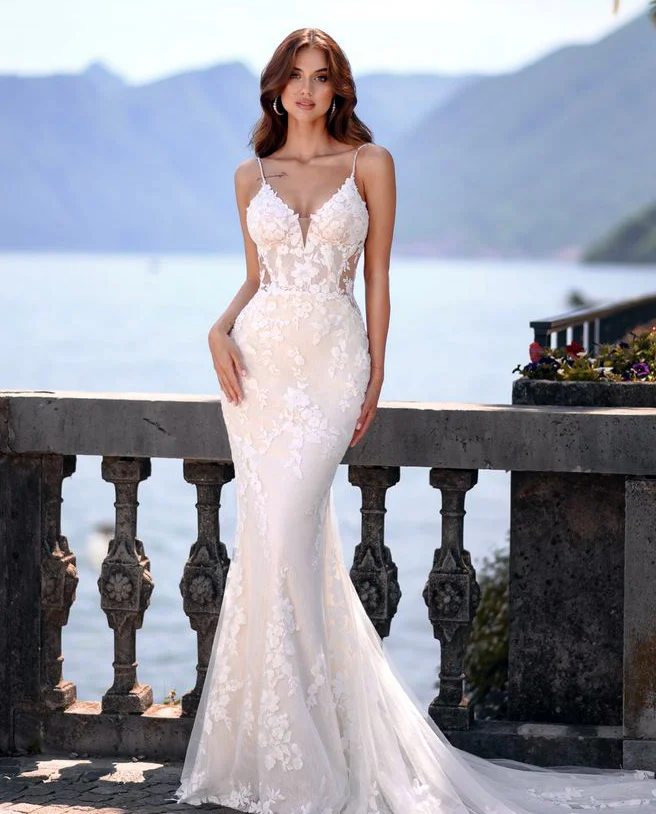
3. Check the visible middle with its actual underlying area
The floral bodices have pale and sheer-looking areas beside the motifs. An additional surface may appear inside a V-line too. Check what actually remains open on the offered garment and which layer lies behind. Have the front shown under the conditions in which you intend to assess it. You are selecting the complete visible middle as well as two outer edges. A differently coloured underlying area can change that effect without altering the neckline’s basic shape, making it useful to inspect both on the same real candidate.
Try intended inner pieces with it and clarify desired coverage and fit on the actual model. The sheer wedding dress guide adds questions about visible pattern and areas behind it. Use these for your garment’s specific middle. Upright lines or bodice shape establish no particular support. Ask about real layers and attachments where they matter to the decision. This connects the visible preference to product information without allowing a photographic effect to replace the answer, keeping actual candidates comparable through the same clearly stated questions.
4. Compare the V-line with another upper boundary
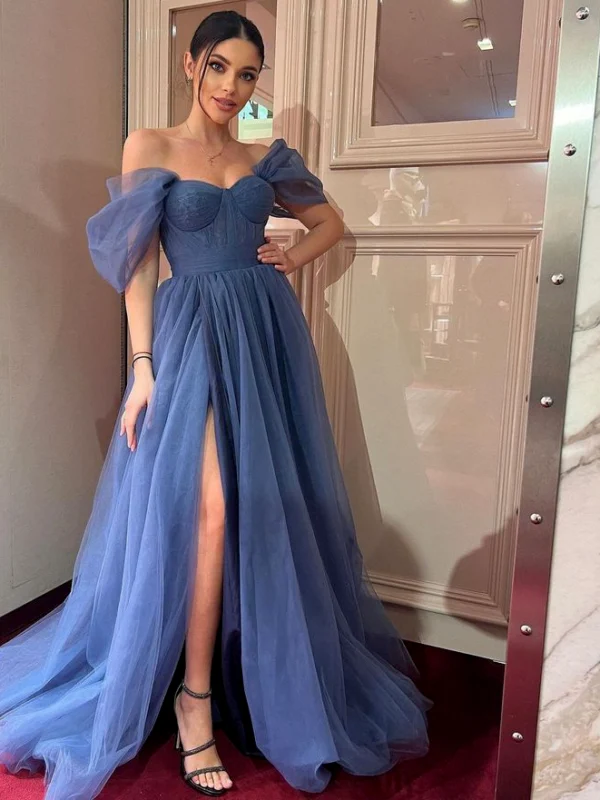
The long-sleeved comparison model shows open shoulders, a rounded divided upper edge and a more strongly drawn middle. Its neckline follows another route from the three V references. Compare that difference deliberately when deciding between a longer centre and a more horizontal upper distribution. Keep the intended skirt outline reasonably similar in a real comparison. Otherwise greater lower fullness can obscure the neckline decision. The upper boundary remains its own task even while the complete garment is assessed, helping one conspicuous feature avoid deciding an unrelated preference for you.
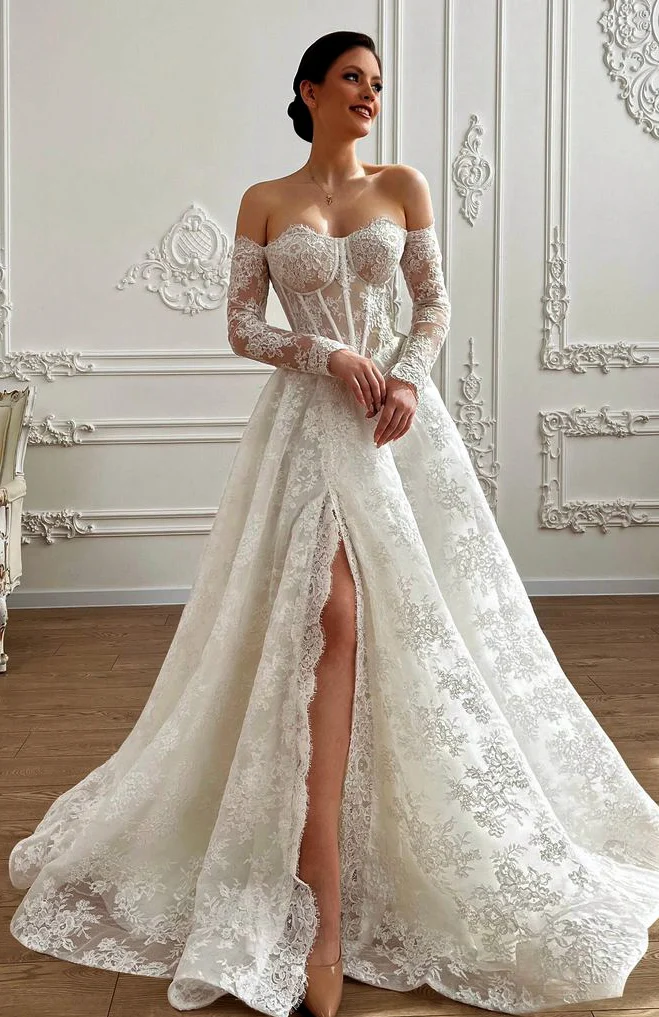
Wear both candidates with planned hair and inspect the area between face and waist first. Choose which sleeve and shoulder solution should accompany the selected line afterwards. You can enjoy long sleeves while seeking a V-form, or want finer straps without choosing the deepest opening offered. Request the actual back view so upper connections become fully visible. The front comparison helps select a direction; the decision then concerns the complete worn dress. Side and rear relationships complete that first preference rather than being assumed from the appealing front alone.
5. Add jewellery and veil after choosing the line
A V-neck wedding dress does not automatically need a long pendant. Fine pattern or floral edges may already supply substantial drawing beside the middle. Try earrings without a necklace first and introduce one jewellery piece afterwards if wanted. Inspect its finish beside the bodice’s lowest visible point. Do you enjoy that additional line, or want a quieter centre? The bridal accessories guide supports selecting companions as a complete arrangement. Transfer the relevant question to your own model without needing every piece from another photographed combination.
Add a planned veil in its actual wearing position. Let it fall normally and inspect which shoulder and neckline edge remains visible before it. Hold any intended bouquet at its real position rather than lower only for the photograph. It may cover another part of the bodice from a side-held arrangement. Decide which line you want retained in view. Jewellery, veil and bouquet then become purposeful companions to the selected neckline rather than independently attractive objects that meet by chance at the end of the process.
6. Confirm the upper line after ordinary movements
Walk, sit and reach for an object with the actual dress fully on. Inspect the neckline edge afterwards before rearranging it. A V-neck wedding dress should appeal with planned companions in these states too. Record which edge should remain unchanged and which point still needs discussion. Check an intended alteration again with the same important pieces. Documented front, side and rear views help recognise the proposed line at the next appointment. The original preference and later fitting then meet at the same observable feature rather than requiring the entire choice to restart.
Clarify care through the actual label. The GINETEX care-symbol explanation helps interpret it; pale floral appearance or fine pattern prescribes no treatment. Keep your three main selection points alongside it: upper width, intended middle and visible framing with companions. This supports comparing another model deliberately without beginning every decision again at each photograph. A suitable V-line develops through the tested proportion on the worn garment rather than an isolated depth figure, bringing actual experience and product information into the final choice.
Compare a V-neck wedding dress through upper width, intended depth and visible middle. Check actual layers before adding jewellery.
Frequently asked questions
Are depth and width the same decision?
No. You may want a broad upper opening with less depth, or prefer a narrow longer line. Compare both on the complete torso.
Does a V-line automatically need a pendant?
No. Try the existing edges with earrings first, adding a pendant individually if you want that extra line.
Do upright bodice lines establish particular support?
No. Visible lines describe outer arrangement. Clarify actual layers, attachments and desired fit on the real model.
Why include an off-shoulder comparison?
It shows a rounded divided upper boundary as an alternative to the three longer V-lines. Assess neckline shape separately from the fuller skirt.