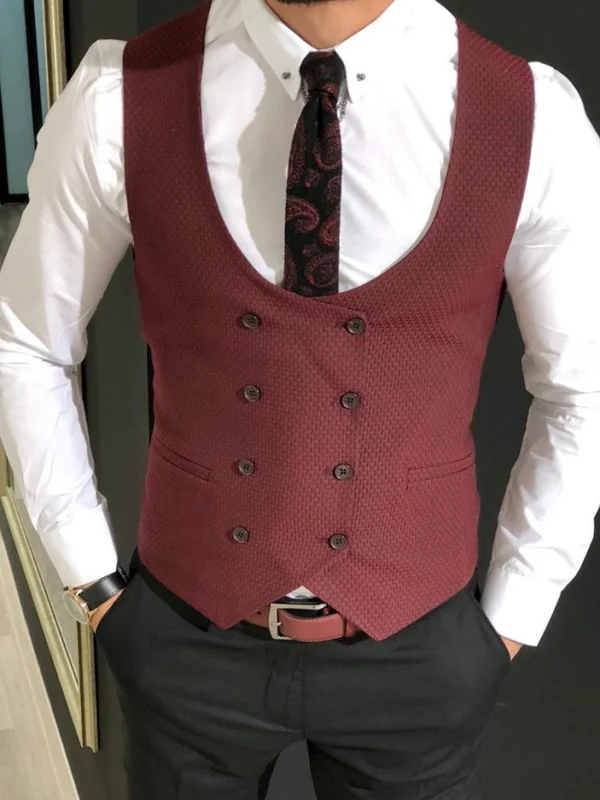
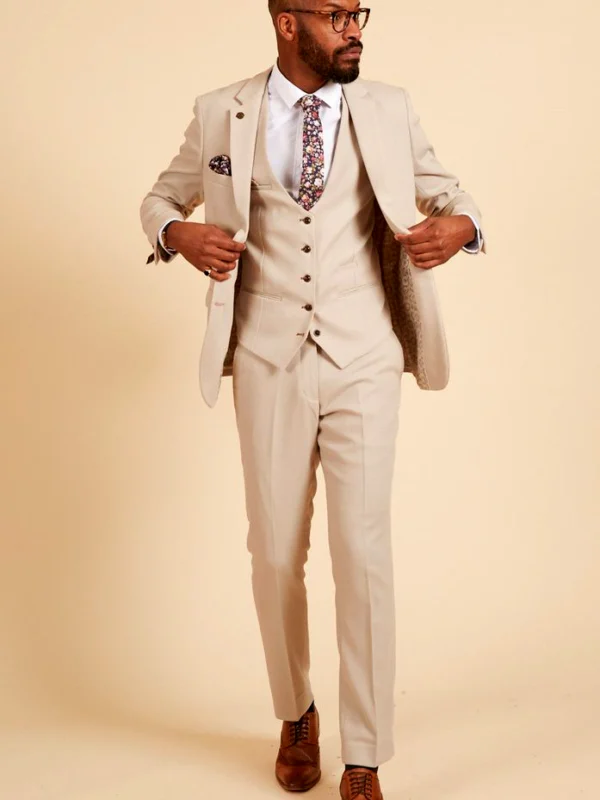
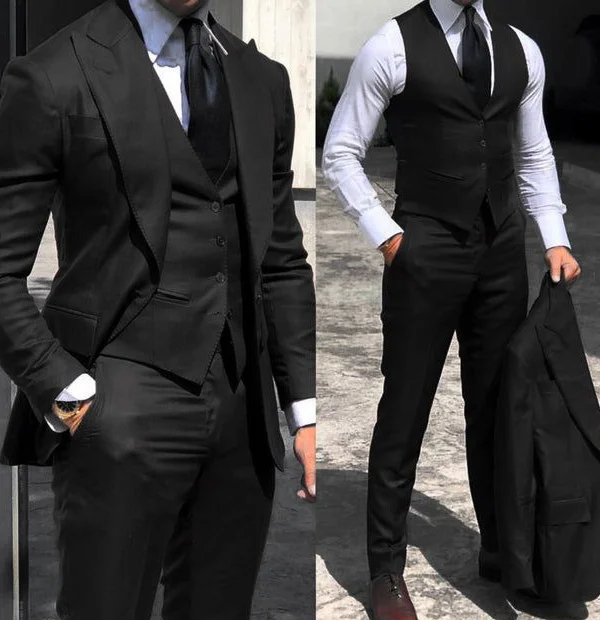
A business suit should suit the tasks of your working day. The commute, a long stretch at a desk and particular meetings offer more useful selection criteria than an abstract promise of success. Establish what clothing is actually expected first. Then compare the suit with the shirt, shoes and bag you intend to use. These photographed combinations offer different arrangements for the neckline, an additional front layer and the trouser finish. You can adapt each to your own schedule.
Choose a business suit through a real daily plan
Write down three situations: arrival, the longest seated work period and the most important meeting. Do you carry a bag over a shoulder on the way? Are you mostly at a keyboard or standing for presentations? Should the same outfit continue into an evening appointment? Those questions define the fitting without claiming a universal professional rule. Ask the relevant contact for concrete requirements when labels such as Business or Business Casual do not adequately explain what is expected.
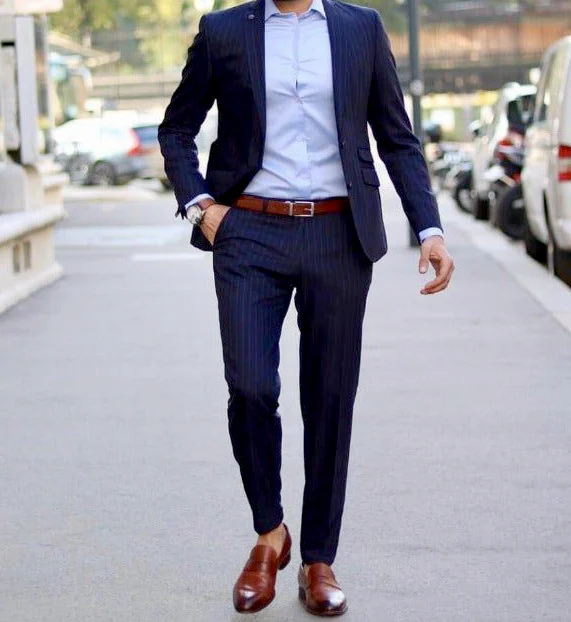
Choose the combinations to compare afterwards. The dark striped outfit with an open pale shirt gives a different neckline from the dark ensemble with a tie and a similarly coloured waistcoat. The light blue version also uses an open collar but creates a much lighter overall impression. Colour, pattern and a tie are separate decisions. A dark shade does not replace asking about requirements, and a lighter outfit need not be excluded solely because of its photographed colour.
Compare shirt and neckline on the same suit
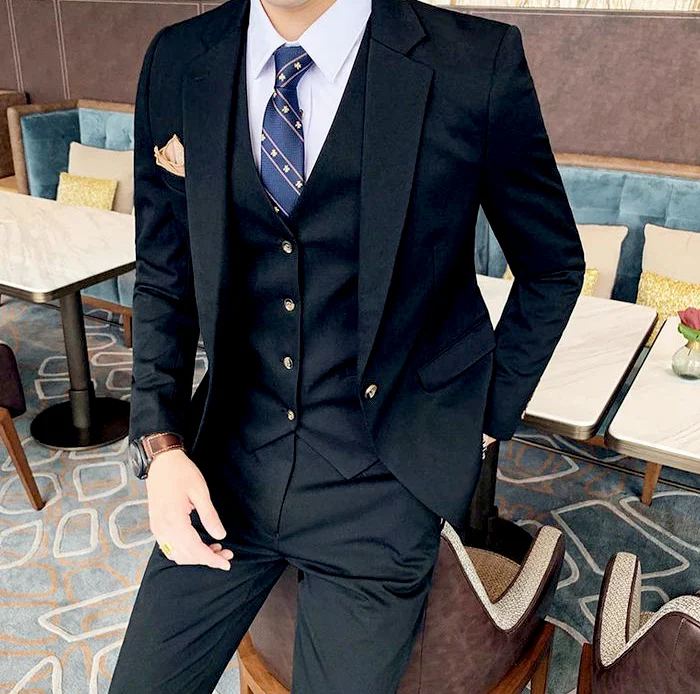
The striped dark version shows a pale shirt without a tie, plus a brown belt and similarly coloured-looking shoes. In the closer photograph of the dark three-piece, a patterned tie fills the space between shirt and waistcoat. Where the requirements permit a choice, compare these arrangements on your own candidate. Assess the open or closed neck area first. Decide afterwards whether you want a pocket square or another small accent rather than changing every detail simultaneously.
Sit at a table and reach for an object in front of you. Check the shirt collar, visible cuffs and jacket front after that movement. A standing photograph does not show a working posture. Include a headset or identification lanyard if you use them regularly. See how the actual neckline arrangement works with those items. Our men’s suit guides offer other comparisons between shirts, jackets and layers that can be adapted to your particular work routine.
Assess the waistcoat as an additional front
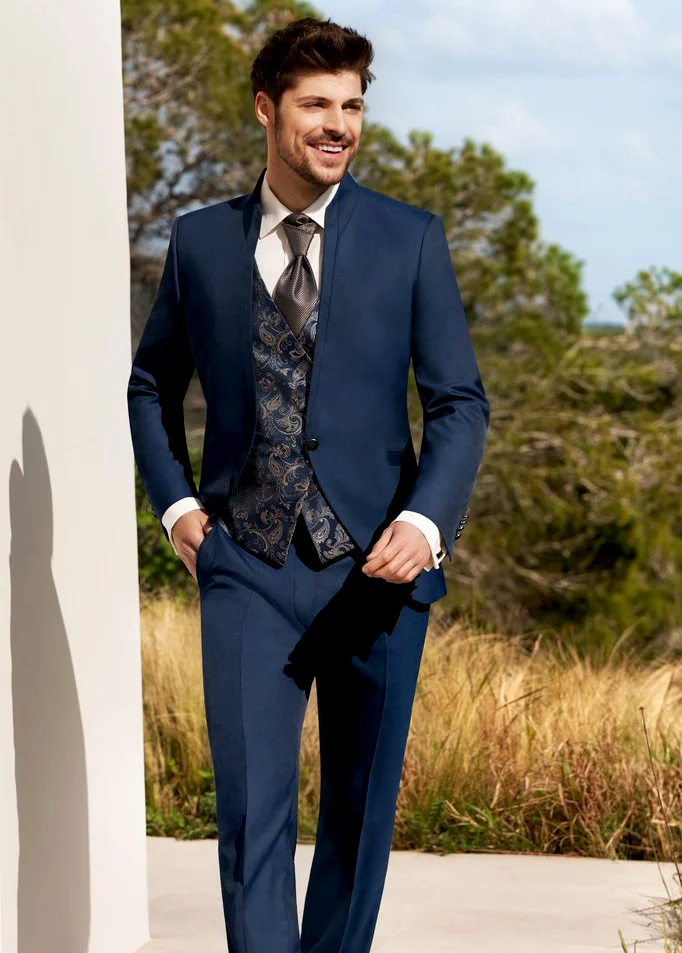
The two waistcoat photographs differ clearly. In the close dark view, the waistcoat stays near the colour of the jacket and trousers; its button line runs vertically downwards. In the blue outfit, the waistcoat instead carries a larger curling pattern. Both change the space inside the open jacket. Decide whether you want that extra front at work before seeking a particular waistcoat. A decorative photograph does not make the layer a general requirement for a workplace.
Try the combination with a chair close to your normal seated height. Look at the transition between waistcoat, shirt and trouser waistband while reaching forward too. Check the outfit with the jacket removed as well. If you regularly take it off at work, the waistcoat itself becomes the visible upper piece. With the patterned example, compare whether a quieter shirt and simpler tie create your preferred distribution. Make the decision through the full outfit rather than a pattern swatch alone.
Judge the trouser finish with work shoes
In the light blue photograph, the trousers finish above black loafers, leaving a visible ankle area between shoe and hem. The grey checked trousers beneath the blue jacket also have a shorter finish, with darker reddish shoes. These are specific arrangements rather than fixed measurements for everyone. Compare them with your preferred length and the shoes intended for your workplace. The same hem can create a different lower relationship with another shoe shape, so keep the actual pair in the comparison.
Walk several steps, step up once and then sit. Look at the trouser finish afterwards. If you want socks visible, try the intended colour and height. If you commute in different shoes, assess both pairs on the same trousers. The checked suit guide adds pattern questions. Transfer the relevant question without treating every checked trouser and jacket combination as a patterned matching suit. Decide separately how much continuity you want between upper and lower pieces.
Matching suit or a combination of different pieces?
The blue jacket with grey checked trousers deliberately separates top and bottom through colour and drawing. The light blue version instead maintains a continuous colour across jacket and trousers. Record which route you want. If your workplace permits both, compare the same shirt and shoes with each. That lets you assess the main pieces rather than accessories changing at the same time. Consider which arrangement you would want to wear again as part of your normal working routine.
Include your work bag too. Fill your own bag as you normally would for the fitting and try the intended way of carrying it. Put it beside the seated outfit and reach inside. Check the actual jacket position rather than substituting a small empty bag. Decide whether you want the belt to create a visible connection with the shoes or attract less attention in the whole outfit. One object need not repeat the colour of every other accessory to make the arrangement deliberate.
Make the final two candidates comparable
For each candidate, record which tasks work well and which specific alteration you want to discuss. Ask about scope, cost and a further fitting for the actual adjustment. Assess the finished version with the same important work items. You can then see whether a change resolved the intended sitting or movement question. A pleasing standing view and a usable working routine are two aspects of the same garment that belong together in the decision, rather than competing selection criteria.
Finally, read the care label of the actual suit. The GINETEX care-symbol explanation supports interpreting its markings; a dark or smooth-looking surface does not prescribe a general cleaning method. Clarify treatment before planning a fixed care routine. Your result is a combination assessed for particular working days, with a deliberate neckline arrangement, a consciously selected additional front and a trouser finish you have judged with your real shoes and work items.
Establish the actual clothing requirements, then test the suit with your shirt, shoes and work bag during the tasks you normally perform.
Frequently asked questions
Does every workplace require a tie?
There is no universal answer. Ask about the requirements for the office, client meetings and events, then try the intended neckline arrangement.
Is the blue jacket with grey checked trousers a complete suit?
The photograph shows a combination of different upper and lower pieces. Compare it as a separate option where your workplace requirements allow it.
Should I automatically order a waistcoat too?
Decide after trying the actual shirt seated and during your normal movements. The extra front and its pattern change the complete outfit.