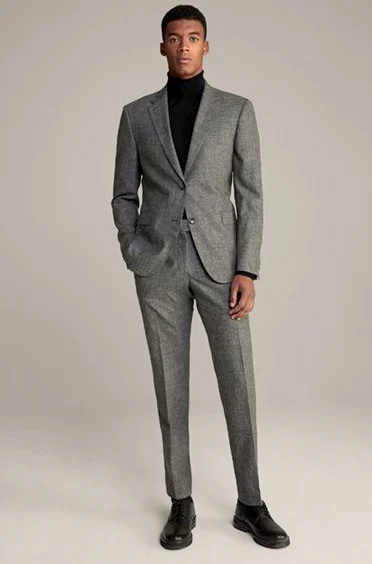
A turtleneck instead of a shirt creates a higher black surface between face and grey jacket here. The neck area has neither separate shirt collar sections nor a visible tie. Grey trousers finish shorter above dark ankle boots, with the complete view showing the lower boundary. One hand is nearer the trouser side while the other arm rests alongside. This reference deliberately offers another neck arrangement rather than proving how a pale shirt should look beneath a blue jacket. Colour and garment form both change, so describe the preferred difference separately.
Use it for a specific question: would you like a higher continuous surface or separate pale collar boundaries? Try both possibilities with the actual chosen jacket. Keep trousers and shoes reasonably consistent so the neck decision remains visible rather than changing every area together.
If you prefer a shirt, this alternative can still clarify the choice. Describe the open space or pale area you miss. Establish the occasion independently of photographic setting. Material and thermal performance of the black piece remain unconfirmed. The view supplies another arrangement to assess with your own actual clothing.