Modern minimalist wedding dresses are not defined simply by the absence of embellishment. When the neckline, shoulder volume, waist position, skirt fit and train remain clearly visible, every line carries more weight. These six images show how smooth, pale surfaces create distinctly different results: a fitted square-neck silhouette, a puff-sleeve A-line, a long-sleeve shirt-collar shape, a tonal patterned bodice, an open back with a train and an unadorned rear column.
Choosing among them requires more than one front-facing view. A neckline may frame the face while its straps affect movement; a quiet skirt can emphasize an intricate back; and a long train changes handling beyond the ceremony. This guide compares proportion and use rather than ranking the dresses, linking each preferred feature to the complete silhouette and the points to test in person.
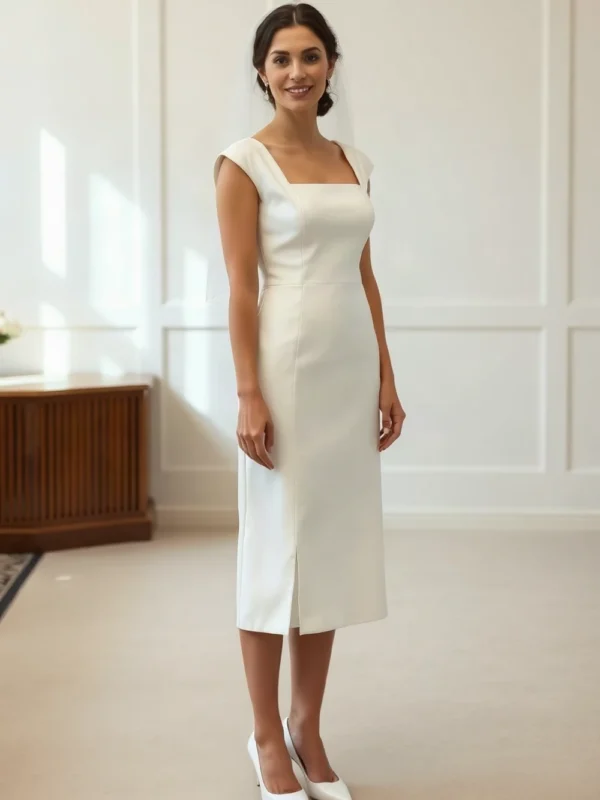
Building a Long Front Line with a Square Neck
A broad-strapped square neckline creates a decisive horizontal line between the shoulders. Vertical panel seams balance that width, continuing through a defined waist into a long skirt that follows the hips. The slight opening below the knees allows more walking room than a completely straight column, while the small train preserves the restrained finish. Neckline and body-skimming silhouette therefore share attention.
During a fitting, assess the square neck for both depth and width, and note where the straps meet the underarms. Check whether the neckline lifts or opens while seated, whether a full stride feels restricted and whether the waist seam remains correctly positioned. Compared with an A-line dress, this shape sits closer to the body, so precise fit is especially noticeable across its quiet surface.
Balancing Puff Sleeves with an A-Line Skirt
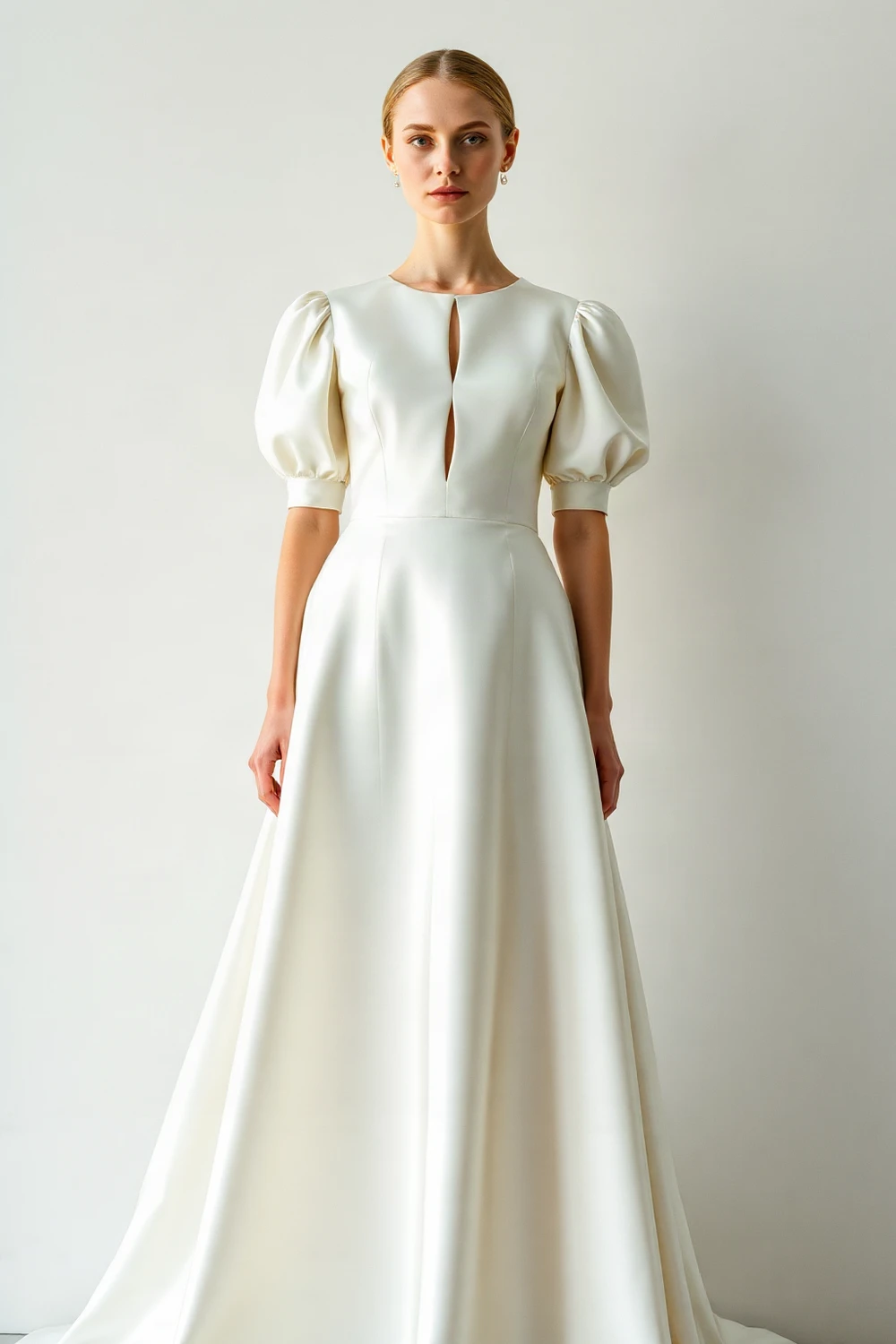
The second look shows that a minimalist surface can still include volume. A slim opening below the round neckline creates a vertical accent, while short puff sleeves broaden the shoulders. The A-line skirt expands from the natural waist, repeating the upper volume in a controlled way. It has a wider perimeter and more sculptural bodice than the fitted first dress, despite remaining largely undecorated.
Judge the sleeves for mobility as well as shape: gathering may shift when the arms reach forward or rise, and fitted bands must stay comfortable. View the shoulder width from the front and side, and inspect the narrow keyhole and its inner layer under different light. Because the defined waist separates the two volumes, its position is crucial to preventing the silhouette from appearing top- or bottom-heavy.
Using a Shirt Collar for Tailored Minimalism
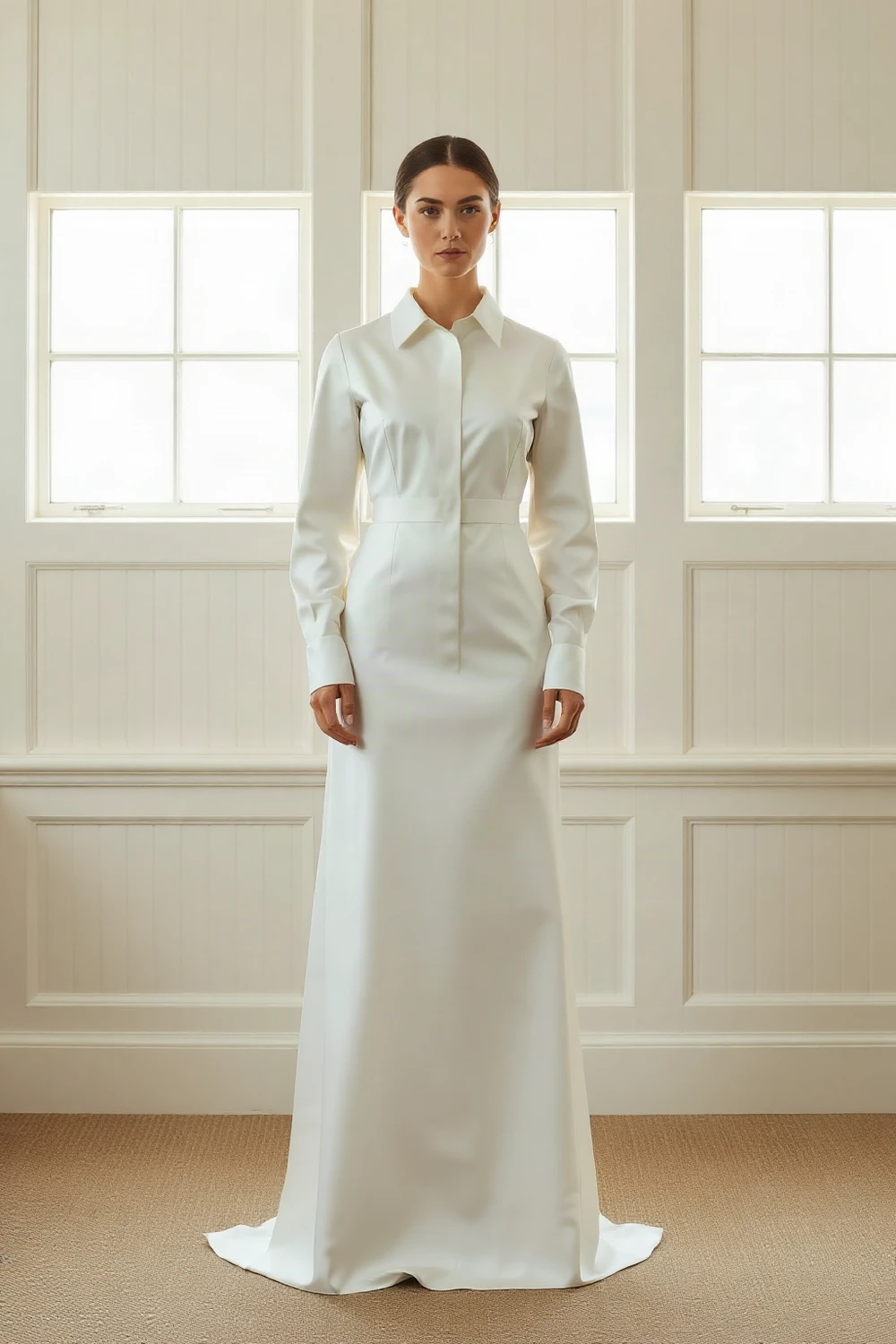
The third dress uses a pointed shirt collar, concealed front closure, long sleeves and wide cuffs to create a tailored character without ornament. A horizontal waistband joins the orderly bodice to a long, relatively straight skirt. It covers more of the neck and arms than the square or scooped alternatives, while the bright windows reinforce the centered placket and controlled proportions.
Check that the collar lies flat, the concealed closure stays smooth across the chest and the cuffs permit easy hand movement. Sit and extend the arms to see whether the crisp front line survives movement and the skirt allows the stride required by the venue. Because the sleeves and straight skirt form a more enclosed silhouette, earrings, shoes and hairstyle can noticeably change its overall tone.
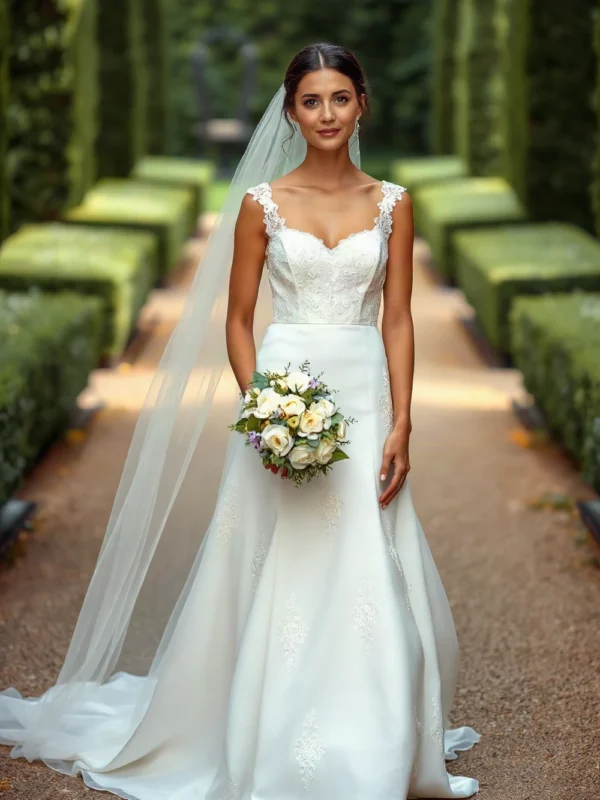
Concentrating Tonal Pattern on the Bodice
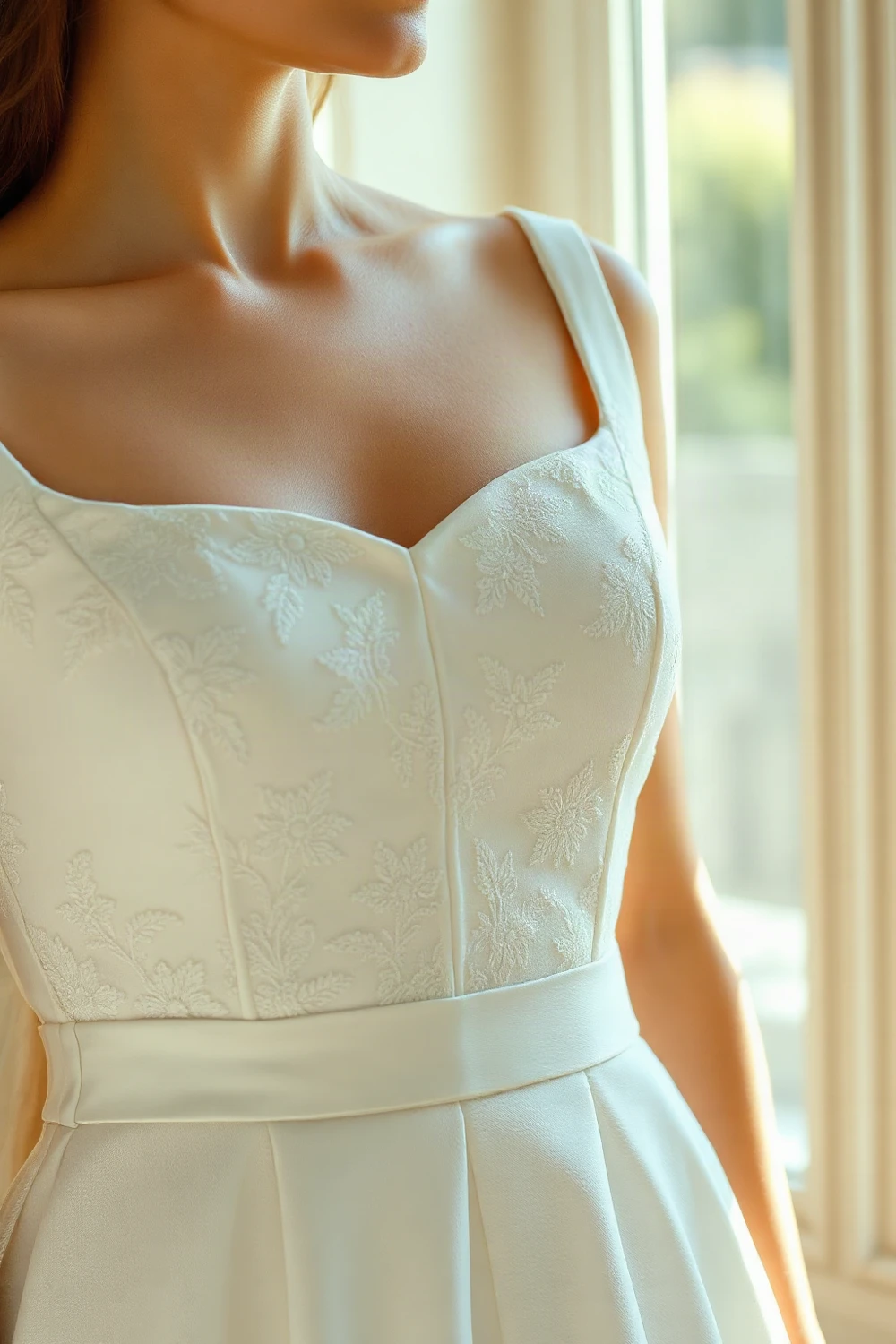
The fourth look sits between a plain surface and fuller decoration. Broad straps and a square neckline with a soft central dip frame tonal botanical motifs within the bodice panels. A plain waistband stops the pattern before the pleated skirt restores visual quiet. Low color contrast makes the detail clear nearby but more subdued from a distance.
This arrangement can suit someone who finds a fully plain dress too severe and an allover pattern too active. Examine how motifs meet the panel seams, whether their weight feels balanced from side to side and where the waistband divides the torso. Since the geometric neckline already commands attention, test accessories with it: compare no necklace, a short simple necklace and multiple earring lengths under the same lighting to determine which preserves the intended focus.
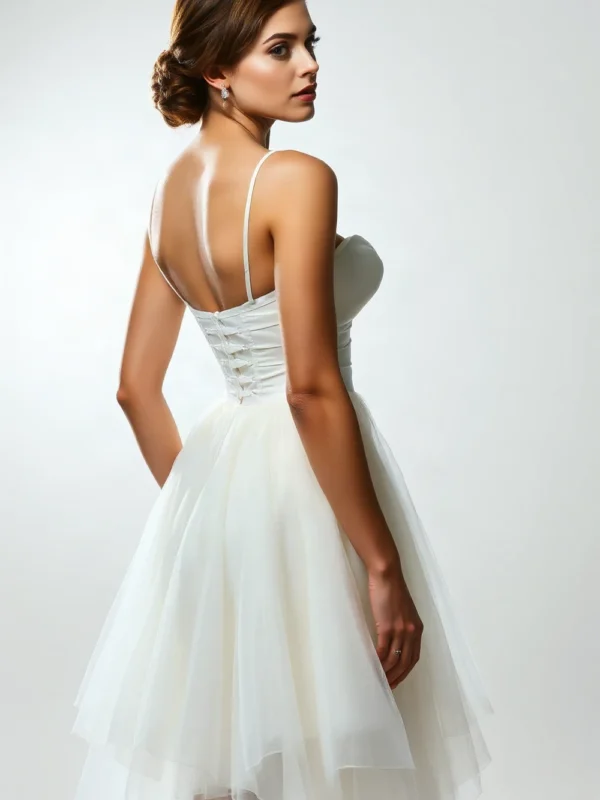
Framing an Open Back with Restrained Motifs
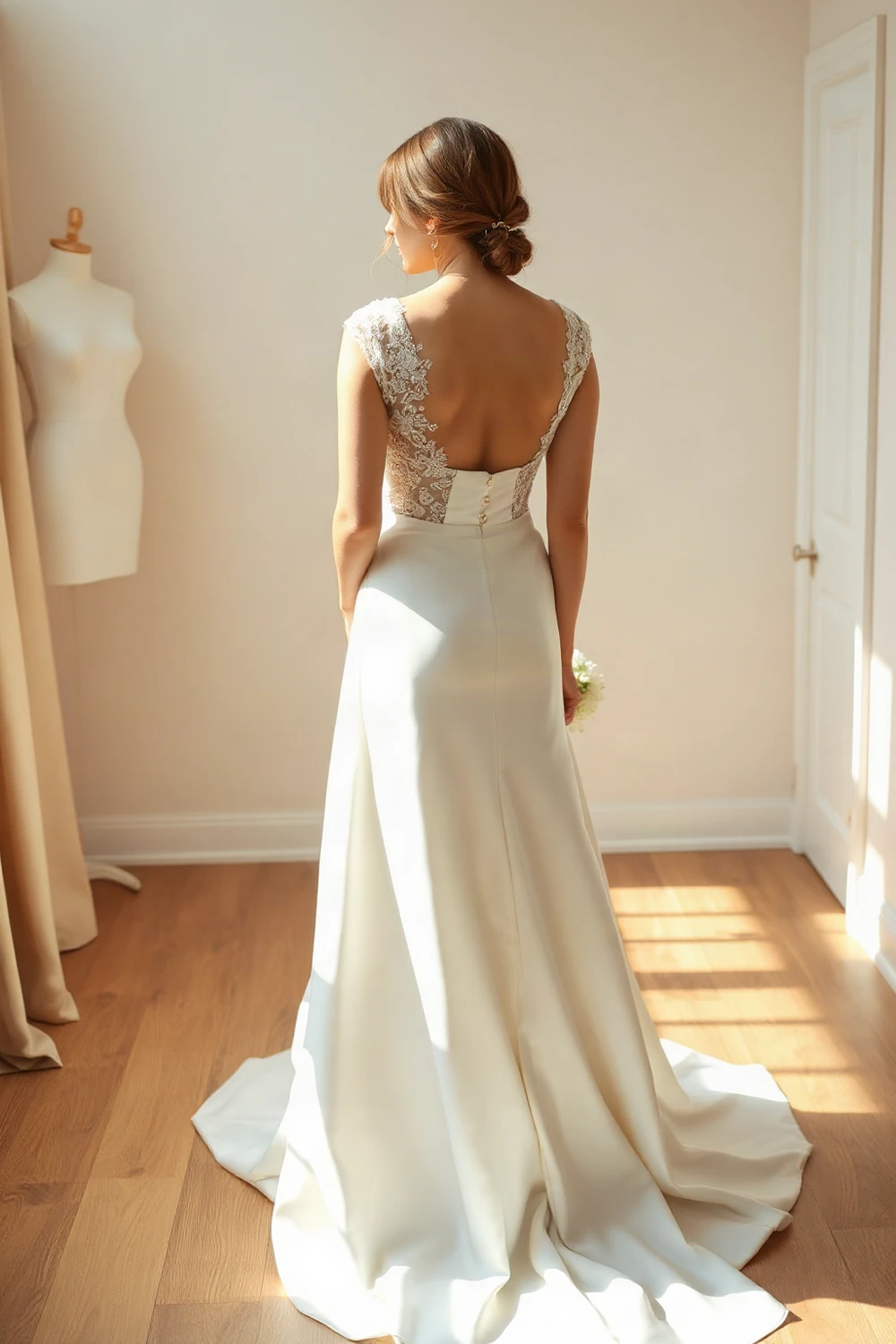
In the fifth look, detail shifts to the back. Pale botanical motifs edge a deep opening from shoulders to waist, while an opaque center panel and small closure details provide a structural connection. The mostly uninterrupted skirt spreads into a generous train, guiding attention from the framed back along the extended rear line. It combines a quiet main surface with a romantic focal area.
Appearance and fit are inseparable here. The shoulder sections must stay secure, the edges close to the body when bending and the waist closure comfortable when seated. Test suitable internal support before the final fitting. Hair worn up or down will alter how much pattern remains visible. Walk, turn and secure the train temporarily to balance its ceremonial effect with practical movement later in the event.
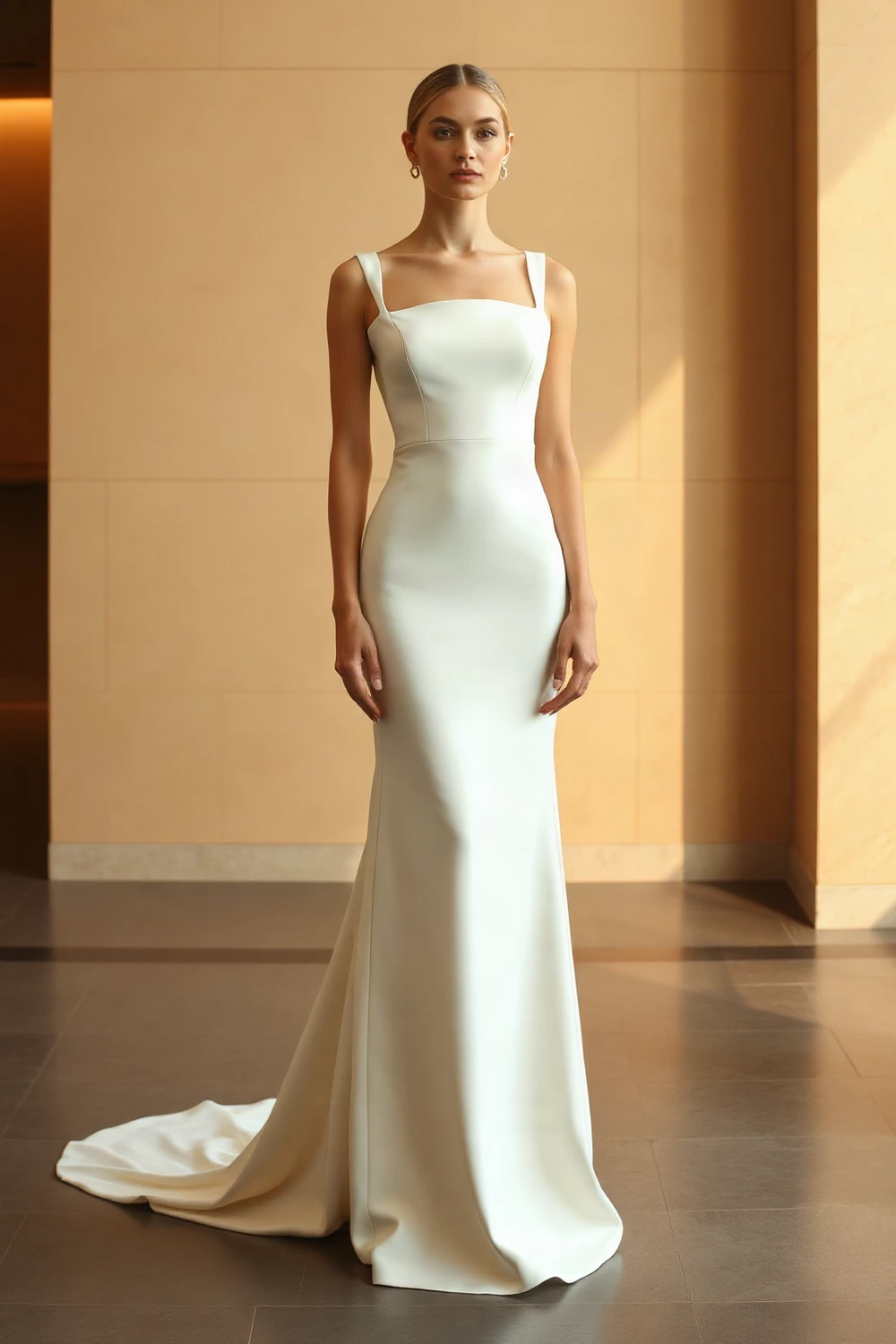
Finishing a Plain Back with a Broad Train
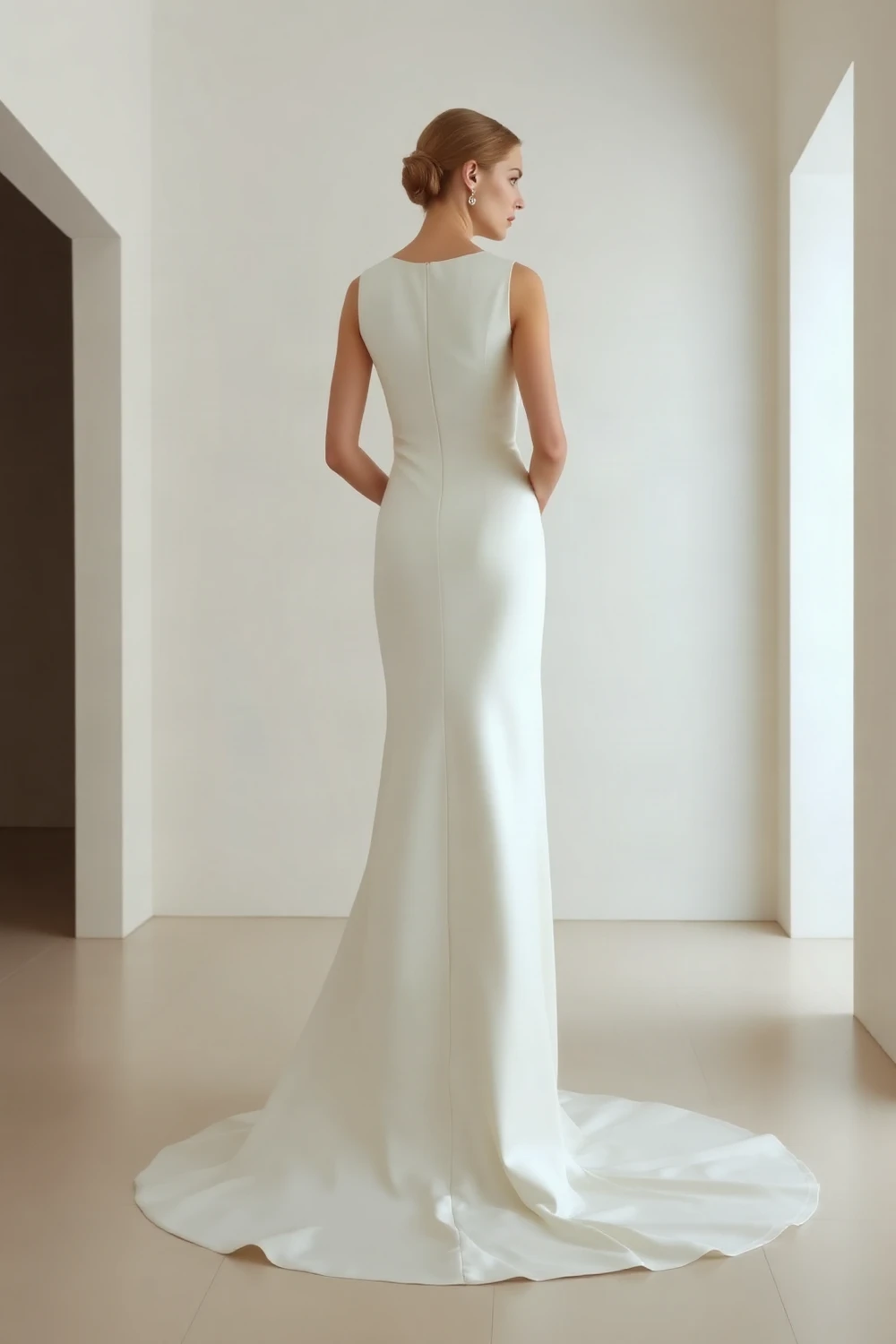
The sixth look demonstrates that a strong rear view needs neither an opening nor pattern. A sleeveless high back creates an uninterrupted surface between the shoulders, and a center seam forms a vertical axis from the neck down the dress. The column follows the waist and hips before widening into a broad, rounded train. Against the spare architectural background, its seam alignment and hem geometry are especially clear.
On this quiet surface, small fitting differences stand out. Ensure the center seam remains straight, no horizontal tension lines cross the back and the armholes stay smooth during movement. It is more covered and visually quieter than the patterned open back, but its expansive train provides a substantial ceremonial accent. View it fully spread and temporarily secured, considering narrow corridors, floor texture and dancing plans before deciding how much train is manageable.
Begin by deciding what should lead the look: a geometric square neck, balanced sleeve volume, a covered shirt collar, localized tonal pattern, a framed open back or a broad unadorned train. Then connect that focus to nearby choices. A strong neckline may favor quieter jewelry, a detailed back becomes clearer with lifted hair and an extended train requires a movement plan.
Do not decide while standing still before one mirror. View the dress in daylight-like and indoor light, then sit, walk, turn and lift the arms. Examine the front, side and back together. This reveals whether its clean lines remain composed in use and whether the silhouette can move as required throughout the day.
From a fitted square-neck silhouette to a puff-sleeve A-line, shirt collar, tonal bodice, open back and sweeping train, these six looks compare proportion, coverage and restrained detail.
Frequently asked questions
What should be checked when fitting a square-neck minimalist wedding dress?
Evaluate the neckline's width and depth together with shoulder proportions. The straps should remain secure, the neckline should not lift or gape while seated, and the underarm area should permit comfortable movement. Front, side and seated fitting photographs can make subtle changes easier to compare.
Will puff sleeves and an A-line skirt create too much volume together?
That depends on the sleeve width, the position of its fitted band and how quickly the skirt expands from the waist. In the second image, a defined waist separates the two volumes. View a comparable dress from the front and side, then raise the arms to assess its moving shape.
How can tonal motifs retain a minimalist effect?
Keeping them within one area, such as the bodice, prevents the pattern from covering the entire silhouette. Low contrast also makes the motifs appear quieter at a distance. Assess the dress both close up and from several steps away before deciding whether the balance feels restrained enough.
When should support for an open-back wedding dress be planned?
Begin as soon as the depth of the opening and the shoulder placement are established. Test the intended inner support while bending, sitting and lifting the arms rather than postponing it until the final fitting. This reveals whether the opening's edges continue to sit close to the body.
How can a sweeping train be balanced with easier movement?
Test the train both fully spread and temporarily secured. Consider the walking route, stairs, floor surface and dancing plans when selecting a securing point. Taking long steps and making several turns during the fitting will indicate how much active management the train is likely to require.