Choosing a flowing dress for a beach wedding involves more than finding a skirt that looks light in a photograph. The neckline’s relationship to the torso, the direction of the draping, the length touching the sand and the behavior of free panels in a breeze can transform both the appearance and the practicality of a silhouette. The six concepts in this gallery share clean surfaces and long hems, yet they generate movement in different places. One relies on a softly colored full skirt, another on a relaxed upper section, while others use crossing folds, an off-the-shoulder line, cape panels or a high slit. A useful comparison therefore looks beyond a still pose. The ground along the ceremony route, expected wind, seating, shoes and planned hairstyle should all enter the decision. These images are best treated as focused visual references for neckline, waist and skirt choices, followed by a fitting that recreates the movements and conditions relevant to the event.
Balancing a Strapless Bodice with a Blush Skirt
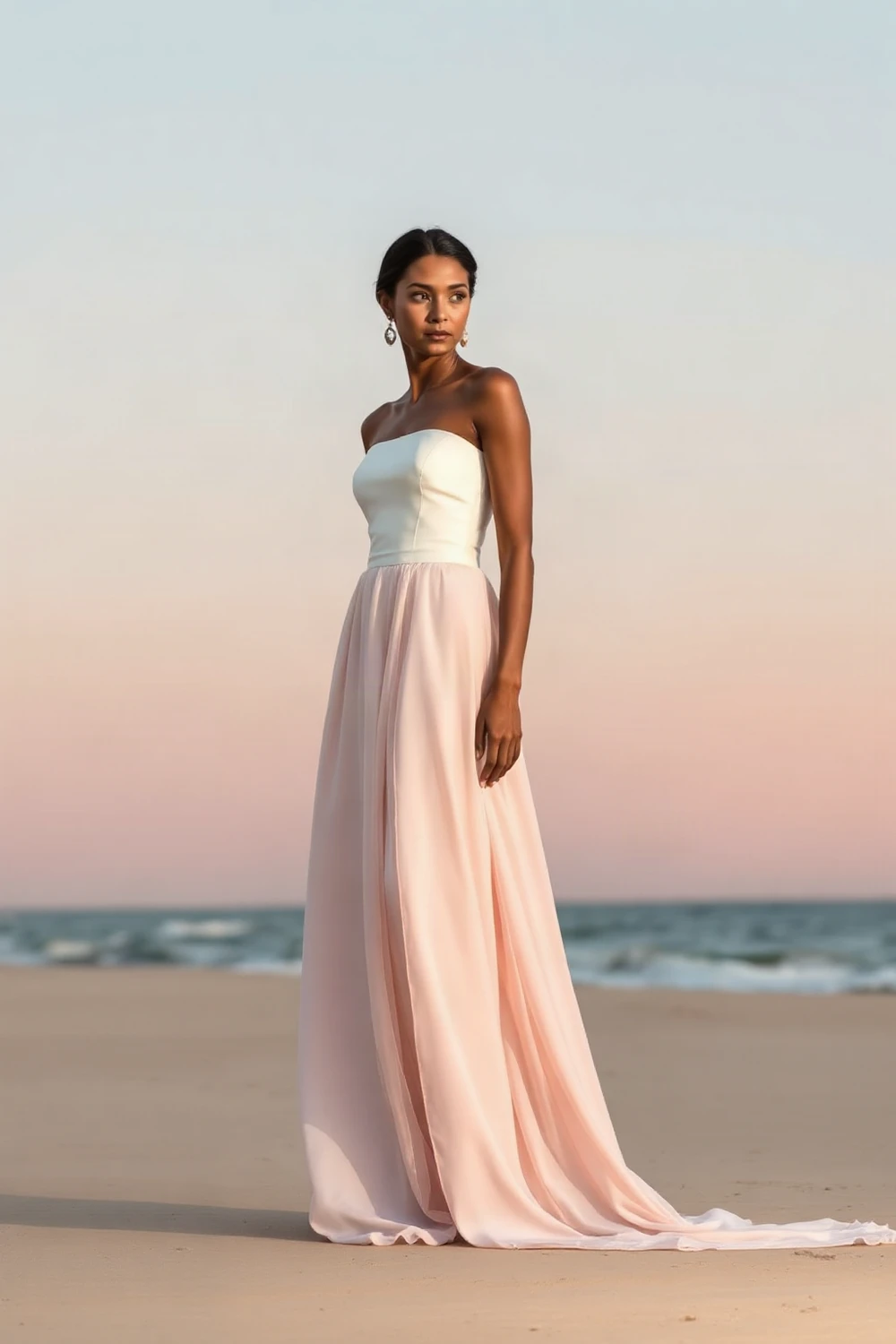
The first look builds its identity at the transition between a clean white strapless bodice and a pale blush skirt. A narrow waist seam releases fine gathers into generous volume, so the upper half appears crisp while the lower half softens toward the sand. Compared with a continuous all-white design, the change in color and structure feels more romantic and immediately visible. The two sections must nevertheless be tested together. Raise the arms, turn and sit to see whether the strapless edge and waist remain settled. Then walk in the intended shoes to establish whether the front hem clears soft ground and whether the lightly pooled back can be managed along the route. Photographs in both direct light and shade will also show how strongly the blush separates from the white bodice in the setting where it will be seen.
Controlling Length in a Minimal Slip Silhouette
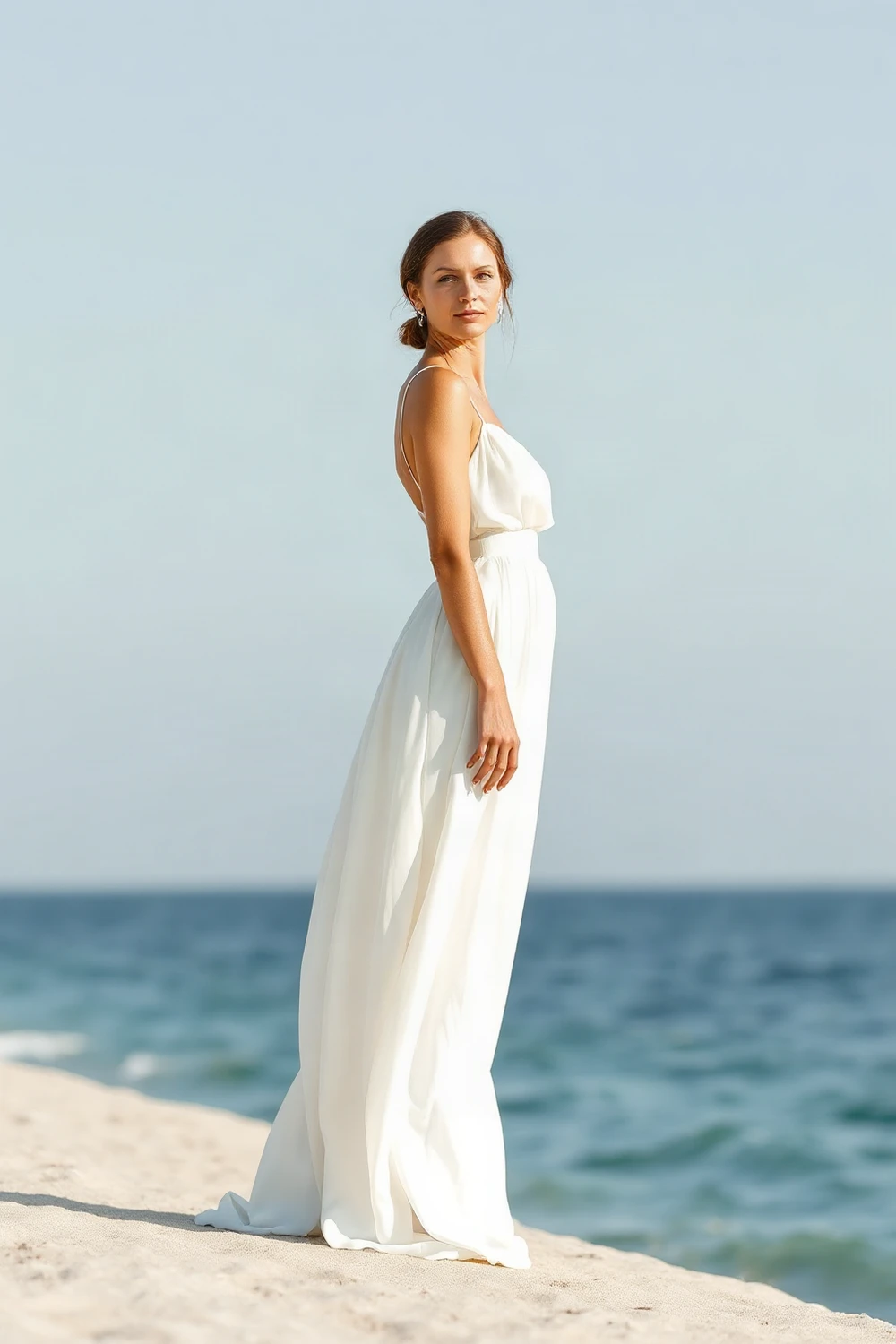
Slim straps, a softly draped upper section and a defined waistband give the second dress a continuous vertical character. Long folds descend from the waist without a full skirt or trailing panel, making this a useful reference for someone seeking a restrained coastal silhouette. Minimal construction, however, places greater emphasis on precision. Strap length determines where the neckline sits, and even a small hem adjustment affects the entire line. A fitting should include front, side and back views while the shoulders and arms move. Check that the relaxed upper section keeps the desired coverage when leaning or dancing. Walk on sand in the chosen shoes to make sure the front edge does not catch underfoot. Strong daylight may also reveal seams and underlying layers more clearly, so examine the dress in both sun and shade rather than relying only on indoor fitting-room light.
Creating Motion with an Off-the-Shoulder Drape
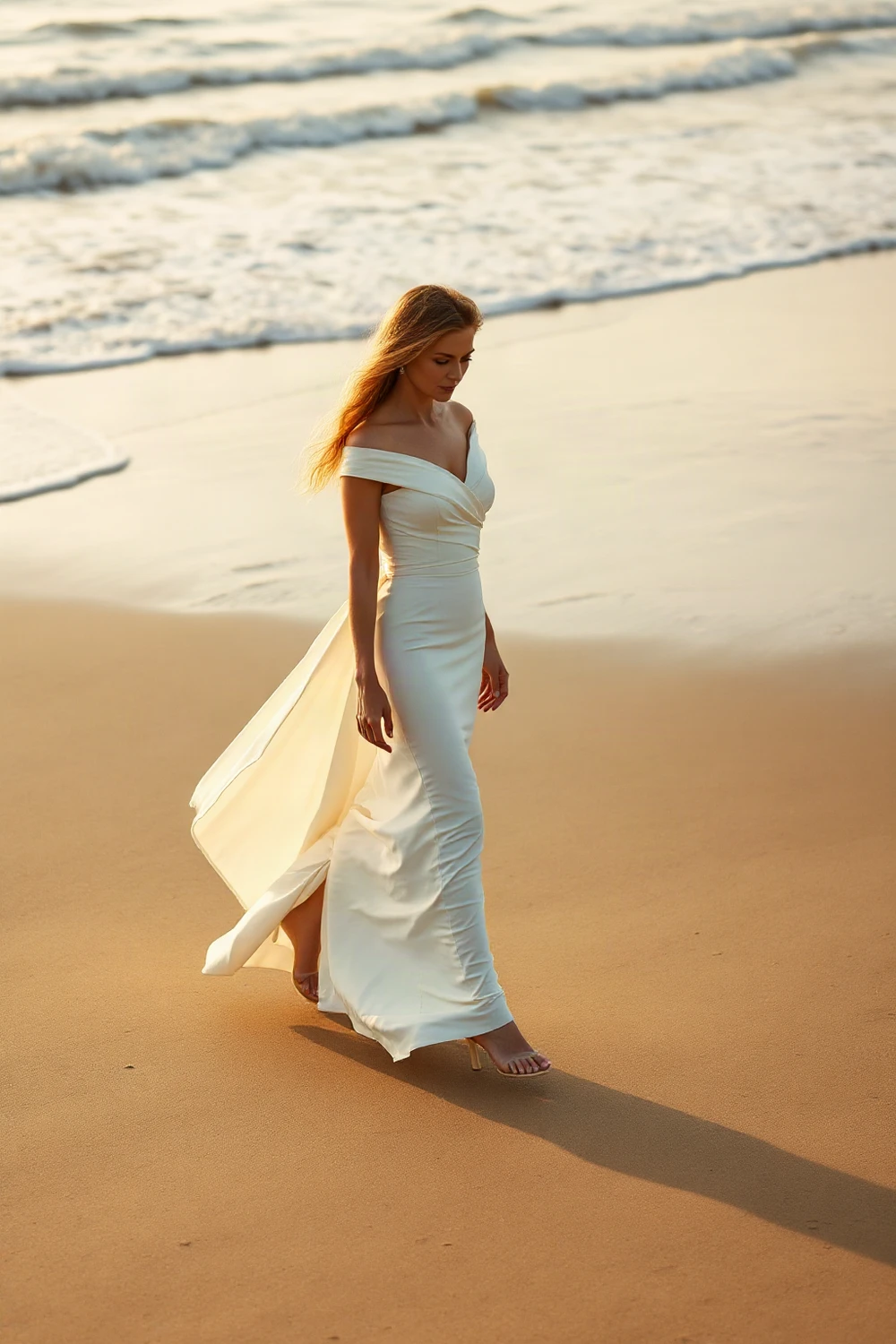
The third concept concentrates movement in three places: the crossing off-the-shoulder neckline, the fitted folds around the torso and the long panel lifting behind the wearer. A narrow skirt keeps those directional elements prominent, while the front opening makes the stride part of the silhouette. It is more dramatic than the spaghetti-strap look, but it also requires more movement testing. The low neckline should allow the arms to rise without shifting excessively or restricting the shoulders. The rear panel must remain manageable when turning, sitting or moving near damp sand. Instead of judging the dress only in front of a mirror, walk at normal pace, take several broad steps and change direction. The intended sandals or heels are essential to this test because their height changes both the front opening and the amount of fabric reaching the ground.
Using Diagonal Folds to Define a V-Neck Waist
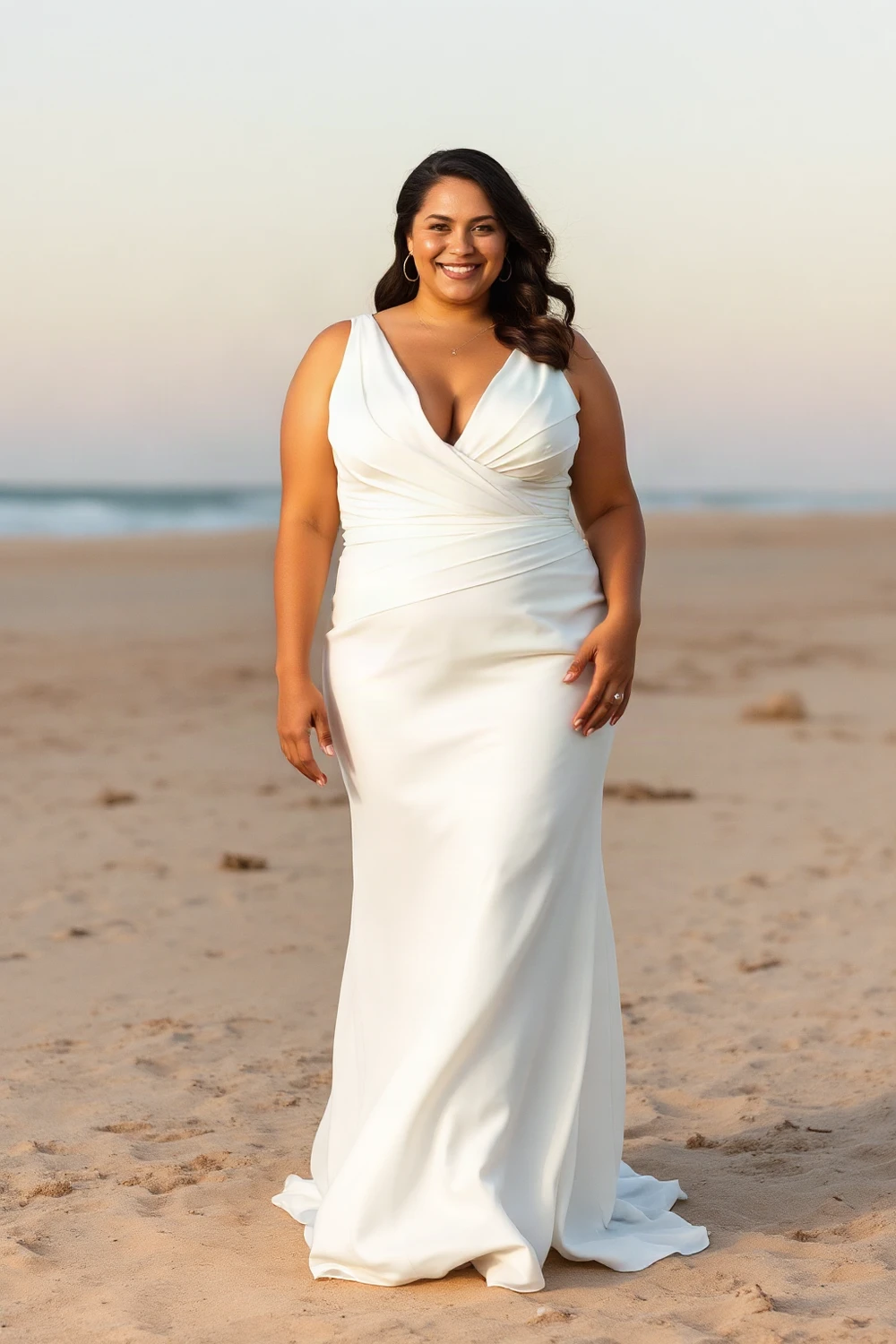
The fourth look supports a deep V-neck with broad diagonal layers that converge around the waist. Because the draping is concentrated above a comparatively smooth skirt, the eye travels between the face, neckline and waist rather than across the entire surface. This may suit someone who wants visible definition in a particular area without an embellished skirt. Neckline depth should not be decided from the front view alone. Sit, lean forward and raise the arms to confirm that it provides the intended coverage through normal movement; discreet securing options can be discussed during alterations if needed. Side photographs will show precisely where the folds meet and how that position affects proportion. Since the skirt follows the body closely, test stride width, turning and the comfort of the underlying layers on sand. These checks help the composed column remain functional away from a stationary pose.
Framing the Breeze with Cape Panels
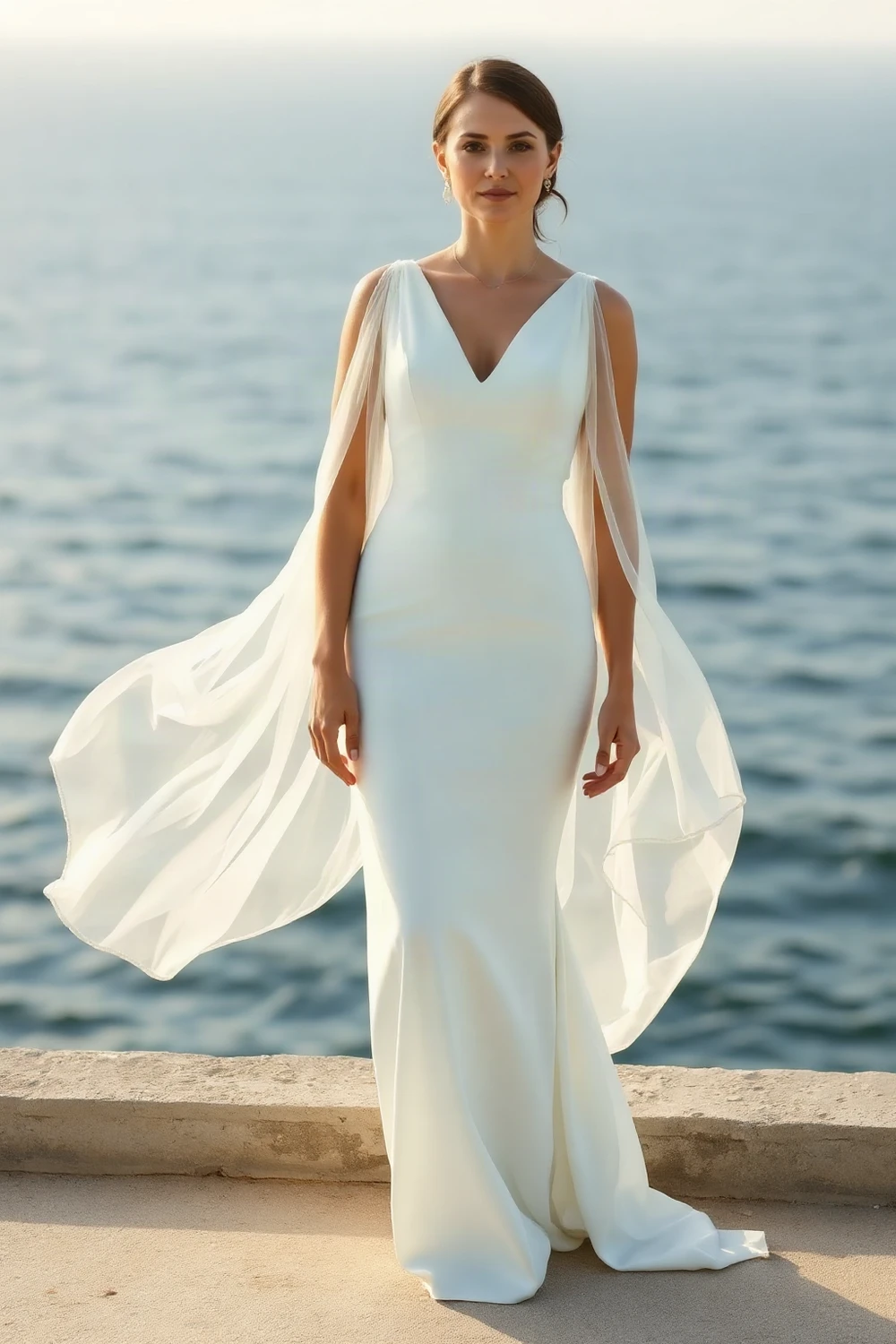
In the fifth design, a simple V-neck column becomes more expansive through long panels falling from both shoulders. They form vertical lines when still and broad curves when caught by the breeze, framing the upper body without the continuous coverage of fitted sleeves. This effect can provide movement around the face and shoulders even without a separate veil. Wind conditions are central to the decision. Test whether the panels flow behind the wearer or move forward toward jewelry, flowers or the face, and make sure they do not catch on seating while turning. Hairstyle also changes their presentation: swept-back hair reveals the shoulder attachments, while loose hair may overlap them. The close skirt visually balances the moving width above, although its stride allowance must still be tested. Panel length should preserve the floating outline without becoming difficult along the planned ceremony route.
Directing the Eye with One Shoulder and a Slit
The sixth look extends one diagonal idea from the covered shoulder through the waist, high slit and long side panel. Its asymmetrical neckline is more graphic than a balanced V-neck, while the exposed leg and fuller opposite side add rhythm as the wearer walks. Rather than adding numerous accessories, it is useful to decide where visual balance should sit. Fitting photographs can compare whether the hairstyle covers the bare shoulder, how earrings relate to each side and where a bouquet or other hand-held detail feels most balanced. A slit that looks appropriate while standing should be reassessed during long steps, sitting and wind. The single shoulder connection must also stay secure through dancing and embraces. Finally, check how much of the long panel drags through sand and whether it can be lifted temporarily, making the transition between ceremony movement and posed photographs easier.
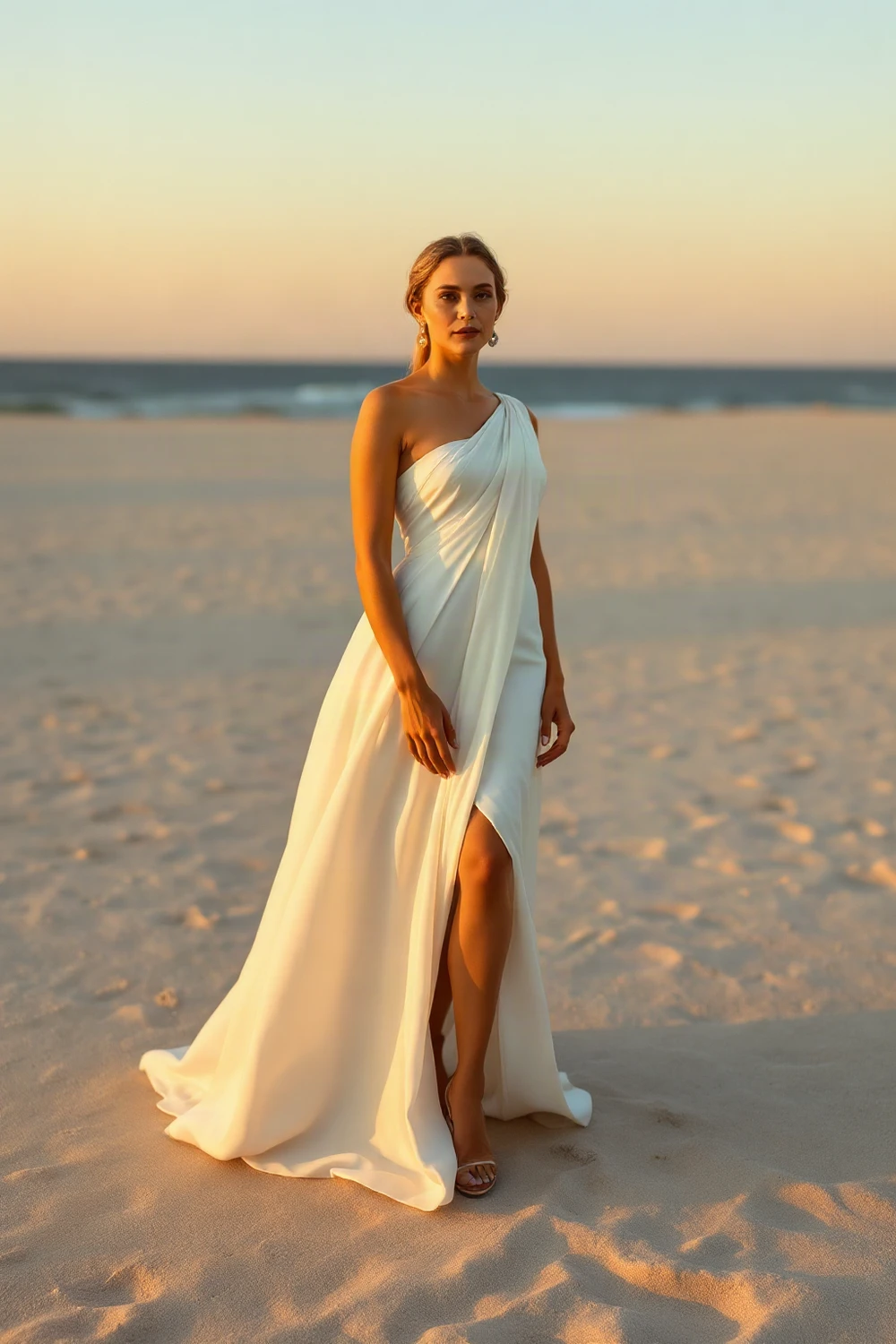
The best choice among flowing beach wedding dresses is not necessarily the design with the most movement, but the one that places movement where it supports the intended look. A blush skirt creates romantic volume, a minimal slip emphasizes a calm vertical line, and diagonal draping defines the torso. Cape panels form a wide moving frame, whereas one shoulder and a slit establish sharper asymmetry. Before deciding, test the preferred option in the intended shoes while recreating sand, firm pathways, sitting and turning as closely as possible. Check neckline stability, natural stride length, contact between hem and ground, and the direction taken by every free panel in a breeze. That practical fitting allows the visual flow seen in these concepts to remain comfortable and manageable throughout the ceremony rather than only during a still photograph.
Compare strapless, spaghetti-strap, off-the-shoulder, V-neck, cape-sleeve and one-shoulder beach wedding dresses through their draping, skirt movement, walking comfort and response to a coastal setting.
Frequently asked questions
How long should a beach wedding dress be for walking on sand?
Test the front hem with the intended shoes and make sure it does not fall under a natural step. A short rear extension can preserve visual flow, but soft sand and a long route may call for a discreet way to lift or shorten it.
Are cape panels or a slim skirt easier to manage in coastal wind?
A slim skirt occupies less surrounding space, although its stride allowance needs checking. Cape panels create stronger motion, but their attachment, reach and tendency to blow forward should be tested in conditions resembling the venue.
How should a strapless or off-the-shoulder neckline be tested?
Raise the arms, embrace, sit, bend and repeat likely dance movements. The neckline should remain positioned without constant adjustment; suitable internal support or discreet securing methods can be discussed during alterations.
Is a high slit practical for a beach ceremony?
A slit can increase stride room, but wind and sitting may expose more than expected. Test its height with the ceremony shoes, several step lengths and both front and side views.
What hairstyle works with draped beach wedding dresses?
Consider whether hair should reveal or soften the neckline. Swept-back styles can show a one-shoulder line or cape attachments clearly, while any final choice should also be tested for movement in the expected breeze.