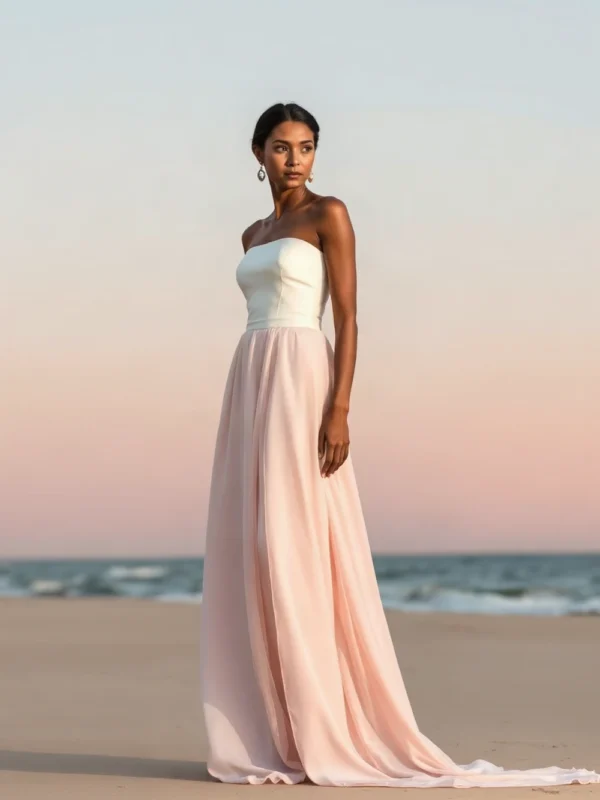
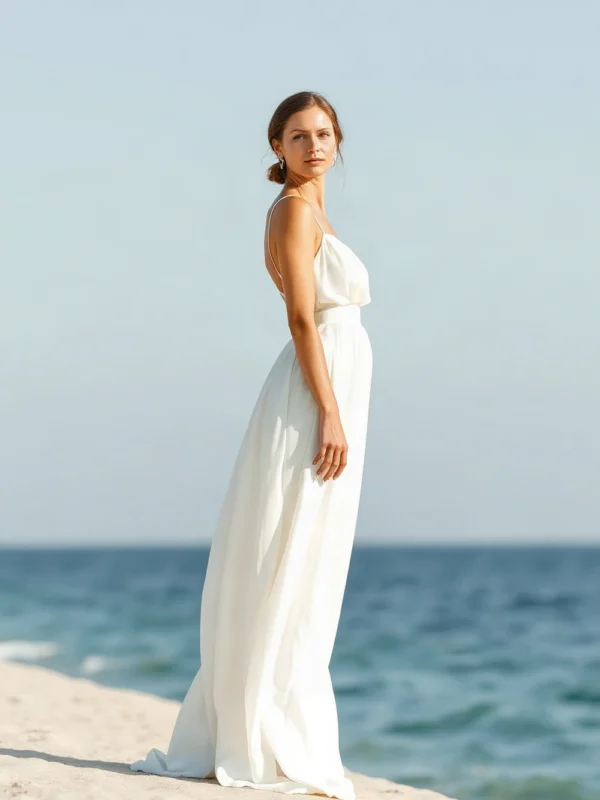
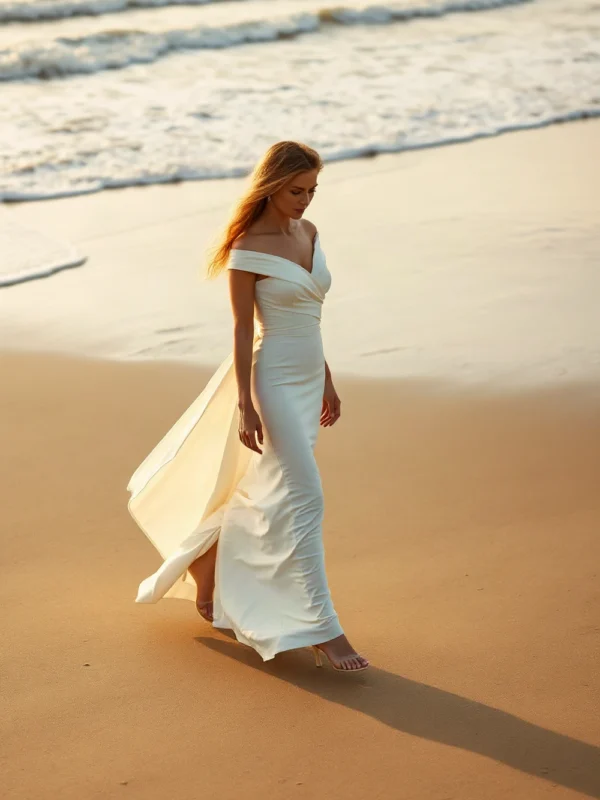
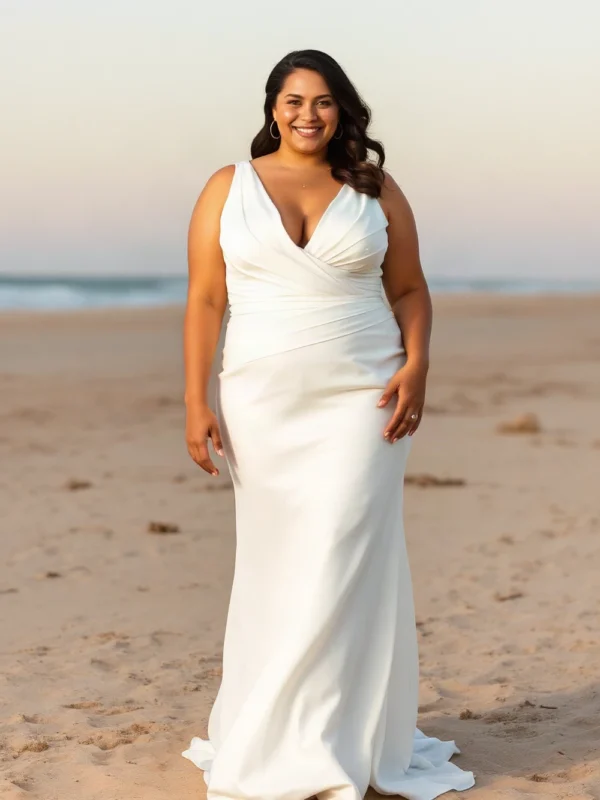
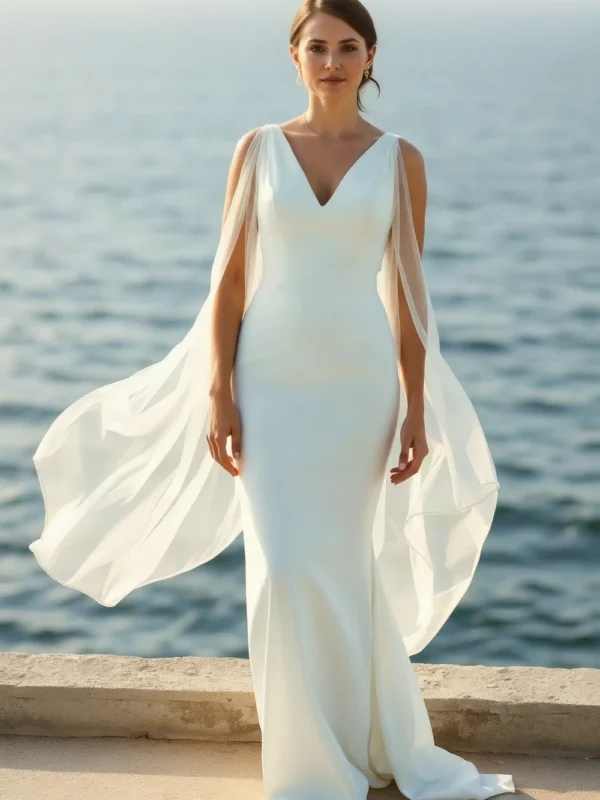
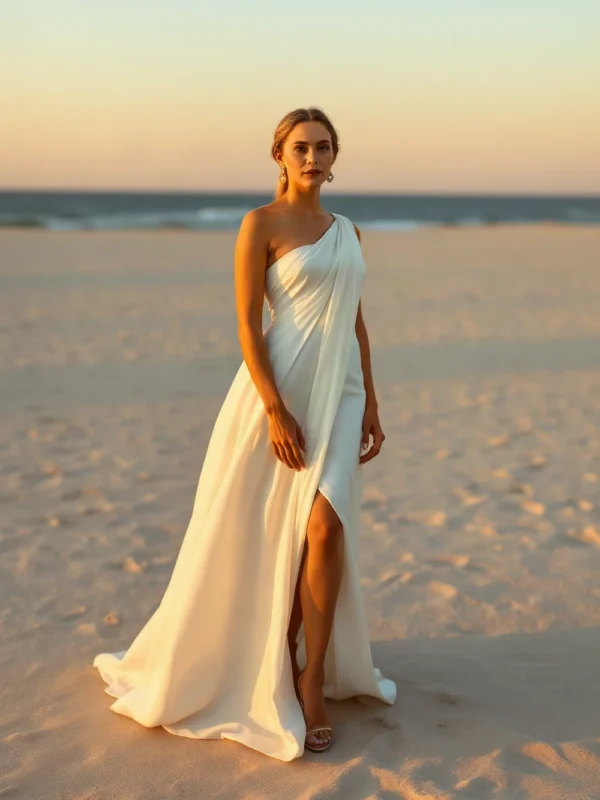
All six concepts pair long, clean silhouettes with a coastal setting, but they do not create movement in the same place. Rather than relying on dense embellishment, they use neckline shape, waist construction, skirt volume and free-hanging panels. Sand, open sky and the sea also make the outlines of white and pale blush surfaces easy to compare.
The first two looks establish the quietest vertical lines. A crisp white strapless bodice meets a softly gathered blush skirt in the first, producing a visible contrast in both color and volume. The spaghetti-strap dress remains white from top to hem, with a relaxed upper section, defined waistband and narrow floor-length fall. One reads as romantic and expansive; the other is restrained and minimal.
The middle pair places draping directly across the torso. The off-the-shoulder concept combines a crossing neckline, fitted horizontal folds and a long panel that lifts behind the wearer. The wrap-style V-neck uses broad diagonal layers to guide the eye toward the waist, while its smooth skirt keeps the lower half composed. Both define the body through direction rather than decoration.
The final pair introduces separate moving elements. Cape-like panels descend from both shoulders of the fifth look, opening around a slim V-neck column. The last design is more decisively asymmetrical: one covered shoulder leads into diagonal folds, a high slit and a long side sweep. Cape panels create width around the figure, whereas the slit creates controlled openness with each step.
When choosing among these ideas, consider the route as carefully as the still image. Test how a long hem crosses soft sand, where cape panels travel in a breeze and whether a neckline remains settled while walking or sitting. Include the intended shoes and hairstyle in the fitting so that length, shoulder details and overall balance can be judged together.