Long-sleeve floral lace wedding dresses differ in far more than the amount of arm coverage they provide. The contrast between a transparent base and skin, the scale of each flower, the openness of the neckline and the treatment of the skirt all influence the complete silhouette. The same floral sleeve can look rich and continuous on a fitted, fully patterned dress or light and carefully focused above a clean A-line skirt.
The six images in this guide compare distinct ways to develop that idea: a fitted V-neck silhouette with a patterned train, a high neckline above a full skirt, widely spaced flowers over a sheer upper section, sparkling sleeve motifs, a close view of floral scale and a detailed bodice balanced by a plain skirt. The aim is not to declare one treatment superior. Instead, the comparisons show how coverage, pattern density, movement and accessories can support one another. These visuals are best used as styling references, with the final decision tested through movement, comfort and the intended setting.
A V-Neck, Fitted Silhouette and Patterned Train
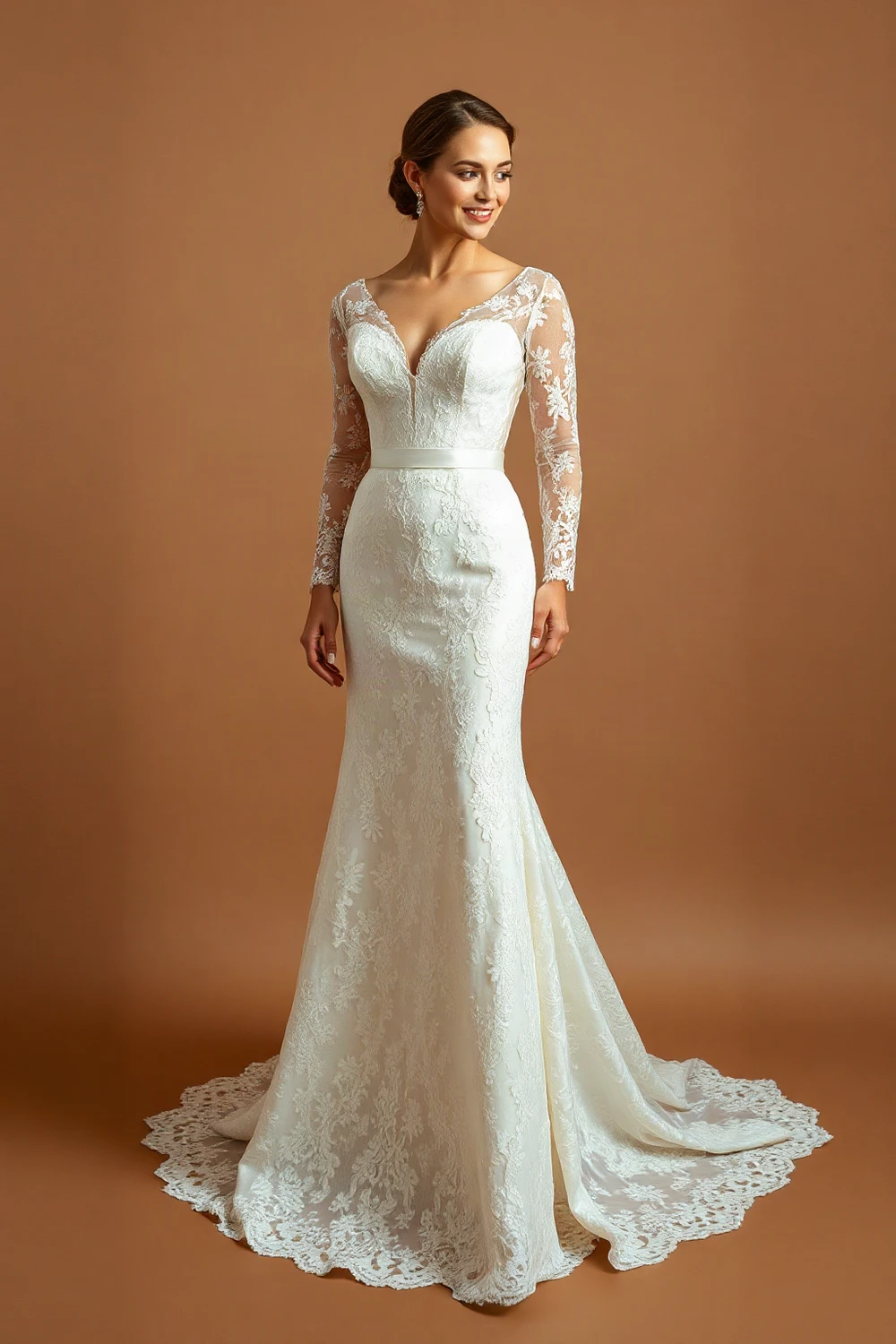
In the first image, the floral surface continues from the shoulders to the hem, making the dress read as one uninterrupted composition. Sheer long sleeves soften the openness of the V-neckline, while a slim plain band gives the eye a brief pause at the waist. The skirt follows the body before widening below, and its rounded, scalloped train makes the lower edge a significant focal point.
This balance suits someone who wants the lace effect to define the whole look rather than serve as a small accent. Combining dense motifs, a close cut and a train makes movement especially important. Walk, sit and reach forward during a fitting. If the train already has an elaborate border, a plain veil edge can prevent two detailed outlines from competing behind the figure.
Contrasting a High Neckline with a Full Skirt
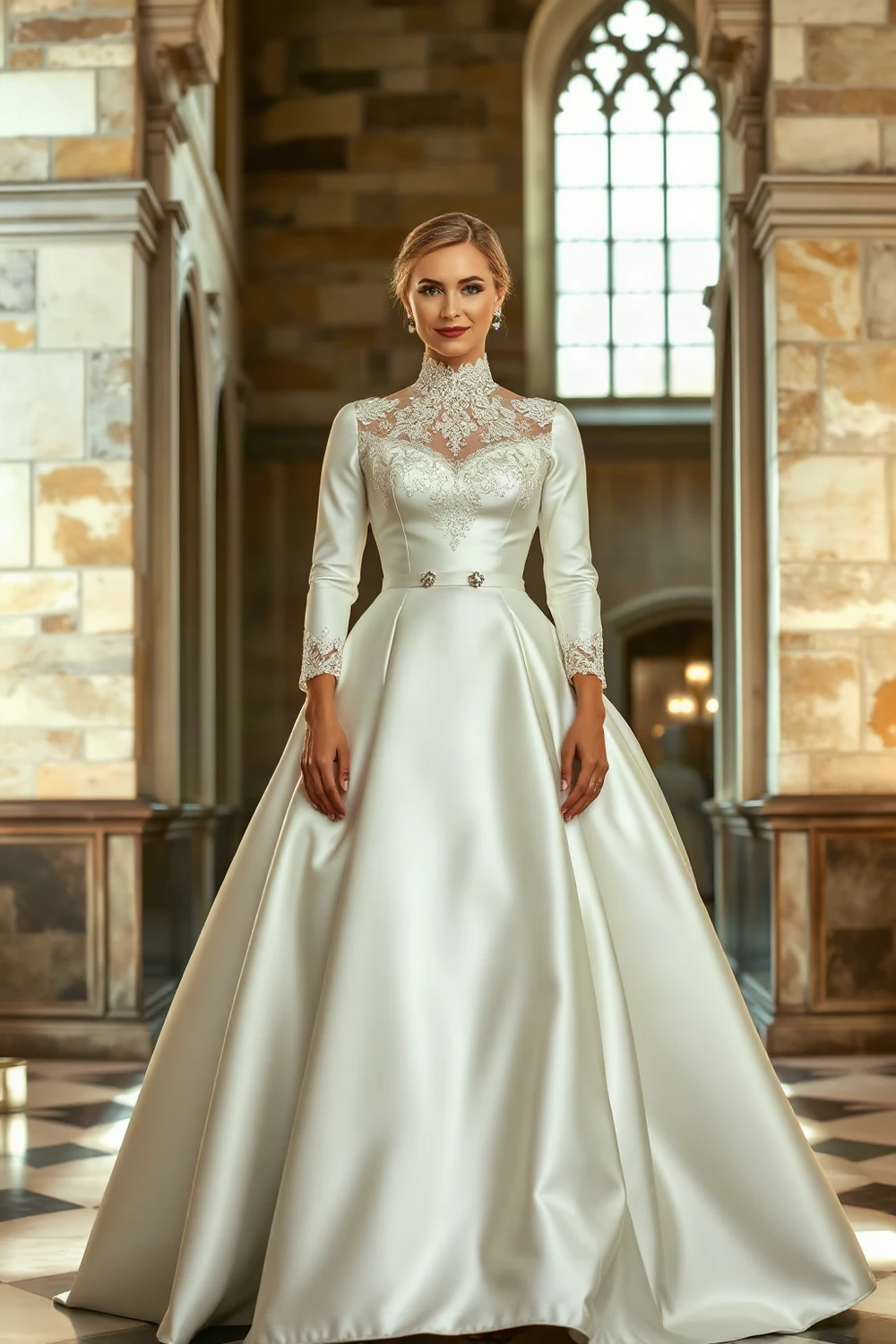
The second concept concentrates detail above the waist and leaves the broad skirt almost completely clean. Dense flowers on the transparent high neckline frame the face, while related cuff motifs connect the ends of the long sleeves to the upper section. After a narrow decorated waist, the lustrous skirt creates impact through volume and light rather than pattern.
This can work for someone who wants more neckline coverage without surrounding the entire silhouette in motifs. A high neck should be assessed while turning the head and sitting, not only while standing still. The full skirt may also require more room around chairs and narrow passages than a fitted shape. Since neckline, cuffs and waist already establish several accents, restrained jewelry helps preserve the clarity of the architectural silhouette.
Spaced Flowers, a Clean Skirt and a Long Veil
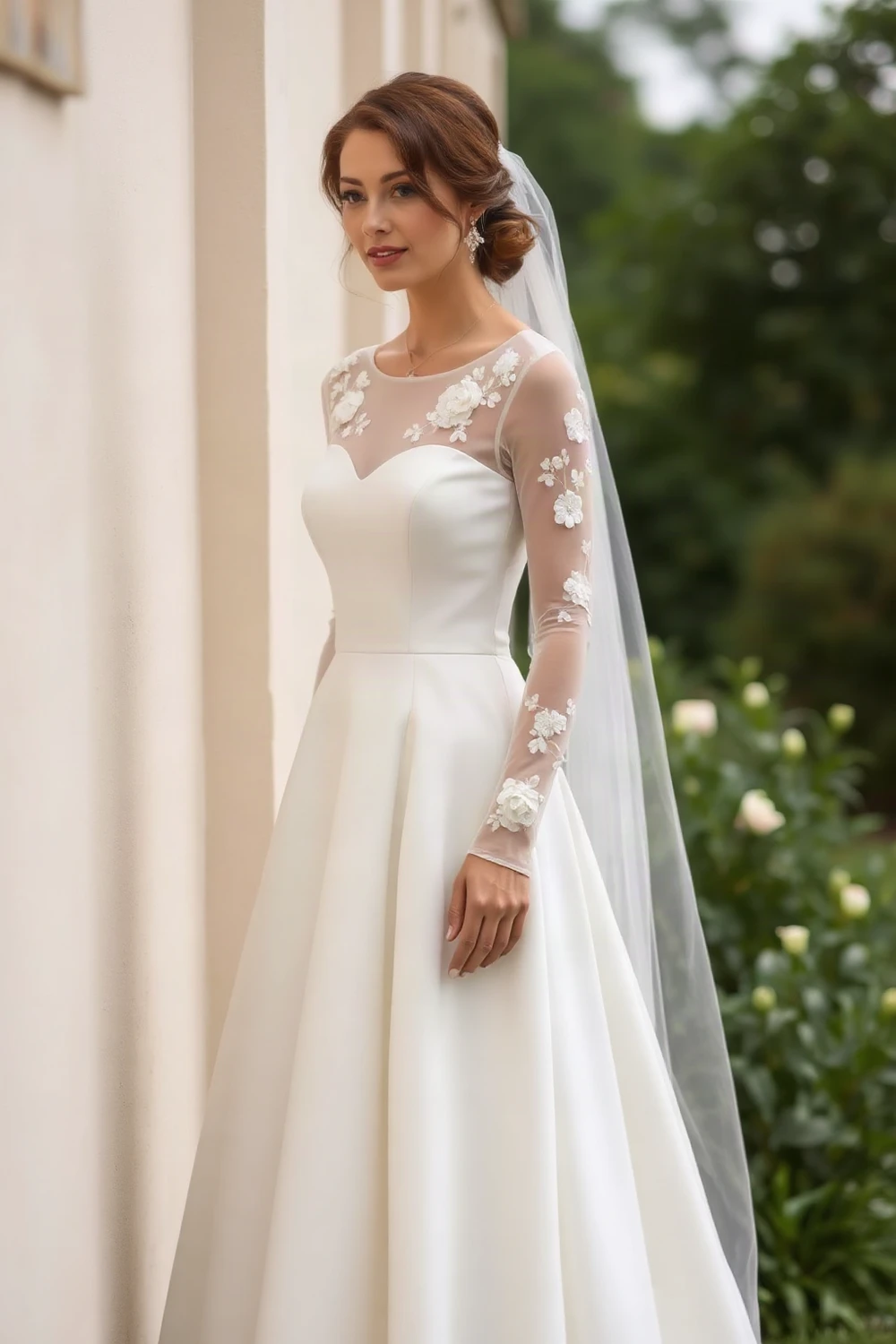
In the third image, large white flowers sit at generous intervals across a sheer bateau neckline and long sleeves. The smooth sweetheart-shaped bodice and undecorated A-line skirt give each motif room to remain visible. A long plain veil falls behind the shoulders and extends the vertical line without adding another dense pattern.
This option retains the romantic character of floral sleeves while keeping the overall surface open. Pay attention to how the spacing changes at the shoulder, elbow and wrist; flowers can appear crowded when an arm bends even if they look balanced in a still pose. View the veil from the side as well as the back. A highly patterned veil might obscure the sleeves, whereas a transparent plain layer can echo their lightness and continue naturally over the quiet skirt.
An Open Neckline with Sparkling Sheer Sleeves
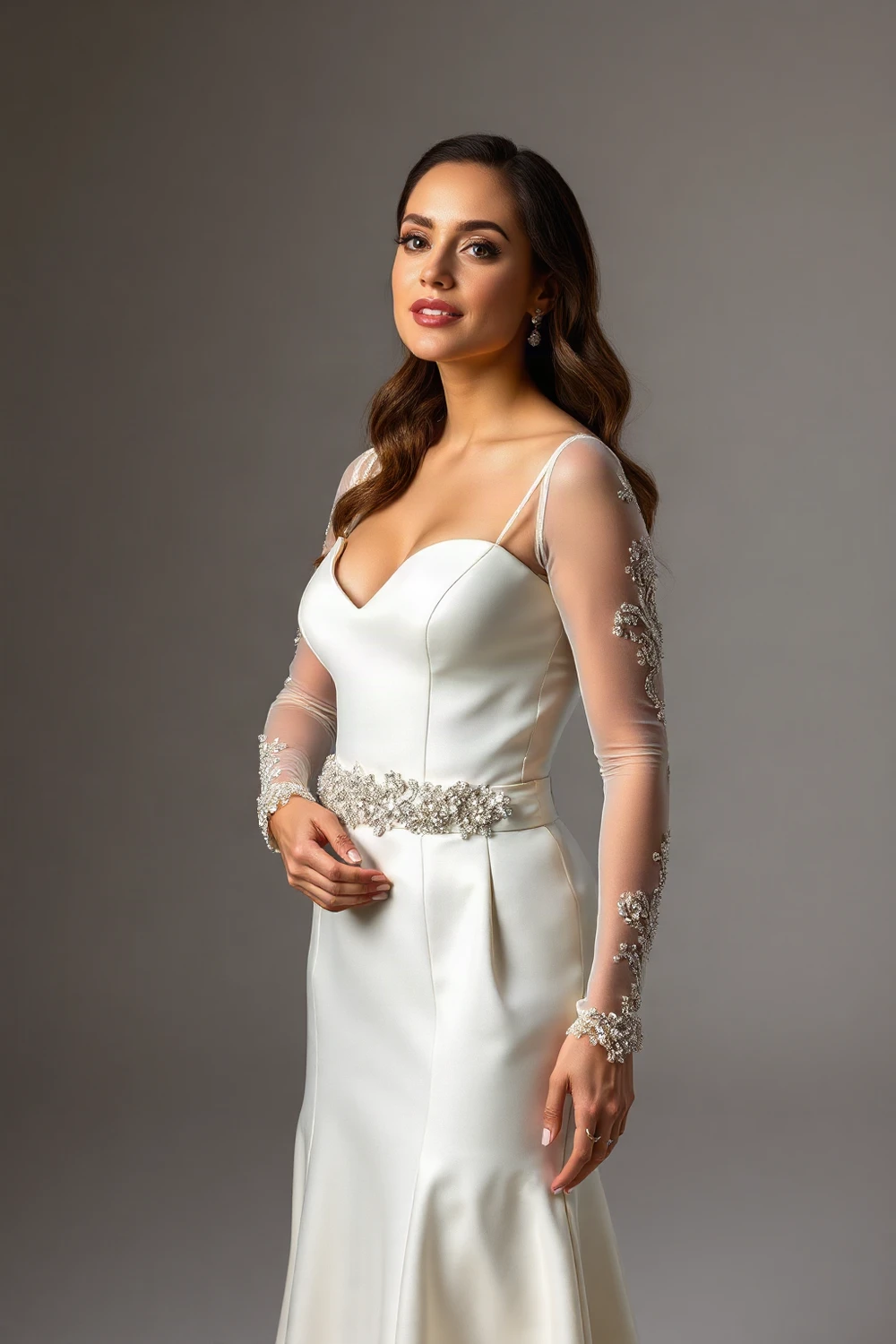
The fourth look pairs a smooth bodice and close skirt with silvery sleeve motifs and a strongly decorated waist. Slender straps and a low neckline create openness, while transparent long sleeves draw a delicate frame from shoulder to wrist. Because embellishments are clustered rather than spread evenly, the result feels more graphic than an all-over floral surface.
This idea suits those who enjoy the contrast between covered arms and an open neckline. Still, the thin straps, transparent shoulder layer and decorated cuffs must move comfortably together. A prominent waist band creates a firm horizontal division and can change the apparent torso proportion, so testing it at slightly different heights is useful. When the sleeves and belt already catch light, keeping only one of the necklace, earrings or hair accessory prominent creates a clearer hierarchy.
Examining Floral Motif Scale Up Close
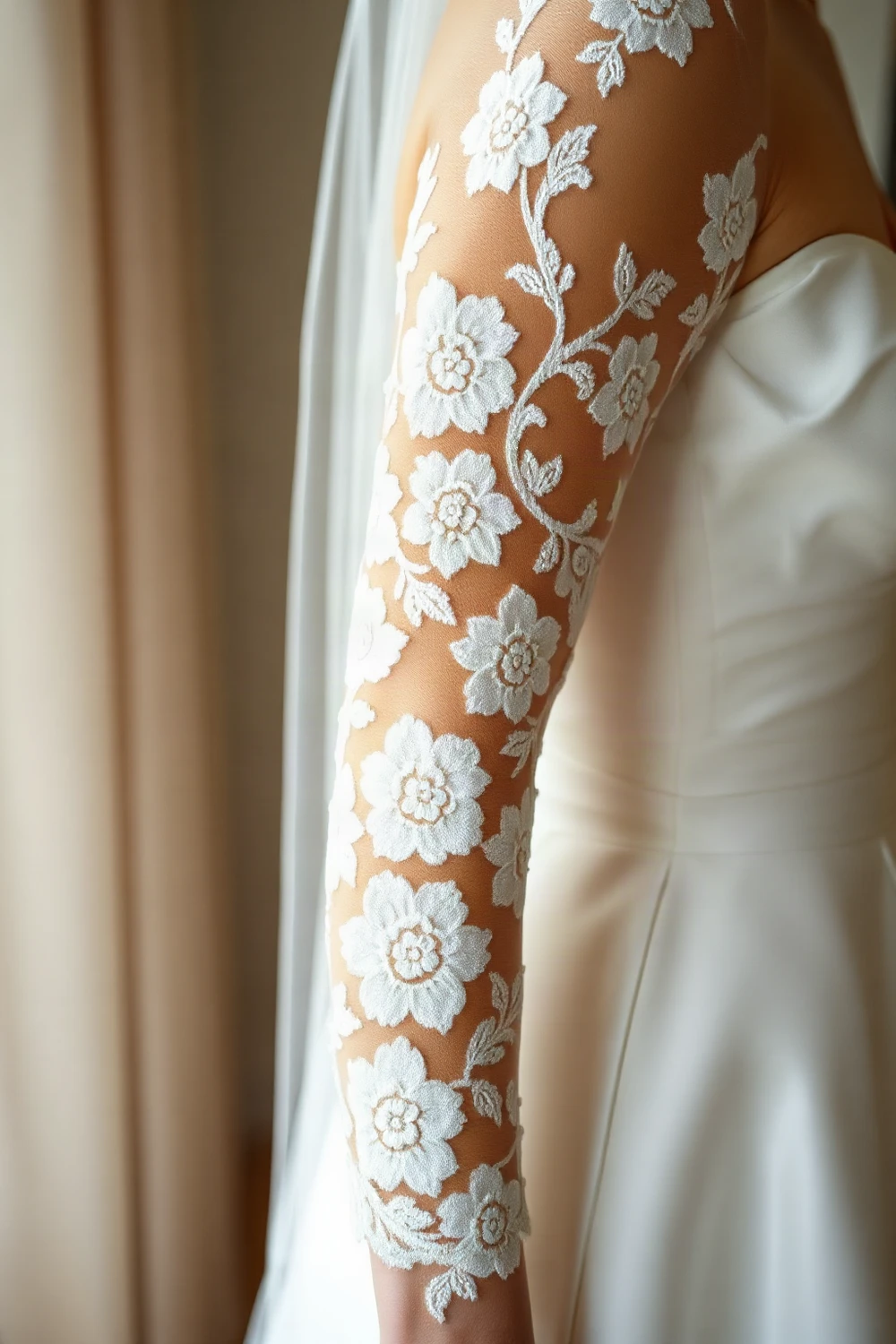
The fifth image sets aside the complete silhouette to focus on the sleeve surface. Large white flowers and fine curling stems stand clearly against a skin-toned transparent base. Their mostly vertical direction creates a lengthening flow, while the smooth bodice edge emphasizes the contrast between pattern and restraint. It demonstrates why two floral sleeves that look similar from a distance can feel very different nearby.
Consider not only motif shape but also scale and repetition. Large, spaced flowers act as distinct focal points; smaller, frequent motifs merge into a more uniform lace field. Bend the elbow several times to see whether blossoms overlap or buckle at the joint. The transparent base can also shift in appearance under daylight-like, warm indoor and photographic lighting. Comparing it in more than one light gives a more useful impression of coverage and contrast.
Balancing a Detailed Bodice with a Clean A-Line Skirt
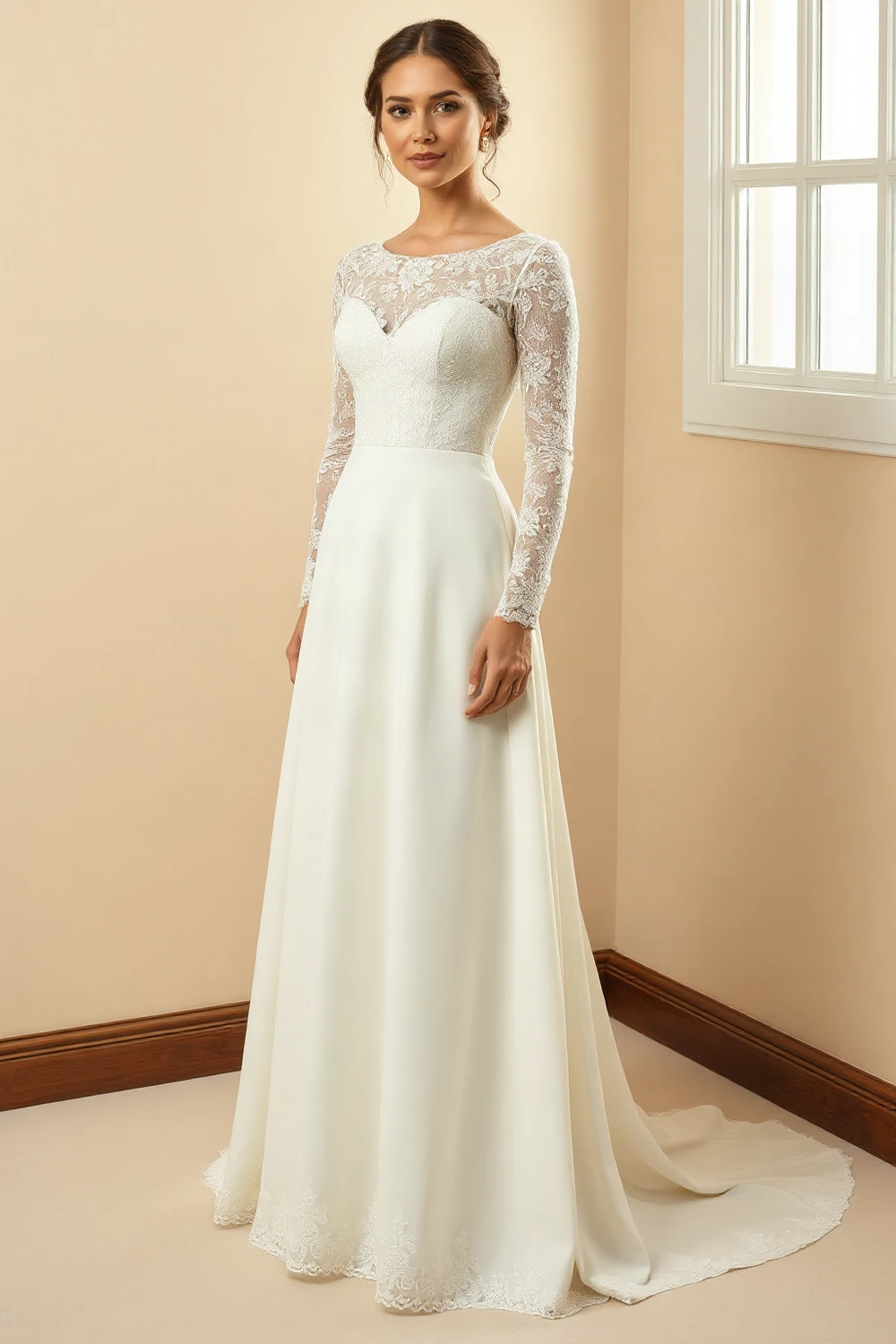
In the sixth concept, small floral motifs are concentrated around the rounded bateau neckline, upper chest, bodice and long sleeves. Below the unembellished waist, a smooth A-line skirt provides a broad area of visual calm. Only a fine hem border and short train add detail at floor level, directing attention first toward the face and then down the uninterrupted skirt.
This structure offers a practical reference for balancing a decorative top with an easily read silhouette. The neckline is less closed than the high-neck example and less open than the V-neck, creating a middle position in terms of coverage. Even with a clean skirt, its width, length and train movement should be tested. If a veil is added, choosing transparency and a simple edge can preserve the upper motifs without competing with the delicate finish at the hem.
When choosing a long-sleeve floral lace wedding dress, beginning with the complete silhouette usually makes later decisions easier. A fitted shape with a patterned train carries continuous decoration strongly, while clean full or A-line skirts direct more attention toward the neckline and sleeves. Neckline openness, transparent areas and flower scale can then be considered as one connected composition rather than separate features.
The final fitting should test whether that visual choice works in motion. Raise the arms, bend the elbows, sit, walk and view the veil from several angles. Check that motifs do not bunch at the joints, the neckline remains comfortable and the train can be managed in the intended space. For jewelry, belts and veils, identify the dress detail that should lead and let the remaining elements support it. This creates a deliberate balance among sleeves, neckline, skirt and train.
Compare sheer floral sleeves, high necklines, clean skirts and patterned trains through six visual concepts, with practical guidance on silhouette, motif scale, movement and accessory balance.
Frequently asked questions
How should floral motif density be chosen for sheer long sleeves?
Closely connected motifs create a richer, more continuous surface. Larger flowers with wider spaces feel lighter and make the transparent base more visible. Test both options with the elbow bent.
Is a clean or patterned skirt better with a floral long-sleeve bodice?
A clean skirt gives the neckline and sleeves greater emphasis. Extending the pattern into the skirt and train creates a more continuous, decorative statement. The better choice depends on where you want the main focus.
What jewelry works with a detailed high neckline?
A high floral neckline already frames the face. Small earrings or one restrained hair accessory can complete the look without crowding the neck area.
What veil can complement floral long sleeves?
A transparent veil with a simple edge balances dense sleeve or train detail. With a clean skirt, a longer veil can work, but check from the side that it does not conceal important shoulder motifs.
Which movements should be tested during a long-sleeve dress fitting?
Reach forward and upward, bend the elbows, sit and take several full steps. Observe neckline tension, cuff comfort, motif folding and the movement of the skirt and train.