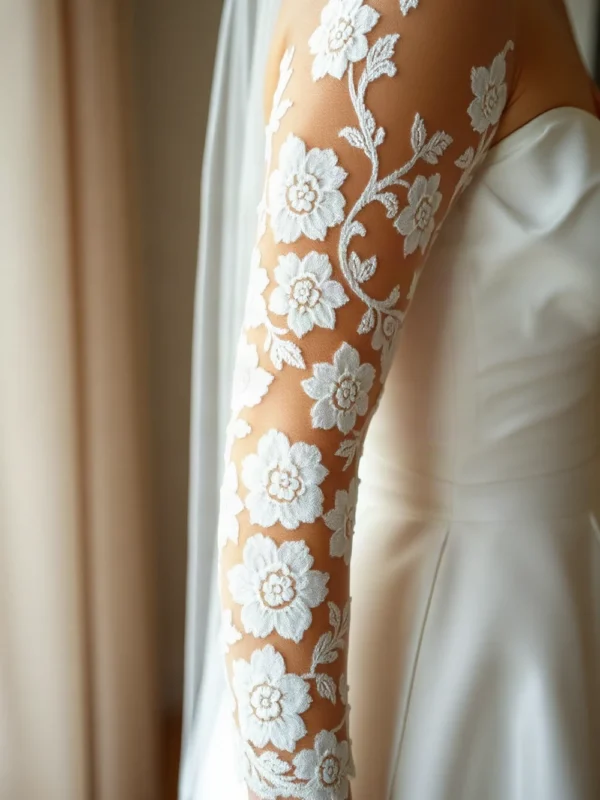
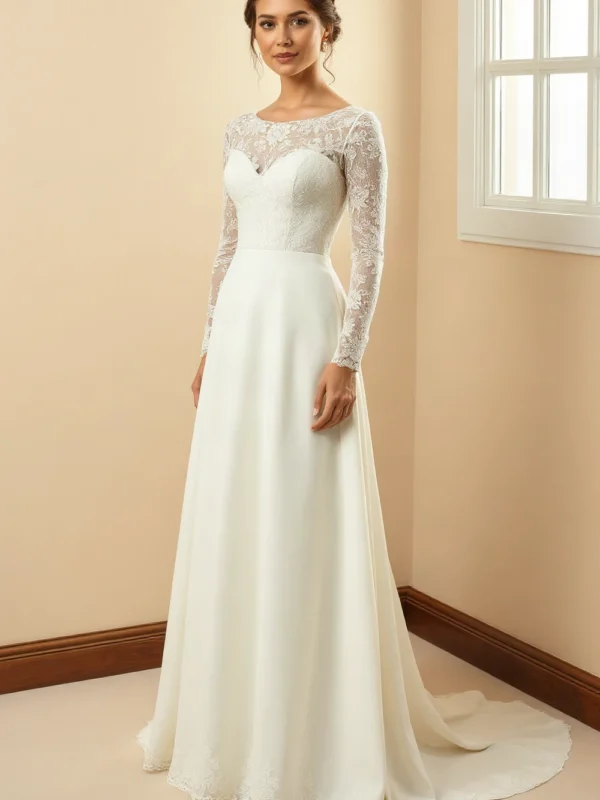
The shared theme in this gallery is the relationship between floral lace-look sleeves and the rest of a wedding dress. In some images, motifs spread across nearly the whole silhouette; in others, they remain concentrated on a transparent upper layer. That distribution can make a similar romantic detail feel rich, formal, light or contemporary.
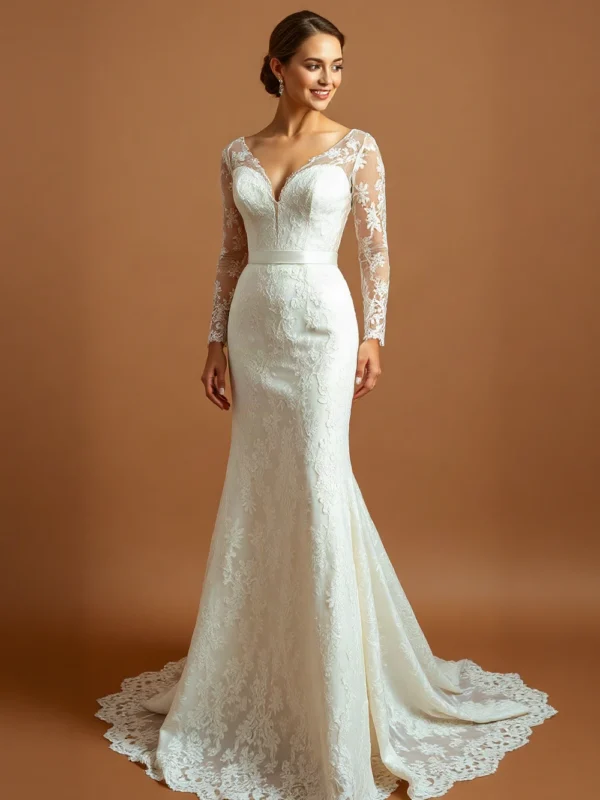
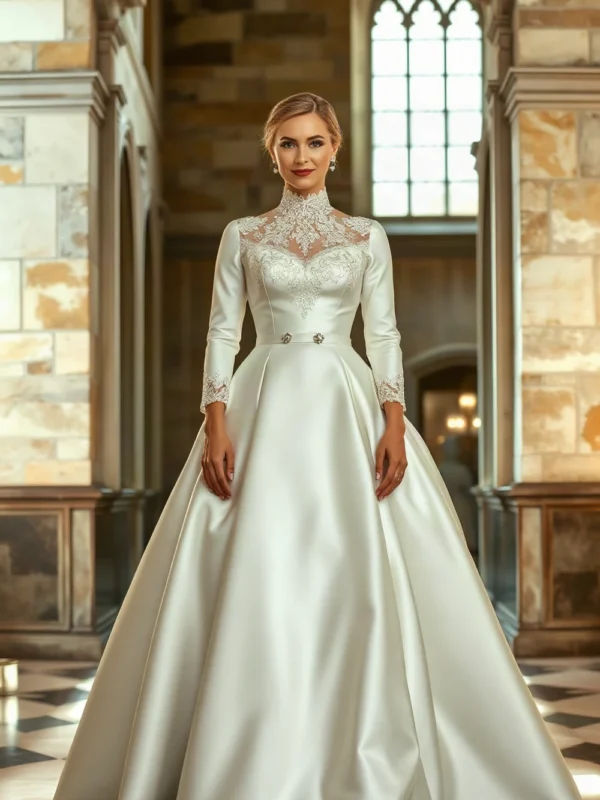
The first concept combines a fitted silhouette, a V-neckline and a lace-edged train to create one continuous patterned surface. The second takes the opposite approach: its ornate high neckline and cuff details sit above a broad, smooth, lustrous skirt. One relies on a long body-skimming line, while the other uses contrast between a defined waist and substantial skirt volume.
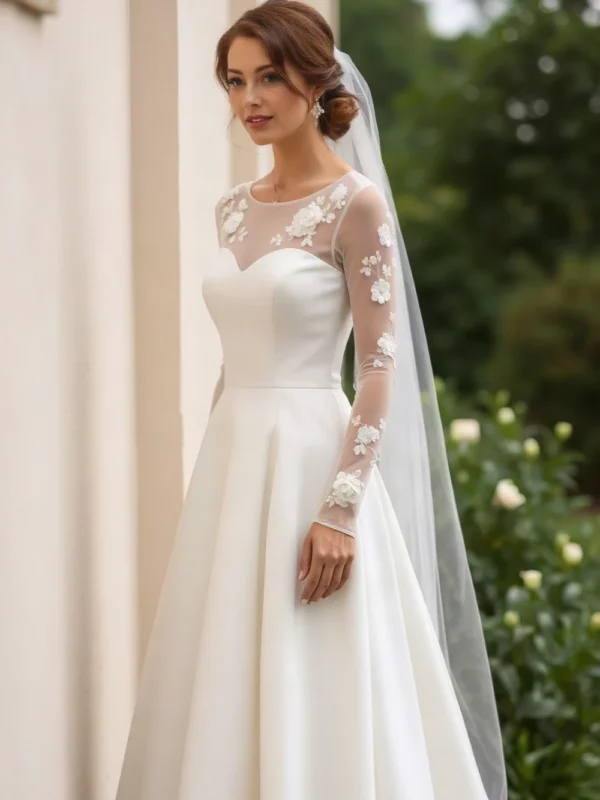
The third and sixth looks both use quieter skirts, but their upper sections differ. Large flowers are spaced across the transparent sleeves of the third, leaving the clean bodice and A-line skirt visually open. In the sixth, smaller motifs cover the shoulders, upper chest and sleeves more consistently. A long plain veil softens the third composition, whereas the sixth reads as a more self-contained balance of patterned top and restrained skirt.
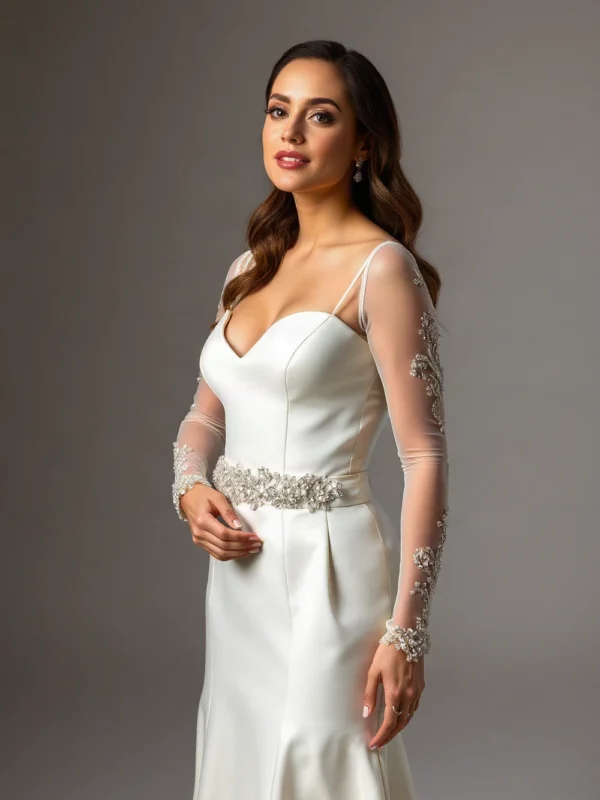
The fourth image shifts from soft white flowers toward silvery embellishment. Decoration is clustered at the sleeves, cuffs and waist, leaving generous transparent areas between motifs. Its open neckline contrasts sharply with the high-necked second look. The fifth image moves much closer, revealing how large flowers, curling stems and leaves travel down a sheer sleeve beside a smooth bodice and pale veil.
Begin by choosing the silhouette and then decide how visible you want the transparent sleeve base to be. A patterned train creates continuity, while a clean skirt gives floral sleeves greater emphasis. During a fitting, reach forward, bend the elbows and sit down to see how motif placement changes with movement. Veils, belts and jewelry are easiest to balance when they respond to the amount of detail already present around the neckline and wrists.